How to strategically incentivize re-engagement from your mobile app users and drive retention from push notifications.
Push notifications have been touted for quite some time as the key for brands to distinguish their app from the sea of apps on a user’s phone screen. They have been praised as a fresh way for marketers to increase user retention and drive re-engagement. As mobile usage continues to rise at an unprecedented rate, push notifications seem to be the glass slipper marketers have been waiting for.
So why hasn’t everyone jumped onboard?
There has been much debate around the effectiveness of push notifications and push marketing in general. How effective are push notifications? Do people really find them useful?
The argument against push notifications goes as follows:
However, although push marketing may initially come off as invasive and unwanted, the stats tell a very different story. Opt-in rates for mobile push notifications reached 61% and 67% for Apple and Android users respectively in 2025, with the open rate for tailored campaigns reaching an impressive 14.4%.1 The fact is, when personalized, push notifications encourage significantly higher app engagement than generic notifications — a notion backed by a 2025 survey report by Batch2. But deploy them without strategy, and you risk an increase in app uninstalls and opt-outs while creating a negative association with your brand.
The question we all want answered is: How do you create push notifications that are beneficial — both to your customers and business?
High-impact tactics to drive retention and engagement from app users
The marketing minds behind some of the most beloved apps out there have figured out how to leverage push marketing to their advantage. But many of these apps — such as streaming and social media platforms — enjoy the advantage of a high-frequency user base. What if you’re in an industry with low push engagement rates? Retail apps, in particular, are struggling to generate more app engagement using push notifications. According to a report by Batch, iOS retail apps top out at a 2.5% open rate for generic push notifications — lower than every other industry.3
As a marketer, how can you tackle the push notification problem?
Start by getting personal.
People want personalized, relevant push messages. They can easily sniff out generic, blasted messages that are part of an obvious re-engagement campaign. Getting a meaningless push message is an annoying distraction, and getting too many of them can lead the user to stop buying from you altogether.
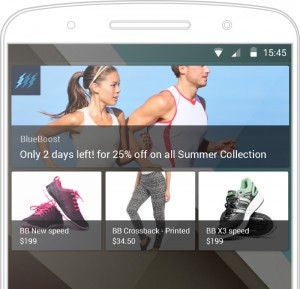
Personalization of push notifications, however, can deliver a 4x lift on open rates.4 One very effective and unconventional approach to personalizing push messages is to serve recommendations based on the products the user has shown an affinity for in their browsing and buying history.
If a user demonstrates that they are in the market for specific items — for instance, they viewed and interacted with women’s sneakers and workout apparel — then they can be served those items in the notification itself. What’s more, deep linking to these products within your app enables users to act on the push notification instantly, driving increased conversions. Instead of opening the home-screen, users will find the push notification to be increasingly relevant when it lands them directly on the product displayed.
The last thing you want is to be woken up by your phone buzzing at 2AM with a push message from an e-commerce app. The stories of badly timed push notifications abound. Too many marketers completely miss the mark on messaging, timing and the frequency of their push marketing efforts.
This usually happens in two ways:
The times marketers send push notifications and times users are actually opening and engaging with them are out of sync, often resulting in out-of-date messaging
Marketers often totally miss with time zones — in Eastern Europe, the Middle East and Africa (EEMEA), they may be sending pushes at midnight, when most users are sleeping as they focus on hitting peak times in North America — instead of creating local campaigns
The solution to the timeliness problem? Customize delivery time according to when each user is most likely to engage with your app, based on insights measured over time.
When is the right time to send the message?
You can start by creating conditions to send the push based on the user’s most active or last active period. For example, if a user has a history of launching the app at 6pm PM but purchases around 8 PM, then marketers can create conditions to send the push message at 8pm when the user is most likely to purchase.
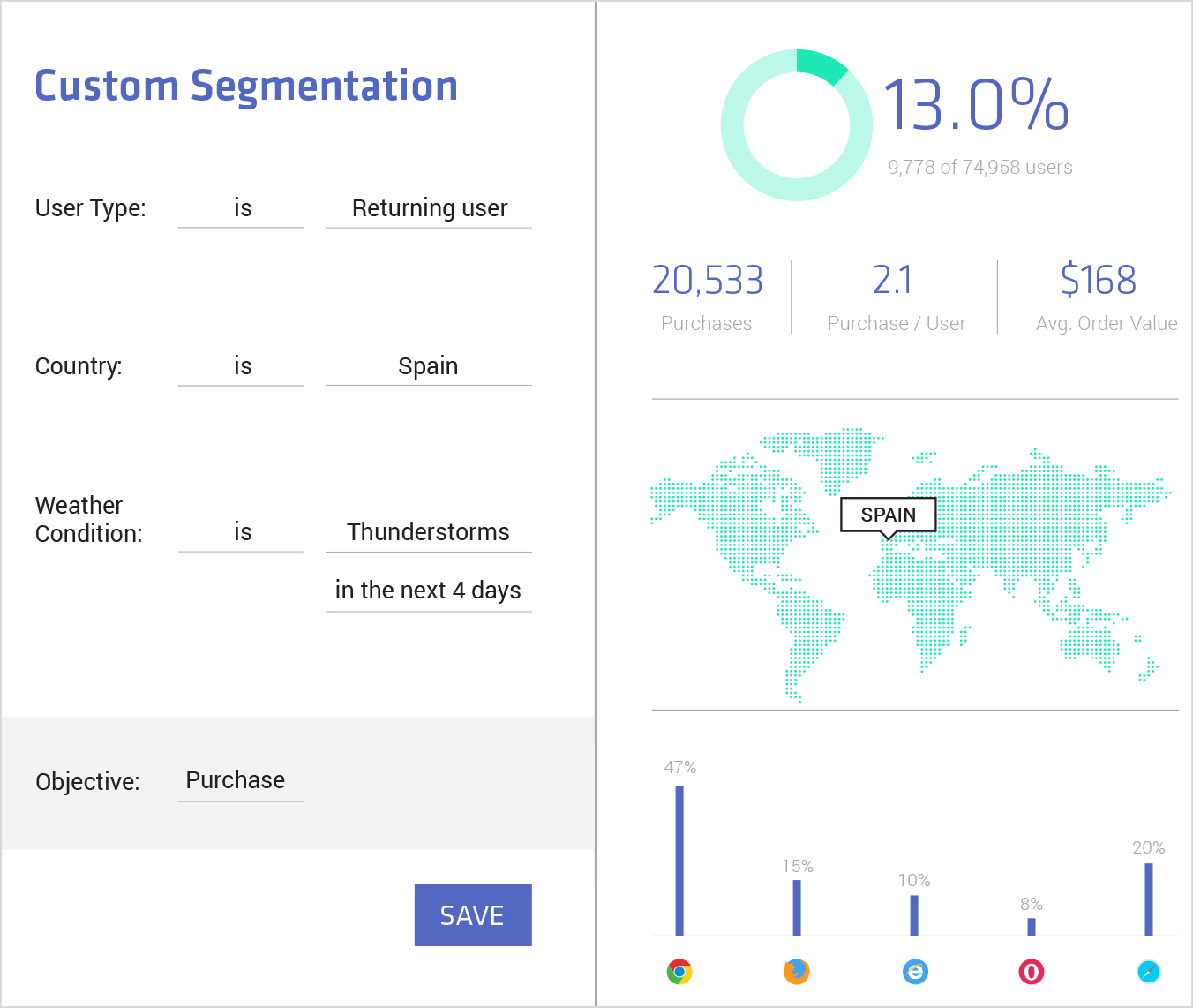
The solution to the location problem is to geo-target users and send messages in lockstep with your customers’ local time zones. Marketers can even tailor specific promotional messages based on users’ local weather conditions.
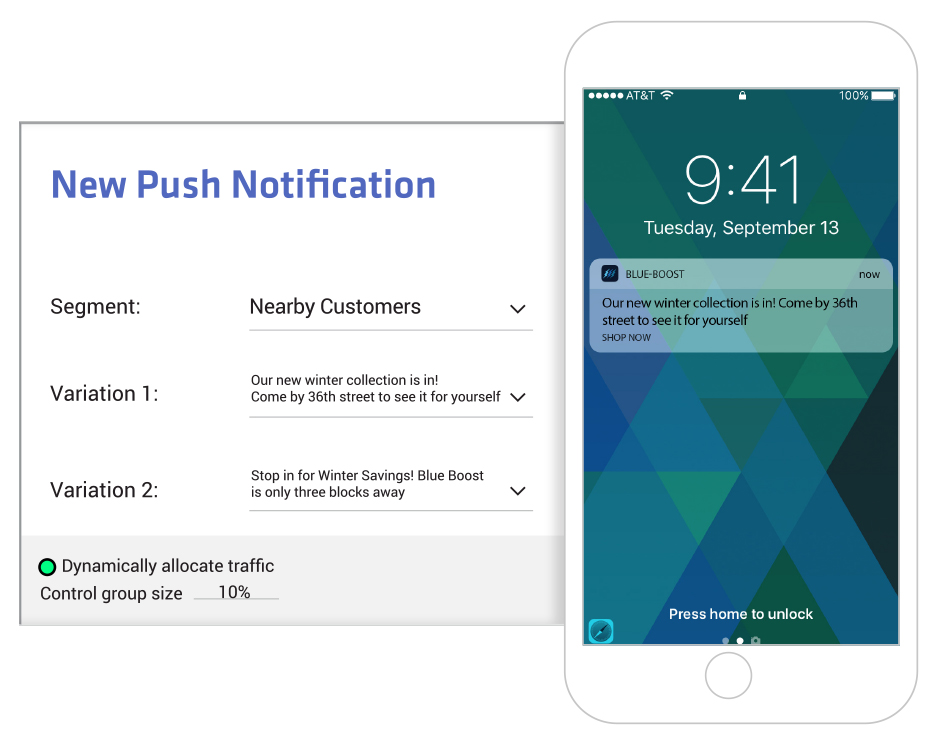
It’s also important to point out that location-based notifications do not have to be limited to online shopping: retailers with brick and mortar stores can encourage physical store visits by triggering an incentivizing push notification to users that are nearby.
Combating shopping cart abandonment is a major challenge for all online retailers, and this is especially true with mobile. It goes without saying that mobile shopping cart abandonment rates are horrendous, clocking in at around 70% in 2025.5
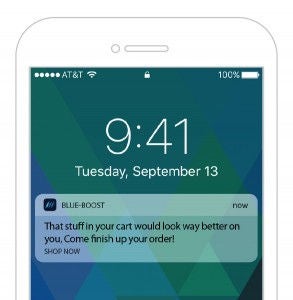
Shoppers abandon their carts for a number of reasons (be it high shipping costs, more affordable alternatives, window shopping, etc.) and while sending cart abandonment emails is an invaluable tactic to recover sales from abandoned carts, open rates for push notifications far higher than email, as are click rates.You can proactively increase mobile conversions by pushing notifications to a segment of users who abandoned your mobile website or app after beginning checkout.
Most apps don’t have a cart abandonment strategy in place and have no way to nudge users to complete their purchases. Reminding users that they have unpurchased items in their carts is a critical tactic to win back those lost purchase opportunities.
Some users enable push notifications to gain access to special deals or exclusive offers. Offering limited-time offers or discounts can be a highly effective way to lure latent users back into your app.
As always, the decision to offer a discount needs to make sense for your business. Don’t just send discounts to everyone — we recommend starting with latent users.
For example, you could create a promotional push campaign that is scheduled to run once a week aimed at audience segments who have not been on your mobile website or app for more than 10 days. If a shopper uses the discount, then they should automatically be removed from that segment of latent users receiving discounts. If the user ignores the notification, they can receive it again next time your automated campaign runs. To ensure users aren’t receiving endless amounts of discounts, marketers must leverage automation solutions that cap the number of messages each user receives.
Push notifications are one of the most effective ways for e-commerce marketers to incentivize re-engagement with mobile apps and drive retention. Perfectly timed and personalized push notifications delight customers while irrelevant and spammy push messages will drive them away.
It’s critical to keep in mind that push notifications — like all 1:1 messages — are an ongoing interaction with your customers that must be tested and optimized. Make sure to analyze customer data insights over time to understand the effect each push notification has on different user segments and the role push messaging plays in your overall marketing strategy.
Mastercard Dynamic Yield is not affiliated with the research cited in these sources.