Lesson

How to make your personalization strategy shine using contextual weather insights

Learn how to incorporate weather-based triggers as a mainstream component of your CRO and personalization strategy to improve the customer experience and increase conversions. 

Yaniv Navot profile photo

Yaniv Navot

Senior Vice President, Commercialization,

Consumer Acquisition & Engagement,

Mastercard

As a marketer, you already know about the benefits of real-time contextual personalization and its effects in inducing increasingly meaningful customer interactions. Yet within this category exists a highly effective method of customer engagement that is quickly becoming a mainstay of many successful marketing strategies. 

Weather-based, personalized content is empowering organizations to anticipate patterns of demand and tap into the motivations, needs and purchase intentions of their customers.

Personalization example

What is weather-responsive personalization?

Weather-responsive personalization is the practice of tailoring influential messages to visitors based on local temperatures or weather conditions and is accomplished by integrating a real-time weather forecast data stream into your existing personalization platform

The sky’s the limit when it comes to its practical applications, as weather-based insights can be used to tailor promotions and content across email campaigns, digital display ads, mobile push notifications and almost any other means of digital communication. 

These days, marketers across different industries are coming up with clever ways to implement weather-responsive personalization and boost conversions. 

Weather-responsive personalization empowers organizations to tap into the needs and purchase intentions of their customers.


Practical industry applications of weather-based personalized content

Retail

Weather has a profound influence in shaping your customers’ purchase decision process.  One glance out the window can make all the difference between what we buy, how we buy it, when we’ll buy it and our willingness to live without it. 

This information is especially critical for retail brands with large seasonal product catalogs. Promoting the right seasonal products to the right users is a surefire method of gaining a competitive advantage and increasing average orders values (AOV). 

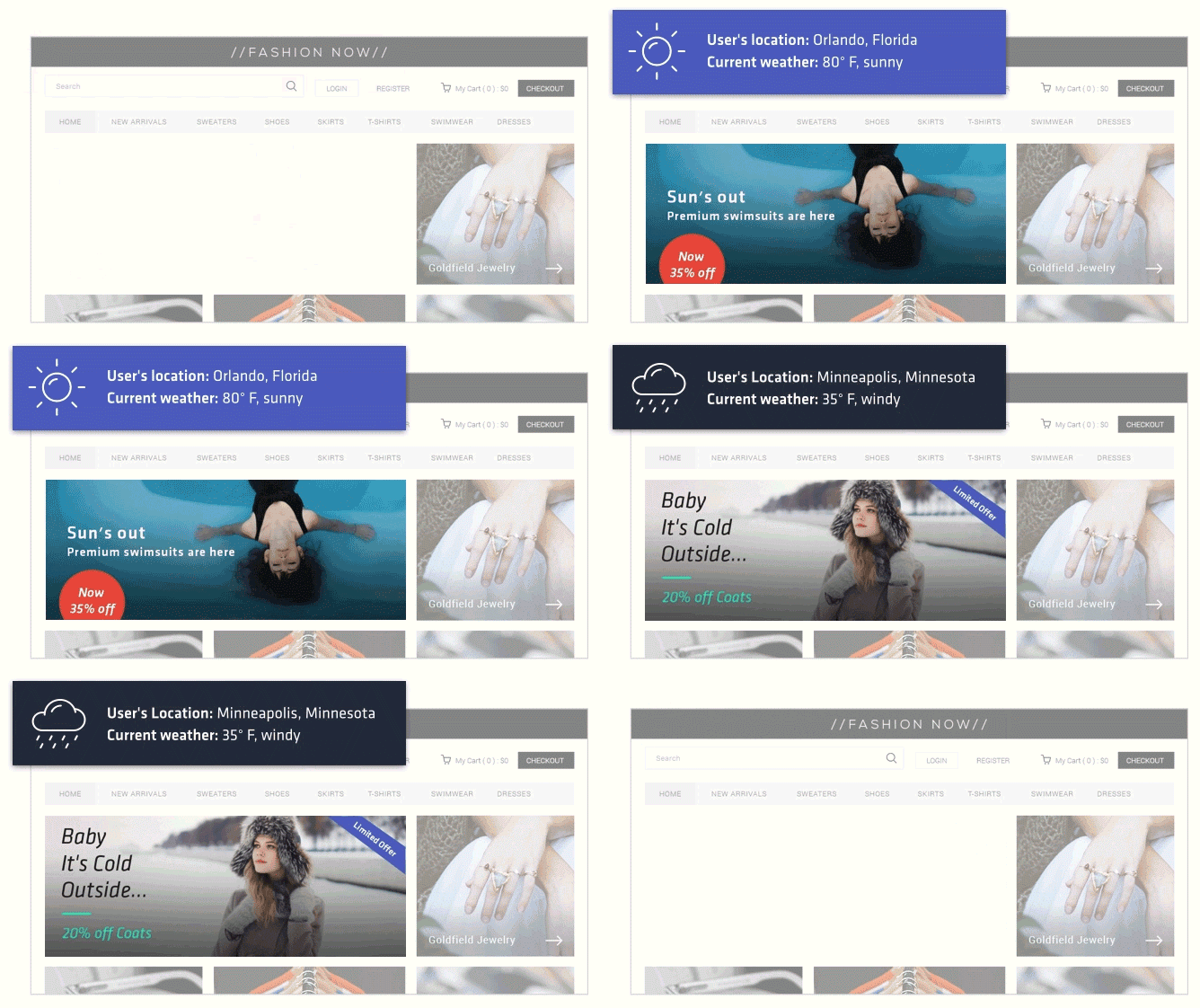
To illustrate, clothing retailers can segment users according to geo-location and run multi-channel campaigns according to local weather conditions. If it’s cold outside in a user’s location, the brand can direct them to a landing page or banner promoting cold-weather gear, apparel and accessories. In addition, brands can create and run weather-specific campaigns that dynamically adapt messaging to fit certain conditions (e.g. if it’s rainy, if temperatures drop below 55°F, etc.) like serving personalized content or product recommendations based on the local weather. 

Personalization example

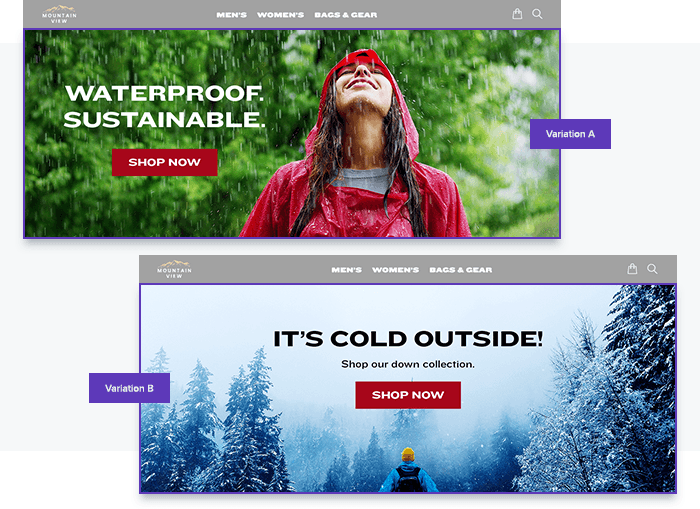
An example of an outdoor equipment retailer serving personalized homepage hero banners based on the local weather forecast. Read more about weather-based banners here.

Commercial travel

A lot of people are itching to get away; if you’re an airline or travel site, the question always on your mind is how you can best persuade them to. Contextual weather insights provide a tremendous opportunity to influence travel decisions and provide useful information to your travelers. 

For example, airlines can use weather-based data insights to trigger promotional emails for customers in areas undergoing snowstorms or continuously unpleasant weather conditions. These emails can contrast the visitor’s local climate with that of the suggested destination, provide up-to-date info on flight times and include time-sensitive incentives to purchase tickets now. 

Further, using weather-responsive personalization eliminates the frustration customers feel when they receive offers that are completely irrelevant to them. Your ‘winter wonderland getaway’ campaign should be promoted towards customers looking for ways to escape the sweltering local heat, not to customers in sub-zero temperatures now looking for any excuse to leave your site. 

Sports and iGaming

Using weather-responsive personalization to bolster in-stadium merchandising efforts is a win-win for teams and their fans alike. One way to accomplish this is by broadcasting beacon offers and push notifications to fans’ mobile phones throughout the course of games. 

A home team anticipating a rain delay can quickly notify fans about the closest place to purchase ponchos, umbrellas and official team rain gear. If high heat is in the forecast, fans can be offered an exclusive discount code for cold beverages upon downloading the team’s mobile app. 

From another angle, online operators of fantasy football leagues can use weather-based, personalized content to notify fantasy owners about changes in field conditions which could negatively affect players’ performances. Each instance is more than an organization providing a service to customers: It’s an effective means of building loyalty by anticipating what customers will be most inclined to desire and putting an opportunity directly in their hands. 

Personalization example

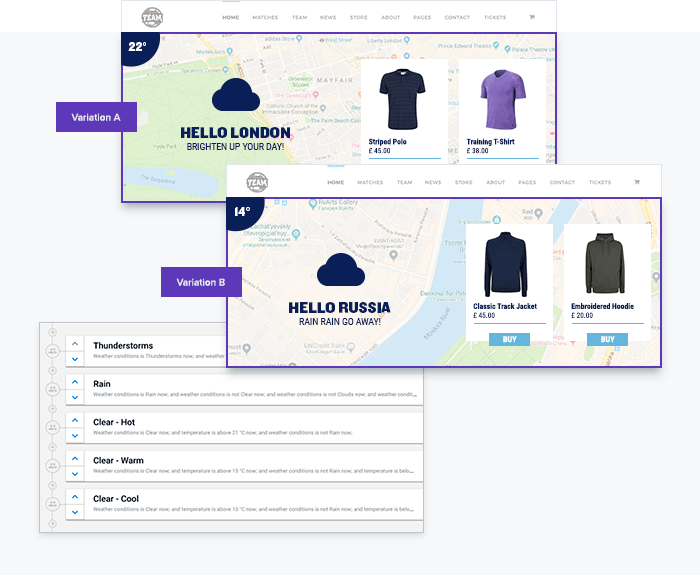
An example from the online store for a football club that powered product recommendations using weather-responsive personalization. Read more about weather-based product recommendations here.

Conclusion

Weather has a profound impact on how your customers engage online and in-app, opening up a highly relevant avenue for organizations to influence decision making and increase conversions. Weather-responsive personalization empowers marketing teams to demonstrate an understanding of their customers’ needs — and an ability to deliver on them. There’s no limit to the creativity you can employ using personalized weather marketing and organizations across all industries would be wise to incorporate it as a mainstream component of their marketing strategies. 

Contact sales

Talk to an expert to learn how Mastercard can enhance your business through our products and services.

Mastercard