Report

Climb the personalization maturity ladder

See how global e-commerce businesses prioritize personalization as the key to delivering superior customer experiences.

Black gradient background

Each year, we generate and analyze the responses from our personalization maturity self-assessment test to better understand how brands are evolving to meet the personalization demands of e-commerce.

In 2026, disruption is redefining personalization maturity in e‑commerce. As AI transforms the buying journey and external pressures — from supply chain setbacks to tempered consumer spending — reshape the landscape, brands face a clear choice: Accelerate progress or risk falling behind.

The gap between leaders and laggards is widening. Forward-thinking teams are reimagining how they engage shoppers and racing to harness AI for greater efficiency and relevance. With expectations climbing and the pace of change intensifying, differentiation and loyalty now depend on how quickly organizations close critical gaps in strategy, resources and process.

How we evaluate personalization maturity

Mastercard Dynamic Yield surveys C-suite executives, marketers, developers, and other key stakeholders (of various demographic profiles) involved in customer experience design across the globe to learn how their organization’s commitment to personalization impacts the resource allocation, process implementation, and cultural and collaborative foundations needed to effectively scale their programs.

Responses are then bucketed into four levels of maturity: absent, basic, advanced, and pioneer, allowing us to effectively report on the state of the personalization market.

Global snapshot

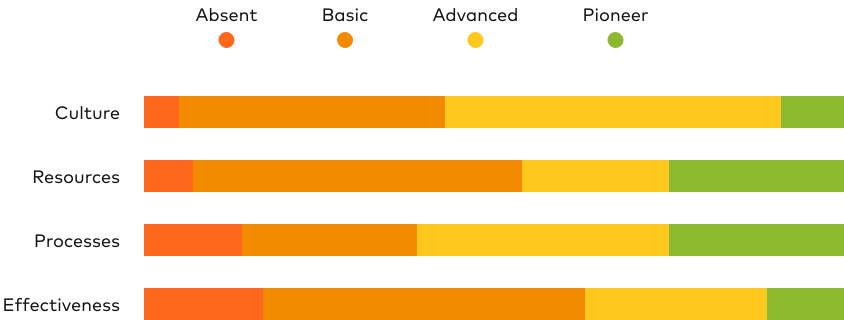
Graph showing the distribution of personalization maturity for all regions divided by Absent, Basic, Advanced or Pioneer
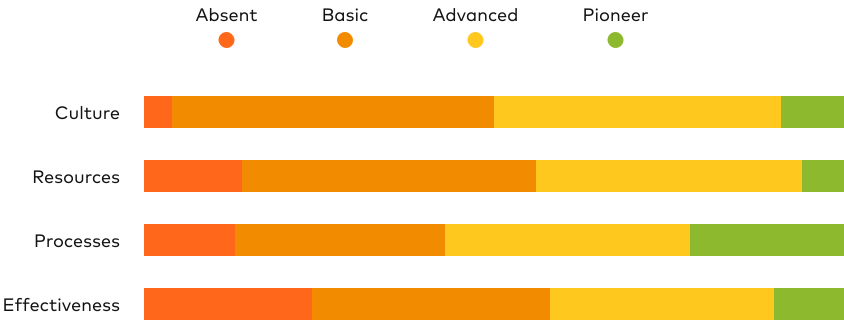
Graph showing the distribution of personalization maturity for APAC divided by Absent, Basic, Advanced or Pioneer
Graph showing the distribution of personalization maturity for EEMEA divided by Absent, Basic, Advanced or Pioneer
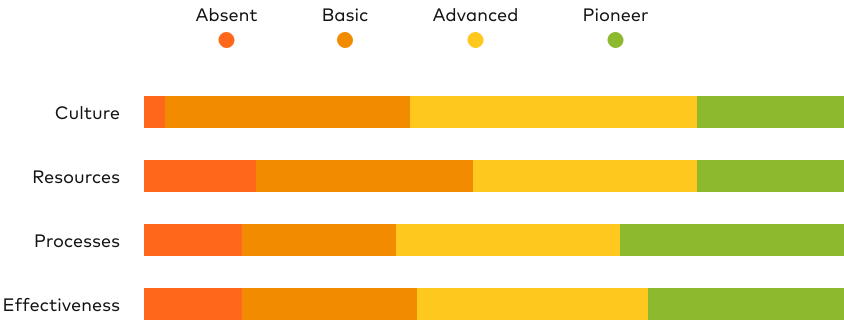
Graph showing the distribution of personalization maturity for Europe divided by Absent, Basic, Advanced or Pioneer
Graph showing the distribution of personalization maturity for LAC divided by Absent, Basic, Advanced or Pioneer
Graph showing the distribution of personalization maturity for NAM divided by Absent, Basic, Advanced or Pioneer

Commitment to personalization remains high despite fragmented goal setting.

Consistent with previous years, 63% have either made personalization a top priority or claimed it’s already part of their DNA. However, teams continue to struggle with setting concrete, quantifiable goals and linking their efforts to business outcomes.

Woman smiling on an orange background
Three coworkers collaborating at the office

Resources build momentum — but unlocking growth requires greater support.

Brands are slowly inching up the ladder, with 54% allocating business, technical and creative talent to personalization, up 4% from 2025. To power greater collaboration and scale, they must establish dedicated, cross-functional teams with clear owners, and ensure expertise is readily available across the organization.

On the heels of communication and data investments, processes hold strong.

Process gains have largely stayed consistent. Brands are taking small strides to better circulate internal test results and identify impactful data insights. However, 39% report failing to action their findings in subsequent tests.

Abstract image showing orange lines in a black background
Two women smiling while looking at a computer

Maturity divide in effectiveness closes as laggards gain ground.

We saw notable progress around organizations ensuring KPIs are established for every campaign. And although 62% of respondents have not aligned on a singular audience strategy, a 5% improvement from the previous year indicates a trend in the right direction.

Disruption redefines maturity — brands must accelerate progress or risk falling behind

E‑commerce is evolving fast — and the standards for pioneering personalization are transforming just as quickly. AI is raising the stakes, driving new models of product interaction and opening the door to unified brand experiences at scale. As competition intensifies and external pressures squeeze both consumers and companies, brands are forced to choose: Double down on familiar strategies or take bold risks to innovate.

This year’s research shows most organizations remain at an Advanced level of maturity. But as the bar rises, advancing talent, collaboration, actionability of insights and audience strategy will no longer confer an easy advantage — it’ll be table stakes for sustaining growth and loyalty in 2026.

The state of personalization maturity in e-commerce cover

Who participated?

Geographies

Graph showing the survey participation by geography

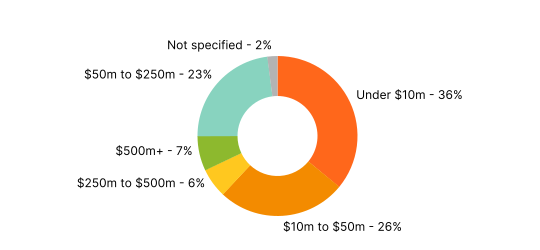
Annual revenue

Graph showing the survey participation by anual revenue

Company size

Graph showing the survey participation by company size

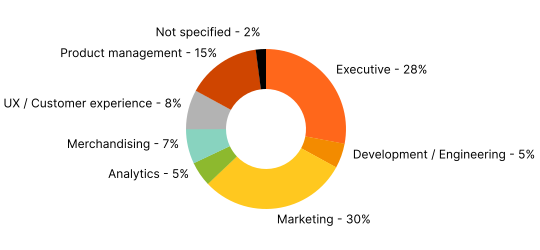
Job functions

Graph showing the survey participation by job functions

Discover your company’s personalization maturity level

Answer 16 questions to discover your company’s digital maturity.