Lesson

The psychology of social proof marketing to drive conversions

Learn how to increase sales and conversions by leveraging the psychological power of social proof and scarcity messaging.

Yaniv Navot profile photo

Yaniv Navot

Senior Vice President, Commercialization,

Consumer Acquisition & Engagement,

Mastercard

Put yourself in the following situation:
There’s an energy conservation initiative going on in your community urging citizens to use fans instead of air conditioning. Four signs have been randomly divided amongst hundreds of houses throughout your neighborhood, each containing a convincing message:

  1. You could save $54 a month on your utility bill.
  2. You could prevent the release of 262 pounds of greenhouse gases per month.
  3. Conserving energy is the socially responsible thing to do.
  4. 77% of your neighbors use fans instead of air conditioning — it’s your community’s popular choice.

Which sign do you think would most effectively persuade people not to use the air conditioning? If you answered #4, you’re correct — and for good reason.


What is social proof?

Psychologists call this phenomenon social proof and it’s especially prevalent in the realm of online shopping. These days, e-commerce brands are utilizing the ‘pull of the crowd’ to influence purchasing decisions and turn hesitant visitors into confident purchasers.


Social proof theory

While we’d like to think our actions are always determined by our own individualistic thinking, the truth is that our final decision making is often conditioned by those around us.

This notion is especially prominent in situations where people are unable to determine the appropriate course of action and assume that others possess more knowledge about the situation.

Even if a brand’s unique value proposition and pricing is perfect, it may not be enough to secure a purchase. In fact, according to a recent study, customers prefer high star ratings, a large number of reviews and a trustworthy shopping platform — even if other similar products are less expensive .

If you’re an e-commerce brand, leveraging social proof in your offering can solidify customer confidence in purchasing decisions and help eliminate the concerns that stand between them and clicking the buy button. Here are two effective social proofing strategies that will help you accomplish just that.


Social proof examples for e-commerce

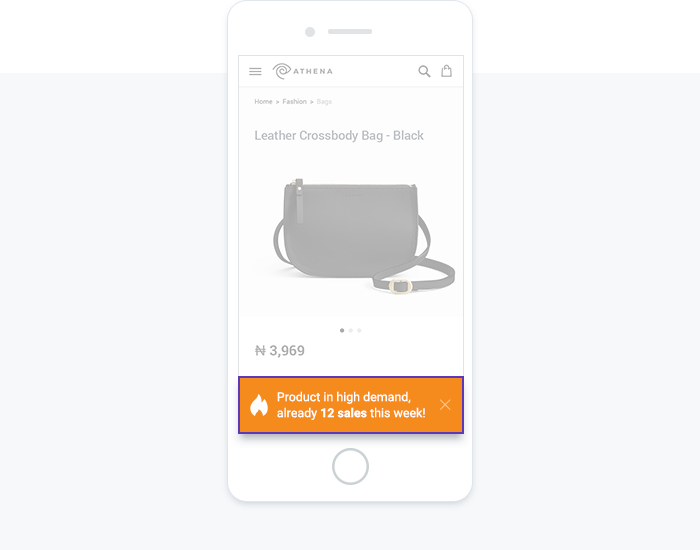
Highlighting demand to create urgency


Highlighting high customer demand for a product is a proven method of boosting sales and can be accomplished by showcasing the number of views, adds-to-cart or purchases that were conducted within a specific time frame. Notifying customers that, “157 people have bought this product within the last 24 hours,” for example, creates a correlation between urgency and buying in the mind of the customer, and induces a fear of missing out for not going through with the purchase.

The understanding that other people have already bought the item plays an important role in validating the customer’s own thinking to buy it as well. Uncertain customers naturally find comfort in a greater collective, and if you can create the impression that everyone is buying your product, there’s a strong likelihood that they will too.
 

template

An example from one of Africa’s largest online retailers. They triggered product availability messages on product pages to power social proof messaging and drive urgency. 

The principle of community


Human beings have a tendency to turn to others when determining courses of action, especially those who come from similar backgrounds or share similar interests. E-commerce brands can leverage this idea by evoking a sense of identity when presenting products to customers.

One way to accomplish this is by inserting a product badge or overlay that makes direct reference to a user’s geo-location. If a customer is from New York, for instance, communicating that an additional “98 visitors are now viewing this item in New York” lends credibility to the product and creates a relatable outlet for the user. Allowing users to ‘feel at home’ when buying is a bonafide way of increasing purchase rates.

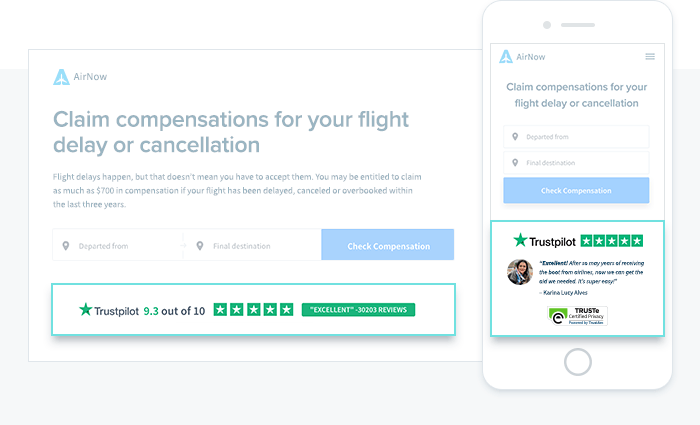
Building trust is key to reducing friction and reassuring customers. Surfacing positive customer testimonials in the right context can achieve exactly that.


template

A European airline passenger protection company served hesitant site visitors homepage banners featuring positive customer testimonials. 

Don’t forget to test!

Leveraging social proof marketing remains one of the most effective ways to ease the minds of apprehensive customers and successfully influence purchasing decisions. In a reality where presenting a perfect value proposition isn’t always enough, grasping the psychology behind consumer decisions is key to increasing conversion rates, add-to-cart rates and ultimately driving sales.

When it comes to introducing social proofing tactics into your marketing, be sure to A/B test your ideas as you implement them to find the variations that make the most sense for your audience segments. Ongoing optimization can make all the difference when persuading visitors using the power of social proof.

Mastercard is not affiliated with the research cites in these sources
1.    Sung, Eunsuk, Chung, Won Young and Daeho Lee. Humanities and Social Sciences Communications. “Factors that affect consumer trust in product quality: a focus on online reviews and shopping platforms,” November 2023.

Contact sales

Talk to an expert to learn how Mastercard can enhance your business through our products and services.

Mastercard