We caught up with Elkjop to learn why customer-centricity has become the heart of experience creation at the organization — and how focusing on real-time context and user preferences has supercharged its ability to create highly engaging experiences, boost conversions and gain a competitive edge.
Home to 400+ brick and mortar stores and over 25% of the consumer electronics market share in the Nordics, Elkjop has become a household name in northern Europe. Relevancy is top of mind for the retailer, and to properly deliver experiences that would resonate with its customers, the business turned to personalization to serve more tailored product recommendations and refine its search results.
With a massive product catalog, the European giant has traditionally functioned under a product-centric model. But to continue building off its existing market dominance, Elkjop understood the importance of layering its customers’ needs into its operations. This would allow them to:
We caught up with Elkjop to learn more about her organization’s digital transformation, how the company has prioritized its optimization efforts and the unique challenges — and successes — the organization has encountered along the way.
Early on in its journey into e-commerce, Elkjop recognized the importance of the search function. As a result, after partnering with FACT-Finder, the brand decided to start displaying relevant suggestions and thumbnail images in the search field dropdown, helping customers quickly and efficiently navigate to their desired products.
Additionally, Elkjop strategically ranks products on results pages to display items that are contextually relevant to its users’ preferences. These results are optimized automatically in real time using the business’s AI-driven site search solution, which boosts items with the highest click-through rate (CTR) the next time someone searches for the same phrase.
These search optimizations have been especially helpful as the seasons change and have helped Elkjop account for words that have different meanings depending on context.
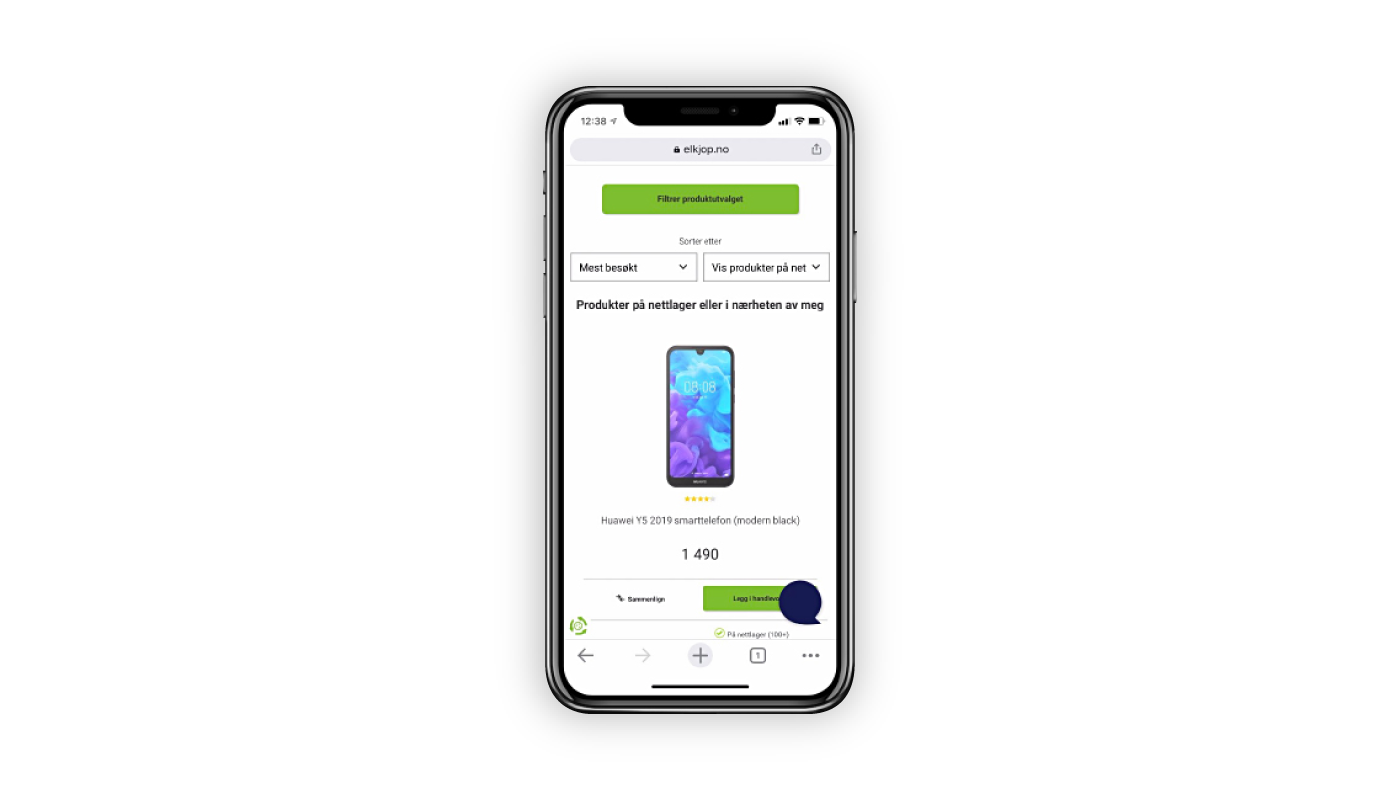
After assessing online purchasing patterns and trends, Elkjop found that users who use filters are 10% more likely to convert. With this knowledge in hand, the team knew it was time to focus on filtering, especially on mobile. They began adding the most-used filters from each of the brand’s product categories to the top of the product results page. And to make the experience more visually appealing, they displayed images alongside each filter to represent the product category.
Change takes time though. Even with the smallest, subtle changes to the filtering experience, Elkjop’s team witnessed more engagement and less drop-off, which exposed a new learning: filters can have a major impact on the discovery experience for the brand’s site visitors.
Filter menu visible atop product pages on mobile
A mobile-friendly site can make-or-break a business, and Elkjop identified this as an area it needed to invest in. Historically, the retailer’s navigation wasn’t very intuitive, especially on mobile devices, and the business’s team believed optimizing the organization's navigation experience would result in an uptick in sales across their digital channels.
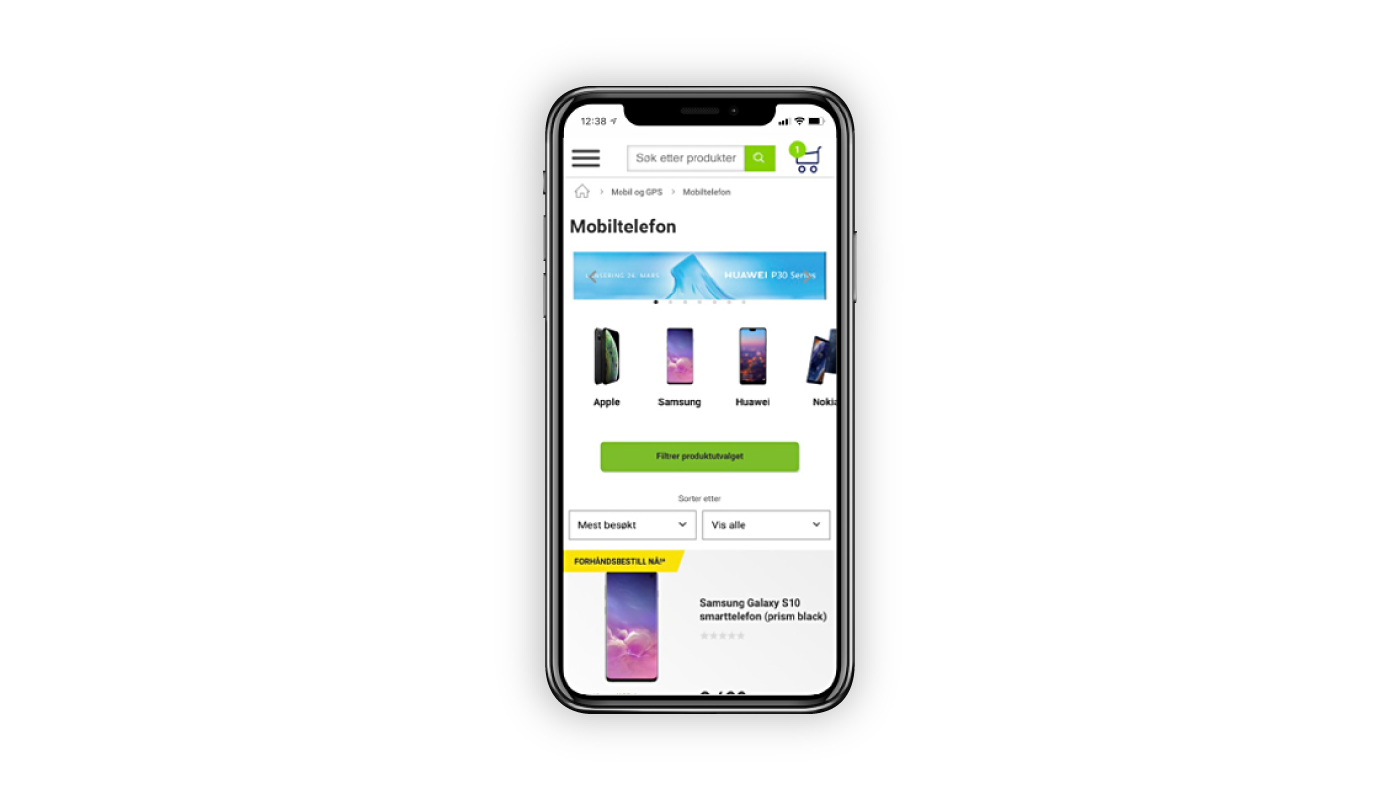
They could go macro, tailoring the navigation to a larger segment of users, or micro, according to shoppers’ unique preferences and aspirations. Preferring the more granular approach and with data-driven insights in hand, Elkjop was able to better understand its customers’ shopping preferences and start pushing preferred categories to the top of the site navigation menu, making for a simpler, quicker and more intuitive product discovery process overall.
Featured product categories listed atop product listing pages help guide users’ navigation experience
With its eyes set on increasing conversion rates, Elkjop focused more intently on both bolstering discovery and better catering to customers’ wants and needs. This created a strong case for more tailored product recommendations.
Its main objective with personalized recommendations was to ease the path to purchase, which is why the retailer expanded the range of its widgets across the entire site. Doing so resulted in successfully setting 16 different strategies, such as recently viewed and interest-based recommendations, live on several pages, including:
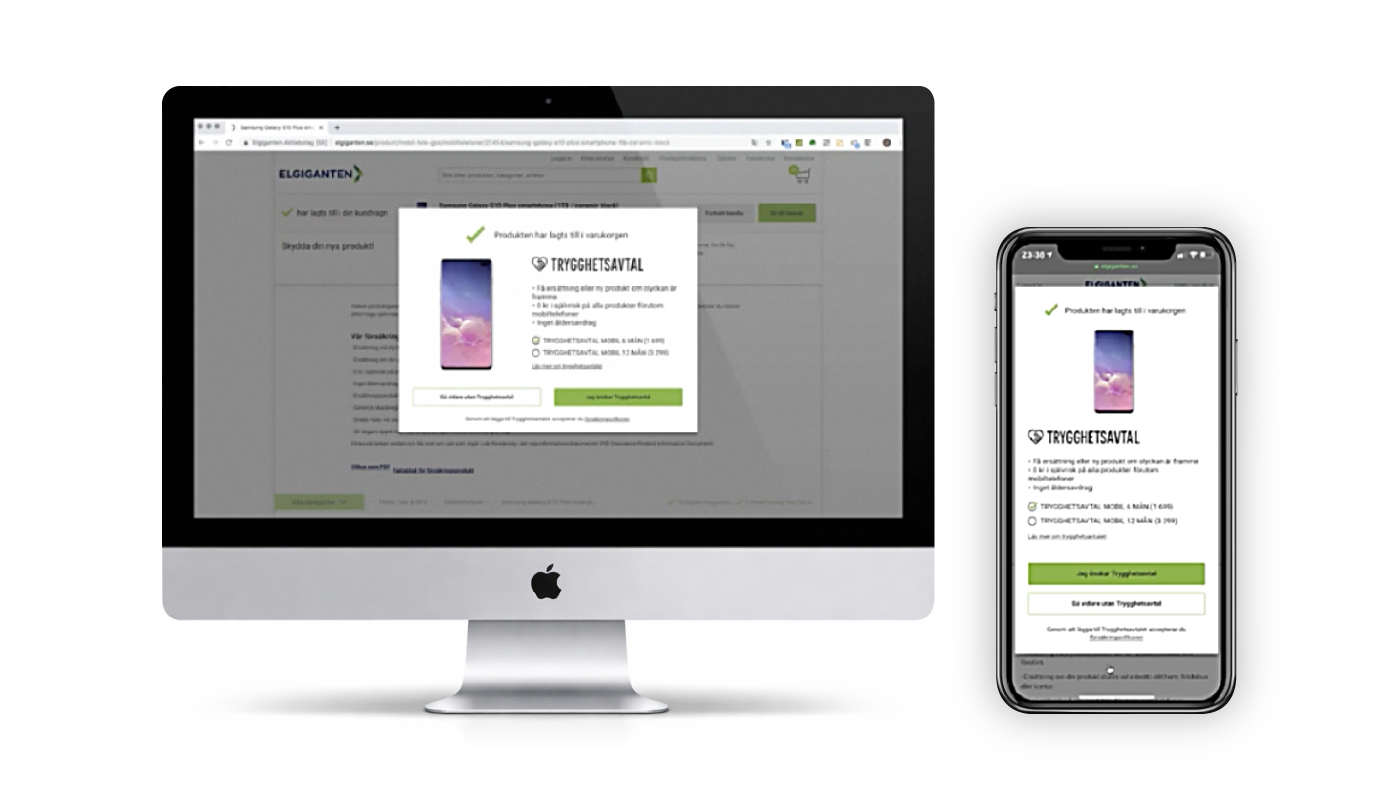
As it did with filters, Elkjop began engaging users in small, incremental ways, e.g., using pop-ups featuring product recommendations. Assessing the impact of these changes helps better tailor these interactions and present more relevant products. For example, when a user added a new mobile device to their cart, the team began recommending device insurance plans. Analyzing the performance of minor site and UI changes was also a major game-changer, helping the company determine which changes yielded positive or negative customer sentiment. This information helped inform which changes or optimizations the e-commerce team decided to make going forward.
Example of a product recommendation overlay widget featuring insurance plans, which resulted in a 362% increase in insurance plan conversions
Elkjop is a perfect example of the benefits of taking a customer-centric approach to marketing. By focusing on its customers and their unique motivations and interests, the company has been able to create highly engaging digital experiences and gain a competitive edge. The organization’s recent digital transformation has also enabled the business to connect online and offline experiences, helping to build loyalty and drive conversions. And now that the retailer has put a sustainable, scalable personalization program in place, its team will continue championing the importance of tailoring experiences and continue witnessing positive, long-term success.