Lesson

Strategizing for omnichannel personalization at scale 

Important considerations and high-impact use cases for marketers incorporating various channels and touchpoints within their personalization strategy. 

Shana Pilewski profile photo

Shana Pilewski

Vice President,

B2B Marketing ,

Mastercard

Once the main vehicle for how brands connected with visitors online, these days, the website is just one of many channels used to nurture relationships and influence purchase decisions. From email to mobile app, call centers, digital kiosks and more, brands are discovering the key to acquiring and maintaining customers requires delivering a tailored experience, regardless of whether they are interacting on-site or off. 

In this blog post, we’ll outline some important considerations when it comes to incorporating various channels and touchpoints within your personalization strategy as well as highlight some high-impact use cases for each. 


Establishment of a cohesive dataset 

Much like how proper website personalization relies on a complete, 360-degree understanding of the customer, so too does experience optimization across channels. It is, therefore, incredibly important that vital information — such as real-time context on-site, online and offline conversion history, geography, interests, cross-device activity or any other insights acquired about a visitor — is able to flow freely throughout your marketing stack to maintain consistency and relevancy in experiences from one channel to the next. 

However, the more systems of engagement (SoE) employed to handle various areas of your customer experience, the greater the likelihood you will face issues with fragmentation of data insights. Built to integrate, consolidate and unify data insights from any available source, an omnichannel personalization platform is recommended to achieve this level of cohesion. 


The shift to APIs 

As more channels are added to the customer journey, Product & Engineering teams must now work in tandem with Marketing to build experiences that will engage audiences in new and meaningful ways. To do this with a greater degree of flexibility and control, many are turning to Application Programming Interfaces (APIs), allowing them to embed personalization and user-level data insights into: 

  • Mobile apps 
  • Digital displays 
  • Interactive screens 
  • Clienteling apps 
  • Point-of-sale (POS) 
  • Call centers 

Though much more involved, implementation via the server-side approach comes with many advantages over the traditional client-side approach, offering full visibility into all relevant aspects of a user’s online experience, including the ways they engage online, the messaging they have been exposed to in each channel (certain test variations or recommendation strategies, etc.), as well as how they respond to it. And as decisioning happens centrally, it is much easier for teams to orchestrate all their apps — be it web, native, hybrid or whatever the next trend is. Lastly, it simplifies linking between the various channels and devices, executing based on a customer’s wants and needs. 


Identify strategic areas of opportunity 

Before attempting to get in front of customers in as many places as possible, you should carefully balance the need to optimize existing traditional digital channels and those that are considered emerging. For even though expectations are constantly rising, this pressure to be everywhere can often have adverse effects on the overall customer experience, especially if teams don’t have a clear understanding of how business value can be derived from a specific channel.

Like with any test idea, you can vet channels and touchpoints to experiment with using the same tried-and-true personalization framework, identifying strategic opportunities within your data insights to inform decision-making.

Ask yourself:

  • Who are my buyers?
  • What are my high-value acquisition channels?
  • Which customers exhibit strong lifetime value?
  • Where are customers dropping off in the purchase funnel?
  • What are each customer’s preferred devices and channels to be engaged on?
  • What utility can I provide current customers to increase loyalty?

Once you’ve gleaned enough insights, you can better prioritize which channels to incorporate within your testing roadmap, even factoring in room to play around with digital touchpoints outside of your current marketing ecosystem.
 

Cross-channel personalization use cases 

Now that you know which channels you’d like to scale your efforts to, it’s time to determine the types of use cases you can implement to maximize your impact. Below, find a few personalization examples of how leading brands are delivering tailored experiences across a variety of channels and touchpoints.
 

Tailor email content based on key events 

When compared to other channels such as social media, display ads and video marketing, email still packs a punch. For every $1 companies spend on email marketing, the majority receive $10-$36 in return.1 Yet despite the high ROI from email, there is often a disconnect between what happens on-site and in the inbox.

To close the gap and ensure high engagement, you can test sending emails with personalized content and recommendations or trigger automated emails based on important lifecycle events.

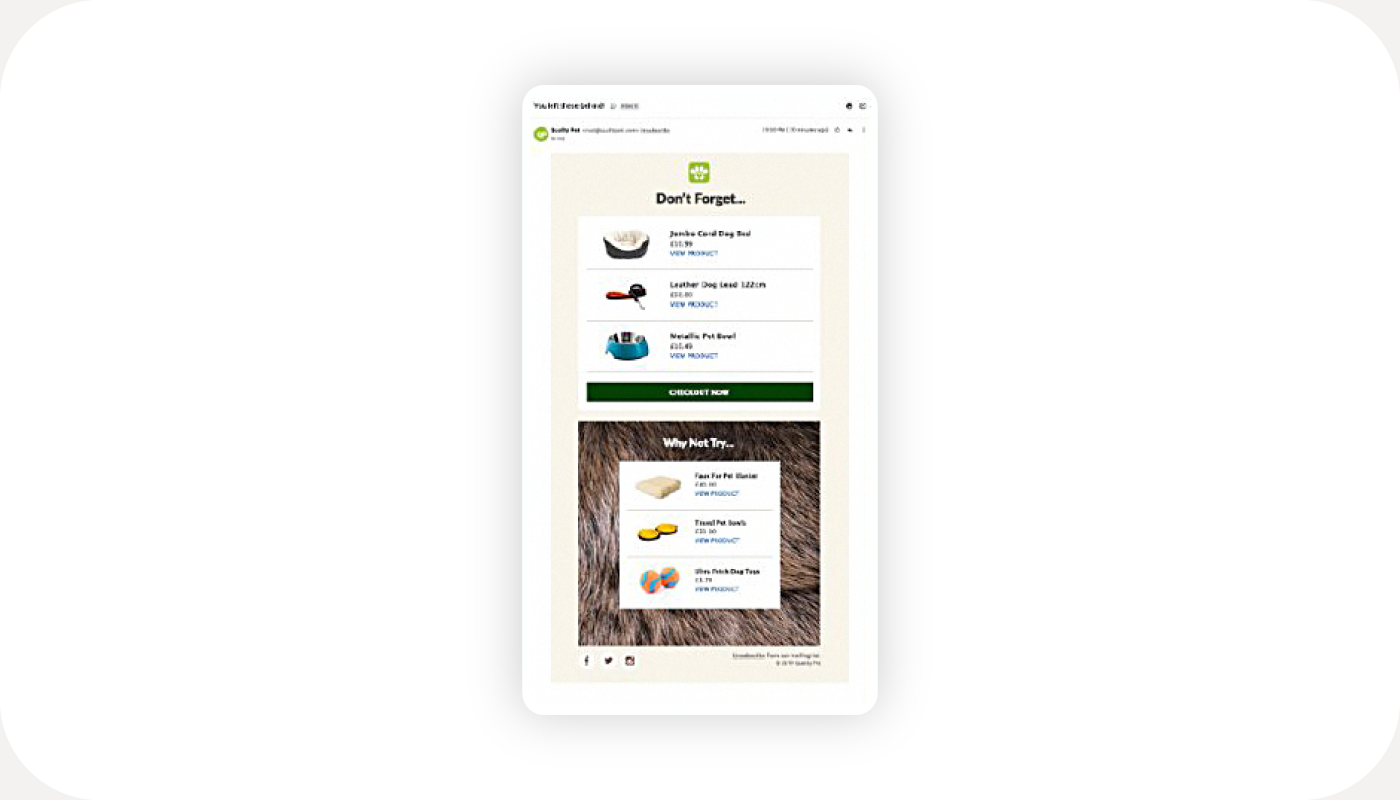
For example, if a visitor leaves the site with items in their cart, use the chance to remind them of what has been left behind and offer promotional deals to help close the conversion loop.

An example from an online grocery retailer on how to recapture cart abandoners using triggered emails with personalized recommendations that remind visitors about items in their basket. Learn more about sending time-based cart abandonment emails with recommendations.


Optimize retargeting campaigns on paid media 

Amid intense competition for ad space, costs increase, meaning brands must be more discerning about whom they advertise to. Without accurate audience data insights, ad campaigns can quickly become “spray and pray” rather than finely tuned to a specific audience segment. But leveraging a unified and up-to-date dataset from which to build experience, you can deliver correctly personalized campaigns for even greater results. 

For example, you could run a campaign based on purchase history to avoid shoppers who already converted, recouping potentially wasted media spend and improving the overall end-user experience.


Recommend personalized items within chatbots 

Chatbot interactions were recently forecasted to generate $290 billion in retail sales in 2025, representing a huge area of opportunity for marketers. 

An excellent tool for providing answers to simple questions, easing the communication process and quickly resolving complaints, while great for streamlining support, chatbots can also be utilized to personalize the customer experience. 

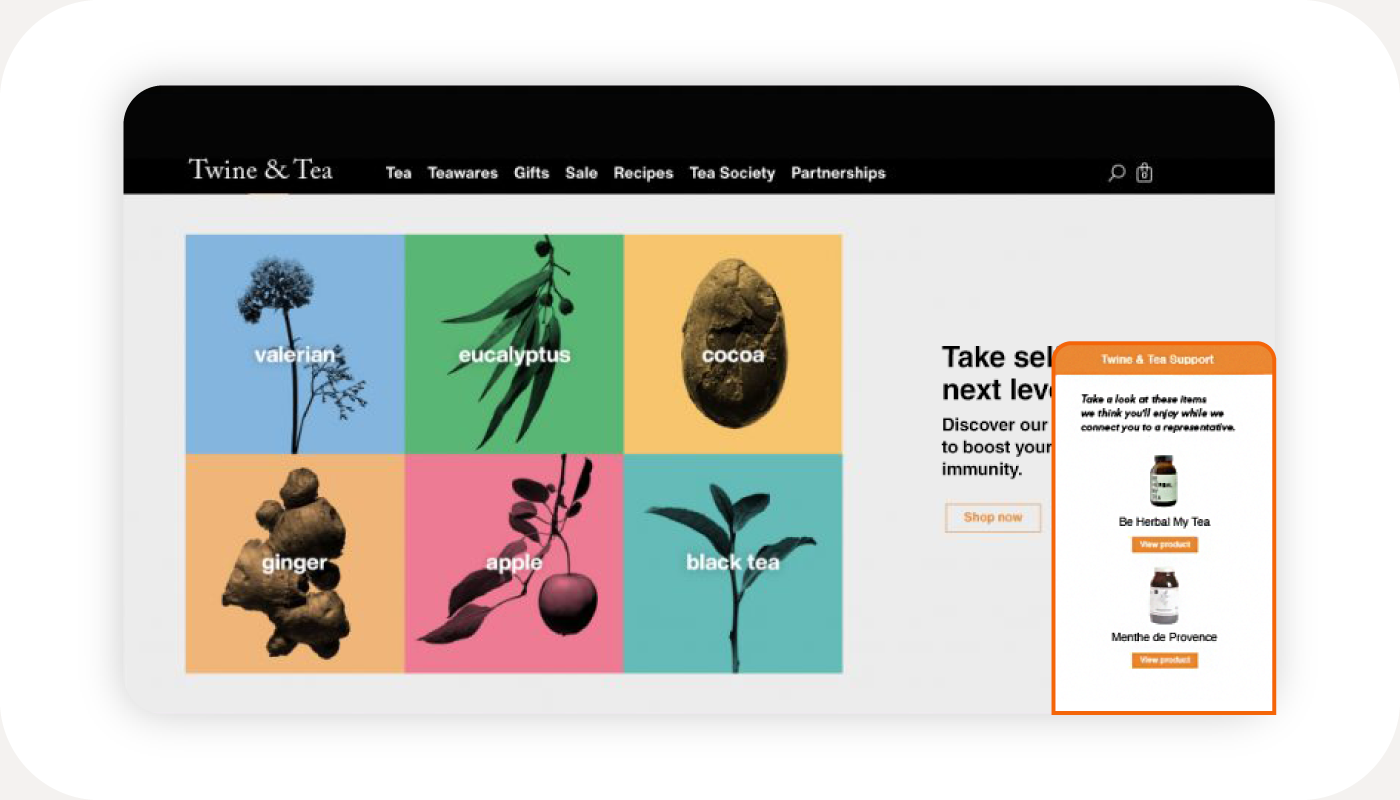
Imagine a customer waiting to be connected to a sales representative. You can capitalize on the valuable time and attention by showcasing additional items of interest from within the chatbot screen based on real-time context and intent.

An example of how a tea and wellness retailer keeps site visitors engaged and recommends products, even as they wait to connect with a Support representative via chatbot.


Tailor call center communications 

While chatbots and self-service solutions continue to grow online, call centers remain a major point of customer interaction for brands across industries such as financial services, travel and hospitality, media and telecommunications, online retail and others. 

However, many times, customer service representatives lack the critical user information necessary to contextualize inbound phone calls, creating a frustrating support experience. 

Now, let’s consider the impact of understanding a caller’s wants and needs front to back. Using information captured on-site along with their past purchase history, preferences and more, you can better facilitate the shopping journey by tailoring communications and even recommendations to the individual over the phone. 


Dynamically change mobile app elements 

Time spent on mobile has reached 4 hours per day among U.S. adults, making it the most popular media access point2 — and mobile apps make up a substantial share of that usage. 

As mobile app usage climbs, customers are making their preference for navigating the online experience clear, and teams should do their best to employ strategies that provide channel-specific value and are optimized for smaller screens. 

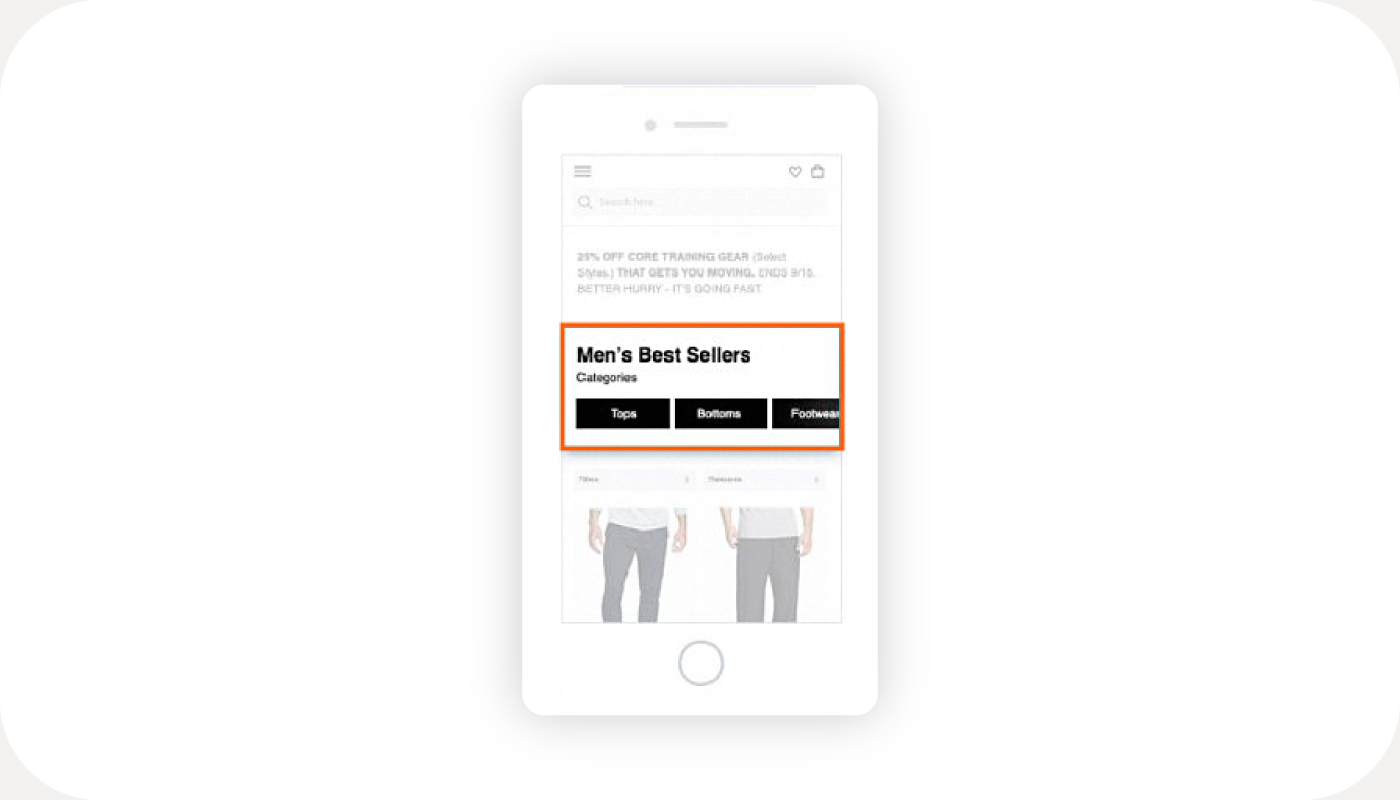
As an example, the process of clicking through category pages and layering in filters can be time-consuming on mobile. So instead of forcing the user to start this work from scratch, personalize the navigation experience, surfacing filters according to users’ unique preferences. 

A real example from a large apparel retailer on how it guides users through decision making using a preference-based strategy to surface the most relevant and personalized filters for each site visitor. Learn more about designing personalized filters based on preferences to ease the navigation experience.


Utilize digital kiosks for product discovery 

More and more retail may be moving online, but customers will always enjoy the benefits brick and mortar provides, which is why online retail giants are prioritizing truly immersive in-store experiences. 

Outside of cashier-less checkout and advanced facial recognition technology, digital kiosks offer a unique, two-way channel of interaction between a brand and its customers, collecting pertinent information about their preferences and needs that can be used to influence the omnichannel retail experience in-store and online. 

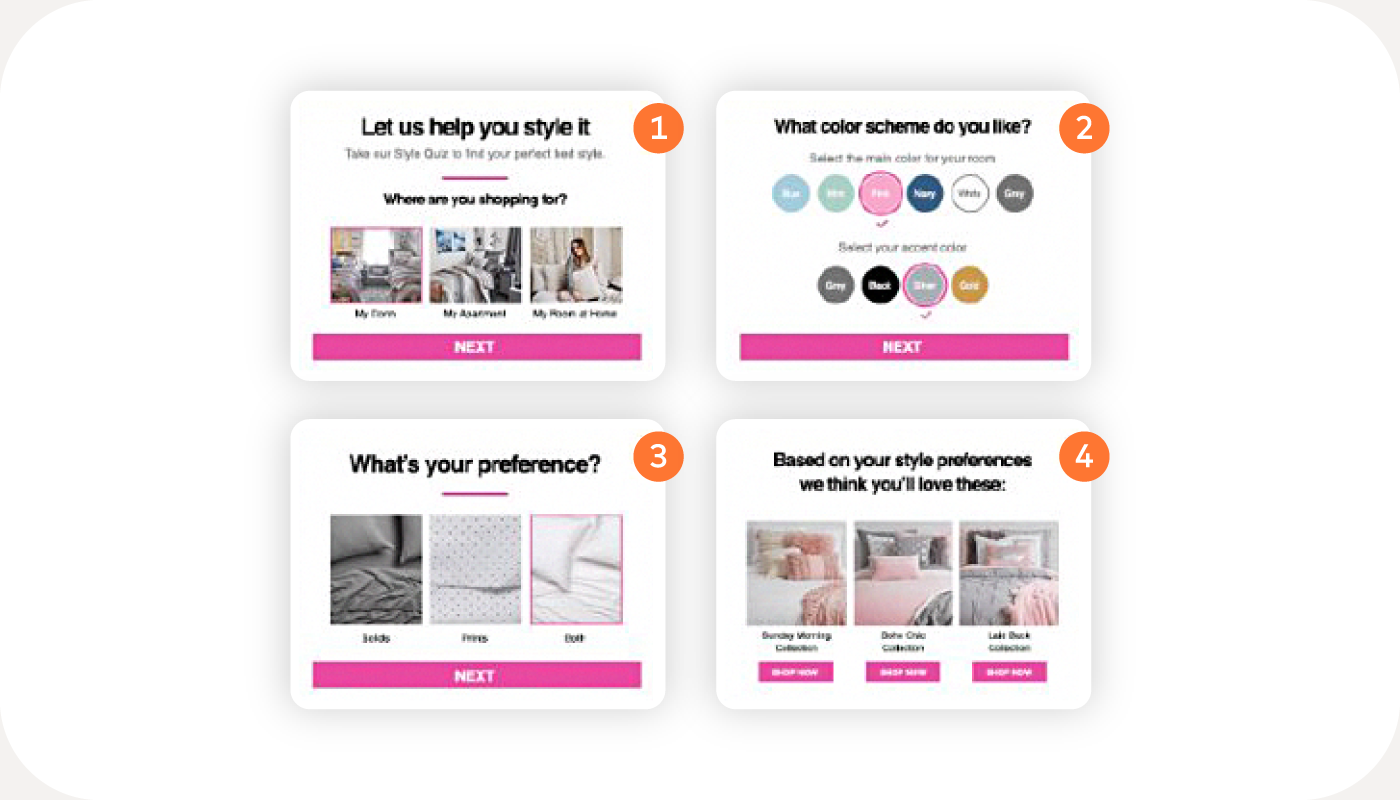
For instance, you can prompt users to complete a guided survey to learn more about the purpose of their visit or any product preferences they may have, highlighting relevant items and even where to find them in the store.

A real example from a home decor retailer that can be adapted via digital kiosk in order to better segment and provide more personalized recommendations. Learn more about serving a guided quiz to better segment visitors and serve more personalized experiences.


There is no one customer journey

If the influx in channels and touchpoints has taught us anything, it’s that there is no one path to purchase anymore, presenting additional opportunities to engage with and influence consumers in a multitude of places. But if teams want to extend the customer experience beyond their existing scope, they’ll need to do some work up front to make sure the data, strategies, and resources are in place to succeed with every new outlet.

Contact sales

Talk to an expert to learn how Mastercard can enhance your business through our products and services.

Mastercard