Lesson

Identifying segments and enhancing relevance for visitors not in your CRM

How businesses can use real-time context to discover the intent and preferences of new visitors in order to personalize experiences that drive action. 

Yaniv Navot profile photo

Yaniv Navot

Senior Vice President, Commercialization,

Consumer Acquisition & Engagement,

Mastercard

Data insights are fundamental to a great customer experience, allowing you to connect with the right audience, using the right message at the right time. And the more  you glean from potential buyers, the more tailored the messaging can be to match the specific needs and interests of your audience.

However, the average website sees 97% to 98% of its traffic from those who have never shared their email address. These could be first-time visitors to your site or even returning visitors who are still not part of your CRM.

Such a large pool of visitors, businesses need to find ways to identify intent and preferences in real time as part of their personalization strategy to drive action with these users. But while you might think that only 2% of your audience is identifiable, in reality, it doesn’t necessarily mean that you know nothing about the remaining 98%, or that you can’t get more personal with them.

Through various techniques like cookie-matching, analysis of browsing patterns, reverse IP identification, data insight onboarding and context-based segmentation, brands can fill in the blanks and better serve the needs of lesser-known audiences.

(Note that in Europe, under the GDPR guidelines, all of the tactics mentioned below require active consent from each user, otherwise you won’t be allowed to leverage relevant online context and use cookies to run experiments or personalization, measure attribution and so on.)


The known knowns, known unknowns and unknown unknowns

The term “unknown users” makes it sound like you know nothing about those users, hence, the unknown. Sure, their personal information can’t be used for personalization unless explicitly provided you, but if other ample, actionable data insights exist, can you truly consider them to be completely unknown?

I would argue that within this bucket we refer to as “unknown users,” therein lies an audience that can be considered known unknowns. These are folks who haven’t shared a name or email but can still receive personalized experiences based on implicit and contextual insights.

Generally speaking, thisinformation can be sourced from three areas:

  1. Self-reported, such as through web forms, online questionnaires, etc.
  2. Digitally exhausted based on site engagement patterns, geo-location, etc.
  3. Discerned through third-party sources, cookie-matching technologies, etc.

A browser’s local storage and document object model (DOM) events can be used to register event handlers or listeners and better understand online customer behavior trends. Cookies are commonly used to understand customers’ browsing histories. Reverse IP technology can be used to glean additional context from a visitor, and there are even ways of understanding user browsing patterns without cookies at all.

Context and intent can be unmasked by collecting, aggregating and analyzing insights from multiple sources, and organizations should learn how to leverage themfor delivering better digital experiences.


Sharpen audience segments for contextual marketing

Insights gathered from unknown visitors can be used to drive contextualized marketing messages. And as time goes on, you learn more and more about them via their site engagement patterns, the frequency of visits and what they are interested in, etc. These hundreds of micro-actions should be used to get a clearer picture of your audiences, as well as learn about intent and personal preferences.

To effectively use unknown visitor information for web personalization, there are three key requirements that must be met:

  1. Comprehensiveness – Data insights should be comprehensive and high-quality, collected based on interactions across as many touchpoints as possible.
  2. Unification – Sources of insights through multiple channels should be unified and centralized, rather than siloed.
  3. Actionability – The platform should allow you to use all available data insights in real time to influence segmentation and messaging.

As you gather more data insights over the course of multiple visits and actions, you can facilitate more relevant and timely personalization. Over time, by connecting, matching and syncing the online context outlined above to visitor IDs, that large bucket of “unknown unknowns” becomes smaller and smaller.


Let’s dive in with some examples

Personalization based on third-party data insights

First impressions with a website can make or break potentially lucrative relationships. Providing a welcoming experienced based on context can make a huge difference to unknown visitors. 

For example, you can use anonymous third-party audience insights  to tailor the messaging for first-time visitors. With a taxonomy list of thousands of demographic, psychographic and intent-based segments, you can create custom segmentation combinations to match your business objectives. 

If you’re in the media industry, you can serve more subscription ads to people who were recognized as known readers of magazines or subscribers to leading national and regional publications.  

If you’re in the retail business, you can even leverage these audiences to identify people who are regularly Black Friday and Cyber Monday shoppers. You can add another layer of segmentation and tailor your messaging based on gender, age group, household income and more. 

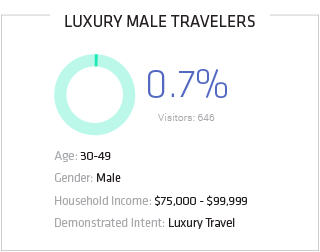
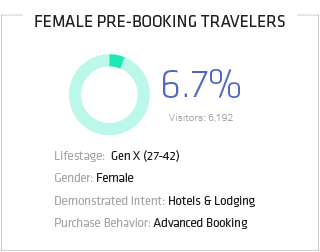
If you’re in the travel industry, you can use these data insights to identify visitors who have demonstrated an interest in booking air travel, hotels, car rentals, cruises and vacation packages in the last 21 or more days, and become more aggressive with your messaging — because you know about their high intent. 

Here’s another demonstration of segments that can be highly valuable to travel sites:

Identifying segments example

With around 8,000 available segments, you’ll surely find valuable information for segment building.  

B2B sites can partner with companies to leverage IP addresscapabilities for analyzing unknown traffic using a variety of sources. 

Normally, these companies automatically identify and push dozens of company attributes into your analytics tool, allowing you to filter website metrics by audience classification, industry, company name, revenue, number of employees, etc. 

By onboarding these data insights into your personalization platform, you’ll be able to segment your anonymous users based on all of these attributes for deeper personalization and A/B testing campaigns. 

Personalization based on browsing patterns and context 

As mentioned earlier, context can be derived from things like user location, local weather, traffic source, device being used, etc. 

As an example, for some organizations, weather plays a vital role in shaping highly relevant avenues for influencing decision making and increasing conversions. 

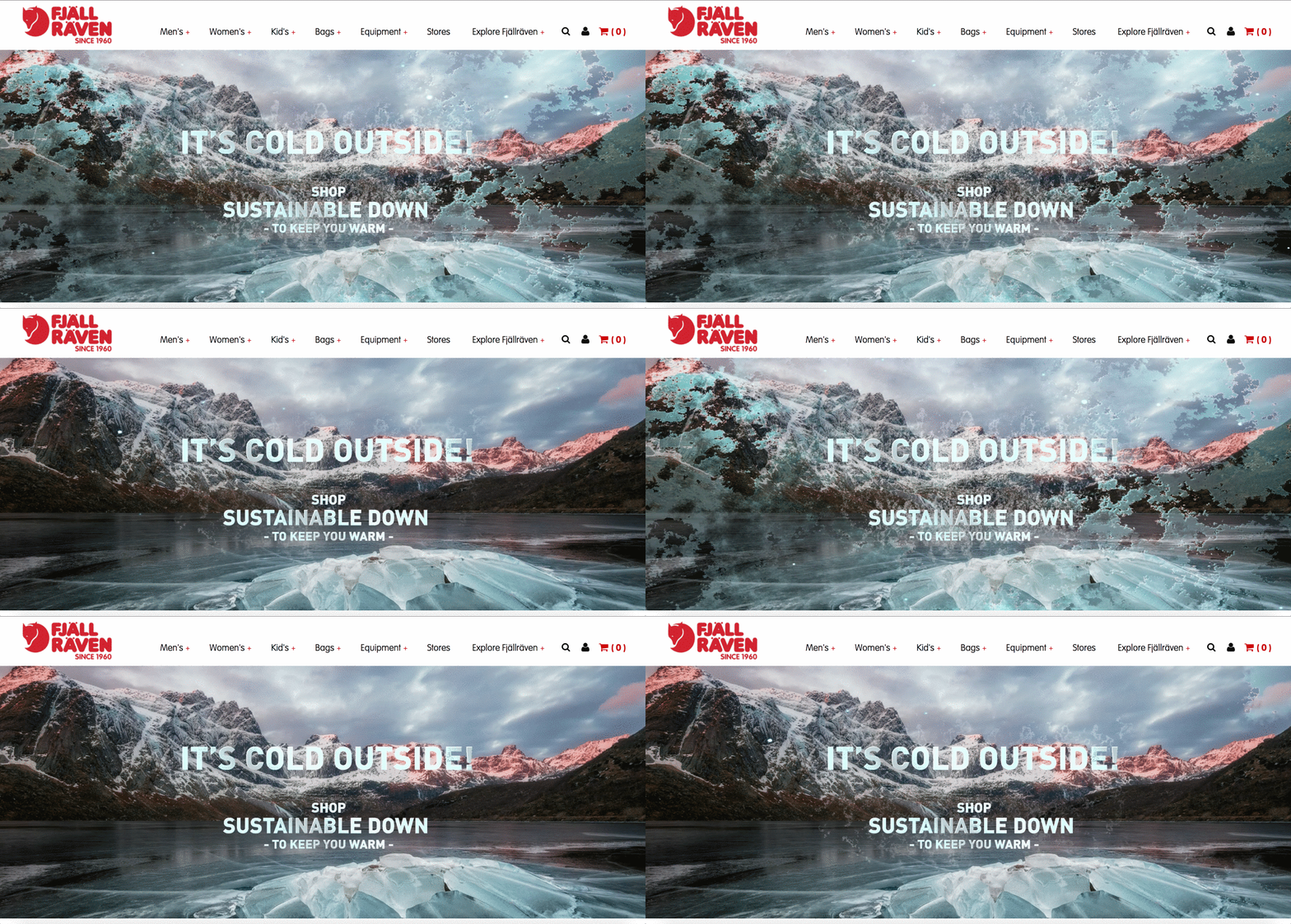
Clothing retailers can segment users according to geo-location and run multi-channel campaigns according to local weather conditions. If it’s cold outside in a user’s location, the brand can direct them to a landing page or banner promoting cold-weather gear, apparel and accessories. 

In addition, brands can create and run weather-specific campaigns that dynamically adapt messaging to fit certain conditions (e.g. if it’s rainy, if temperatures drop below 55°F and so on). 

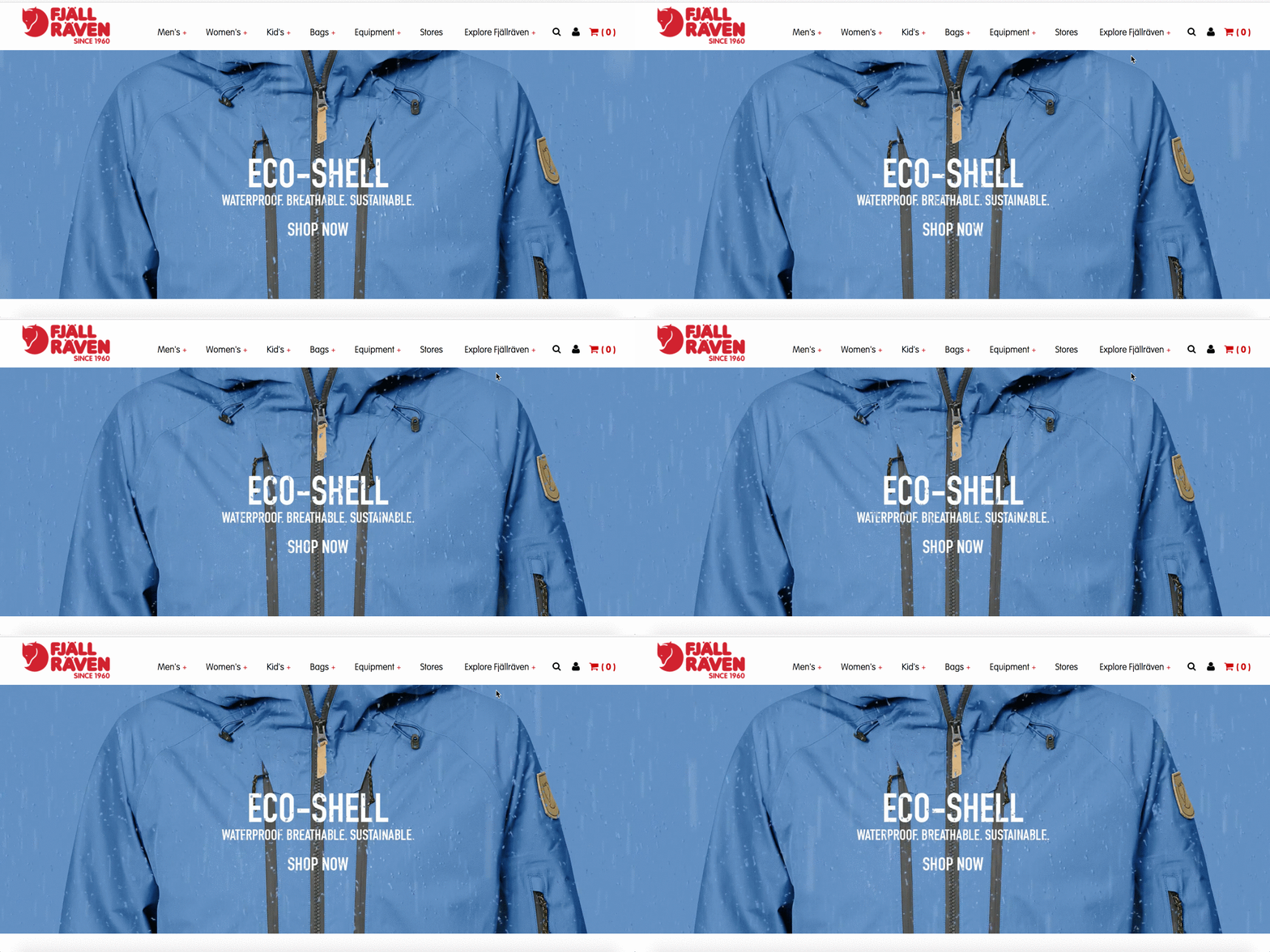
Many of our retail customers have been using this strategy to increase conversions, one of them being Fjällräven, the Swedish outdoor gear giant. They served multiple video-based Homepage hero banners for every type of weather condition, with multiple variations per each weather condition which is continuously being optimized all year round. 

This single use case resulted in 79% uplift in CTR vs. that of a non-weather-based static banner: 

Identifying segments example

You can use much more than weather and location for personalizing your hero-banner, customizing the hero banner according to browsing and purchase history or product affinity. For visitors with a demonstrated history of browsing or buying women’s shoes, you can opt to automatically present relevant content as soon as they land on the homepage.

Regardless of the page your new visitors land on, they need to orient themselves and determine whether you offer items of interest to them. 

A rotating hero banner showcasing your top four distinct categories, along with global best seller product recommendations presented above the fold should set the stage and give your visitors the vote of confidence to proceed with browsing.

Any click on a category will immediately disclose the main area of the site in which they are most interested.


In summary

Don’t neglect large portions of your users if you don’t have to — and you don’t. The fact that a visitor isn’t in your CRM doesn’t necessarily mean you have fewer data insights about them to work with. 

In all actuality, unknown visitors are leaving constant clues for you to pick up on their trail, and serving the same experience to them presents a huge, missed opportunity in the face of potentially delighting them. 

Contact sales

Talk to an expert to learn how Mastercard can enhance your business through our products and services.

Mastercard