How QSRs can capitalize on their most promising channel with cutting-edge personalization.
Published: September 14, 2023 | Updated: June 26, 2026
Mobile ordering became table stakes for fast casual restaurants during the pandemic, providing greater convenience while also increasing operational efficiency. And adoption on the part of both businesses and customers continues to grow, with 40% of restaurant brands saying first-party digital ordering will drive the highest revenue growth in 2025.1Coupled with the fact that many mobile app users are loyal members who have willingly provided some personal information and most (if not all) are at least known customers with an attached purchase history, the channel presents a special opportunity for QSRs to greatly improve experiences for some of their most engaged customers through personalization.
In this article, we’ll take a deeper look at some of those unique opportunities for mobile app personalization and how QSRs can capitalize on them to not only significantly increase conversion rates, average check size and incremental revenue but also foster greater loyalty.
From the moment a user opens the app until an order is placed, delivered or picked up, QSRs can individualize each step of the process in a few major ways through:
Now let’s explore each area further.
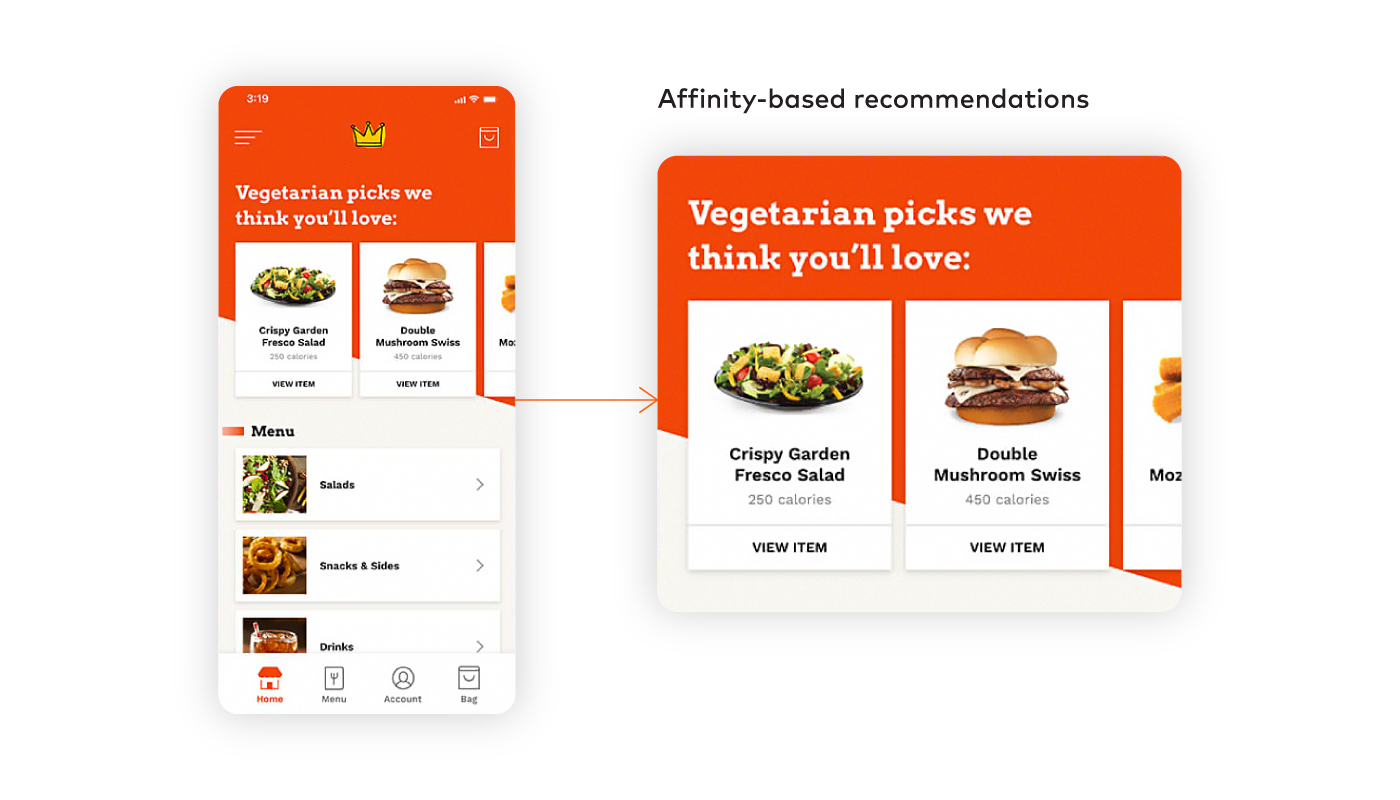
Product recommendations are one of the best tools to reduce exit rates, drive discovery and increase monetization for every app user. These campaigns can be embedded across the entire order flow and in various locations on the mobile app, including:
For registered users, recommendations can take data-driven insights into account, such as cross-channel purchase history (such as drive-thru, web and kiosk purchases), loyalty program information as well as any dietary restrictions or preferences. The end result being recommendation campaigns that strategically highlight the last meal a customer has ordered, meals that qualify for a loyalty reward or meals that fit their dietary preferences.
Real-time context, such as restaurant location (either selected by the user or based on geodata), weather, product popularity, current inventory and time of day, can then be used to further augment these experiences. For example, QSRs can use it to highlight trending or limited-time items, remove out-of-stock or unavailable items or showcase seasonal recommendations, like hot beverages on a cold day.
Recommendation campaigns don’t have to be limited to products, either. Since mobile apps are usually at the core of the QSR loyalty program, special offers and coupon experiences can be tailored to users as well. These can include store-level promotions or those personalized for loyal members to drive higher engagement and increase revenue.
Serving a single, static menu is a thing of the past, especially given each restaurant has its own unique inventory, promotions, pricing, types of patrons and more. This is why real-time menu personalization across selling channels, including mobile applications, is so important to QSRs.
On top of your guests having their own needs and preferences, here are a few other factors that necessitate different menu experiences:
The goal is to reduce friction throughout the ordering process and guest experience, which can be further streamlined for existing customers by implementing “Click & Collect” or “Or It Again” experiences. This would provide them with the option to quickly reorder their last order, with personalized recommendations supplemented to promote new products and increase check size.
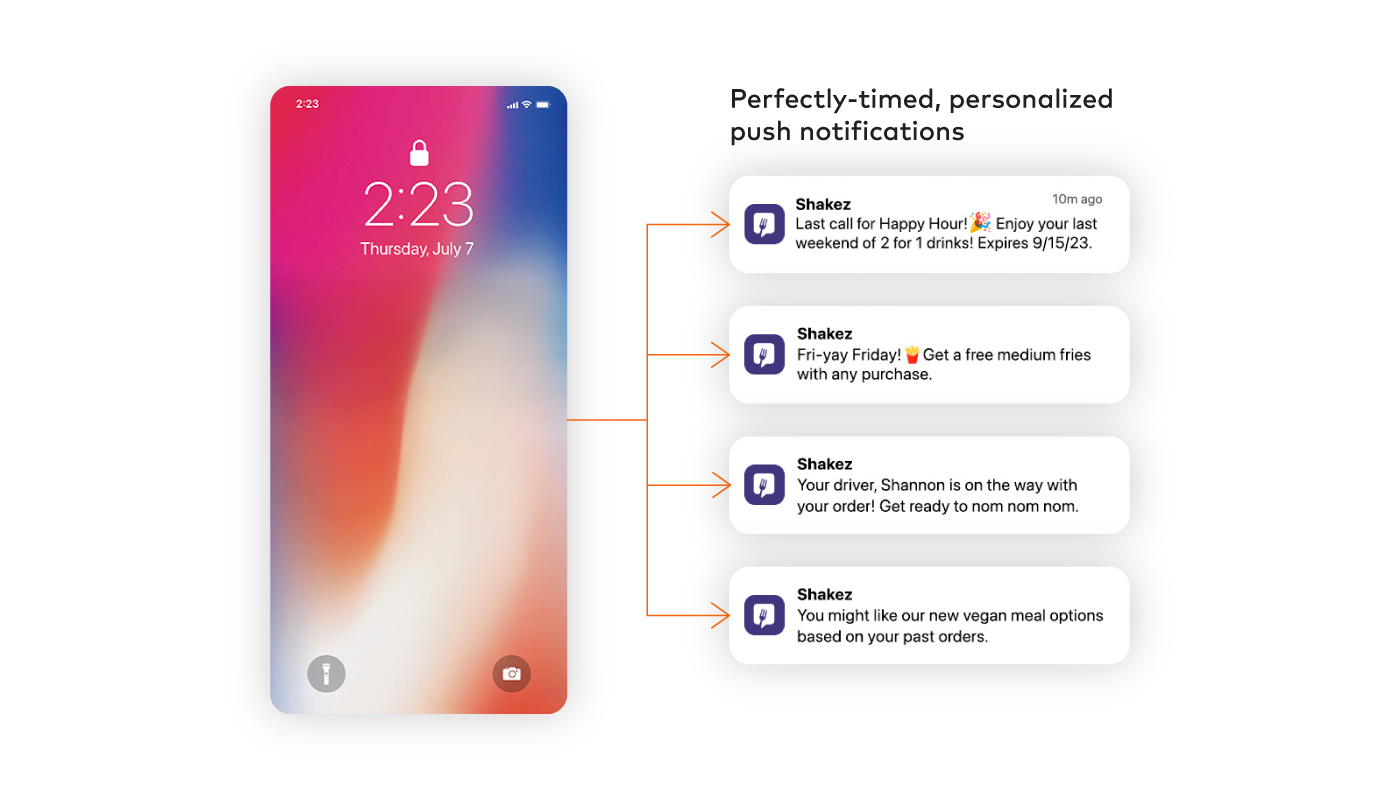
Mobile apps present QSRs with the added benefit of being a convenient, consistent channel to send notifications and proactively engage with customers in a way that is personalized and relevant across your customer base.
Push notifications are especially helpful for QSRs looking to convert new mobile app users into loyalty program members. For example, content and messaging designed to promote loyalty program sign-ups can be both A/B tested to determine the best-performing variations overall as well as personalized to different segments based on data insights from the current session, previous interactions and even historical transactions at the store (for both identified and unidentified customers), increasing the likelihood of conversion.
Notifications, either delivered in-app or via push, can also be used to deliver the following tailored messages for different customer-types:
Mobile app personalization can also improve QSR operations through the optimization of order fulfillment workflows. For example, pick-up order preparation can start when the customer gets close to the restaurant (based on mobile geo-location) vs. at the point of order confirmation. This eliminates situations where orders sit on the pick-up shelf for extended periods of time and ensures the highest quality and freshness of food for increased customer satisfaction.
A/B testing is a powerful approach that can be seamlessly executed to ensure the most relevant campaigns are launched for a given audience or KPI, whether they involve product recommendations, dynamic menus or push notifications. Deep learning can also be used to predict the next best series of product recommendations, with the right QSR personalization platform able to train the models to understand and execute against specific nuances onFly found in the restaurant industry. For instance, they understand that take rate says less about business impact than check size.
Mobile apps represent a huge opportunity in QSR, as they provide insight-rich, loyalty deepening experiences that cannot be replicated in-store or via the drive-thru. Teams can gain a competitive advantage by delivering the tailored experiences customers have come to expect across industries. Doing so through personalized product recommendations, dynamic menus and push notifications will not only positively affect order fulfillment workflows and the larger customer experience, but also foster loyalty and increase key business KPIs.
Dynamic Yield is not affiliated with the research cited in these sources.
2025 State of Digital Restaurant Report. QU, 2025. https://www.qubeyond.com/2025-state-of-digital-restaurant-report/.