Article

Black Friday is coming — is your personalization strategy airtight?

Maya Gorlicki, Director of Enablement at Mastercard Dynamic Yield, discusses what makes a personalization strategy successful during Black Friday and major seasonal events, covering online retail and more. 

Published: December 16, 2024

JR Moore profile photo

JR Moore

Marketing Analyst,

Mastercard

Maya Gorlicki profile photo

Maya Gorlicki

Director of Enablement,

Mastercard

Indian woman looking at clothing during black friday

Here’s what you need to know:

  • Marketers should identify top-performing channels and personalization tactics using Black Friday data insights from the prior year, focusing on KPIs like session time, page views and spending patterns.

  • Collect zero-party data insights to identify whether visitors are shopping for themselves or others and adapt your personalization strategy accordingly.

  • To avoid piling on during an overwhelming holiday season, brands should craft a channel prioritization strategy and aim to aid customers with helpful experiences like shipping deadlines and price drops.

As a marketer, Black Friday has likely been on your radar for months — and you have countless strategy meetings on your calendar to prove it. But before you get executive-level approval for your plan, we’d like to pass on some valuable insights for gift-giving season. After all, the stakes are high: As recently as 2024, online retailers in the U.S. alone racked up a record $10.8 billion in sales — a figure expected to continue climbing.¹

Few know Black Friday better than Director of Enablement Maya Gorlicki. At Mastercard Dynamic Yield, she has worked alongside countless brands to craft battle-tested personalization strategies for major seasonal events.

Here are her best practices, which readily apply to many industries beyond retail in today’s market:

JR: What should brands pay special attention to during Black Friday? 

Maya: The window for Black Friday seems to be getting wider every year. Some retailers offer early access to sales on certain items, and price drops happen a lot sooner than in prior years. You may want to factor in a longer timeline as you build out your seasonal campaigns.

How can brands use the data-driven insights they gleaned from previous Black Fridays to set a good foundation for their campaigns this year?

Start sleuthing to find where most of your traffic comes from — social media, paid ads, wherever. You’ll gain a sense of your best performing channels and where you come up short. Plan to invest most of your efforts where you are already performing.

You should also examine your personalization campaigns. Identify your top performers from previous years, further refine what worked and experiment where you can improve.

Pay close attention to these KPIs:

  • Average session time: How deeply are customers engaging with your site?

  • Average page views: Are your customers researching or purchasing?

  • Average order value: Are customers responding to any free shipping thresholds or product bundles you’ve created?

  • Purchases per user: Are customers responding to personalized product recommendations and other cross-sell opportunities?

When building out a personalization strategy, we recommend starting with audience segmentation. How do seasonal events like Black Friday affect audience strategy and what tweaks should marketers make to their approach?

To create effective audiences, you need a holistic picture of your customer — and that applies year-round. Put the infrastructure in place now to better understand your customer journey going forward. If you have an offline retail presence, try to bridge in-store and e-commerce experiences. Loyalty programs allow you to make online product recommendations based on in-store purchases and/or you can upload offline CRM data insights into your personalization engine.

During the year, your site visitors typically shop for themselves, but when the holiday season rolls around, they’re often looking for gifts for their friends and family. A personalization approach based on long-term data insights will be less effective for this audience.

That said, there are certain products and big ticket-items like appliances that most purchasers buy for themselves. You can still use your year-round personalization strategy to serve the needs of these returning site visitors.

How do you recommend marketers consider these customer nuances?

Black Friday attracts more site visitors than any other time of the year. Use this as an opportunity to gather as much zero-party data as possible. You can roll out a quiz that asks for preferences upfront and if they’re shopping for someone else. You can also engage customers with a personal AI assistant like Shopping Muse, which initiates a conversation and captures their intent.

Consider sending return visitors an email that asks them to double-check their preferences and note whether they’ll be shopping for someone else this go-around. From there, marketers can personalize offers, content and products accordingly and tailor their campaigns to optimize for the most relevant KPIs.

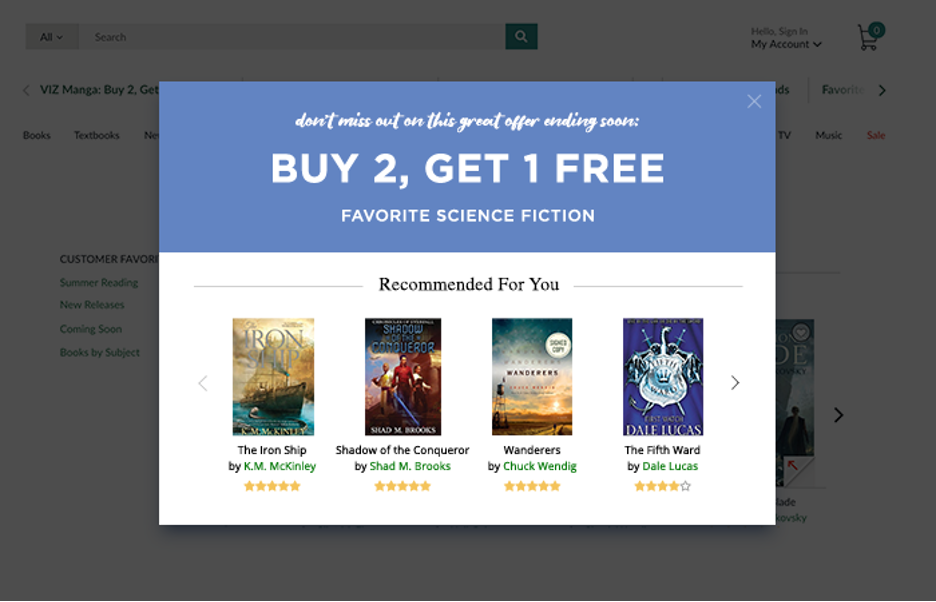
If a site visitor is shopping for someone else this season, you can segment them into a temporary audience that deprioritizes personalized recommendations based on their preferences and focuses more on real-time context instead. Gift shoppers tend to have high bounce and low engagement. One way to keep them on the site is an attention-grabbing overlay with reviews and testimonials when they show exit intent. This can help them feel confident that they’re grabbing the perfect gift and drive them back down the marketing funnel.


Personalization example

A personalized exit popup offering a limited time offer after detecting potential site abandonment.

Knowing that shoppers are likely facing choice overload and getting dozens of emails and texts during peak seasons like Black Friday, what can brands do to reach customers without pushing them away? 

Brands should empathize with their customers: As campaigns and promotions fill up customers’ inboxes and messaging apps, they’ll likely feel overwhelmed. If you send out too many messages across too many channels, customers will unsubscribe. To reduce over-communication, implement a channel prioritization strategy.

How else can customers cut through the noise and make their messages stand out?

Customers feel a greater sense of urgency during the holidays. With a typical personalization strategy, you would gradually move customers toward conversion over time, but a seasonal shopper can traverse the customer journey all in the same day. It’s important to deliver what they want quickly.

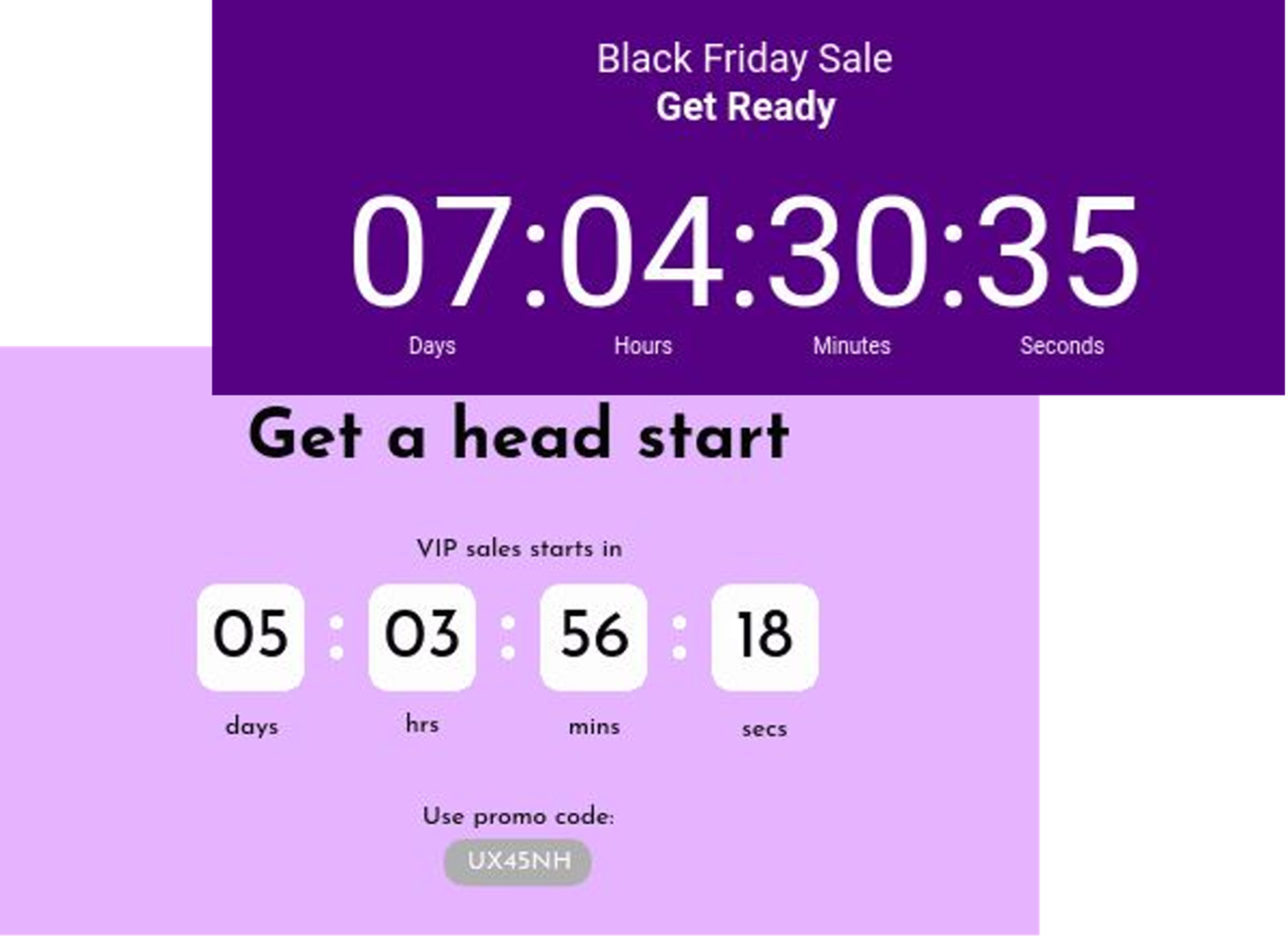
For Black Friday, countdown timers that show the timeline of a sales event can help convert more holiday shoppers, both on your website and in your email campaigns. I’d also recommend using badges with messaging like “best seller” or “most loved” for products that are selling fast. And for those who are on the fence about a certain item, you can send a price drop SMS message or email to build a greater sense of FOMO.

Personalization example

Two countdown timers indicating the start of a Black Friday sale and an early-access VIP Black Friday sale respectively.

During the holidays, one of the best things marketers can do is to generate urgency around shipping. If a customer has abandoned a cart full of products or has been looking at a product recently, brands can trigger an email send that notifies them that a shipping deadline is approaching, and their desired items won’t show up in time if they wait to purchase. If a shipping deadline has already passed, brands can also use geolocation data insights to offer an in-store pickup option. 

What are some takeaways from Black Friday for industries that may not have as much of a seasonal push?

I think the Black Friday approach can still apply for other industries, with a few contextual differences and caveats. Marketers in FI should use this moment to collect as much zero-party data insights as possible, since big holiday spenders are likely to apply for credit cards so they can fund their purchases. Grocery brands can still drive urgency for holiday meals by using product badges to highlight when a particular food item is low in stock or popular. And personalized, triggered emails and texts around price drops could easily slot into a travel company’s personalization strategy — especially as their customers book accommodations for the holidays.


Make the most of the holiday season this year

With Black Friday just around the corner, brands should give their personalization strategy a kick of the tires today. They can start by analyzing data insights from last year’s performance, segmenting gift buyers from repeat customers and catering to customers’ seasonal shopping patterns — be it through personalized shipping offers, countdown timers or timely messaging. Brands who get this right have an opportunity to turn the Black Friday flood of traffic into a steady stream of loyal customers.

Mastercard Dynamic Yield is not affiliated with the research cited in these sources.

[1] Adobe. “2025 Holiday Shopping Trends,” 2025. 

Contact sales

Talk to an expert to learn how Mastercard can enhance your business through our products and services.

Mastercard