Small business

June 3, 2026


How to survive going viral: These small business owners share what they’ve learned

What happens after the views spike, the orders pour in and the chaos begins?

google logo

Houston florist Dana Chehab went viral after she presented a bride with a purse fashoned from flowers, an idea she'd been noodling on for months. The reaction taught her to take more risks, she said: "Be confident in yourself." (Photo credit: Dana Chehab)

Maggie Sieger

Contributor

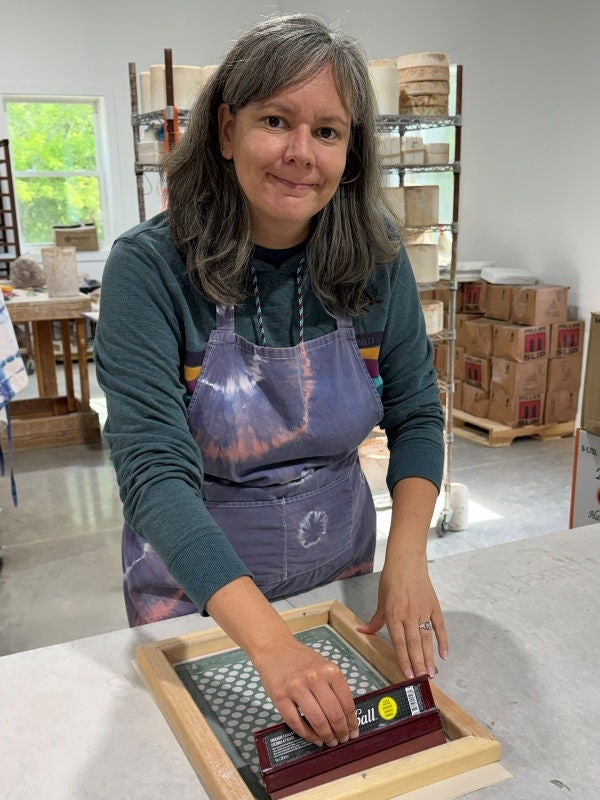
A rough day for potter Heidi Fahrenbacher ended with an anonymous letter chastising her business acumen and her art. Trying to laugh it off, Fahrenbacher posted the letter to a small business memes channel on Instagram and went to bed. She woke up to chaos.

Fahrenbacher’s post had gone viral overnight, and people from as far away as Australia — more than 9,500 miles from her Bella Joy Pottery studio, in Plainwell, Michigan — were snapping up her pots, mugs, vases and anything else they could get their hands on.

“I sold out of everything in a day,” Fahrenbacher says. “I probably could have sold old pots from my garage. It was insane.”

Florist Dana Chehab’s viral moment came in April when she designed a gorgeous purse made entirely of flowers for a bride. Chehab, whose Dana’s Touch shop is in Houston, always gives her brides something extra on their wedding day. The purse and a video of the bride’s reaction received over a million views, then racked up even more after a wedding platform reposted it.


The "purse" bouquet that made Dana Chehab's small business, Dana's Touch, go viral. (Photo credit: Taylor Friedman)


“I kept getting comments and DMs and text messages, my friends were all calling me,” Chehab says. “Millions of people were seeing the videos. It was surreal.”

For both business owners, the two weeks after going viral were overwhelming, exhausting and extremely profitable. Here’s what they learned, as well as a few tips on how to cope (and retain those new customers) if your business goes viral.


Honesty is the best policy

During her pottery studio’s post-viral madness, in 2022, Fahrenbacher was honest with customers about shipping delays and other problems stemming from the unexpected number of orders. “I adjusted the expected shipping times on my website and let people know right away about issues,” she says. “They appreciated the honesty.” She also allowed a customer who received the wrong item in a packing mix-up to keep the piece as a goodwill gesture, sending what they originally ordered without requiring a return.


Michigan potter Heidi Fahrenbacher fielded orders from as far away as Australia when she posted a snippy note from a disgruntled customer on her social media, and support came flooding in. (Photo credit: Heidi Fahrenbacher)


Don’t compromise on quality

Mother’s Day coming just a couple weeks after the wedding was a huge opportunity for Chehab, one the florist wishes she’d been better prepared for. “We were flooded with orders for Mother’s Day, and I ended up panic-buying flowers from wholesalers,” she says of her purchases, which included pricey and somewhat rarer peonies and anthurium. What Chehab didn’t do was load up with cheaper and more easily available flowers like carnations and baby’s breath. She felt it was more important to meet customers’ expectations than to save money.

“I offer flowers that can’t be found in the grocery store,” Chehab says. “So I paid to maintain my standards. I also hired extra people to help deal with the orders.” In the end, the unexpected expenses were worth it. Her sales more than matched them, and many of her new customers have already placed repeat orders.


Be (kind of) prepared

These days, Fahrenbacher keeps a small supply of her unglazed pottery on hand in case one of her designs goes viral, which happened again after the Today show featured her studio in 2023. That cuts down on the usual two-week timeline to produce new pots. And Chehab has learned not to overly fret about ordering too much. She’d over-ordered for Valentine’s Day, making her hesitant in May. That contributed to her Mother’s Day flower shortage. “It was a lesson learned,” Chehab says. “As long as you’re not losing money, it’s going to be OK. Sometimes it’s OK to break even.”


Fahrenbacher keeps a supply of unglazed pottery ready in her studio in case orders suddenly multiply again. (Photo credit: Heidi Fahrenbacher)


Don't be afraid to say no

As a relatively new small business owner, Chehab never wants to say no. But she realized during her viral moment that it can be the best option. “We try our best to make it work, whatever the budget,” she says. “But I learned that I really shouldn’t take every single order, because sometimes it's just not worth my energy.” For example, some budgets simply won’t stretch to include those peonies. Fahrenbacher agrees. There are times you can’t take on more work. “After the letter, people would message me, and I just didn’t have anything left to sell,” she says. “I asked them to join my mailing list, and I would email them when I had more product.” 


Keep posting engaging, authentic content

It can be hard to predict when lightning will strike. Chehab and Fahrenbacher both had social media posts prior to their viral moments that racked up thousands of views without turning into orders. “I think lots of creators and makers, business owners, want to go viral, but sometimes you do and it's crickets,” Fahrenbacher says. “That’s important to point out. You have to keep trying to find something that strikes a chord with people.” 


Roll with it

Both business owners compare going viral to riding a wave, and both advise, “Just go with the flow.”

Chehab wishes she hadn’t stressed out so much and had taken more opportunity to appreciate the nuttiness of it all. “It also taught me to take more risks,” she says. “I thought about making that purse for months but was nervous it would fall apart. Be confident in yourself.”  

If your business goes viral, Fahrenbacher warns, it’s a wild ride. “You’re going to be very tired,” she says. “You’re going to get overstimulated. You’re going to be stretched thin. It’s crazy and unpredictable. But in one day I sold what I’d normally sell in a month. So, yeah, it’s great, too.”

What small businesses need now: Simplicity, AI and resilience

Experts at Mastercard’s Small Business Summit share practical tips for small businesses on AI, cybersecurity, resilience and managing growth in 2026.