Generations

February 25, 2026


Six generations in the sugar bush

In a snow-coated upstate New York forest laced with sap lines, one family shows how entrepreneurship evolves — and endures — across time.

google logo

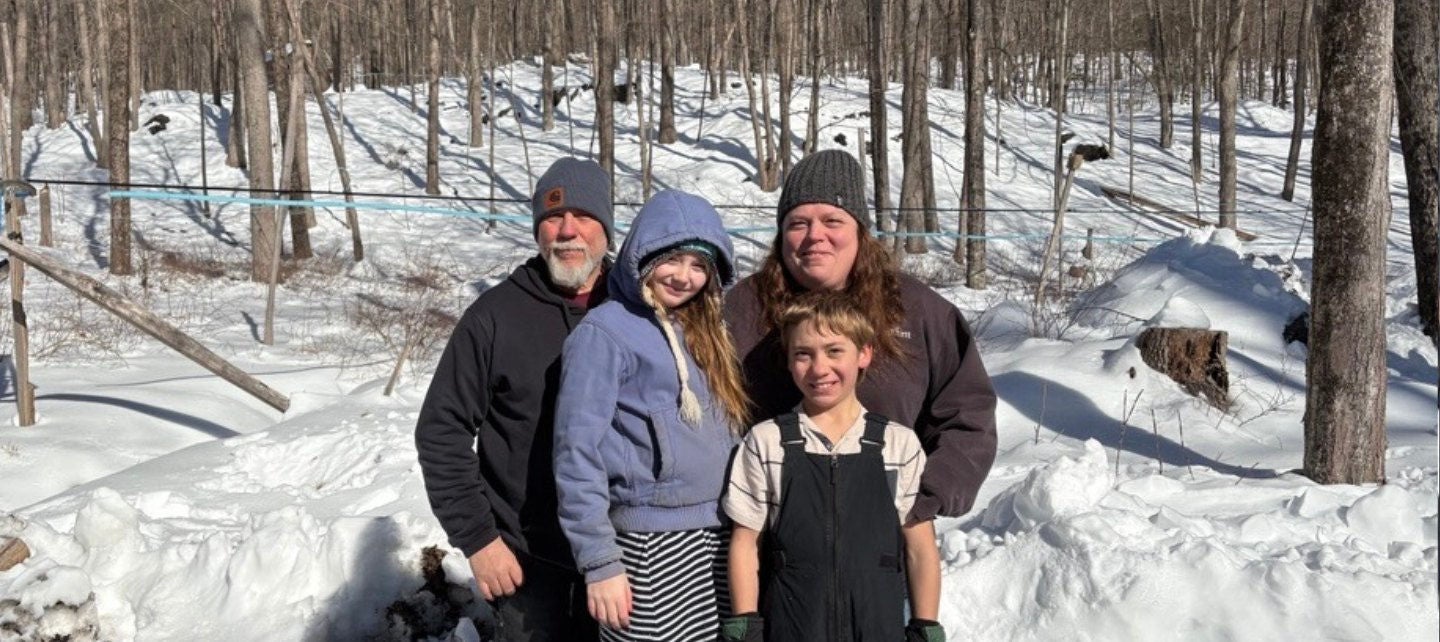
In their upstate New York sugarbush, the Ballard family — dad Trevor, left, mom Kimberly, right, and their two children, Ashley-Morgan and John-Daniel — shows how entrepreneurship,  like maple syrup making, can be passed down, rethought and sustained across generations. (Photo credit: Vicki Hyman)

Vicki Hyman

Director,

Global Communications,

Mastercard

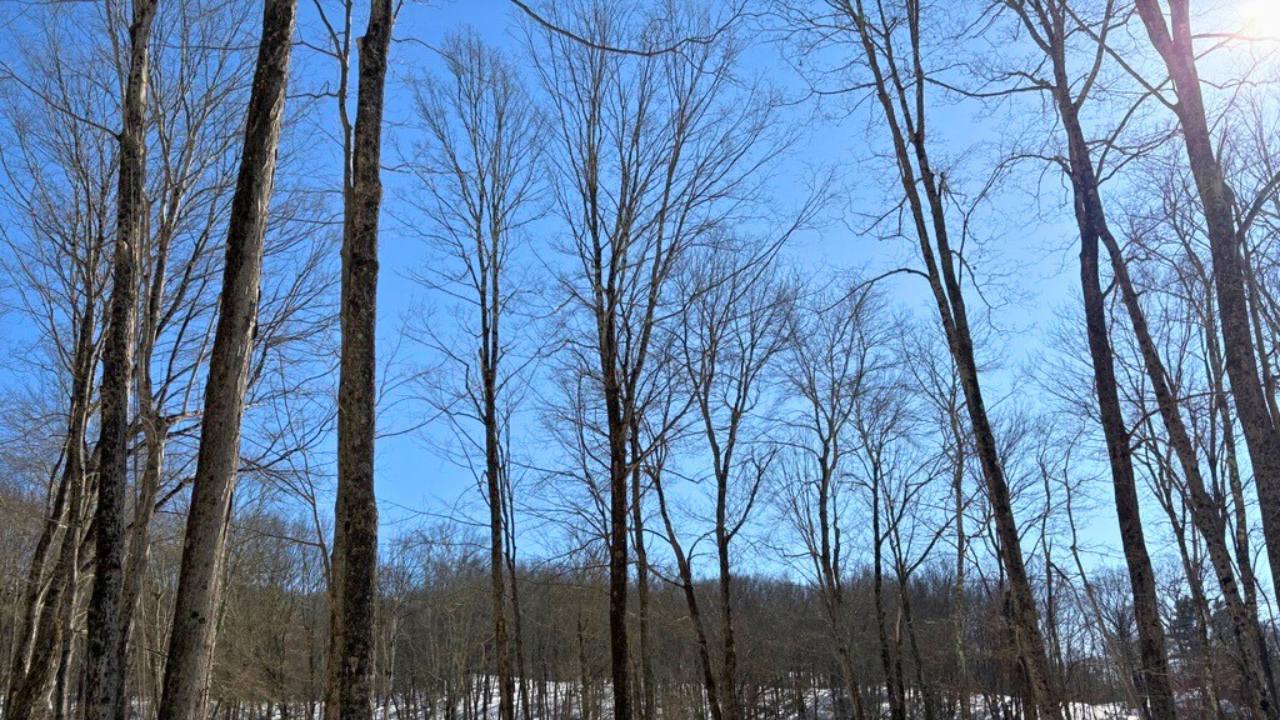
On a hillside in Holmes, New York., bright winter sunlight cuts through a grove of maple trees, where thin blue tubes stretch from one trunk to the next, feeding into a network of thicker black tubing. It’s a carefully choreographed vascular system for the sweet sap that will be pulled from the roots of the trees and carried downhill toward the wooden shack that serves as the heart of the sugar bush.  

Trevor Ballard, wearing snowshoes and a toolbelt overflowing with pruners, tubing, tubing tools and assorted fittings, tramps over the icy ground to greet me. Trevor — along with his wife, Kimberly, and their youngest two children, darting through the trees nearby — are the latest stewards of a maple sugaring business that has passed through six generations of his family.

“I got this bug as a kid,” Trevor says. “Now I’m 52 years old and I still want to do it.”


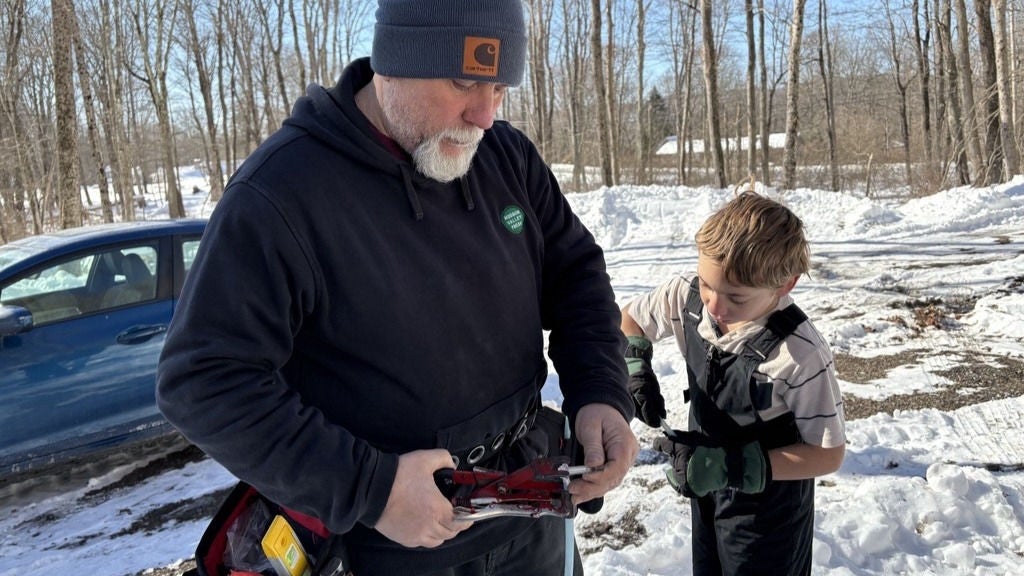
Trevor Ballard and his son, John-Daniel, prepare the plastic lines that connect the tree taps, called spiles, to the vacuum-assisted collection system that keeps the sap clean, the tree healthy and increases yield. (Photo credit: Vicki Hyman)


It’s early in the season, the sap weeks away from being boiled down into deep, earthy maple syrup, and the family is still in preparation mode. “Once we drill that first hole, it’s 24/7,” Trevor says, handing the power tool to his 11-year-old daughter, Ashley-Morgan, and nodding toward a nearby tree.

Ashley-Morgan and her brother John-Daniel, 10, are homeschooled, and a trip to the sugar bush this frigid February morning isn’t merely a field trip — it’s part of the daily curriculum.

“There’s math, chemistry, physics,” Trevor says. “Elevation, pitch, flow rates. I usually put it under science, and sometimes PE,” he laughs, “because they’re running around all day.”

Though the product remains unchanged throughout the decades, the entrepreneurial nature of Ballard Maple has evolved through the generations — from backyard hobby to small business, from inherited obligation to deliberate choice, from sweat and strain to science and systems.

Will the business last beyond the sixth generation? It’s too soon to tell. Ashley-Morgan loves horses and is considering an equine career. John-Daniel isn’t sure, but when asked what he enjoys most about the business — after, of course, sneaking a taste of the sap — he doesn’t hesitate. “I get to spend time with Dad.”


From cauldrons to commerce

The Ballard family has called Dutchess County, about 70 miles north of New York City, home for hundreds of years, and their relationship with maple syrup predates both modern equipment and modern markets. Freddy Ballard, Trevor’s grandfather, learned the art of maple sugaring from his father and grandfather, techniques rooted in tradition and plenty of sweat equity.   

Trevor rummages through a toolbox and fishes out a small wooden spout called a spile, whittled by his grandfather from mulberry branches — one of thousands of hand-carved spiles that were tapped into maple trees and hung with metal milk jugs over the decades. As a kid, Trevor would haul a toboggan around the woods, pouring the sap from the jugs into 10-gallon cans and then emptying them into a collection tank.  

For years, the family made syrup the way many backyard sugarers once did: by boiling sap in cauldrons and homemade pans, producing small batches for friends, neighbors and family. That began to change in 1972, when Freddy made a defining entrepreneurial decision. He purchased a commercial evaporator, with the goal of turning a family tradition into a family business.


Tony Lutz of Verizon stands in front of a photo booth.

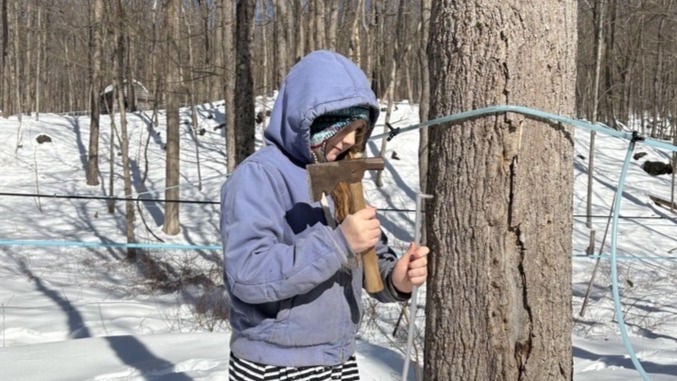
Ashley-Morgan Ballard taps a maple tree as the family readies the sugar bush for maple sugaring season. (Photo credit: Vicki Hyman)


Today the buckets are gone. In their place is this network of plastic lines attached to a vacuum system that pulls sap faster and more efficiently than gravity ever could. Inside each modern spile is a tiny valve — a plastic ball that opens when sap flows out and seals shut when pressure reverses, preventing bacteria from entering the tree. This matters: Bacteria can trigger a tree’s natural healing response, sealing the tap hole and cutting off the flow.

Upon close inspection, the tree Ashley-Morgan is eyeing with her drill is dotted with thumbnail-size holes that twirl up the trunk. She finds a new spot, about eight inches across and eight inches down from the last hole, and drills a new one. Then she swaps out the drill for a wood-handled mallet and taps a spile into place. 

Despite the heavy snow blanketing the grove, Ashley-Morgan and John-Daniel move easily through the woods, marking broken lines with green tape, assembling the drops that connect the tubes between the trees, and, of course, sneaking a taste of sap straight from the line. 


From inheritance to intention

By the time Trevor was his daughter’s age, he was already watching his grandfather closely — not just how syrup was made, but how other producers were adapting. As a teenager, he noticed which operations were surviving and which were struggling.

“I knew I wanted to make a business here,” he says. “But I knew I needed more education, because the way we were doing it, I saw that just wasn’t going to work.” Other than buying the commercial evaporator, Freddy wasn’t really investing in the business. “He came up in the Depression era, the World War. You make do with what you got. If you don’t have cash in your pocket to pay for something, you don’t buy it.”


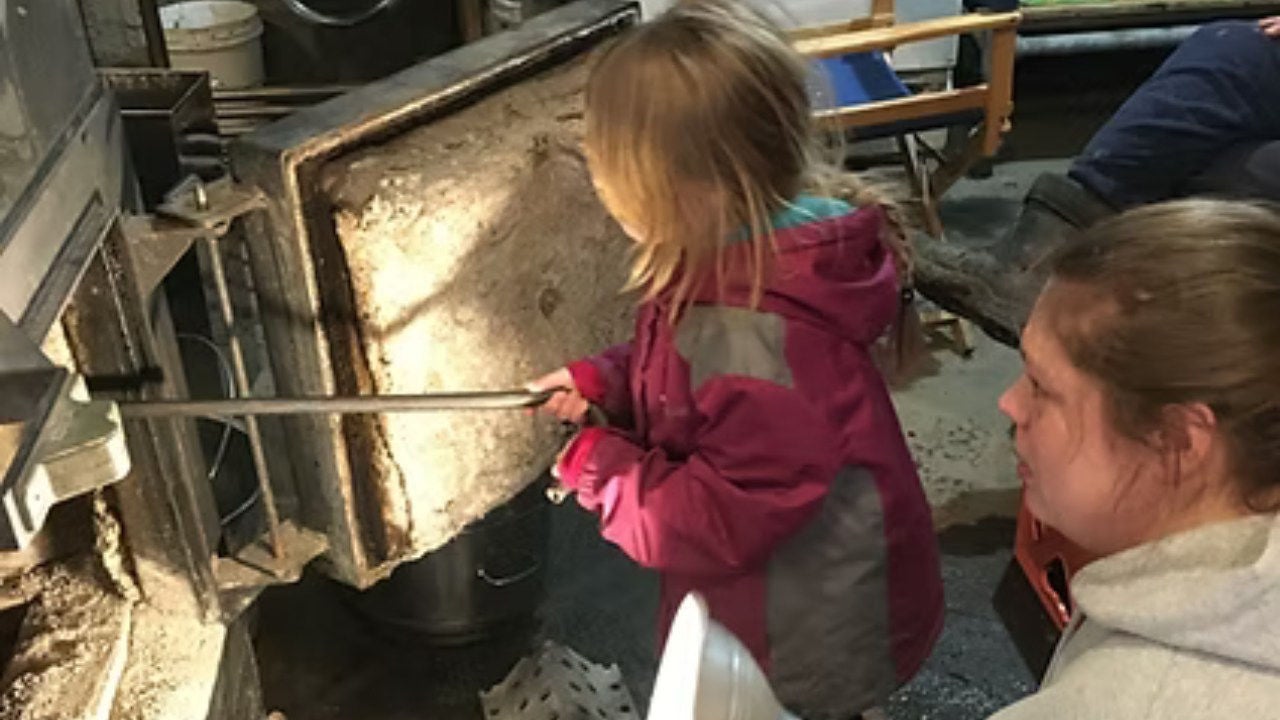
Ashley-Morgan and Kimberly Ballard clean out the furnace used to boil sap into syrup in the Ballard Maple sugarhouse. (Photo courtesy of Ballard Maple)


Trevor’s father Tom, while not involved in the day-to-day of the business, can often be found picking up supplies, helping split wood, watching the fire and, every year when the first batch is ready, arriving at the sugarhouse with homemade vanilla ice cream over which they drizzle the fresh syrup.

The family had always leased their sugar bush, but in 2019, Trevor and his wife purchased these 25 acres. The woods are Trevor and John-Daniel’s domain — in fact, at one point, John-Daniel is about 20 feet in the air, hanging off a rope tied to a high tree branch. (“Is the rope there for fun, or is there a reason for the rope?” I ask. “That’s the reason,” Trevor quips. “Fun.”) 

After the sap flows into the collection tank, it is pumped into trucks and transported to the sugar house, where Kimberly and Ashley-Morgan boil it down — roughly five gallons of syrup an hour during peak season. Most of the syrup is stored in large containers and bottled later, once the rush of sugaring season subsides.


In 2019, the Ballards bought their own maple forest near their home in Holmes, N.Y., with an eye for making the business last. "This will outlive me,” Trevor Ballard says. (Photo credit: Vicki Hyman) 


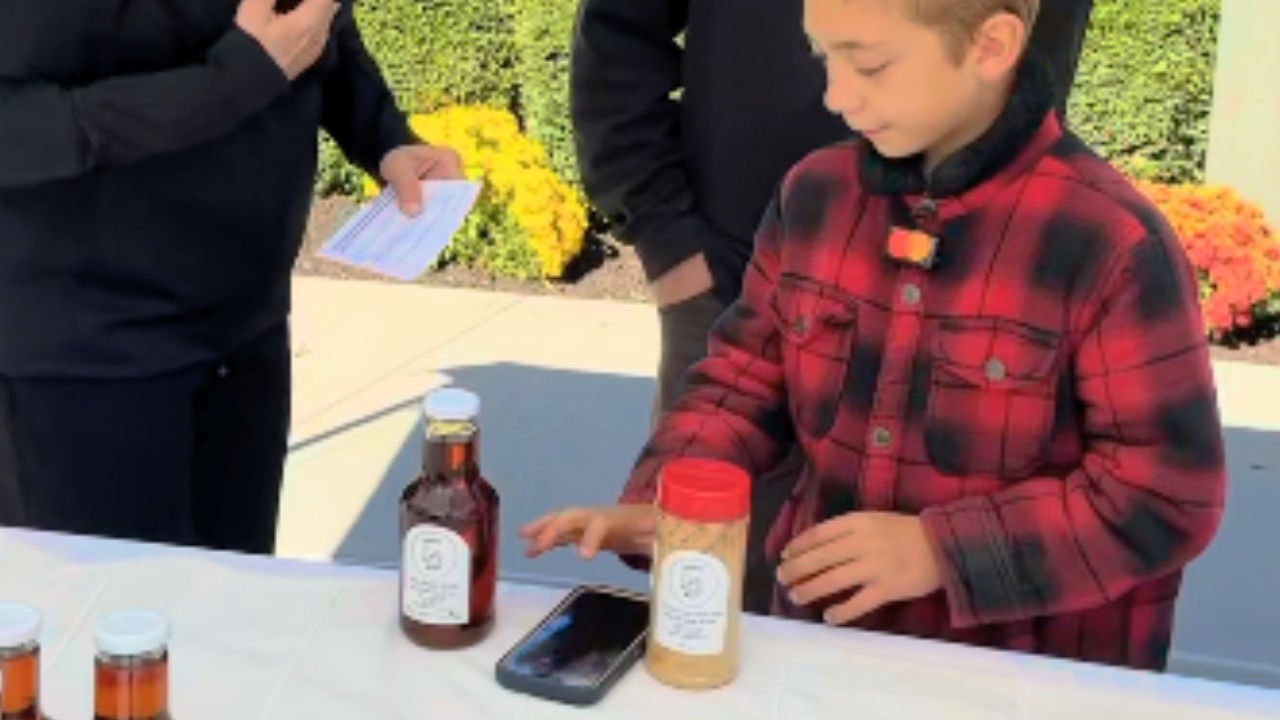
The work then also shifts to selling. Ballard Maple operates year-round, primarily through farmers' markets in the Hudson Valley. Every Sunday, regardless of weather, the family sets up in Beacon, New York. You can also find the dark, rich syrup on store shelves in the area.

“We don’t do consignment,” Trevor says. “If you want our syrup in your store, you pay for it before it goes on the shelf. I want to know my customers.”

Everything is designed with longevity in mind: conservative tapping practices, careful tree rotation, systems that can expand if the next generation wants to grow.

“This will outlive me,” Trevor says, gesturing toward the trees. “If the kids want it, everything they need is here. If they want to increase it, they want to get out here and work in the woods more, it’s here. The foundation is already built. If they want to take it and grow it, it’s here.”

Powering family businesses

Mastercard's Ginger Siegel spoke to the Ballard family and other entrepreneurs at the company's weekly farmers market about how digital payments are helping them connect and thrive.