February 20, 2026
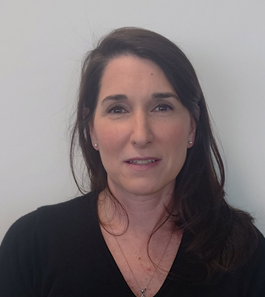
The student becomes the master: Maria Laura Tabanera, left, worked as a kindergarten teacher in the late 1990s in Buenos Aires, Argentina, where Nicolas Lagreste Zucchini, right, was in her class. More than two decades later, they met again in an online training course, and their roles reversed. (Photo courtesy of Maria Laura Tabanera)
In late 2024, Maria Laura Tabanera was in an online training session when she began to feel a strong sense of déjà vu. It didn’t come from the class content, which was part of a week-long boot camp on data visualization, but from the course leader, Nicolas Legreste Zucchini.
“It was something about the way he smiled,” remembers Tabanera, an associate analyst at Mastercard's London office. “I kept thinking: I know this guy from somewhere.”
Curiosity got the better of Tabanera. When she returned home from the office, she dug out an old photo album from the late 1990s, when she’d worked as a kindergarten teacher in Buenos Aires, her native city. “I thought: This would be a one-in-a-million situation,” she recalls. Then, she almost dropped the book in shock. Beaming out from a class photo taken in July 1997 was the unmistakable, dimpled smile of the 3-year-old Lagreste Zucchini.
Tabanera emailed her former pupil about the remarkable coincidence. “At first, I wondered if it was spam or phishing,” recalls Lagreste Zucchini, who earned a bachelor’s degree in Administration and Systems from the Instituto Tecnológico in Buenos Aires and other certifications abroad before moving to Madrid in 2016. “But when I saw the photo, I realized it was Miss Lau,” he adds, using Tabanera’s teaching name. He was thrilled. He had never imagined encountering his beloved preschool teacher on the other side of the world, let alone a desk.
The two Porteños have quickly reestablished their teacher-student relationship, only this time it goes in reverse. The 32-year-old Lagreste Zucchini is now actively mentoring 52-year-old Tabanera about business intelligence tools including Power BI, Azure, Power Automate and custom apps to deliver the advanced analytics and data visualization that are reshaping the payments industry.
These types of reverse mentoring relationships make sense in a world where new technologies might be second nature for younger people, but difficult to grasp for even seasoned professionals like Tabanera. “Nico’s generation grew up with these tools and technologies,” she explains. “The learning is embedded in them.”
Beyond training, Lagreste Zucchini works with organizations to design scalable data models and analytics frameworks that turn reporting into strategic decision-making tools. As co-founder of Analytic Mood and the emerging AI venture Nitaki Group, he is particularly interested in how artificial intelligence and automation are redefining how companies compete and create value.
But relationships like his with his former teacher also harvest something more than digital know-how: deep human connection and understanding. “Respect and a collaborative attitude are most important,” says Lagreste Zucchini. “I don’t say: ‘I’m the expert’, I say ‘let’s try this together’.”
While this form of mentorship may break the traditional mold, it’s becoming increasingly common in the age of AI, as more workers look to upskill and reskill in an ever-changing jobs environment and as innovations come out even faster. One tool Mastercard uses is its Unlocked platform, an internal marketplace to connect people to mentors and projects.
“Mentoring doesn’t entail seniority — it just requires expertise and confidence,” says Emily Lin, senior vice president and global head of Learning and Development at Mastercard, who has benefited personally from many younger mentors on the platform. “They’ve played a big role in helping me challenge my mindsets and perspectives on how I approach leadership, vision casting and problem solving.”
Tabanera has always had an eye for creativity and art but was unaware of a talent for numbers until 2000, when she moved to London to enhance her language skills. She took a job as a research analyst in the commercial department of the Argentine embassy in the U.K., working with different databases, keeping records of her nation’s imports and exports, collaborating with importers, exporters and international buyers to support cross-border trade, and increasing commercial relationships between Argentina and the U.K.
She moved on to corporate finance as an executive assistant, keeping up to speed with cutting-edge data management and procurement techniques. In 2014, when her daughter was four, she joined Mastercard. A hectic decade ensued as she juggled roles as both mother and executive assistant. When her daughter began secondary school in 2024, calmer waters returned to Tabanera’s life, and she was ready to dive back into a more hands-on role. “I had 15 more years before I retired, and I wanted to make the best of it,” she says. Tabanera approached her manager about retraining and the answer was a resounding “Absolutely, yes.”
Tabanera wasn’t starting from scratch. She was keenly aware of the growing power of data in the payments industry. “It’s become everything in our world,” she explains. “We live, manage, share and govern data.” And she already boasted the broad-based skills to navigate this data-rich environment. “Data for me has always just been like building Lego or Roblox,” she says. “As long as you have the right foundations, you can just build up and put it in order."
That’s how Tabanera found herself at Lagreste Zucchini’s online bootcamp. He specializes in bringing visual context to data, using software such as Microsoft’s Power BI, a business analytics platform. “Giving numbers some life helps people make better business decisions,” he explains.
Lagreste Zucchini’s mentorship sticks to the principle of teaching a hungry person to fish, rather than spoon-feeding them seafood. He recalls a recent situation when Tabanera was struggling to make sense of implementing an automation task and connection to a dashboard, which led them to identify a back-end connection step that was not done correctly and to fix it. In Tabanera’s words: “He shows me the ropes, and then I manage.”
The skills have put fire in Tabanera’s belly. She’s keen to add more Microsoft certificates to her growing haul of digital gongs. When she goes to the Mastercard Learning Hub, she says, “It’s like online shopping. I’m always considering enrolling and saving courses to my profile to keep me busy and skill up.” Meanwhile, she’s been working with internal Mastercard mentors and other colleagues scattered throughout the world on analytics, finance and product teams.
The former teacher has been amazed by the support from colleagues for her upskilling journey, from veteran product gurus who take time out of their calendars to share insights to Power BI “super-brains” who pass on tips about interactive dashboards. Tabanera has a message for her colleagues who might be hesitating to upskill: “Seize the opportunity.”