Small business

March 4, 2026


One mother, three hustles: How a Pakistani entrepreneur spun thread, worms and chickens into gold

Digital training helped Babra Zafar turn setbacks into a growing business — and new opportunity for other women.

google logo

Maggie Sieger

Contributor

A few years ago, Babra Zafar had a big problem. The 200 chickens she and her family were raising to sell depended on commercial feed, which was facing severe supply chain disruptions in Pakistan. The disruptions threatened the entire flock.  

So she acted quickly, researching what else would provide enough protein for the chickens and emptying her savings to launch yet another business. This time she would be selling mealworms, the squirmy larva of beetles that chickens love to eat. And while she had no idea how to farm mealworms, she was confident she could do it successfully. 

After all, the 46-year-old woman had survived her share of harrowing times. A decade ago, she was the single mother of a nine-year-old daughter living in her hometown of Rawalpindi, where she returned after her marriage ended. As is the custom, she depended on her male relatives to support her. That is until her brother died unexpectedly, leaving Zafar with no option but to figure out something on her own. “I had many worries about where our food was going to come from and how our bills would be paid,” she remembers.  

Zafar turned to what she knew: sewing. “When you have children, you have to clothe them, and when you don't have the economic means, you end up buying fabric and making the clothes,” she says.

In a quest to find customers, Zafar advertised Babra Stitches on social media. With ingenuity, a bit of luck and lots of hard work, she tapped into communities of Pakistani women living abroad who had trouble finding traditional clothing in Western stores. By 2019, she had grown popular enough to consider opening a shop to earn more money and engage with the world beyond her house. But then the pandemic shattered her dreams of opening a store.

Zafar was once again trying to figure out how stay afloat. To supplement her clothing business, she and another brother started raising and selling chickens.

Around that time, Zafar joined Strive Women, a four-year program led by CARE and supported by the Mastercard Center for Inclusive Growth designed to strengthen the financial health of women-steered small businesses in Pakistan, Peru and Vietnam. Through the program, Zafar gained digital, marketing and networking skills that helped her sustain her tailoring business while many women she knew lost their source of income.

Zafar’s journey mirrors the reality facing millions of women entrepreneurs in low- and middle-income countries, where women power local economies but are often held back by limited access to digital tools, training and networks. As International Women’s Day on Sunday highlights, closing these gaps can unlock opportunity not only for women like Zafar, but for the communities and economies that depend on their success.

Strive Women has given Zafra the moxie to become something of a serial entrepreneur — one who can make bold, informed choices amid challenges. When the feed shortage put her chickens at risk, she turned to raising mealworms. And as it turns out, mealworms are a lucrative endeavor.

 

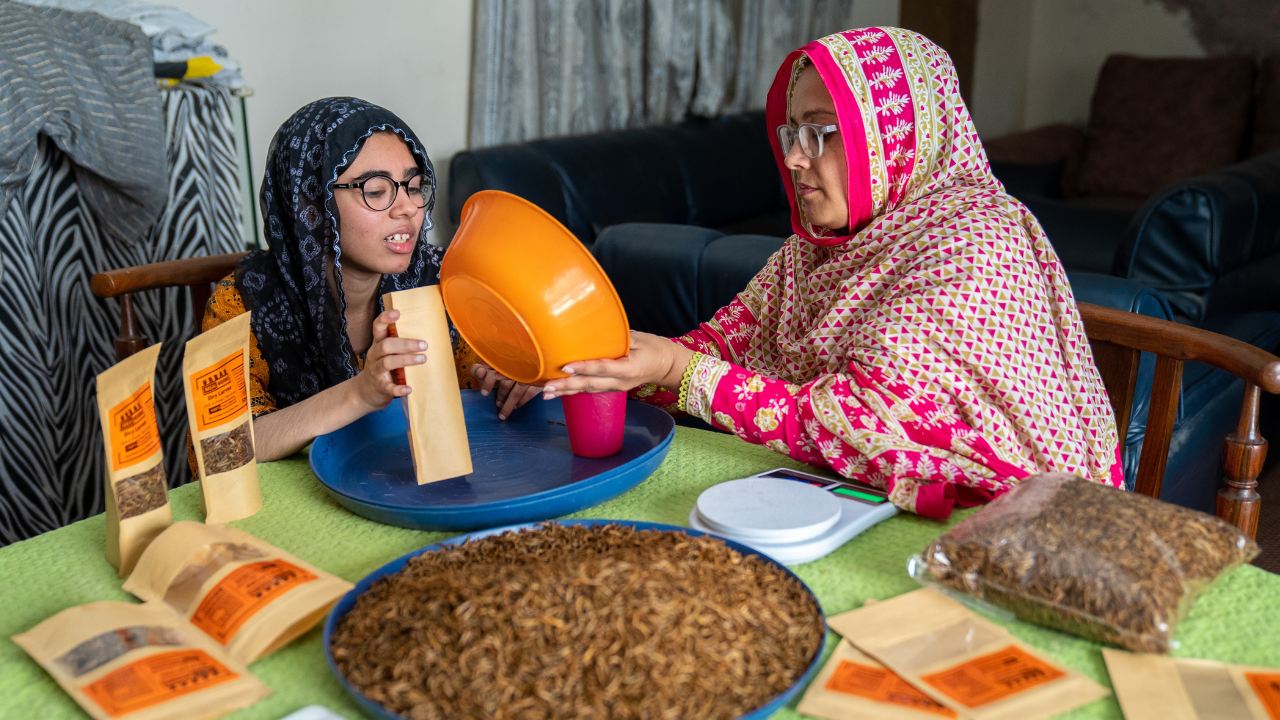
Babra Zafar, right, and her daughter, Tahzeeb Mirza, work together to package mealworms, the business she started during the pandemic when chicken feed grew scarce. 


Mealworm farming is accessible, sustainable and doesn’t require a lot of space — a vital characteristic since Zafar and her family live in a house that sits on just 302 square yards. The chickens live in a shed on the roof.

“Expansion only truly requires vertical space,” Zafar says. “We started with about 15 crates [of mealworms] stacked on top of each other.”

A million worms can be farmed in something as small as a four-drawer dresser. Black beetles produce eggs which grow into larval worms. Those are mostly dried for feed, while some are allowed to mature into beetles to lay more eggs. Even the poop is valuable and can be sold for fertilizer.

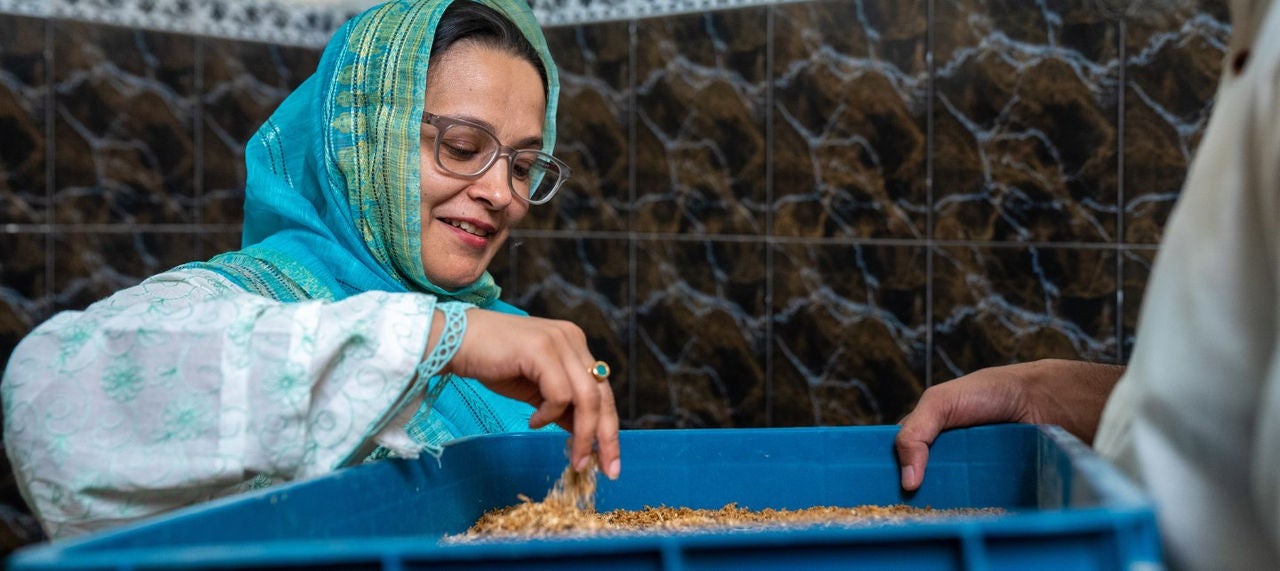
The most vexing problem for Zafar is keeping the humidity level high enough to sustain the eggs and worms. Her brother came up with the idea of using old computer CPU fans to blow steam from boiling water around the crates set up in her house. So far, it’s working.

“When I started the stitching business, I didn’t understand there’s a sequence, there are techniques, methods, for starting a business,” Zafar says. “I had no business plan, no idea. I just did it because I had to.”

But when she and her brother launched Urban Mealworms, they were much more strategic, thanks to her training from the Strive Women program. They approached government agencies, like the one that helps poultry farmers, and exotic bird dealers. They were able to build clients in step with their ability to expand the number of worms they could farm. Today, she has dozens of crates filled with all three stages of beetles.

Meanwhile, Zafar has maintained and begun regrowing her tailoring business. She now has four women helping sew her custom designs, which she ships to customers all over the world. Because of her experience with Strive Women, Zafar is thinking bigger now than she did in the past. Instead of a shop where she alone would work, she’s hoping to expand into a sort of factory, where many seamstresses could make 50 or 100 copies of a single pattern to be sold in her online storefront.

“The mealworm and poultry businesses I share with my brother, so I do not have as much say, but the stitching business is mine alone,” Zafar says. “I’d like to be able to have many women coming to one place and stitching together. It would be a safe and culturally acceptable way for them to work.”

And with that, she’d not only be increasing her earnings, but also giving other women the opportunity to follow her lead.

'Mobilizing for impact'

Mastercard and ASEAN leaders gathered in Kuala Lumpur to advance inclusive economic growth, digital innovation and regional collaboration.
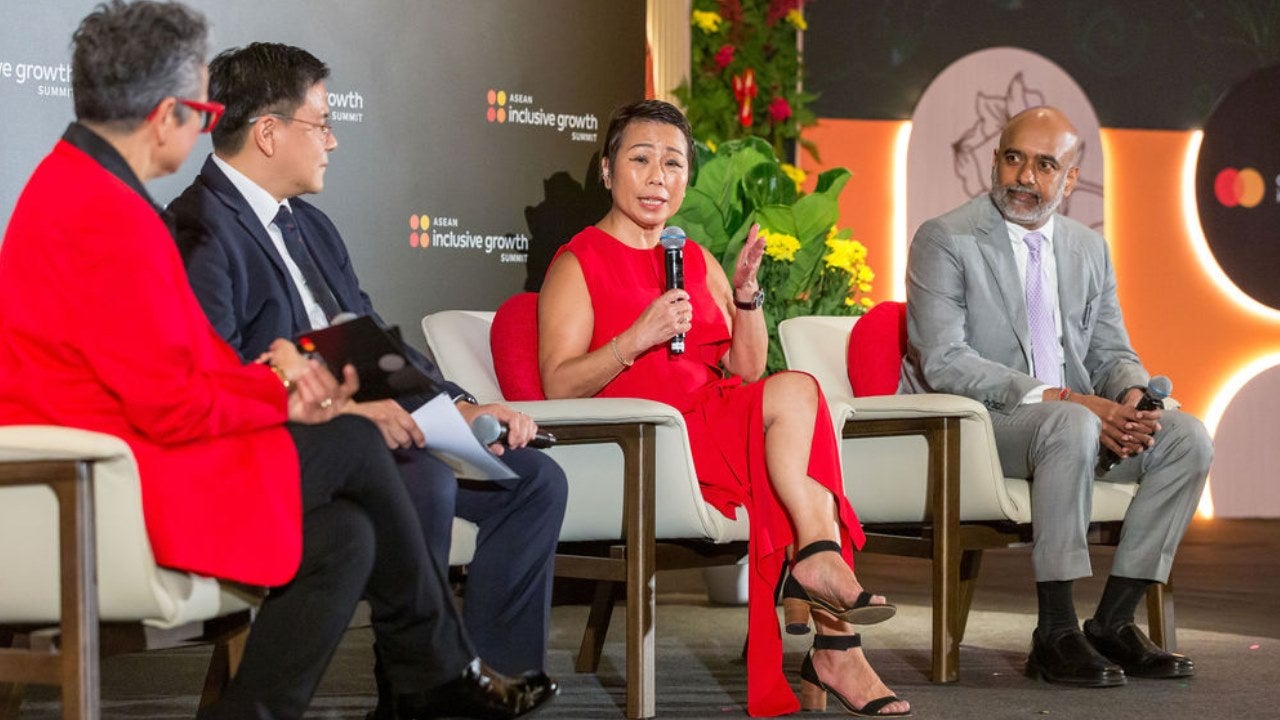
Karen Ngui, second from right, head of DBS Foundation and DBS Group Strategic Marketing and Communications, DBS Bank, shares insights on building philanthropy that results in real change, with the Center’s Shamina Singh, left, Tony Lambino, president and trustee of the Ayala Foundation, second from left, and Hari Menon, the Gates Foundation director for South and Southeast Asia.