Small business

June 29, 2026


Anxious, optimistic and all in: These Midwestern entrepreneurs size up the moment

At a small business trade show in Chicago, they shared what’s on their minds: AI, finding talent, customer growth and cybersecurity.

google logo

Aimee Levitt

Contributor

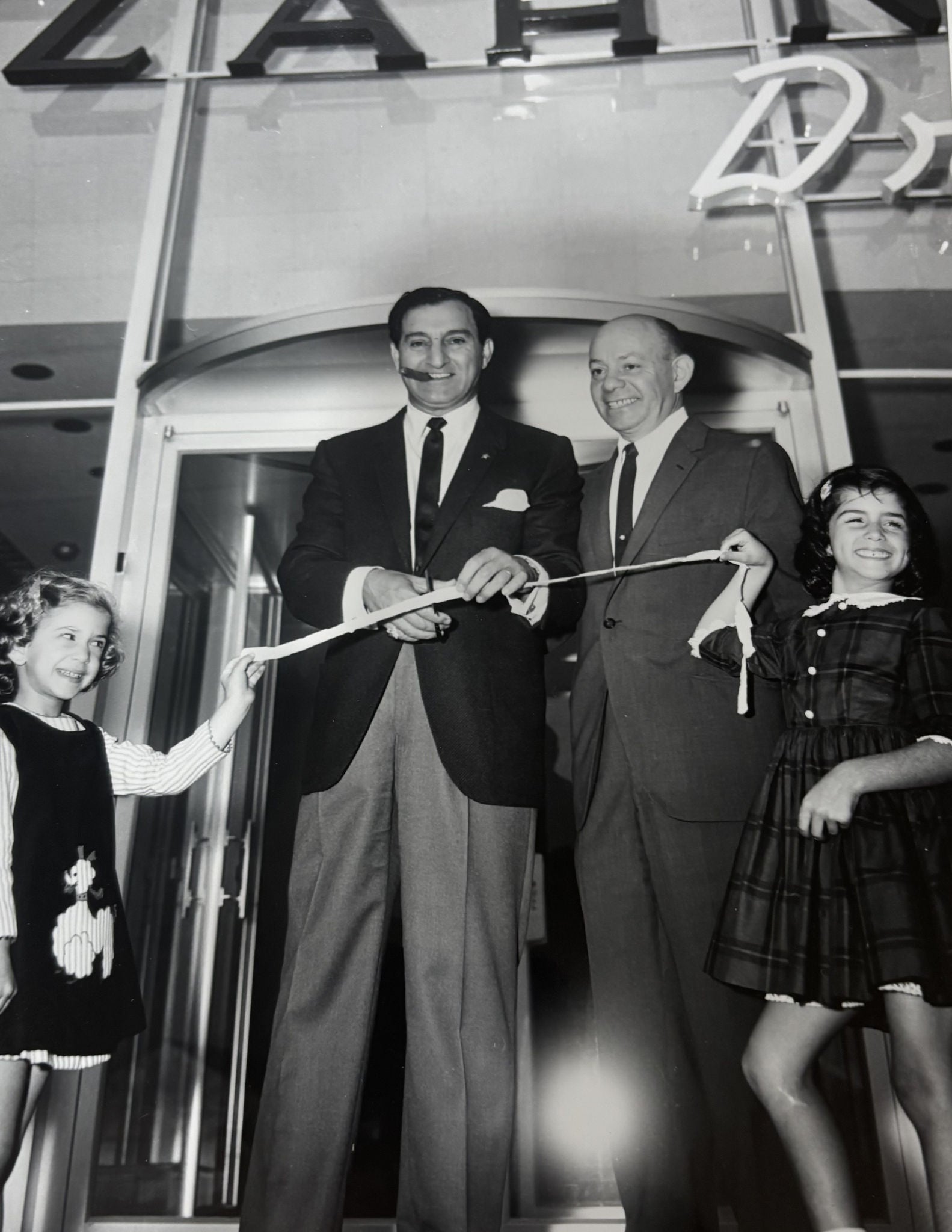
On a steamy day in mid-June, several hundred small business owners from Chicago, the suburbs and nearby states jammed the narrow corridors of the Isadore and Sadie Dorin Forum, an event space on the campus of the University of Illinois Chicago. Attendees of the Small Business Expo, a traveling conference and networking event, clutched their phones and glided past vintage photos of small business owners who once worked at the Maxwell Street Market that occupied this spot a century ago. As the sound system blasted Journey’s “Don’t Stop Believin’,” the crowd was already in serious networking mode by the time the expo officially opened mid-morning.

The Small Business Expo gives business owners a chance to get out from behind their computers and meet other entrepreneurs in person. Perhaps some of those business owners might turn into new clients. Or maybe one of the vendors would offer a service to make their lives easier.

The concerns of small business owners today are in some ways not dissimilar to those of the Maxwell Street Market pushcart vendors 100 years ago: How can they grow their businesses and maximize profits, all without losing too much sleep. Based on interviews throughout the day, that balance seems to have gotten even harder to manage, as entrepreneurs discussed dealing with the timeless needs of hiring employees and finding new customers along with modern challenges like cybersecurity and AI.

With so much changing in the tech world and uncertainty looming over economies, a clear takeaway that emerged was that those small businesses — and their business partners — that will survive and thrive today will have to become experts at both the old ways of networking and the new school of tech. Focusing too much on just one simply won’t cut it.


A temp check on small businesses

Sentiments at the expo seemed to offer equal parts of both anxiety and optimism, a hallmark of the highs and lows of being an entrepreneur.

“Do you know that a record number of small businesses have started over the past few years all across the country?,” asked Phil Krough, founder of Source It Local, an online marketplace that connects shoppers with nearby artisans. “This is one of the best times for small businesses in history,” he declared. “AI can do a lot of work for small businesses now. With better international shipping, you don’t need a brick-and-mortar space to survive anymore. As an entrepreneur, you can live in a digital space.”

Surprisingly, despite the many conversations about AI’s impact on jobs saturating the news and social media, most of the entrepreneurs at the expo weren’t worried about computers taking over their jobs. This is, in part, because many of them are their own bosses. They consider AI, at its best, like another staff member that helps them sort through data and save time on administrative tasks so they can concentrate on the real work of their businesses.

“You can use AI to do cool things,” said Dan Chamberlain, the principal of CDC Marketing in Elgin, Illinois. ”But you need people to run a small business.”

But that confidence has its limits, reflected in the most recent study by the Fed’s Small Business Credit Survey. In the report, 76% of owners of businesses with more than $10 million in annual revenue believed they were in a “good,” “very good” or “excellent” financial position. By contrast, only 26% of owners of businesses with annual revenue below $100,000 felt the same. And these challenges seem likely to continue for a while amid economic upheaval.

The tension between ambition and uncertainty is showing up globally, too. Nearly a third of small and medium-size business owners globally cite economic and market conditions as their top challenge, according to upcoming research by Mastercard. A survey of more than 6,600 owners revealed that rising costs (56%), competition (51%) and economic pressure (49%) are the dominant pressures.


Finding new clients

One Source pos, a payment processing company in Frankfort, Illinois, has been in business for 30 years. Its website contains testimonials from satisfied customers. And yet Jakub Zaranski, the executive director of operations, said the company’s biggest challenge is still finding new clients.

“Unless you’re paying for clicks, you’re not going to be on the first or second page of a Google search," he said. "It takes longer to build relationships.”

Samantha Mean, who does data science and marketing at Acelytics Consulting, a year-old strategy consulting firm in Chicago, agreed. “People have an affinity for trademark brands,” she said. “Bigger businesses appeal to their emotions. But that sort of thing needs to be built over time. People have to get to know you.”


Developing the right expertise

“Who here is an expert in accounting, HR, IT, shipping, inventory and tariffs?”

Scott Hodges, an executive consultant at SD Hodges & Associates, a small accounting firm in Chicago’s south suburbs, looked around the small auditorium where he was leading an afternoon workshop on “The Myth of the Self-Made Business Owner.”

No hands went up. 


Problems aren’t solved by working harder. You need good information, systems and people.

Sharon Hodges


Hodges did not look surprised. Why should anybody have to be all those things? Except, of course, a small business owner who can’t afford to hire a large staff.

“Problems aren’t solved by working harder,” added Sharon Hodges, the firm’s president. “You need good information, systems and people.”

So what to do? Many of the small business owners in the exhibition hall were there to offer their services to other small business owners: accounting, tax preparation, trademark protection, travel planning, building and maintaining IT systems and websites, and even selling the business when they retire. To entice visitors to stop and chat, they piled their tables with branded swag, candy and, in one case, cat toys.

The idea is, by seeking help, small business owners are free to do what they do best without exhausting themselves trying to master everything at once, explained Conan Venus, the founder and chief strategist of Conan Venus and Company, a marketing firm based in Kalamazoo, Michigan. “You want to grow in a way that doesn’t kill you.”


Hiring the right people

Armin Ghazi, the CRO of Wired CIO, an IT firm in Chicago, has yet to place a help wanted ad for new employees. Instead, he does all his hiring through his personal network, and he says it’s worked out great.

Kelly Hamende, the director of marketing and business development at Advanced Computer Specialists, a small IT company in Bradley, Illinois, offered a similar perspective. “We don’t have trouble finding clients,” she said. “We have trouble hiring competent people who are excited to work.”

Hamende and other small business owners find themselves inundated with more resumes than they have time to look over, many from people who don’t have the right qualifications. “When you’re scaling up, what you’re really looking for is replicating the skills of the founders,” said Ghazi. “You really wish you could clone people.”

Clearly, there is an opportunity here for talent recruiters and job sites to better serve small businesses. In the meantime, many microenterprises, including Advanced Computer Specialists, often become family businesses. The expo was filled with people like Shannon Frankl, who came to help her daughter Tatiana promote her new Chicago event planning business, Polished and Poised. “I’m just here for whatever she needs,” Frankl said.

The best part about hiring friends and family is that they feel an obligation to stick around. Alex Drexler, a loan advisor at Chicago-based Windsor Advantage, finds it especially hard to retain entry-level workers. These employees often don’t feel much loyalty to him or the company. And every time someone leaves, Drexler and his colleagues must find and train someone new.

“We need entry-level talent,” he said, “The work isn’t demanding and people are afraid they’ll be replaced by AI. I really hope it changes.”


Small targets, big risks

“Cybersecurity is often an afterthought,” said Matt Moss. Of course, as a sales engineer at the cybersecurity firm ESET, he’s slightly biased. Nonetheless, it’s true that many small business owners, like many individuals, feel they’re too small and insignificant to be a target and don’t value cybersecurity until they’ve been scammed themselves. A 2025 Mastercard  survey of more than 5,000 small and medium-sized businesses revealed 46% have experienced a cyberattack on their current business, and nearly one in five that suffered an attack then filed for bankruptcy or closed their business.

Swindlers have often targeted small business owners because they have fewer protections than bigger enterprises, but scams have been getting more sophisticated with the advances in generative AI. “It helps attackers streamline a lot of operations,” Moss said, “and it makes attacks more frequent. You can even launch lots of attacks simultaneously.”

AI-based cyberattacks can take the form of deepfake phone calls and videos, and many of them result in the installation of ransomware that makes computer systems inoperable until the business owner pays the attackers.

The effects of cyberattacks can be lingering. “We have to pay the chargebacks from stolen credit cards,” said Aaron Wang, the vice president of sales at ShipBae, an e-commerce shipping software provider. “And by then the shipping has been paid and so we’re in the hole as a merchant.”


The future for small business owners

Krough, from Source It Local, grew up in Nashua, a small town in northern Iowa, and feels a strong nostalgia for the Main Street of his childhood where everybody knew everybody else. The sprawl of the internet doesn’t really allow for that; many small business owners, Krough said, believe that lack of online visibility is one of their biggest challenges. And he thinks that’s a shame.

Despite that limitation, he said small businesses still provide the tax base for municipalities. They contribute to local festivals or sponsor Little League teams. Bars, restaurants and shops become community hubs.

To Krough, small business owners are heroic, and they deserve all the help they can get to navigate the many the challenges they face today: “Small business owners invest more in their communities than anyone else.”

Investing in women entrepreneurs is about more than capital

CARE and the Mastercard Center for Inclusive Growth are helping women entrepreneurs access capital, digital tools and networks to grow their businesses.