But artisans finding wider, welcome audiences for their work doesn’t make the actual work of running a small business any easier. “People come with their creativity,” van Bergen says, “but the business side — accounting, pricing, marketing — they’re learning on the go. And that translation is really challenging.”
Nest’s approach starts with meeting makers where they are.
Through its global Nest Guild and U.S.-based Makers United program, Nest offers free training, mentorship and market-access support designed to help small-scale artisans translate their skills into sustainable income. In the U.S., with support from Mastercard Strive USA, a program of the Mastercard Center for Inclusive Growth, Nest is expanding Makers United to reach more entrepreneurs across the U.S., many of whom are running microbusinesses from their homes.
In the U.S., 2,314 craft businesses employing nearly 15,000 people are enrolled in Makers United, with more than $1.5 million in total revenue generated through market opportunities, according to Nest’s 2025 Impact Report.
Makers United combines e-commerce training, one-on-one market-access mentorship and practical guidance, from opening an online storefront to digital merchandising to building a brand through storytelling. Nest helps makers understand everything from pricing to profit and loss — and how to think about growth more strategically.
That can mean diversifying revenue streams, expanding into new markets or simply finding ways to scale without losing what makes their work unique. In some cases, it’s about rethinking how they work by connecting with other makers, outsourcing production or tapping into shared resources.
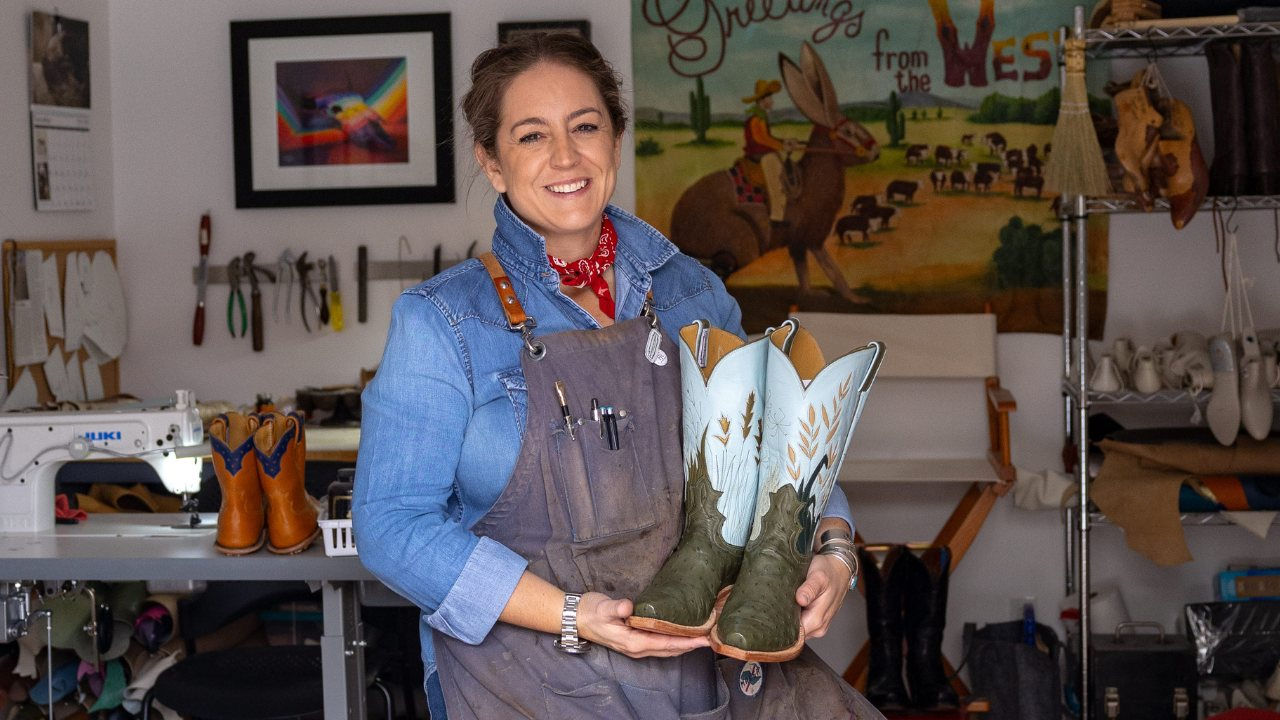
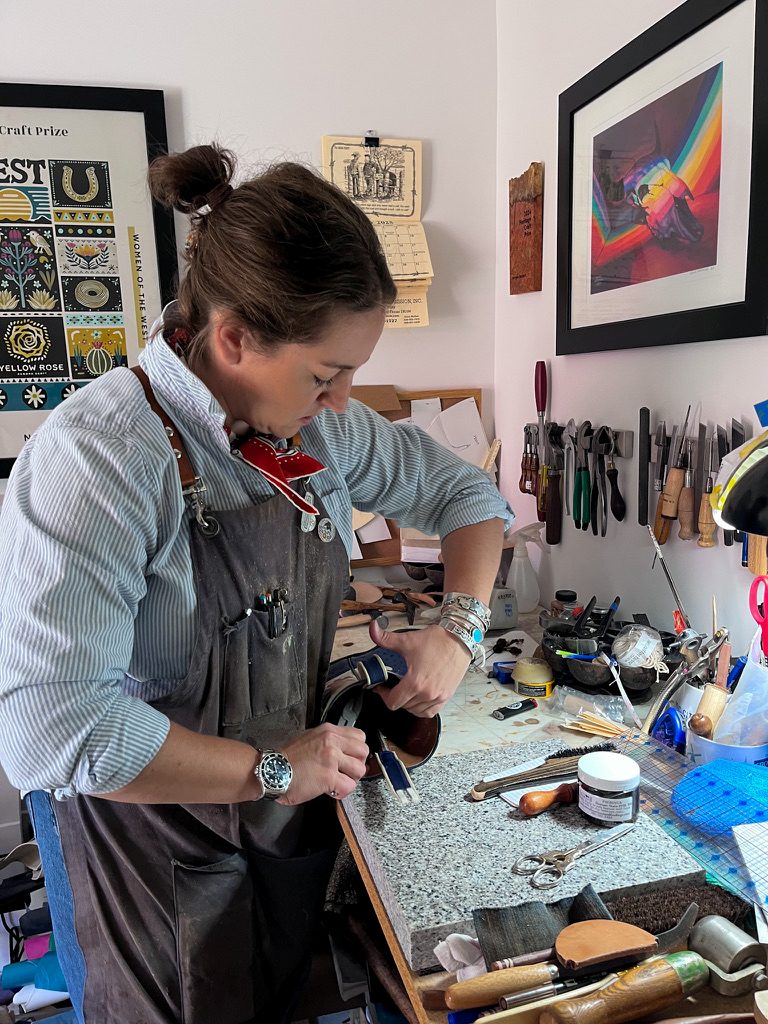
Thanks to Nest’s advice, Buckert made a shift that many artisans initially resist: letting go of part of the process. With skilled labor in her bespoke field being scarce in her small mountain town, she contracted with a small workshop in El Paso, Texas, to handle the work of soling and bottoming the cowboy boots — which is physically intense but not creatively so. “It’s time,” she says. “It’s getting some time back.”
Buckert — who also took part in the Makers Future Fund, an intensive coaching and financial readiness training combined with a $5,000 grant — did come to Nest with business experience; she and her husband own an outdoors store, a local institution in nearby Ketchum. But boot-making is her passion.
Born into the seventh generation of a Texas ranching family, she started sewing at age 4, but she didn’t return to it until she found herself working as a fly-fishing guide in Idaho during the 2008 recession. “I had a lot of extra time,” she laughs. As a new challenge, she started working with leather and then signed up for a shoemaking course at North Carolina’s storied Penland School of Craft.
“It was the first thing I had ever done that was a full-body experience,” she says. “My brain hurt at the end of the day and my muscles hurt at the end of the day. I love it because it’s a combination of math, creativity and brute force … Cowboy boots are something that I will continue to do for as long as my body lets me.”
Her advice for artisans considering turning their love into a livelihood? Don’t rush in. Unlike other industries, craft offers a kind of built-in flexibility. Makers can test ideas in small ways: selling at a local market, launching an online shop or, like Buckert, taking on commissions — all while maintaining day jobs and other sources of income.
“I watch people regularly go into massive debt to start whatever it is they want to do then they quit. Go slow and don’t be afraid to be honest about how you’re making a living. Having the opportunity to live a creative life is just very special and spectacular, and doing what you have to do to make that happen is not something to be embarrassed of.”