Cybersecurity

October 19, 2026


On stablecoins, agentic payments and trust issues

Ann Johnson, who leads Mastercard’s Security Solutions teams, shares her cybersecurity approach to new payments tech.

google logo

Ben Fox Rubin

Vice President,

Global Communications,

Mastercard

As new payments technologies take hold, whether they’re stablecoins or agent-led payments, ensuring they’re secure is a must.

One of the key teams tasked with doing this work is Mastercard’s Security Solutions group. Ann Johnson, who leads the team, unveiled Stablecoin Security at the Money 20/20 fintech conference this week. The company’s new service assesses the riskiness of any given stablecoin transaction, helping banks, consumers and merchants avoid blockchain-based scams and fraudulent purchases.

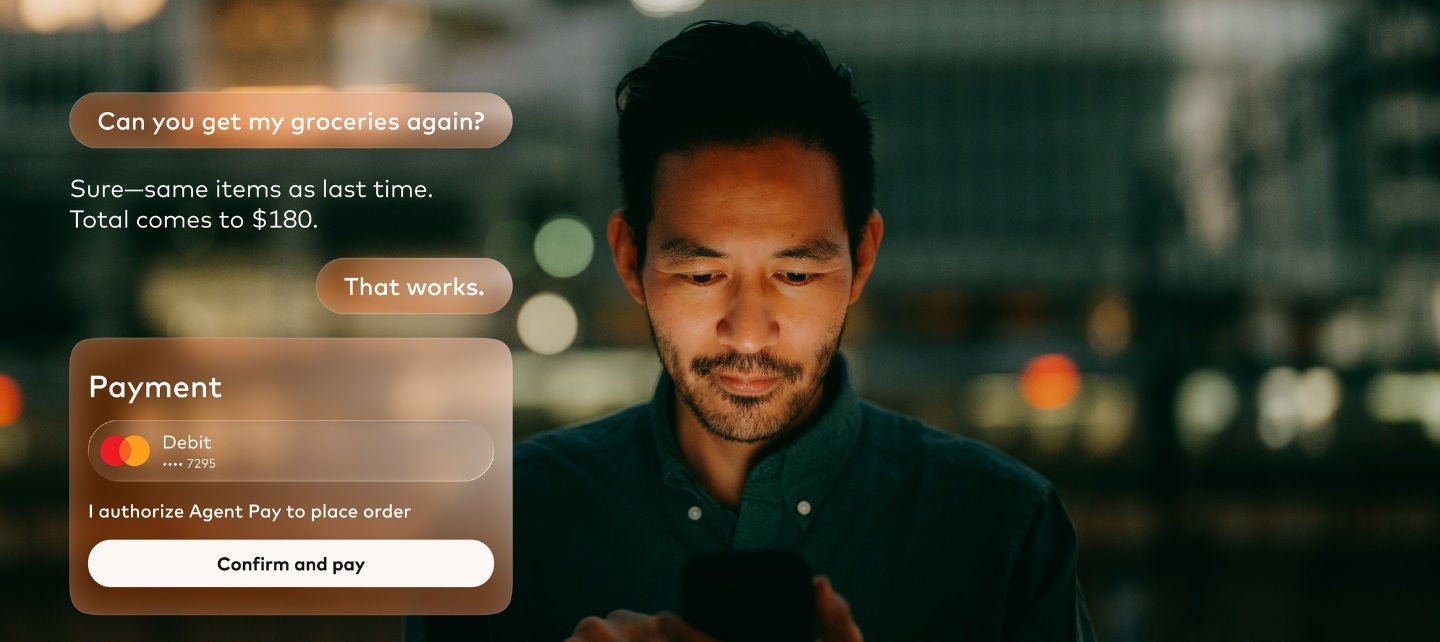
The Stablecoin Security announcement comes on the heels of Mastercard revealing about three weeks ago its new capabilities for its Agent Pay platform, adding identity, intent, behavioral and fraud insights into agentic payments.

Together, these new services point to the payments industry’s massive efforts to bring agentic and blockchain into the mainstream economy and ensure they have the right guardrails built around them. Both payments trends are expected to revolutionize consumer behaviors and digital money movements, but neither will take off unless they are trusted and safe to use by billions of people and businesses.

Ahead of Monday’s announcement, the Mastercard Newsroom interviewed Johnson about the intersection of crypto, agentic and cybersecurity.

The following Q&A was edited for length and clarity.


What's your perspective on how to approach security needs for rapidly developing technologies like agentic commerce and blockchain?

With our 60-year history and 175 billion transactions we see annually on our network, we have a tremendous amount of fraud insights that we can bring to these other payment methods. We understand regional, merchant and issuer variability. We have the intelligence to build solutions no matter how people are transacting.

And as I look at the evolution of stablecoins or look into the evolution of agentic, I see an opportunity for us to extend our learnings so we can quickly identify risky transactions based on the experience we have on the network. Regardless of how someone is transacting or what payment method they are using, we can secure the experience. 


We're talking about agentic and blockchain today — who knows what it's going to be 10 years from now. Are there fundamental aspects of security that Mastercard's users will always need?

I think it starts with trust. Technology enables people to do things. Trust enables innovation to scale. In order for us to build trust with individuals, we need to stop fraud before it starts. It is a core tenet of ours.

So how do we do that? The core principle is all about intelligence. It is the reason we bought Recorded Future. You combine Recorded Future’s threat intelligence with Mastercard transaction data, and you get a unique intelligence set that allows us to build capabilities and truly to stop fraud before it starts.


Technology enables people to do things. Trust enables innovation to scale. 

Ann Johnson
Ann Johnson


What are you hearing from Mastercard customers about stablecoins? Is this something that they want to lean into? Are they worried about security issues?

There are a couple things going on with our customers. They want to keep up with technology changes. They need a solution in this space, whether it be stablecoin or whether it be agentic. And they are relying on us. They are saying, “Look, you have been our trust and identity and fraud provider for decades. We trust you to continue to fulfill that role.”

It is imperative that consumers trust these new ways to pay as they start to scale. We will provide the engine so issuers, merchants and acquirers all have confidence in the ecosystem.


How much do you see people start to adopt these new technologies — stablecoins and agentic — already?

There is a lot of attention right now focused on agentic. And we think that agentic will be carded transactions because when you are asking an agent to buy something on your behalf, you want strong protections, fraud monitoring and support if you are a consumer. Trust and security are especially critical when an agent is involved.

Stablecoins are on a little bit of a different trajectory. Their clearest use case today is cross-border payments, where they can help make moving money faster, more transparent, and more efficient. The opportunity is to ensure stablecoin and agent-led transactions have the same trust and security people expect from any other form of payment.


Risk intelligence for more secure stablecoin payments 

Mastercard Stablecoin Security combines payment and blockchain intelligence to help financial institutions assess risk from payment initiation through on-chain movement.
Decorative