Article

The restaurant marketing guide to memorable guest experiences

Published: July 26, 2022 | Updated: October 29, 2025

Barista making a drink

Introduction

When macroeconomic pressures heat up and costs rise, profits decrease. And in spaces as competitive as the quick service restaurant (QSR) and fast-casual industries, where margins are already razor-thin and customers have more options than ever, one truth has become clear: Transactions don’t create loyalty. Experiences do.

To deliver a transformative guest experience, restaurants must not only meet consumers’ rising standards — but craft a loyalty program that rises above short-term incentives to keep diners returning. 

So what are these standards? When a guest chooses where to spend their money, three things matter above all else: 

  • Relevance: Do you have something for me? 
  • Value: Am I paying a fair price, and do I feel recognized? 
  • Convenience: Can I get it quickly, easily and without friction?

Traditional loyalty programs rarely deliver on these fundamentals. Too often, they are undifferentiated and commoditized, competing on discounts instead of deepening customer relationships. The result? Customers chase points across brands while restaurants erode their margins.

In this guide, we take a closer look at how pairing the latest technology and advanced analytics with these loyalty program fundamentals can help restaurants stay ahead of today’s shifting markets.

Bring relevance to the experience with personalization

Personalization is top of mind for many restaurants. In fact, 80% of consumers under the age of 40 consider personalized recommendations important to their digital ordering experience, according to Forrester Consulting research. By turning every interaction into an owned impression that is timely, contextual and relevant, personalization helps consumers feel recognized progressively, moving them from first-time guests to loyal advocates. In what follows, we’ll unpack the dimensions of personalization that make it all possible.

Personalization starts with recognition

Delivering a relevant guest experience starts with understanding your guests and the context in which they engage with your brand.

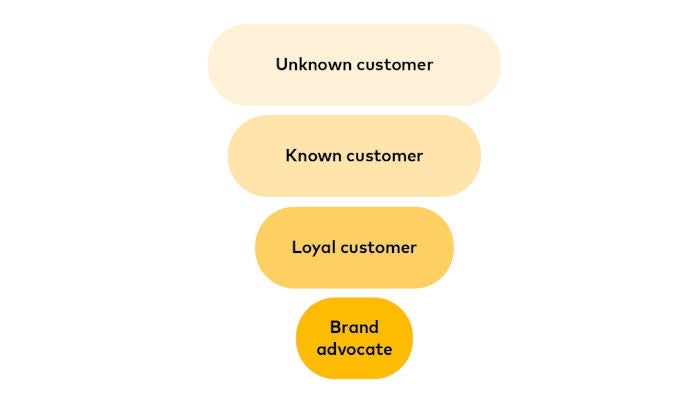
Here are three audience segments that restaurants encounter — and how to shift your personalization strategy to connect with them and turn them into brand advocates:

Unknown customer (context only):

A visitor who isn’t recognized at the time of purchase — such as a cash, drive-thru or kiosk order. When a guest visits for the first time, brands may not know them yet, but they do know the context — time of day, channel or location. A commuter at 7:30 a.m. might see breakfast sandwiches and coffee bundles. A Friday evening app visitor could be offered indulgent menu items like premium shakes, dessert add-ons or new, limited-time entrees to mark the end of the week.

Partially known customer (context plus motivations):

These are identified guests who visit occasionally. The brand knows who they are, but their motivations and interests are of limited understanding. Broader recommendations encourage repeat visits. For example, a guest who orders through the app a few times a year could see widely appealing recommendations — like new menu launches or popular seasonal items — designed to encourage their next visit.

Loyal customer:

An opted-in loyalty member whose purchase history and preferences enable true one-to-one personalization. With loyalty and profile data insights, brands have enhanced context that can move them toward advocacy. A frequent iced coffee drinker can be invited to try a new cold brew flavor. A family who regularly orders kids’ meals can be offered a family bundle at dinnertime. A customer who engaged with last year’s pumpkin spice latte campaign gets early access to its return.  

Context is the foundation, but true personalization emerges when restaurants connect it with insights based on order history and preferences. The more precisely these layers align, the more naturally guests convert from casual users to brand advocates who actively promote the brand through frequent visits, referrals or social sharing.

Technology is the engine that powers personalized experiences

Personalization in restaurants is made possible by an ecosystem of technologies that work together to dish up faster, smarter and more relevant experiences. From voice-enabled ordering to dynamic digital menus, each innovation plays a role in recognizing guests and responding to their needs in real time.

Technologies include:

Personalization engines

Platforms like Mastercard Dynamic Yield bring these capabilities together — connecting data-driven insights from the app, drive-thru, kiosk and loyalty system to tailor every interaction. By analyzing contextual signals and preferences, they help restaurants decide what to show, offer or recommend in the moment.

Voice and ordering automation

AI-powered voice ordering improves speed and accuracy by sending orders directly to the kitchen in real time, reducing friction for guests and freeing up staff for higher-value tasks. Voice ordering can also allow restaurants to maintain output levels while minimizing labor costs.

Dynamic menu boards

Digital menus can adapt instantly based on factors such as time of day, local weather or product availability. For loyalty members, they can highlight items based on past orders or preferences, while removing unavailable items or promoting quick-to-prepare options during peak periods.

Emerging payments and checkout innovation

Consumers are now placing their orders through a variety of channels with particularly strong growth from mobile apps. 90% of consumers are somewhat or very satisfied with mobile ordering and payment technology on personal devices, but only an average of 49% of restaurants deployed it. Contactless, stored card and mobile payment options make transactions faster and safer, while features like biometric authentication enhance security and convenience.

Transaction analytics

Advanced analytics provide insight into spending patterns, average ticket size and frequency — allowing restaurants to identify trends, optimize promotions and measure the impact of personalization.

Together, these technologies form the backbone of a modern restaurant experience: one that uses data insights responsibly to make every order faster, every offer smarter and every guest interaction more meaningful.

Go beyond discounts to develop a value-driven loyalty program

Loyalty programs turn everyday transactions into relationships by gathering insights across every touchpoint. When powered by personalization, they evolve beyond discounts to deliver trust, recognition and stronger lifetime value (LTV). Yet more than 70% of restaurant decision-makers say their loyalty programs still feel outdated, difficult to use and lacking true one-to-one personalization, according to the Forrester Consulting report cited earlier in a article.

Here’s how restaurants can modernize loyalty in five steps.


Step 1:  Define value that builds trust

Value is more than low prices. Guests want to feel they’re paying a fair price and that their loyalty is recognized. Loyalty programs can deliver value across three layers:

  • Fair value: Reinforce everyday affordability through consistent pricing and bundles that feel worth it.
  • Flexible rewards: Allow guests to choose what matters — early access, free add-ons or surprise-and-delight moments instead of generic discounts.
  • Recognition beyond price: Spend and get is great, but also reward non-transactional actions like frequency, referrals or engagement to show appreciation that feels personal.

When loyalty programs deliver value at these levels — fairness, flexibility and recognition — they replace transactional discounting with emotional equity. Customers stop measuring the relationship in dollars off and start measuring it in trust. 

Step 2:  Make loyalty effortless and engaging

After defining value, bring it to life through an easy, rewarding experience. Although 59% of brands are focused on improving the customer experience, only 39% have seen improvements, according to another recent, Mastercard-commissioned loyalty study by Forrester Consulting.

Guests should be able to earn and redeem effortlessly through the app, kiosk or drive-thru without extra steps. Gamified missions or milestone badges can make earning fun, while consistent design and messaging ensure loyalty feels like part of the brand, not a separate program.

Step 3:  Grow enrollment through clear benefits

Enrollment is the bridge between personalization and scale. Make sign-up frictionless and clearly communicate what guests gain: faster ordering, exclusive access or tailored rewards. Use testing to see which offer or messages convert best and emphasize transparency about how data insights enhance the guest experience.

Step 4:  Use data insights responsibly to know your guests

A best-in-class program turns real-time context and customer motivations into actionable insights. With informed consent, businesses can combine purchase history, visit patterns and engagement trends to build a 360-degree view of each guest. This enables restaurants to anticipate needs, tailor communications and refine offers while maintaining transparency and trust. 

Step 5: Deliver personalized rewards that inspire action

Personalization is where loyalty becomes dynamic. Analyze consumer spending and preferences to send the right offer, at the right time, through the right channel. Avoid blanket promotions by identifying when and where a reward truly influences incremental visits. With analytics, restaurants can continuously test, measure and optimize — turning loyalty into a self-learning growth engine.

Modern loyalty programs go beyond distributing discounts. They orchestrate relevance, recognition and convenience across every interaction. When done well, they transform occasional guests into true brand advocates.

Convenience = frictionless commerce 

Convenience is the silent dealbreaker in restaurants. If it is hard to order, pay or pick up, no amount of points will keep customers coming back. Loyalty enhances convenience when it removes friction and makes every step faster, simpler and more intuitive:

  • of ordering: Guests want to get what they want without hassle. Mobile apps that remember past orders or favorites enable “one-tap” reordering, while families can easily customize bundles for quick checkout.
  • Seamless rewards and payment: Loyalty should simplify, not complicate. Rewards apply automatically at checkout, and payments link effortlessly through saved cards or mobile wallets, so loyalty works in the background.
  • Instant fulfillment: In restaurants, timeliness matters. Guests expect rewards, confirmations and order updates in real time from instant point accrual to immediate pickup notifications.

When convenience is embedded across ordering, payment and fulfillment, loyalty stops feeling like a separate program. It becomes the invisible system that powers every visit. 

Conclusion

With more competition and rising costs, QSRs and fast-casual restaurants are at a critical moment.

Restaurants that rely on a transactional, commoditized and easy-to-copy approach to guest experiences risk falling behind.

The leaders of tomorrow will take a smarter path. They will use AI-powered personalization, robust analytics and engaging loyalty programs as enablers of what diners care about: relevance, value, and convenience.

Loyalty is the system that ensures every visit feels effortless and personal. When done right, it enhances speed, strengthens engagement and keeps guests coming back.

Contact sales

Talk to an expert to learn how Mastercard can enhance your business through our products and services.

Mastercard