inclusion

May 20, 2026


What happens when workers own what they create?

Ownership Works has helped 180-plus companies share equity with employees. With the Mastercard Center for Inclusive Growth, it’s translating data into financial health.

google logo

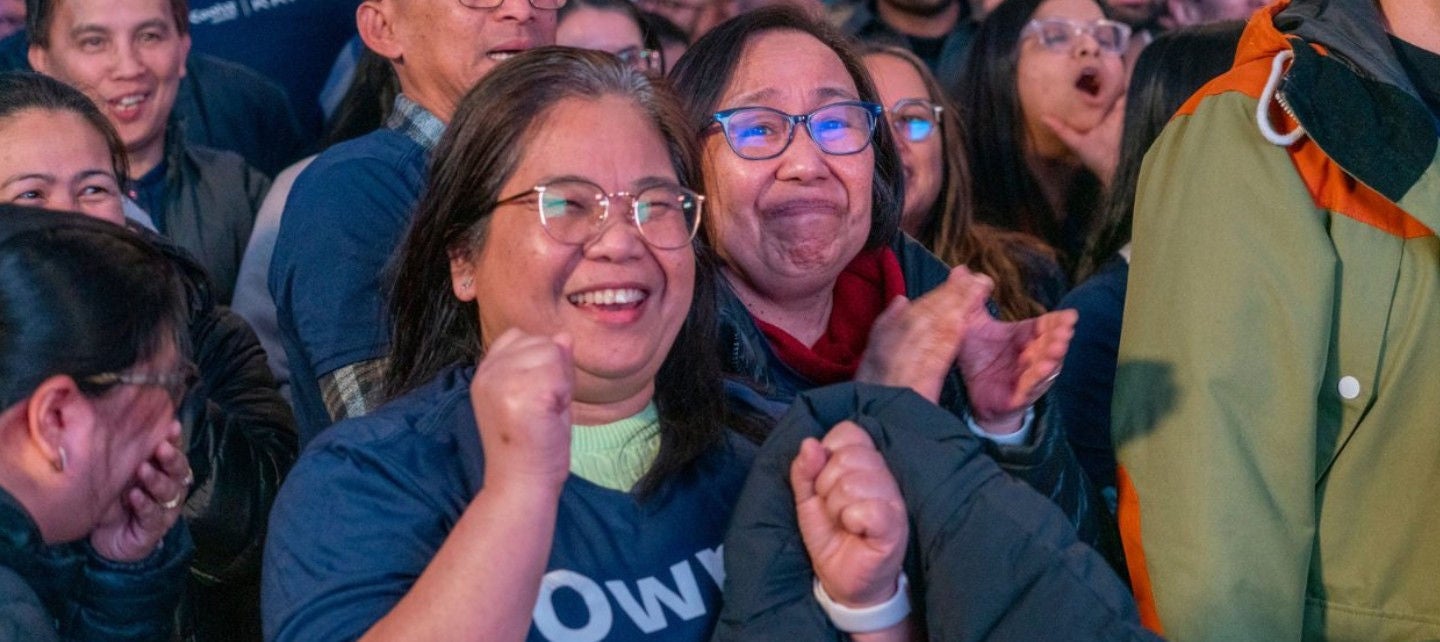
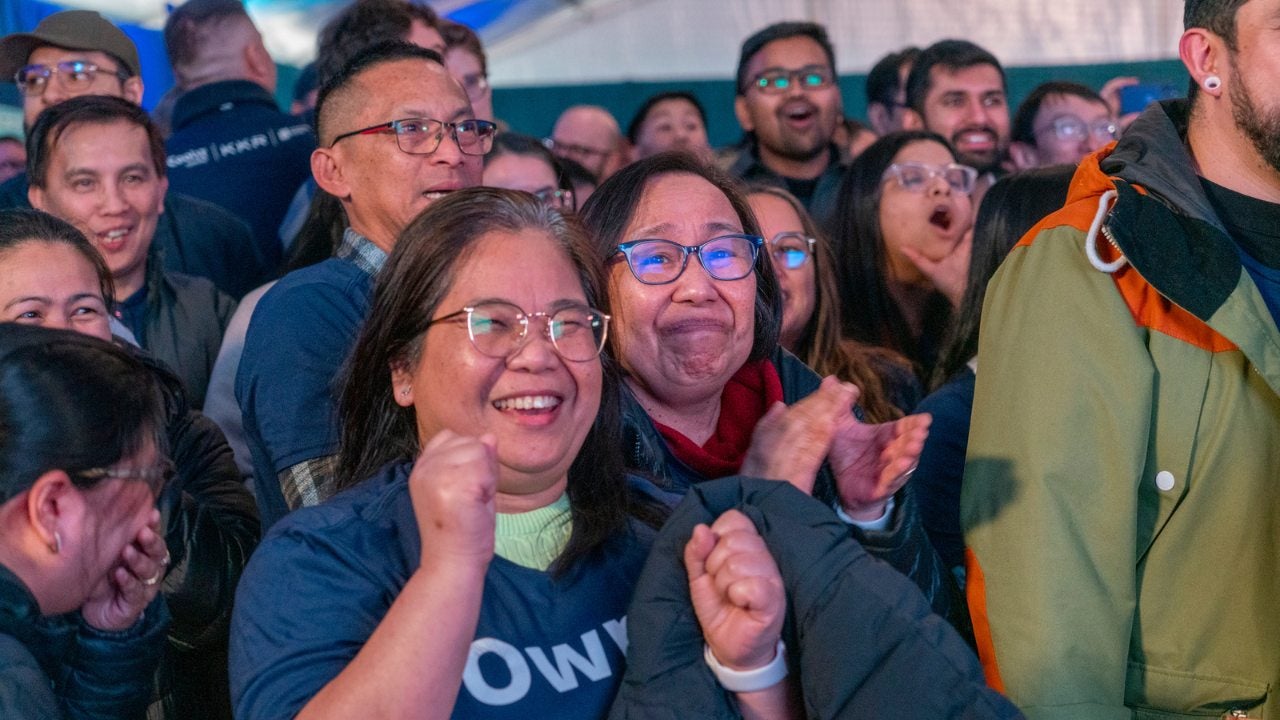
Employees at the data center cooling company CoolIT earned equity in the business via an employee ownership program. Here, they learn that the sale of the company meant they would receive between one and eight years' worth of their annual pay. (Photo courtesy of KKR and CoolIT)

Sophie Hares

Contributor

Peter Stavros grew up in Chicago watching his father tirelessly grade roads to support his family. As Stavros forged a very different career at private equity giant KKR, he was determined to ensure others could receive the opportunity to share in the wealth their hard work created. That’s why he launched Ownership Works, a nonprofit that helps companies give employees an ownership stake.

Since launching in 2022, O.W. has helped more than 180 companies share ownership with their employees through broad-based ownership programs. Staff retention and engagement have improved significantly at most of these companies, and exit payouts that employee-owners receive have helped people put their kids through college, pay for healthcare expenses, and start families.

O.W. set a goal of generating $20 billion in wealth for employees by 2030 to drive economic resilience. The organization is now working with the Mastercard Center for Inclusive Growth to scale the O.W. FinWell survey, which captures insights on how workers are faring financially. The expanded effort could help employers turn those insights into practical financial well-being initiatives, building the resilience and stability needed to more fully engage in ownership programs and make the most of the equity they earn.

Stavros joined Shamina Singh, the Center’s founder and president, to discuss with the Mastercard Newsroom why factors such as economic volatility and AI are strengthening the case for employee ownership.  


What are the biggest issues O.W. aims to tackle?

Stavros: The main challenge is that workers don’t have wealth today, and one reason is because they don’t own stocks. We want to try and get stock and appreciating assets in the hands of workers. There's an opportunity here to include workers in ownership and help companies perform better.   


What types of companies does O.W. support?

Stavros: Initially, I had in mind companies that had a large frontline workforce, like my dad, who was a blue-collar worker. About half of America earns an hourly wage. Those folks tend to be the most disengaged on the job and at the same time have a massive impact on company performance. Everything that is so critical to a business is in the hands of employees, many of whom are struggling financially and are often not happy and can lead to high turnover.

Since then, we've worked with companies across all industries. What's exciting to me is you've got people working together who don't often talk to each other, and certainly don't collaborate, all coming together to say, if we could get this right — get millions of workers owning a piece of their employer — that could really change things. It’s not just giving workers a chance to build wealth, it could build a more inclusive culture in corporate America.  


How did the Center get involved with O.W.?

Singh: Pete’s work was in the news at the same time broader conversations were emerging about founder succession and the impending generational transfer of wealth. We were already thinking deeply about worker economic mobility as part of Mastercard’s financial inclusion commitment, and this stood out as a creative, practical way to help workers in these firms move from inclusion to access, to security, and ultimately financial health. I reached out to Pete to explore how we could support the effort, and we’ve been going ever since. 


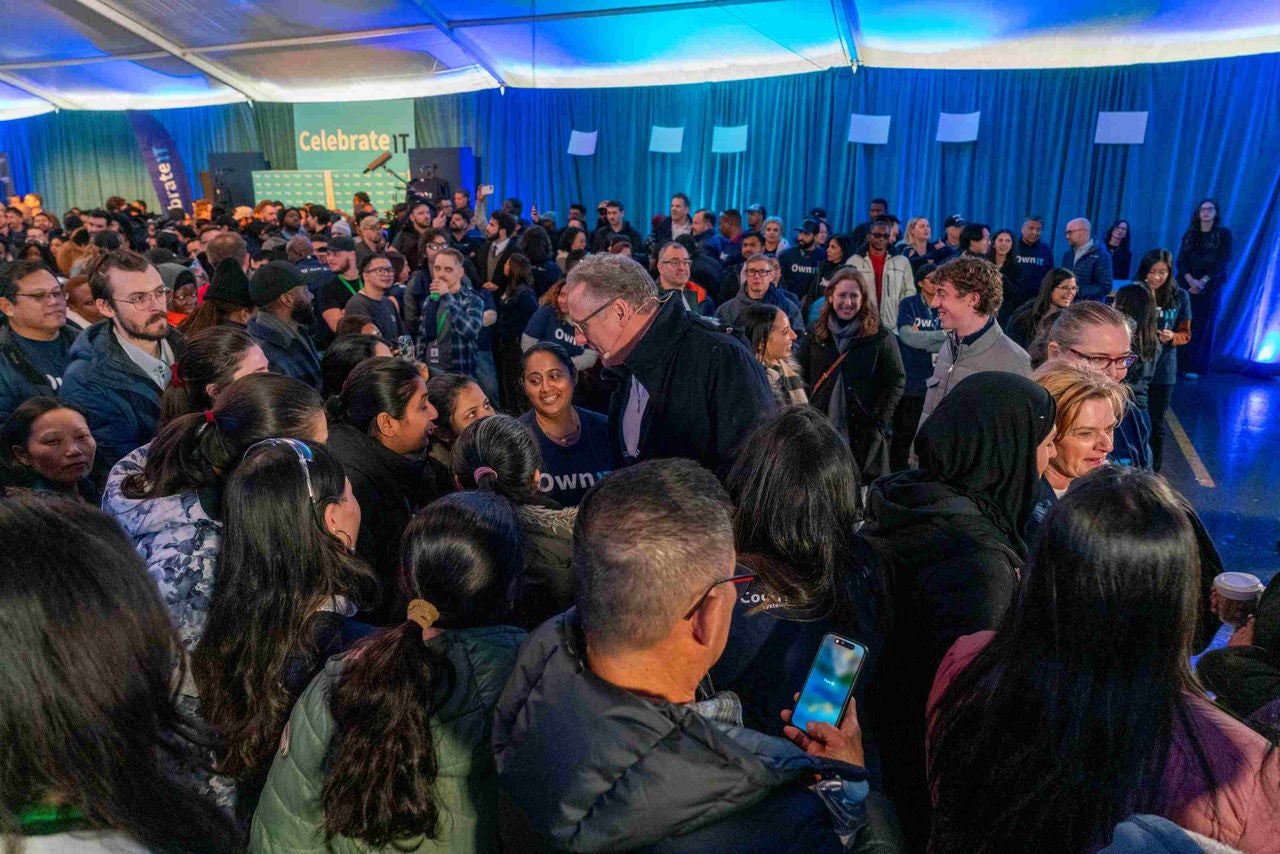
Peter Stavros, center, greets CoolIT worker-owners after they learned what the acquisition of the company by Ecolab meant. Ownership Works, a nonprofit founded  by Stavros' private equity firm KKR, helps companies expand employee ownership. (Photo courtesy of KKR and CoolIT)


What are the benefits to companies and workers?

Stavros: Some companies in America experience churn in their workforce every year. If you can get people to really engage with the business, like someone who's got a stake in the outcome, you can reduce turnover. We also see engagement rates go up, safety incidents go down — a host of strong outcomes. As well, it’s amazing what you can accomplish around financial metrics. More than half of the companies with employee ownership delivered top-tier returns, with nearly nine in 10 performing above average.

There’s one company, CoolIT Systems, that makes cooling systems for data centers. There were 650 workers at the business and, when the company sold, all workers received an exit payout between one and eight times their salary. The average payout was $240,000. That is life changing wealth. 


'An ownership mindset'

CoolIT employees learn exactly what an ownership stake means to their own bottom line in real time. 

Employees at CoolIt cheering.


What other stories can you share about how employees benefit from O.W.’s programs?

Stavros: One of my favorite ones is a frontline worker that I got to know at Ingersoll Rand. He and his wife were in debt from the moment they got married. They decided not to have children because of it. They just said, ‘Hey, we'll never be able to afford it.’ The ownership program got them out of debt and changed their whole lives. And they ultimately decided to have kids. Today, I can say there are two kids on the planet as a result of that ownership program. There are so many stories around sending kids to college, getting out of debt, buying their first home. As workers become happier and more engaged, they feel more respected and part of the team, which means they are less likely to quit.  


Why is now a good time for companies to launch employee ownership programs?

Singh: We’re in a moment when volatility is becoming the norm rather than the exception. In that kind of environment, stability becomes an important measure of economic progress, which is why this work feels especially timely. And because private equity portfolio companies employ millions of people, they represent an important channel for advancing inclusive economic growth — a core focus of the Center.

Stavros: There's been a tremendous amount of inflation in the last five years, and if you don't own assets, it's hard to keep up. As you look forward with AI and how quickly technology is moving, all productivity gains accrue to the people who own. If there's ever a time to make sure ownership is broadened, I think this is it. 


When financial well-being is treated as part of the system, backed by data, financial tools and real support, that's when you start to see real growth and resilience. 

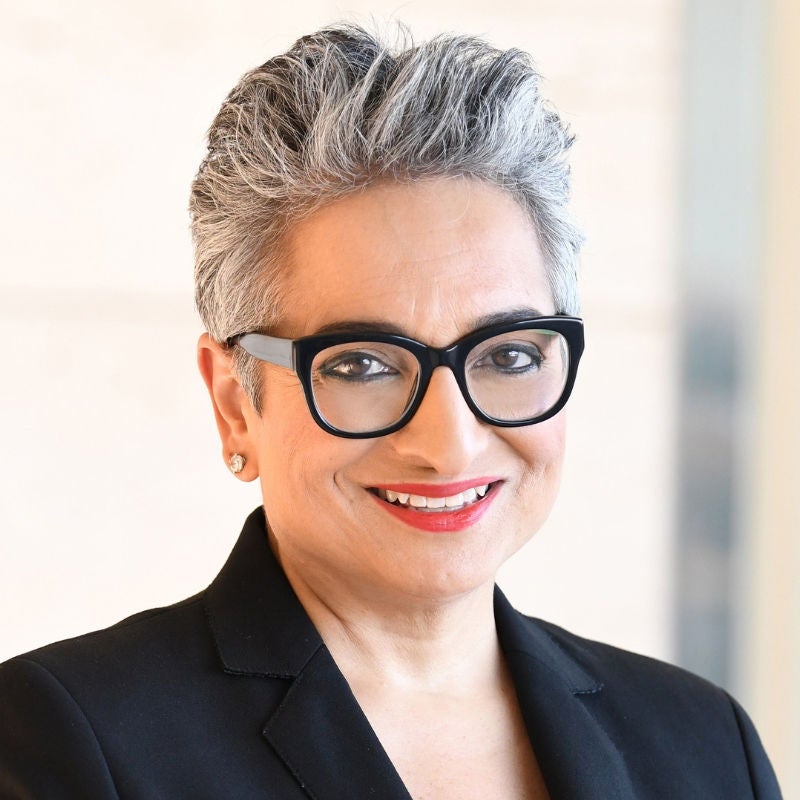
Shamina Singh
Shamina Singh


How does O.W. fit into Mastercard’s commitment to connect and protect 500 million people and small businesses on their path to financial health by 2030?

Singh: We’ve spent the last decade building the foundation for financial inclusion and digital access — reaching 1 billion people and 50-plus million small businesses in the digital economy by 2025 — and our new 2030 commitment sharpens that work beyond access toward usage, security, and lasting financial health. What we’ve learned is mirrored in O.W.’s model: When financial well-being is treated as part of the system, backed by data, financial tools and real support — not as a standalone benefit but an integral part of the lifecycle of a citizen, of a worker — that's when you start to see real growth and resilience.

That’s why Ownership Works is such a strong partner: its model advances financial health for workers while supporting business performance. We have an opportunity to strengthen that model with data and insights to inform a broader set of solutions that can help both businesses and workers succeed. At the Center, we’re always looking for the win-win — doing well, by doing good — and Ownership Works is doing that work where it matters most. 

Empowering even more people on the road to financial health

Mastercard is expanding access, strengthening security and building the confidence that 500 million people and small businesses need to thrive.