Innovation

January 14, 2026


AI is coming for your shopping cart

Retailers are turning to AI to eliminate manual drudgery and speed up merchandising, signaling a new era of automation.

google logo

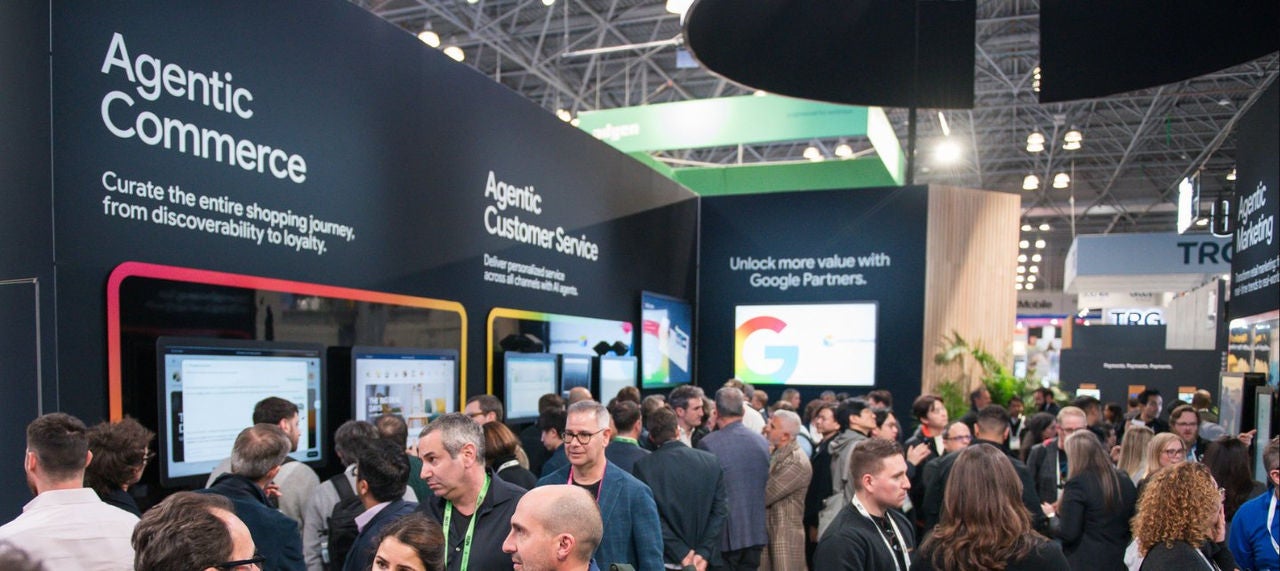
At NRF 2026, Google announced a new protocol to govern agentic commerce on its platform. (Photo credit: Jason Dixson Photography/NRF)

Ben Fox Rubin

Vice President,

Global Communications,

Mastercard

The Google booth at the NRF 2026 retail conference in Manhattan this week was jammed with people, as attendees eagerly jostled for space to hear one of the many AI-centric demos going on throughout the day.

In the middle of this chaos, I snagged a spot by Ankit Jain, a Google AI business leader, who walked me and a group of other attendees through a live demo of planning a kid’s birthday party powered by the company’s Gemini AI agent. On a hypothetical retailer website, Jain fired up a chat, with Gemini suggesting different party themes — baking, balloons — along with AI-generated images of what it could look like. He uploaded a picture of a backyard and the chatbot quickly shared what the party could look like there, too.

The agent provided a detailed list of items to buy, slimmed it down to fit Jain’s planned budget, and he was then able to purchase what he needed right in the chat.

AI has been everywhere lately, and it completely took over this year’s NRF show , from panel discussions to booth demos to conversations all around the Javits Center. The dominance of AI at the show (and several other major trade shows recently) highlights just how much retail, payments and tech are focusing on what they see as the next big shift in shopping, with the potential to change just about every business function in commerce — from developing new products to running a store.

For example, the team at the retail tech startup Machyna showed off an AI-infused shopping cart that can suggest recipes while you’re still walking down the grocery aisles. AWS presented a concept demo of using its AI tools to design a new piece of luggage from scratch, making the process both faster and cheaper.

Not using AI today to buy stuff? Well, businesses have very clearly made a big bet that you soon will.


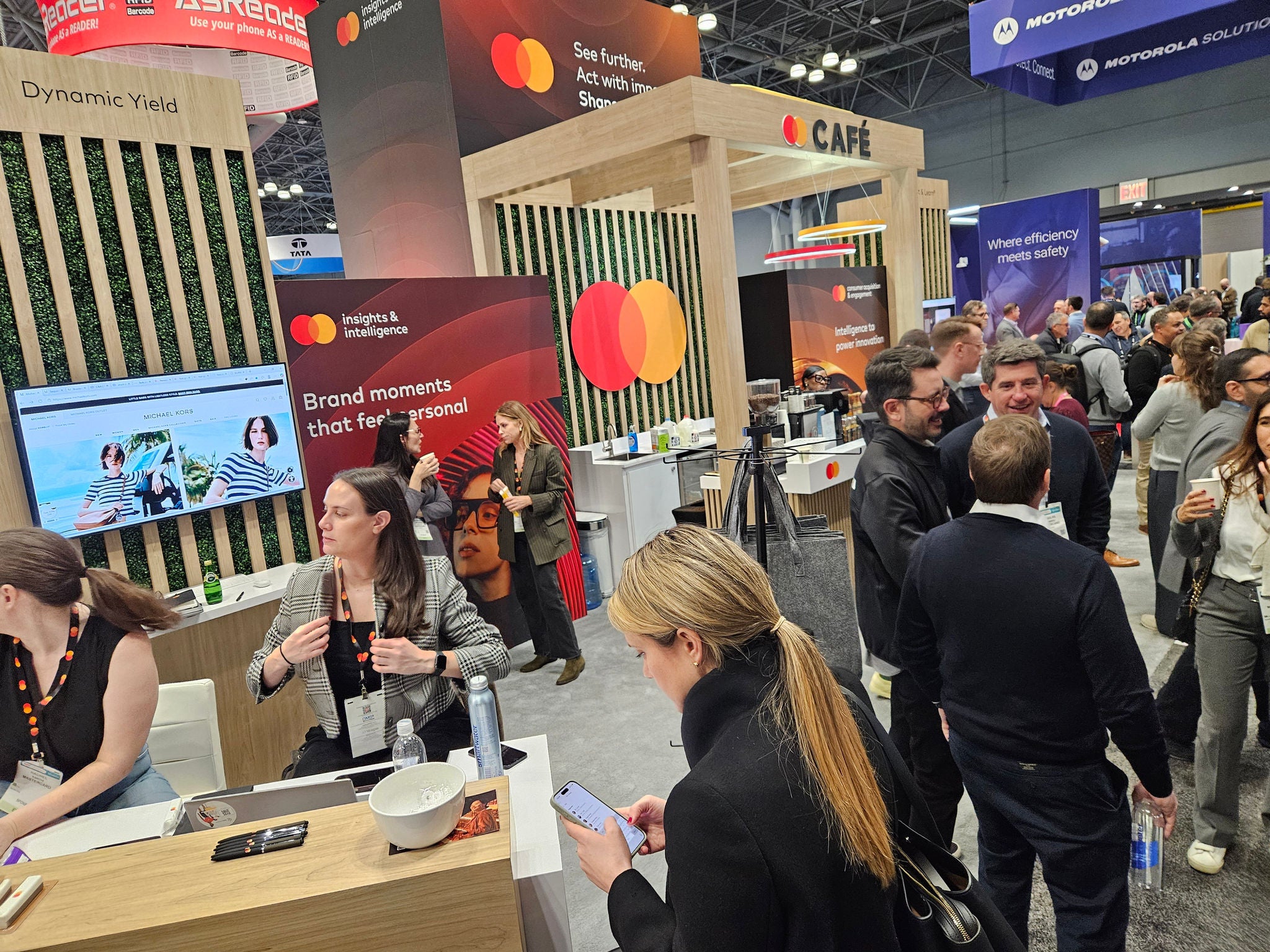
At Mastercard's booth at NRF 2026 trade show.

During NRF, Mastercard announced it would join Google on its new protocol, bring Agent Pay to Microsoft Copilot Checkout and grow its startup engagement program to fuel AI-powered commerce. (Photo credit: Ben Fox Rubin)


“It’s not only going to change the customer experience,” Sherri Haymond, Mastercard’s global head of digital commercialization, told me just outside Mastercard’s booth. “It’s already changing the way retailers are thinking about product selection — the way they merchandise.”

She added that the company is creating tools for merchants to take advantage of this move to AI and is continuing to listen and learn from retail partners as this space keeps changing quickly.


AI in the virtual aisles

The conference kicked off this past week with Google announcing its new Universal Commerce Protocol, a new standard for agentic commerce, and Microsoft unveiling its Copilot Checkout feature.

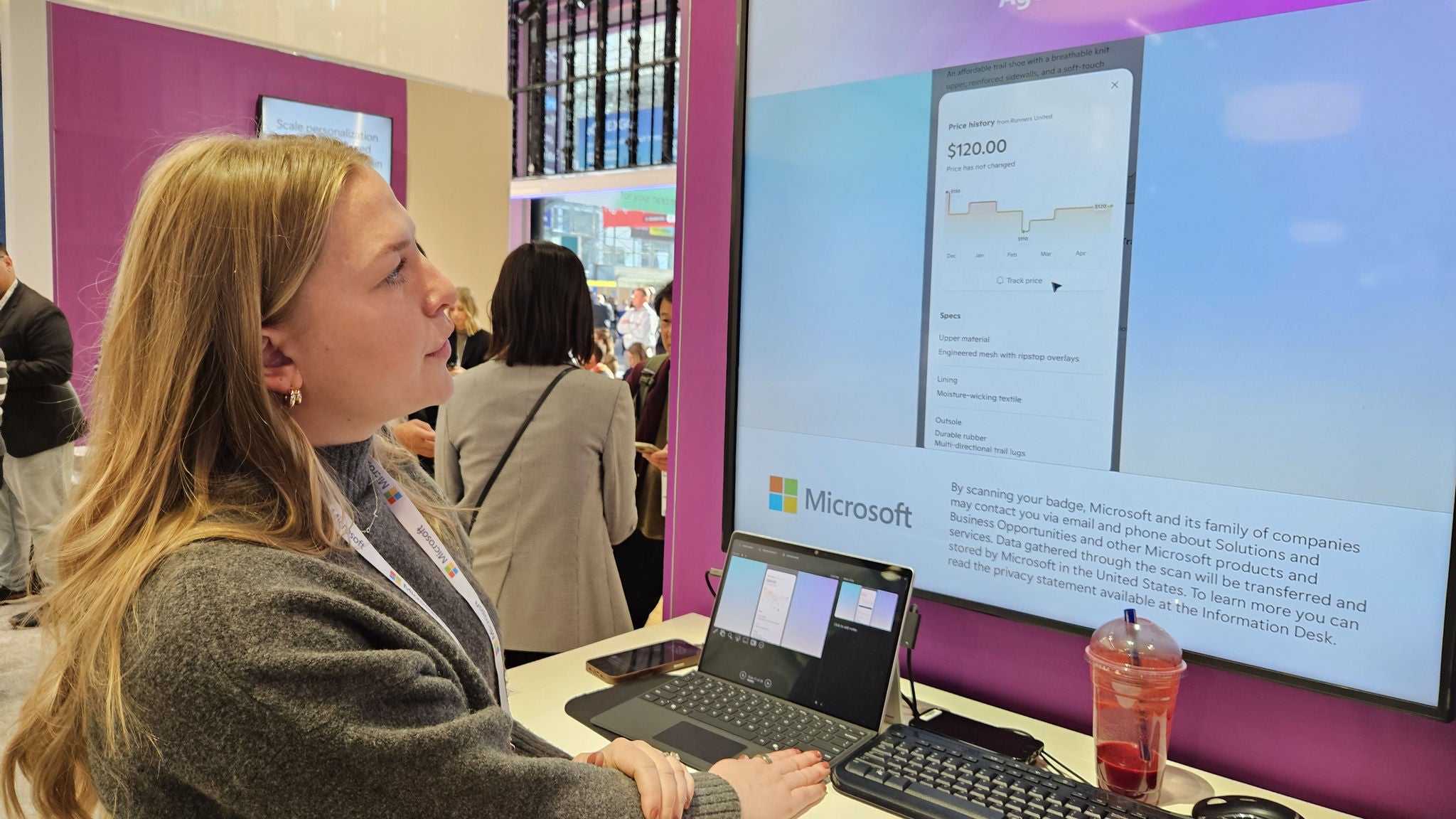
At Microsoft’s booth, Mallory Manolis showed me how Copilot Checkout worked, with a shopping experience and (of course) checkout embedded into the company’s Copilot AI agent. She said the team intentionally includes a specific retailer’s name in the buy button — like, say, a local bookstore — as an important way these businesses can maintain a close connection with their customers even in the new world of AI chats.

“We want any merchant, big or small, to surface their product to millions of Copilot users,” she said.


At the Microsoft booth, Mallory Manolis shows off Copilot Checkout. (Photo credit: Ben Fox Rubin)


Teams from both Microsoft and Google discussed at the conference how AI-powered shopping could be integrated both inside their own agents’ chats and also on retailers’ websites.

Scot Wingo, CEO and co-founder of ReFiBuy, which works in the AI commerce space, said the speed of innovation today is unlike anything he’s seen in his 30 years working in retail. With AI agents prioritizing context and content, smaller boutique shops who tell a story about their products have a big opportunity to shine as AI shopping takes off.

“I think this resets the whole playing field,” he said.

On another section of the show floor, I met Chase Alexander, a solutions engineer for Verkada, which makes security camera and door access controls. He showed me how his company, too, was integrating AI to make searching through video archives much easier. He added that Verkada ensures its using new AI tools with a foundation of privacy and protecting user data.

“I think it’s really interesting the number of markets it’s getting deployed into,” he said. “I think we learn every day how powerful a resource it is. It’s just a matter of time before it touches every industry.”


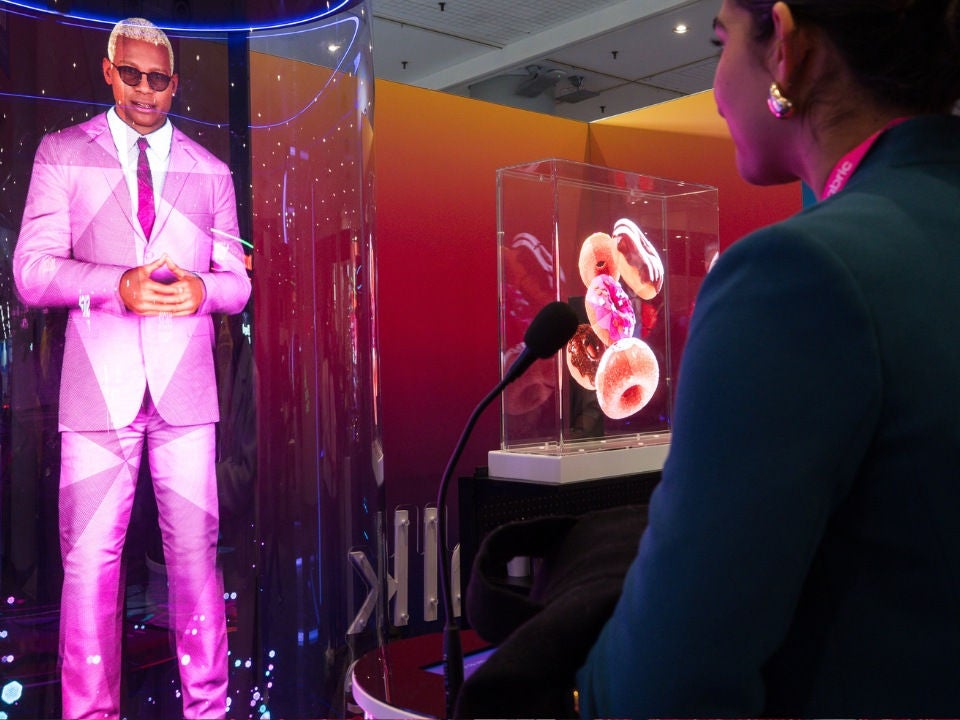
Tony Lutz of Verizon stands in front of a photo booth.

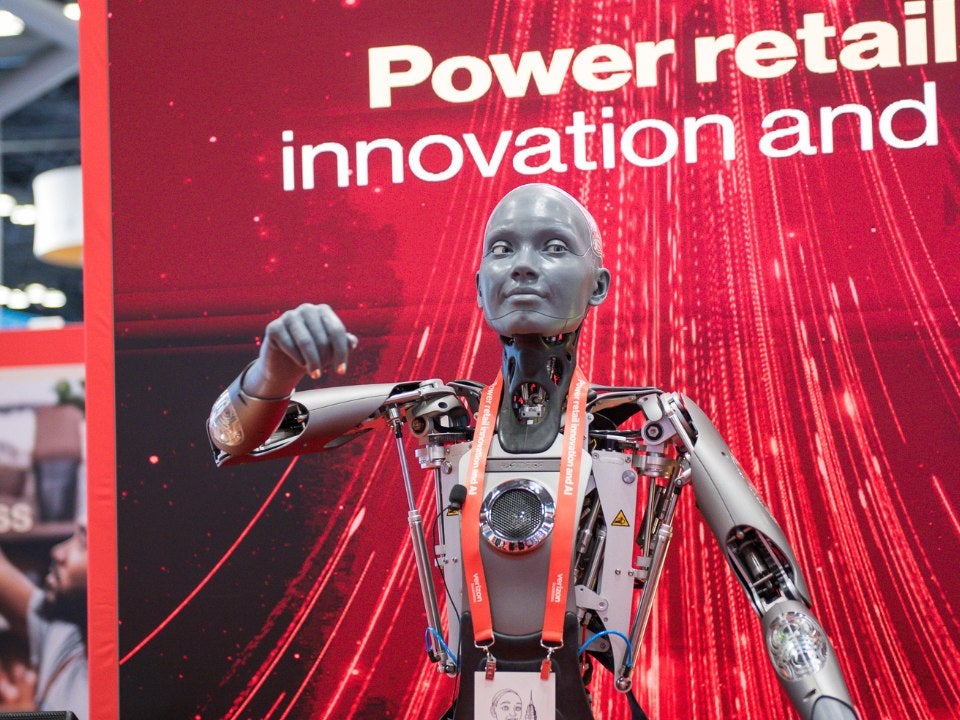
AI wasn't the only tech game in town, with retailers and brands harnessing holograms and robots to showcase their solutions. (Photo credit: Jason Dixson Photgraphy/NRF).


Toward the end of the day, I bumped into Pinny Gniwisch, an executive in business development at Delmar Jewelers in Montreal, Canada, a 150-person company that sells jewelry through other retailers like Kohl’s and Walmart. Gniwisch said Delmar is using AI to manage its inventory in real-time and help its workers more easily fill out data sheets on items so they can be listed across several different sites — the kind of manual drudgery hardly anyone enjoys doing.

“At every level, AI is going to make the job easier,” he added.

There was an interesting counterpoint mentioned amid all this AI hype. During a panel on Gen Z shopping interests, several members of The Z Suite, a Gen Z professional network, noted the importance of in-store shopping. As more of Gen Z is looking to avoid AI slop and doomscrolling and their phones in general, going to a physical store and discovering things there has become more popular for the younger set, said Naomi Barrales, a Gen Z consultant in the fashion industry.

So it seems we are certainly heading toward a future of much more AI, with the technology added to websites, business tools, video archives and even shopping carts. But, as Barrales noted, it will be nice to take a break from all that and go to a real store sometimes, too.

CES was all about AI … again

AI dominated the show — from faster processors and smarter vehicles to humanoid robots and home helpers — plus connected bricks and a trifold phone.
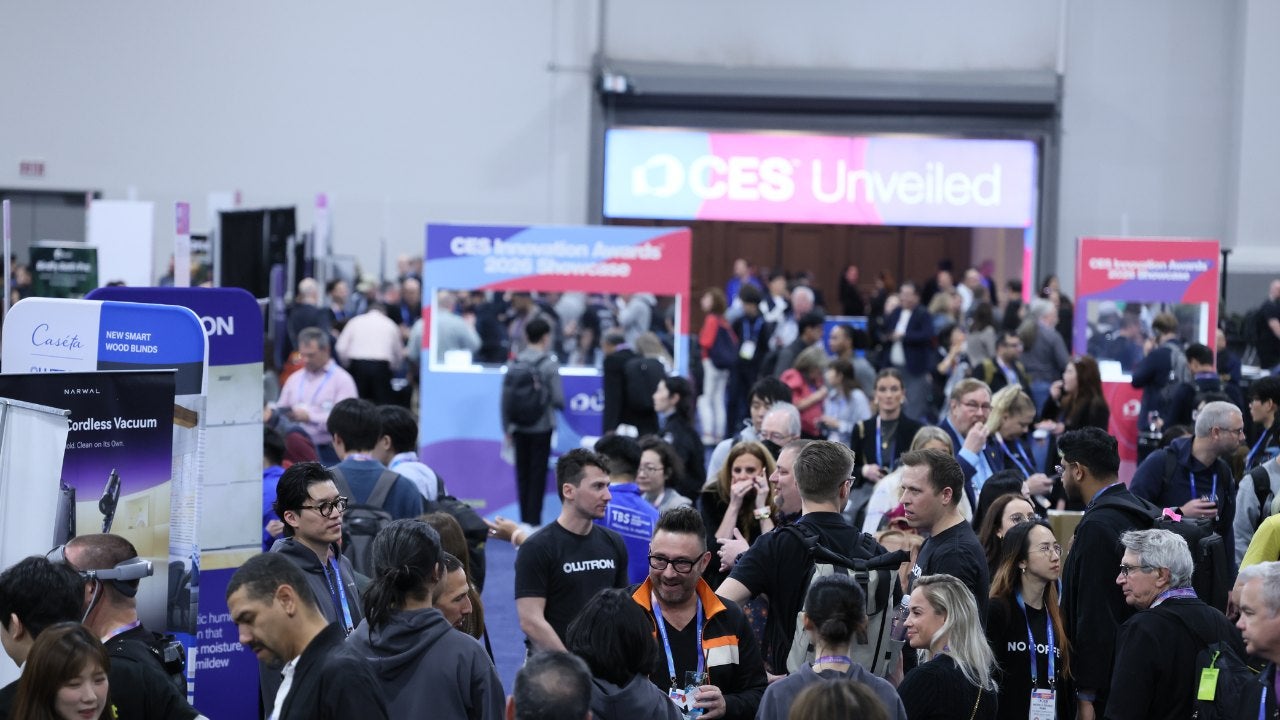
Attendees mingle on the floor of CES 2026 in Las Vegas.