Innovation

January 9, 2026


The quiet tech revolution of 2026: When big promises become everyday reality

Streaming, AI, autonomous vehicles and personal devices are shifting from hype cycles to daily infrastructure, reshaping life.

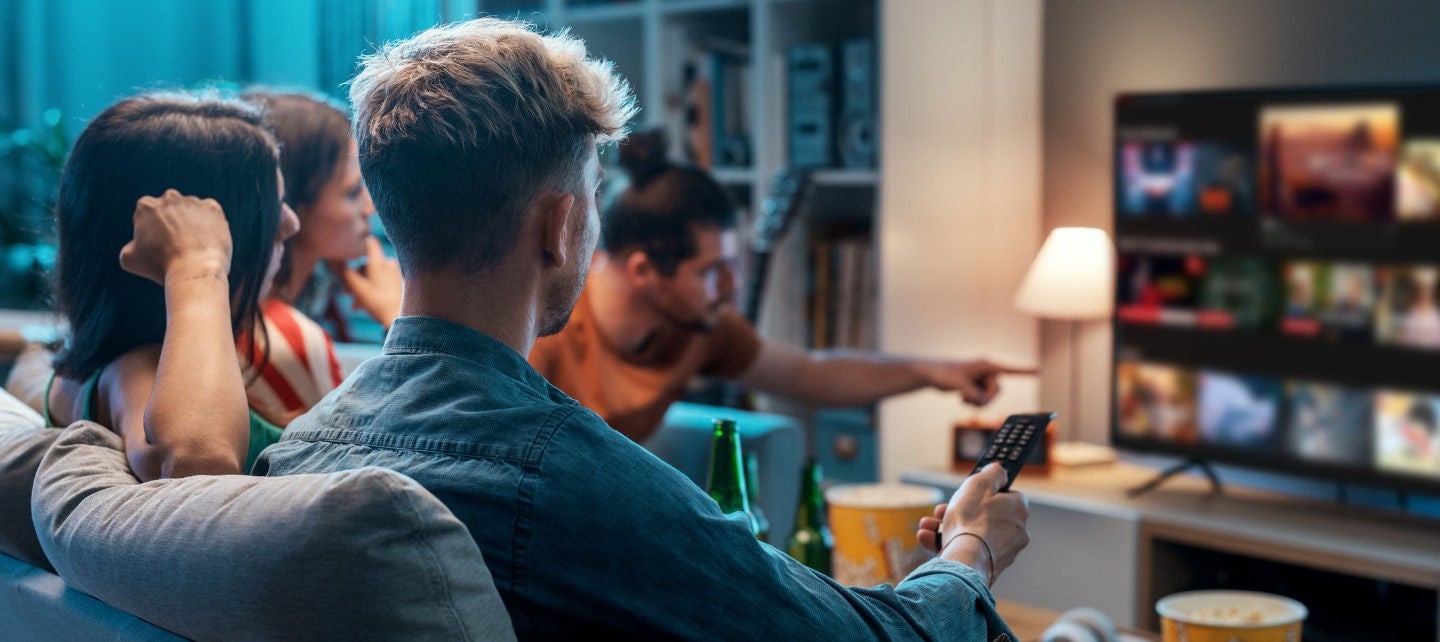
A group of friends watch TV together.

Chris Mullen

Manager, Global Communications,

Mastercard

In Tech

In Tech is our regular feature highlighting what people are talking about in the world of technology — everything from crypto and NFTs to smart cities and cybersecurity. 


It’s 2026, and like every year, major tech and culture outlets and research and advisory firms have started sketching out what the year may look like. The theme that emerges is less about breakthroughs and more about long-promised technologies becoming ordinary. The result is a year that may be  defined less by surprise than by visible changes in everyday routines.


Streaming stops feeling endless

According to reporting from Ars Technica, streaming in 2026 is expected to feel more constrained than it has over the past decade. Services are scaling back libraries, shortening licensing windows, and relying more heavily on bundling and advertising to control costs. What once felt like unlimited access is increasingly shaped by rights management and budget discipline.

The practical effects are already familiar to many subscribers. Shows rotate out more often. Entire franchises migrate between platforms. Viewers are spending more time searching for where something is available rather than deciding what to watch. Ars notes that this shift mirrors older cable dynamics, even as streaming remains the dominant format.


Self-driving cars: From curiosity to city streets

Several outlets, including The Guardian and Understanding AI, point to 2026 as a year when autonomous vehicles become more visible in public use. Rather than a sudden nationwide rollout, there will be an expansion in specific cities, particularly through robotaxi services and controlled urban deployments.

These changes are being driven less by new inventions than by infrastructure readiness. As noted in coverage of Nvidia’s autonomous systems, advances in AI hardware and simulation tools have made scaling more feasible. The result is that self-driving vehicles are no longer confined to pilot programs but are beginning to operate as part of regular transportation networks in select regions.


AI becomes built-in

Industry analysts are increasingly aligned on what artificial intelligence looks like in 2026. According to Gartner, the focus is no longer on general purpose tools or splashy capabilities, but on task-specific AI systems embedded directly into everyday software. These systems are designed to operate continuously in the background, handling narrow functions inside applications people already use.

Forrester reaches a similar conclusion in its 2026 predictions. Rather than chasing novelty, companies are under pressure to show measurable value. That means AI tools that reduce time, automate routine decisions, and integrate cleanly into existing workflows. The emphasis is less on experimentation and more on reliability.

Taken together, the analysis suggests that AI in 2026 is less visible, but more present. It does not arrive as a separate product or destination. It shows up inside spreadsheets, writing tools, customer systems and internal platforms. The shift is not about what AI can do, but about how quietly it does it.


Technology moves closer

The Wall Street Journal’s broader tech predictions point to incremental but noticeable changes in consumer devices, with phones, wearables and laptops are becoming more capable without becoming more visible. Improvements focus on efficiency, on-device processing and tighter integration with daily tasks rather than entirely new categories of gadgets.

Much of this progress is tied to advances in chip design and localized AI processing, allowing devices to respond faster without constant cloud access. These changes are unlikely to feel dramatic but again, may quietly alter how often and how seamlessly people interact with technology throughout the day.


Taken together, these reports describe a year defined by consolidation rather than disruption. Technologies that once promised transformation are settling into routine use, while systems built on abundance are learning to operate with limits. If 2026 has a defining characteristic, it is that change feels less like an event and more like a slow recalibration.


Six payments trends for 2026

Discover the future of payments with insights on AI-driven commerce, crypto and personalized experiences and more.

A woman lays on a dock in a running gear holding her phone as the sun rises.