Innovation

January 12, 2026


CES was all about AI … again

The march of AI continues, from chip design and PC speed ups to robots that work beside us and helpers aiming for a ‘zero labor’ home.

google logo

Bree Fowler

Contributor

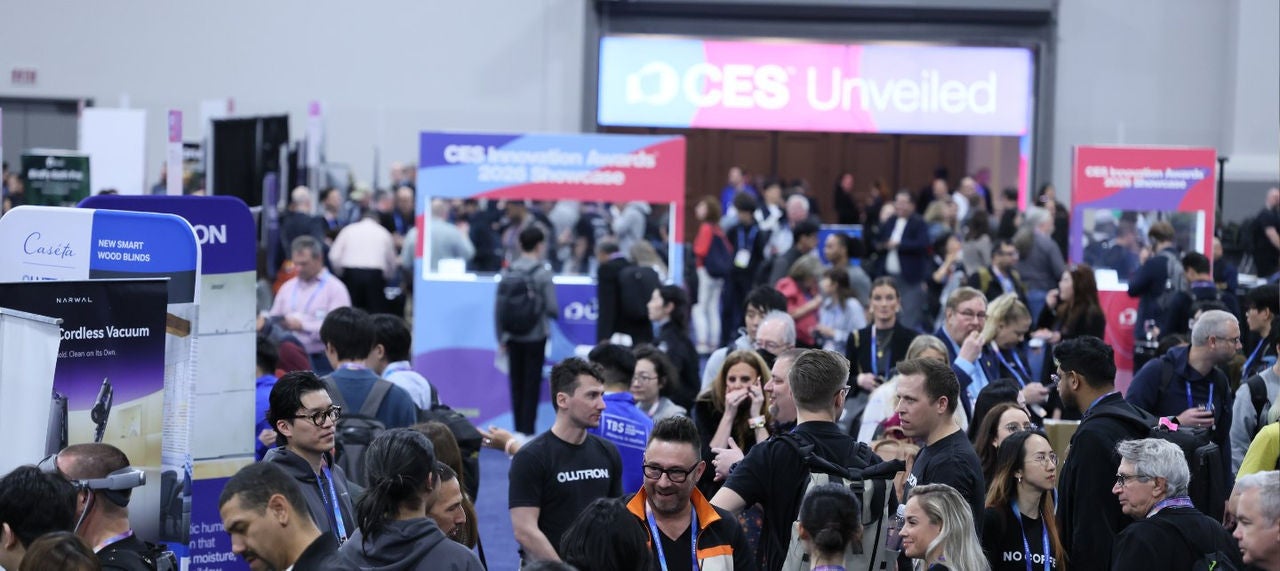
There was a little of everything at CES 2026, including Lego’s new Smart Play connected bricks, a trifold phone and a stair-climbing vacuum cleaner.

But, as expected, artificial intelligence claimed center stage again at this year’s consumer tech show in Las Vegas. And, of course, it wouldn’t be CES without the usual batch of increasingly human-looking robots.

Throughout the week-long event, AI played an integral part of just about every new form of consumer technology, starting at the chip level all the way to the cars we drive — and even those quirky robots — showing how massive and all-encompassing this technology has become over the last few years.

Calling it the “most important technology of the last 50 years,” AMD CEO Lisa Su noted how AI has transformed industries ranging from health care to manufacturing and commerce, touching the lives of billions of people every day.  

“AI is going to be everywhere over the next few years,” Su said during CES’ opening keynote. “Most importantly, AI is for everyone. It makes us smarter. It makes us more capable. It enables each one of us to be a more productive version of ourselves.”

Here’s a look at some of the latest AI technology, along with other kinds of innovations, unveiled at CES this year.


Nvidia has quickly risen to become the biggest player in AI chips and the highest-valued publicly traded company. While an increasing number of companies are now vying for pieces of that business, Nvidia isn't going to let that happen without a fight.

The company is going all in on “physical AI,” which is how it refers to AI models trained in a virtual environment on simulated data, then deployed on physical hardware once ready.

At the company’s press event, CEO Jensen Huang unveiled Cosmos, which is an AI foundation model that has been fed huge amounts of data and is capable of simulating environments governed by physics. He also announced Alpamayo, an AI model that he dubbed “the world’s first thinking, reasoning autonomous vehicle AI.”

Huang announced that Nvidia has started production of its next-generation AI superchip platform, named Vera Rubin after the famous astronomer. It’s designed to meet the growing computational needs required by the proliferation of AI. And it offers speed and storage improvements over the company’s previous architecture.

But it was the two very cute, AI-trained Star Wars droids who joined him on the stage that stole the show.


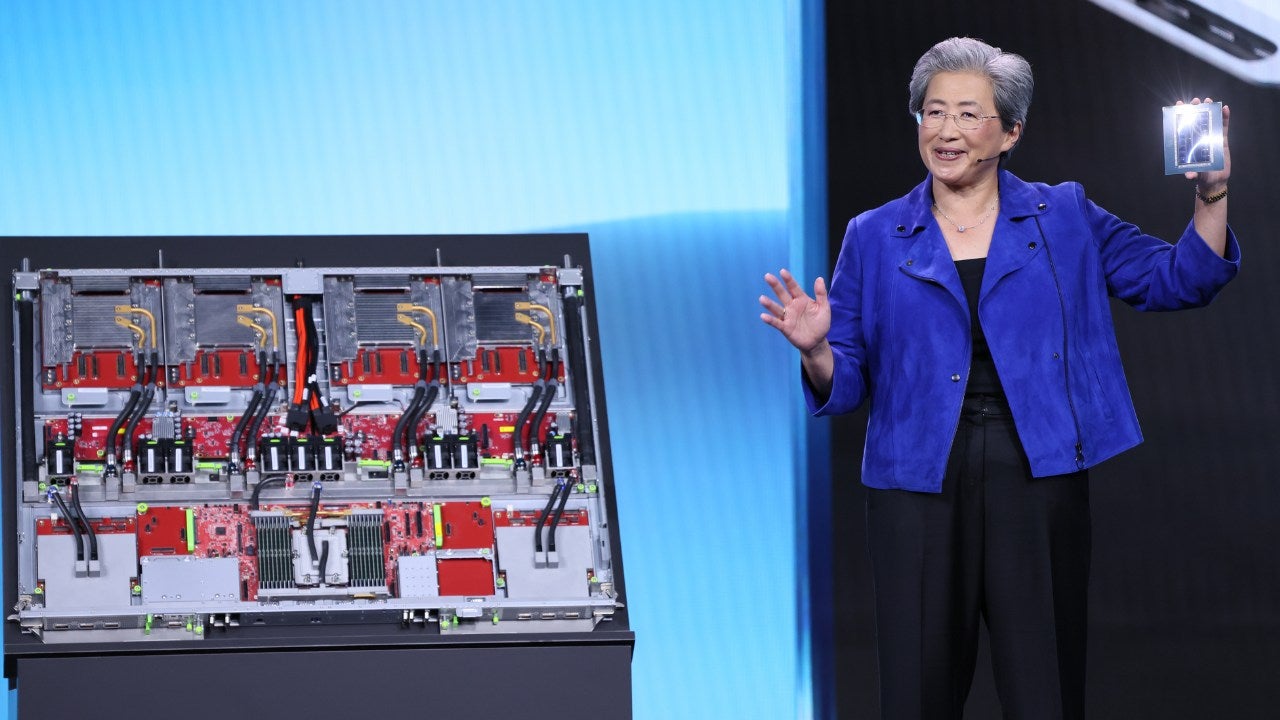
AMD’s innovations in AI-powered chips were the main focus of Su’s keynote as she announced a new line of AI processors designed for personal computers. The launch comes as the massive semiconductor company looks to expand its own presence in the AI industry.

AMD says the Ryzen AI 400 Series processor, the latest version of AMD’s AI-powered PC chips, allows for 1.3 times faster multitasking than its competitors and is 1.7 times faster at content creation. The company also unveiled the AMD Ryzen 7 9850X3D processor, which is designed for gaming. PCs that include either of the new processors will be available in the first quarter of this year.


AMD's Linda Su with a display of chips.

AMD CEO Lisa Su shows off the company’s latest AI chips during her CES 2026 keynote in Las Vegas. (Photo credit: Consumer Technology Association [CTA])


The new products come just months after AMD inked a deal with ChatGPT maker OpenAI to provide it with chips. As part of that deal, OpenAI also gets the option to buy up to a 10% stake in AMD.


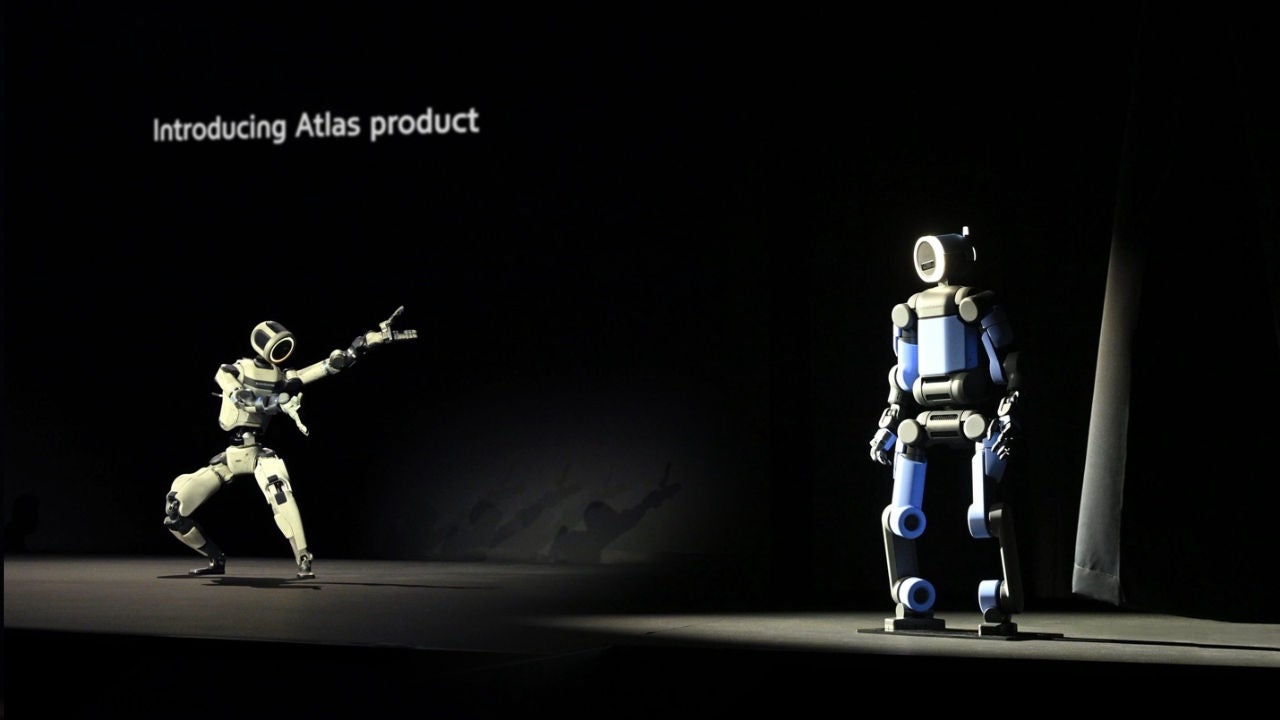
Hyundai-owned Boston Dynamics showed off Atlas, a prototype humanoid robot with arms, legs, and a head that’s designed for industrial use. During a CES presentation, it walked around the stage, swiveled its head and waved to the crowd.

While robots have long been a mainstay on the CES stage, this new breed is — you guessed it — powered by AI. Hyundai announced a deal with Google’s DeepMind to jointly create AI tech for the robots.


The new Atlas robots from Boston Dynamics.

Boston Dynamics’ Atlas, unveiled at CES 2026 as part of Hyundai Motor Group’s AI Robotics Strategy, won CNET Group’s ‘Best Robot’ award for its natural, human-like gait and sleek design. (Photo credit: Boston Dynamics/Hyundai Motor Group)


The robots are designed to work alongside humans in manufacturing environments like Hyundai’s vehicle assembly plants. The company is currently building production versions of the robot, which it plans to roll out for limited use in its assembly plants starting in 2028.

Meanwhile, LG debuted its CLOiD robot which is designed for home use. The goal, LG executives said, is a “zero-labor home.” Like Rosey the Robot on the 1960s animated classic “The Jetsons,” this AI-powered robots can take over mundane household tasks like food prep, washing dishes and doing laundry.

But this robot is slow. When demonstrating its laundry-folding prowess, it took about 30 seconds to fold one towel. So, while AI may possess the computing muscle to help solve some of the world’s most vexing problems, it could still use a few training sessions with Rosey.


Shopping transformed

CES showcased how retail is being redefined, from the rapid rise of agentic commerce to more autonomous shopping experiences, from VenHub’s fully autonomous 24-hour Smart Stores that combine robotics, automation and mobile-first checkout to GE’s latest smart refrigerator equipped with a barcode scanner that can sync with Instacart. This transformation includes includes how brands reach customers, highlighting the growth of commerce media — digital media networks that power smarter, more personalized advertising.

“The shopping journey has fundamentally changed,” said Nili Klenoff, Mastercard executive vice president for Commerce Media and Innovation. “The lines between awareness, engagement and conversion are especially blurry now as agentic makes its impact on commerce. But commerce media sharpens the journey, delivering relevance, influence and action we can actually measure.”

Alongside AI and calls for robust measurement, security and trust were common themes across the week at CES. “If agents are ultimately going to do autonomous buying, consumers have to trust them,” Klenoff says. “That means standards, governance, and layers of security.”

Courtney Meola contributed to this report. 

Agents of change: AI's rise

Go inside the real-world AI breakthroughs, small business successes and the fight against digital threats in 2025.