What’s the sound of the summer?
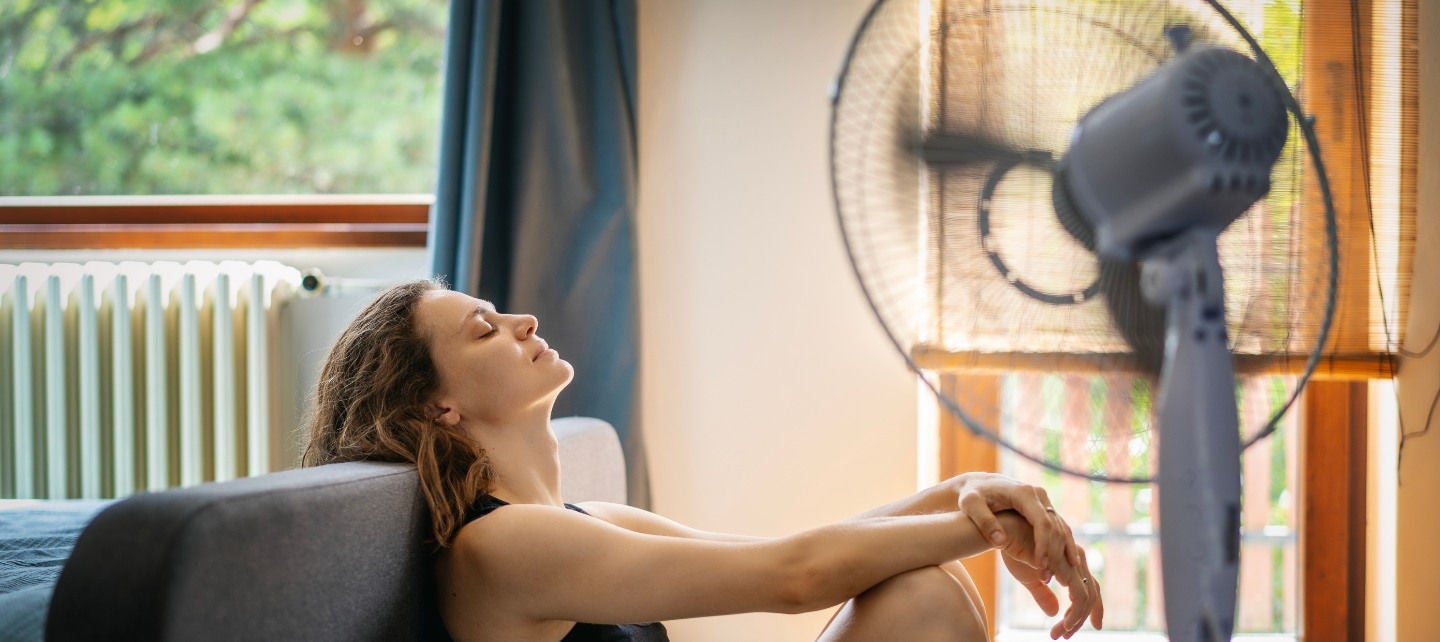
Not the latest pop hit taking over the airwaves, but the real sound of the summer. Is it insects chirping in long grass? Children splashing in a pool or sprinkler? Or the steady hum of an air conditioning unit, diligently keeping your home or office cool?
While the last one may be a familiar and comforting noise in some parts of the world, there are other places where its sound is proving to be more controversial. In the United States, around 90% of homes have some form of air conditioning, whereas in continental Europe, only 20% of homes have the same luxury. In the United Kingdom, that number drops to just 4% — perhaps not a surprise in a nation known for its gentle weather and frequent rain. But with changing weather, and hotter summers, the matter of air conditioning isn’t just one of private convenience, it’s fast becoming one of public health.
The last few months have seen scorching temperatures across the U.K., with the nation’s weather service, the Met Office, calling extreme weather “the new normal.” The heatwave has been so severe, experts estimate there have been an excess 2,700 deaths, a grim statistic repeated across other European countries. But while the climate may changed, buildings have not, and it will take a lot more than opening a window to keep them cool.
While better insulation and fitting exterior blinds may help homes in the U.K., the widespread adoption of air conditioning might seem like a sensible step. The basic technology behind conventional air conditioning is simple, using a refrigerant liquid to condense and expand, absorbing and expressing heat as it changes. Cold air in, warm air out.
The biggest issue is that it the process takes a lot of electricity, and many refrigerants have historically carried a climate cost if they leak. As demand for cooling rises, an awkward feedback loop becomes harder to ignore: hotter world, more air conditioning, more energy use, potentially more warming. Cooling technology already accounts for 3% of global greenhouse gas emissions, and that demand is only rising.
Luckily, engineers are trying to break that cycle with a new generation of air conditioning technology. Across Europe, teams are testing systems that don’t use problematic refrigerants at all.
As covered in Techspot, researchers at Saarland University in Germany are testing using nickel-titanium alloys that generate a cooling effect when stretched and released, a more efficient process known as elastocaloric cooling. Research leader Paul Motzki said the technology could be a “paradigm shift,” and could appear in homes in a few years.
Another team, Mimic Systems, is testing a semiconductor-based heat pump that uses electrical currents to move heat, with no need for refrigerants, with a prototype installed in an apartment in Vancouver. Meanwhile, Germany-based Magnotherm is developing cooling systems that rely on magnetic fields, with plans to test them in a supermarket.
While the need for mechanical cooling is becoming more pronounced, the concept goes back a long way. In Belfast, Northern Ireland, the Royal Victoria Hospital was fitted with a sophisticated cooling system in 1903, using a network of fans to draw air across moistened coconut-fiber ropes. A similar idea is still proving useful in India, where public cooling stations are being used on the streets of Jodhpur. There, walls of fibrous panels made from a dried grass called khus are misted with water, and solar-powered fans are used to draw cooler air into the shaded space. The facility is frequently used by people who spend significant time outdoors, including delivery drivers and street vendors.
Ultimately, any form of air conditioning will only be part of a solution to life on a heating planet. They will need to be smarter, cleaner systems that work with buildings rather than against them. Better heat pumps, lower-impact refrigerants, solid-state cooling, smarter controls, improved insulation, shading and urban design will all have roles to play in keeping us cool when the mercury rises.
Then hopefully, summer will go back to being something to be enjoyed, rather than endured.