March 12, 2026
Circle is best-known for its stablecoin, called USDC, which currently has over $77 billion in value in circulation, making it one of the biggest stablecoins globally. But the company aspires to be known for a whole lot more.
It’s working on building a lot of the infrastructure needed to make blockchain payments and financial services a reality for everyday users. It’s doing that by offering developer tools, the Circle Payments Network and its own blockchain called Arc, all to enable blockchain-based payments and capabilities for just about any company.
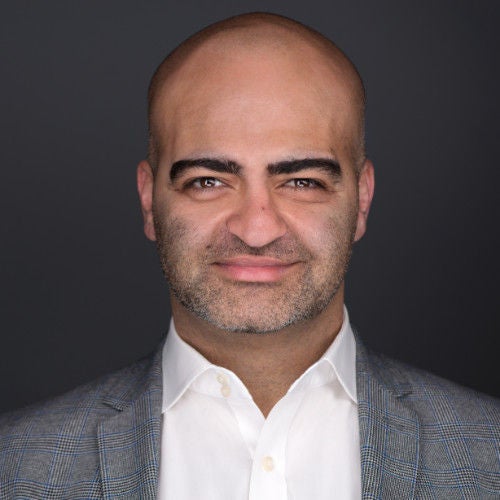
“We're building what we're calling an internet finance platform that really helps encourage and accelerate this move to on-chain money movement,” said Chief Commercial Officer Kash Razzaghi, who’s responsible for Circle's partnerships and strategy to make this effort happen.
This shift of financial infrastructure onto blockchain is expected to make money movement faster, cheaper and more transparent. He said that the work of evolving the entire payments ecosystem is too big a job for any single entity, which is why Circle partners with companies including Mastercard to expand usage and acceptance of stablecoins around the world. This week, Mastercard unveiled a new Crypto Partner Program, which Circle joined.
“It takes an entire community,” Razzaghi added. “The fact that Mastercard is engaged here brings so much credibility to what this technology can be, what this industry can turn into."
Razzaghi spoke to the Mastercard Newsroom soon after he returned from the World Economic Forum in Davos in January, where he connected with people all across finance and financial services to bring more people into the growing blockchain community.
The following Q&A was edited for length and clarity.
Markets are turbulent and that should be an expectation. Crypto, for perhaps the majority of its life, has been directly tied to speculation. But what we're excited about is moving from that — and I don't think trading and speculation will ever completely go away, that's not the point — but the evolution from speculation to infrastructure. Have we seen good days in crypto speculation? Yes. Have we seen more turbulent days in crypto speculation? Yes. These cycles have existed and if people move out, I think there are going to be people that buy and that just happens.
It was really all about infrastructure and how blockchain technology and digital assets can solve real world problems or enhance capabilities of money movement, store of value and access to financial systems and tools. And that's what was really refreshing about Davos this year. Because as regulation is now clearing the way for institutions to get involved, the benefits of the infrastructure are becoming more readily apparent. It is not about speculation. It is about how do you move billions or trillions of dollars of value over this technology, using this technology instantly, securely, cheaply, and how do you upgrade the financial system and the plumbing that hasn't really been upgraded over the last 75 years.
The discussion was that the ecosystem will benefit from this. It will help companies that currently operate in financial infrastructure or financial markets or financial services. It can help them evolve their businesses and provide better services. For the longest time, the narrative may have been, “Will blockchain technology take out banks? Will it take out card networks? Will it take out this, that or the other?” And that's not the case.
And what was really refreshing was to see ecosystem discussions focused on that with these major players. All the banks, financial services institutions, traditional exchanges, card networks are embracing this technology because of the expectation that the cost of moving money will approach zero, and the speed of moving money will accelerate.
At its core, what does Mastercard provide? They provide trust, right? You've built a global trust network. I have a Mastercard. When I swipe my card, the merchant can breathe easy, knowing that the funds will land because Mastercard is behind it. That will never go away in my view — the importance of trust. How I see Mastercard's involvement is not only are you maintaining the trust and building on it, but you're providing better technology for that transaction. You're making it easier. You're making it more accessible. You're removing blockers and intermediaries. You're removing friction, and maybe over time it actually becomes even more cost effective.
And the benefit Circle gets is the adoption of stablecoins, the adoption of digital assets. We see a future of on-chain money movement. We think that money movement is better on-chain in the future. There's certainly large things that need to happen in terms of the infrastructure and in terms of regulation and compliance, so we're not there yet. When Mastercard really begins to build on-chain and to leverage on-chain products for its own customers, it just accelerates the adoption.
There are three primary use cases today. The primary use case for stablecoin in terms of adoption and utilization and growth has been tied to trading and investing. If you're someone who engages in digital asset investing and you have investments in bitcoin and ethereum and other digital assets, leveraging USDC to do that is a really great way because you can move in and out of your positions and then hold value in a stable value like USDC.
The next two are not as big as trading and investing yet, but the acceleration is incredible to see and we think the next phase of growth and real-world utility will come from this. After trading and investing, I would say payments — particularly cross-border payments. If you are moving money from one country to another country, whether you're an institution or you're part of a diaspora and you want to be able to move money from one wallet to another, stablecoins are a great way of doing that. Being able to move money on the blockchain removes intermediaries. It can bring down fees. Settlement time can be in seconds or minutes versus days or weeks. We are seeing large volumes of money movements across every major industry. Even if you're a large institution and you need to move money from Singapore to New York City, you can do it with stablecoins now and you're not beholden to banking hours anymore. We think that payment use case is going to accelerate way beyond just cross-border payments. It will be across all aspects of payments.
And then the third is store of value, predominantly in countries that are suffering from currency devaluation, like the country I was born in, Iran, or Venezuela or Argentina. Countries that have hyperinflation and their citizens don't trust their own currency anymore and would rather hedge and want to actually hold the U.S. dollar.
We think payments and store of value is just going to accelerate this and make the entire stablecoin market cap much, much bigger than it is today.
There's an argument to be made that mainstream adoption of stablecoins, and this technology as a whole, will happen when it is just the plumbing and people don't even know it's a stablecoin that they're holding. They're holding a dollar and they're sending a dollar. We make this analogy a lot: The same way when you go to a website and you type HTTP, most people don't understand that technology. They’re just sending an email. There is absolutely a version of this, of “mainstream adoption,” where the plumbing just becomes on-chain distribution.
There is no such thing as a defined career path. You benefit from both luck and timing, but also expertise you gained that can help you for the next thing. So if you think about my career, it’s this mishmash of clothing apparel, sports company, video distribution and crypto. What is the common thread? Entrepreneurship, go-to-market and business development, sales. I love the idea of building. I like to be mission driven. I like this idea of working on problems that can actually impact a whole lot of people.
And so when I joined Circle six years ago, I was not what you would call the most crypto-native person in the world. I was not a crypto expert, but then when you figure out what this technology can actually do, you become inspired by it and become mission driven by it.