AI

September 29, 2026


Commercial payments are entering the agent era

Oracle's Chris Adams explores how intelligent agents will simplify commercial payments while keeping trust, transparency and human oversight at the center.

google logo

Vicki Hyman

Director,

Global Communications,

Mastercard

What if commercial payments could evolve from a daily regimen of chasing invoices, waiting on approvals and escalating exceptions into a system that knows what to pay, when to pay and how.

With the recent advances in AI, Oracle’s Chris Adams believes it’s when, not if. Within three years, he says, payment agents may be commonplace, continuously monitoring obligations, cash, supplier terms and market conditions. These agents will be able to recommend the optimal action, execute routine steps within policy, and bring only the meaningful exceptions to a person to review and approve.

“That will make commercial payments more proactive and outcome-oriented,” says Adams, the senior vice president for Financial Services Strategy in Oracle’s Payments Strategy team. “Instead of finance teams asking, ‘Which invoices should we pay today?,’ the system will surface a governed recommendation balancing liquidity, discounts, supplier experience, and risk.”

Oracle, which helps businesses manage everything from finance and procurement to supply chains and operations, is working with Mastercard to embed commercial payments capabilities into the enterprise workflows businesses already use, helping companies pay suppliers seamlessly, automate processes and move money more efficiently. The Mastercard Newsroom recently spoke with Adams about how AI is taming the notoriously complex world of commercial payments and the role of trust in making payment agents the practical reality. 


Oracle has been helping companies put AI to work for years. As organizations move from AI experimentation to enterprise-wide adoption, what have you learned about turning AI innovation into real business value? What distinguishes the companies that are successfully scaling AI from those still struggling to unlock its full potential?

AI is no longer confined to a few industries or one type of company. It's becoming foundational infrastructure for the global economy. Already, our customers spanning industries including health care, financial services, and government — organizations that touch billions of people's lives every day — are seeing significant results. This is important because the impact of AI is not measured by how many models you deploy. It's measured by the outcomes you create: better citizen services, giving doctors back time in their day to support patients, and helping reduce financial crime.

The organizations making the fastest progress don't treat AI as another technology initiative or a collection of pilots. They start with a meaningful problem they're trying to solve, then they build the right foundation: trusted data, strong governance, modern infrastructure, and AI embedded directly into the workflows where people already work. The companies that struggle are often experimenting with AI around the edges of the business.


What does AI unlock when payments are built into the system, rather than bolted on beside it?

When payments are embedded in the system of record, AI has the operational context to act intelligently: the supplier, invoice, contract, approval policy, cash position, payment history, and exception status. That makes it possible to move from simply processing a transaction to optimizing the entire payment decision.

For example, AI can help determine whether to pay early, use a virtual card, select financing, onboard a supplier, or escalate an exception, while maintaining the approvals and controls finance requires. The results are less re-keying and reconciliation, faster execution and better working-capital decisions.


The standard should not be 'Can AI automate this?' It should be 'Can it do so safely, transparently, and within the organization’s financial, regulatory, and risk controls?'

Chris Adams


Consumers have quickly embraced AI-powered experiences that are more intuitive and more personalized. How do you see those expectations influencing the ways businesses buy, sell and pay each other?

Consumer experiences are resetting expectations everywhere. Business users increasingly expect payments to be intuitive, immediate, personalized and transparent, even when the underlying transaction is more complex.

In B2B, that means buyers and suppliers will increasingly expect flexible payment options, clear status visibility, fewer manual steps, and experiences tailored to their relationship and terms.

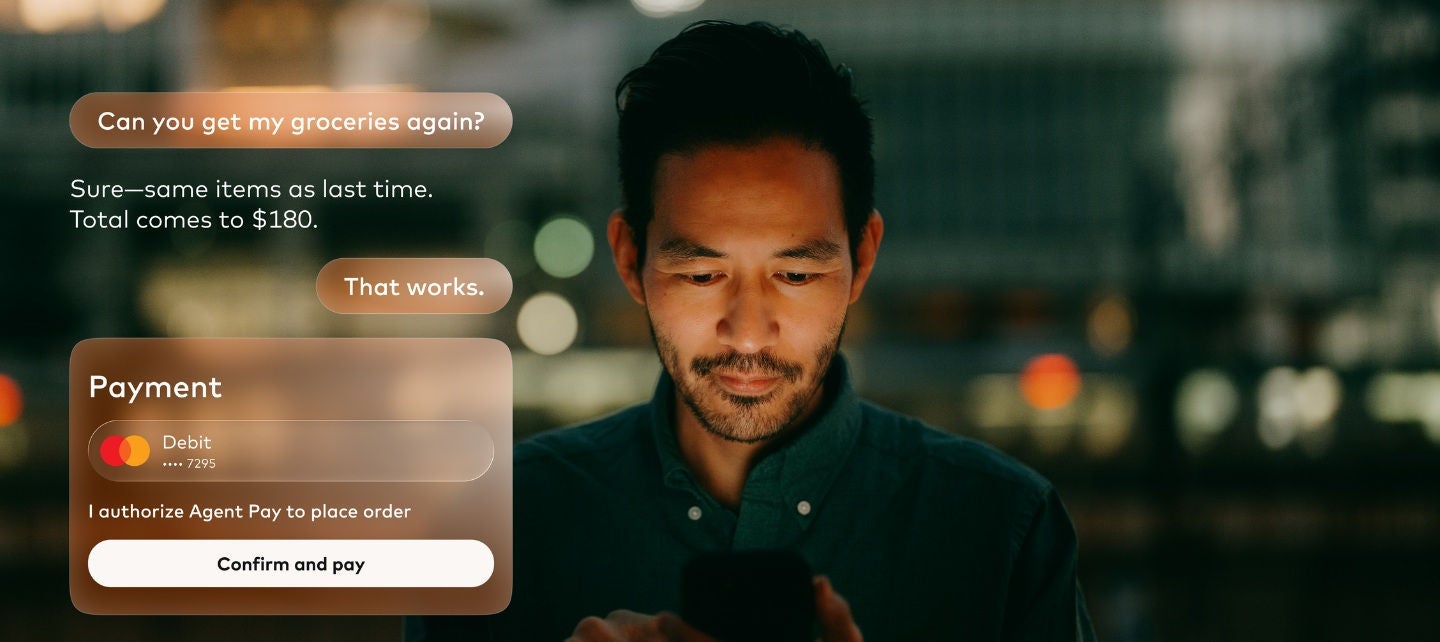
If you look at emerging areas such as autonomous or agentic commerce, AI agents may be able to source suppliers, compare terms, place routine orders, and initiate payments within pre-approved limits. That makes the payment experience more complex behind the scenes: Businesses will need clear rules for delegation, identity verification, spending controls, audit trails, data permissions and liability when an agent acts on their behalf.  AI must present the right action, payment method or financing option at the right moment, without forcing users to navigate multiple disconnected systems. The opportunity is to make that complexity become invisible to the customer, delivering the simplicity consumers already expect while giving businesses the trust, control and transparency they require to navigate these complicated payment ecosystems.


Commercial payments have never been known for their simplicity. They often involve different systems, multiple approvers and lots of stakeholders. Where do you see AI making the biggest difference in simplifying those experiences?

The biggest opportunity is in the exception-heavy work around the payment itself: capturing and interpreting invoices and remittance data, matching documents to purchase orders and receipts, routing approvals, resolving mismatches and monitoring acknowledgements.

Those are processes that commonly span ERP, procurement, banking and supplier systems. AI can coordinate the handoffs, identify what is missing, recommend a resolution and automate routine work. Rather than asking people to chase information across systems, it brings the issue, context and next-best action together.


As AI takes on more routine tasks, how do you see the role of finance and treasury professionals evolving? Where will human expertise become even more important?

AI will take more of the repetitive work out of finance — data extraction, matching, monitoring, routine reporting, and first-pass exception handling. That lets finance and treasury teams shift from processing transactions to managing outcomes: liquidity, supplier strategy, risk, capital allocation and business performance. Human expertise becomes even more important where judgment, accountability and tradeoffs matter: setting policy, approving nonstandard decisions, interpreting market conditions, managing strategic supplier relationships, and challenging an AI recommendation when the context demands it.


Trust has always been foundational to payments. As AI becomes more embedded in financial decision-making, what will it take to build and maintain confidence in AI-powered systems?

Trust has to be designed in. In payments, that means strong data security, clear controls, role-based access, auditability, and the ability to understand why a system made or recommended a decision. It also means keeping people in control of material decisions and setting clear escalation paths when confidence is low or an exception arises.

The standard should not be “Can AI automate this?” It should be “Can it do so safely, transparently, and within the organization’s financial, regulatory, and risk controls?” Embedding AI in enterprise workflows helps because the same policies, permissions, and records govern both the process and the decision.

What will move agentic commerce from possibility to everyday reality?

What stands between today's AI assistants and autonomous commerce? These Start Path agentic commerce startups discuss trust, payments, identity and adoption.

A man looks at his phone.