Mastercard’s Payment Risk Insights gives lenders fresher, more accurate views of borrower and customer financial health—helping them expand lending opportunities and improve service for consumers and small businesses.
Published: April 07, 2026
When it comes to deciding who can access credit and loans, lenders still rely on tools that have not changed much since the 1950s. By contrast, today’s borrowers have changed a lot. Not only are they more tech-savvy, but their finances have become more fluid, shaped by variable incomes and revenues, inconsistent expenses and rapidly shifting spending patterns.
At the same time, demand is growing for new, short-term repayment products, such as Buy Now Pay Later (BNPL), cash advance, short-term personal loans and early wage access, products that require quick assessments of applicants’ real-time financial health. And when demand for those products comes from applicants with thin or no credit history, including students, renters, or recent immigrants, it can be tough to assess creditworthiness and manage risk effectively.
“Lenders need a broader set of financial health signals that give them a better understanding of our rapidly changing financial lives and our evolving needs,” says Taylor Goldaper, vice president in charge of lending products at Mastercard Open Finance.
That’s now changing with the expanded availability of Mastercard’s Payment Risk Insights (PRI), an innovative approach that makes underwriting more inclusive by giving lenders more granular and timely insights into their customers’ ability to make payments.
Drawing on transaction data permissioned by customers, PRI provides lenders with an up-to-date and more robust view of a consumer’s or small business's financial health. PRI gives lenders insights that have a particular focus on:
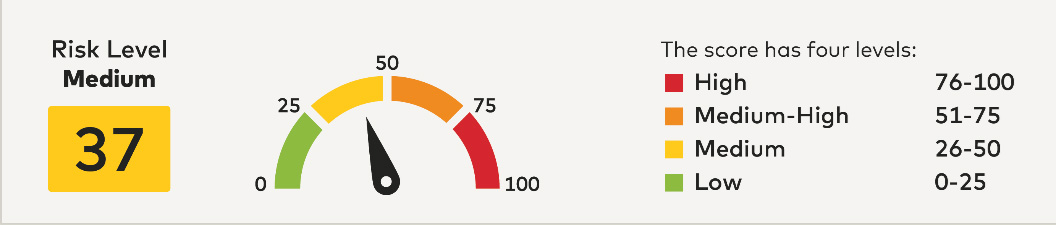
Whereas traditional credit scores are largely based on debt and liability payments, PRI adds to that information by including ongoing transaction data from bank accounts. The result is a new, two-digit Payment Risk Score that predicts the likelihood that a borrower or existing customer will make or miss a loan or an installment payment over the next 180 days.
The new scores — ranging from zero (lowest risk) to 100 (highest risk) — are built on Mastercard’s Fair Credit Reporting Act (FCRA)–compliant Consumer Reporting Agency platform and follow Federal Trade Commission standards for small and mid‑sized businesses. The scores place borrowers into four risk tiers—low, medium, medium‑high, and high—helping lenders make better decisions across the customer lifecycle, from underwriting to portfolio management. The solutions are delivered via modern APIs and can easily be integrated into existing credit decisioning processes, supporting a broad range of underwriting and ongoing servicing needs.
“This gives lenders a better understanding of a consumer’s ability to repay, not just a snapshot of their past,” Goldaper says. “Cashflow-based insights can help lenders see repayment risk sooner and more accurately.”
Using PRI can help underwriters say “yes” more confidently. As a result, financial institutions can fuel revenue growth by selling more short-term products, such as BNPL, which have seen rapid growth in recent years.
PRI scores enable lenders to continuously monitor financial health after origination, improving portfolio management. This helps spot early signs of repayment stress and recognize when financial behavior is improving. Lenders can then adjust offers—such as lower rates, credit line increases, or product upgrades—to better match each customer’s situation. If finances worsen, lenders can step in early with the right support, reducing risk while delivering a more personalized, inclusive credit experience.
PRI is a key component of Mastercard’s Credit Intelligence program, a suite of solutions that empower lenders with faster, smarter and more inclusive insights to better serve consumers and small businesses.
Want to explore how Payment Risk Insights can help reduce risk, support innovative repayment products, and expand access to credit?
Learn more about Mastercard’s Payment Risk Insights solution or Contact us to get started today.