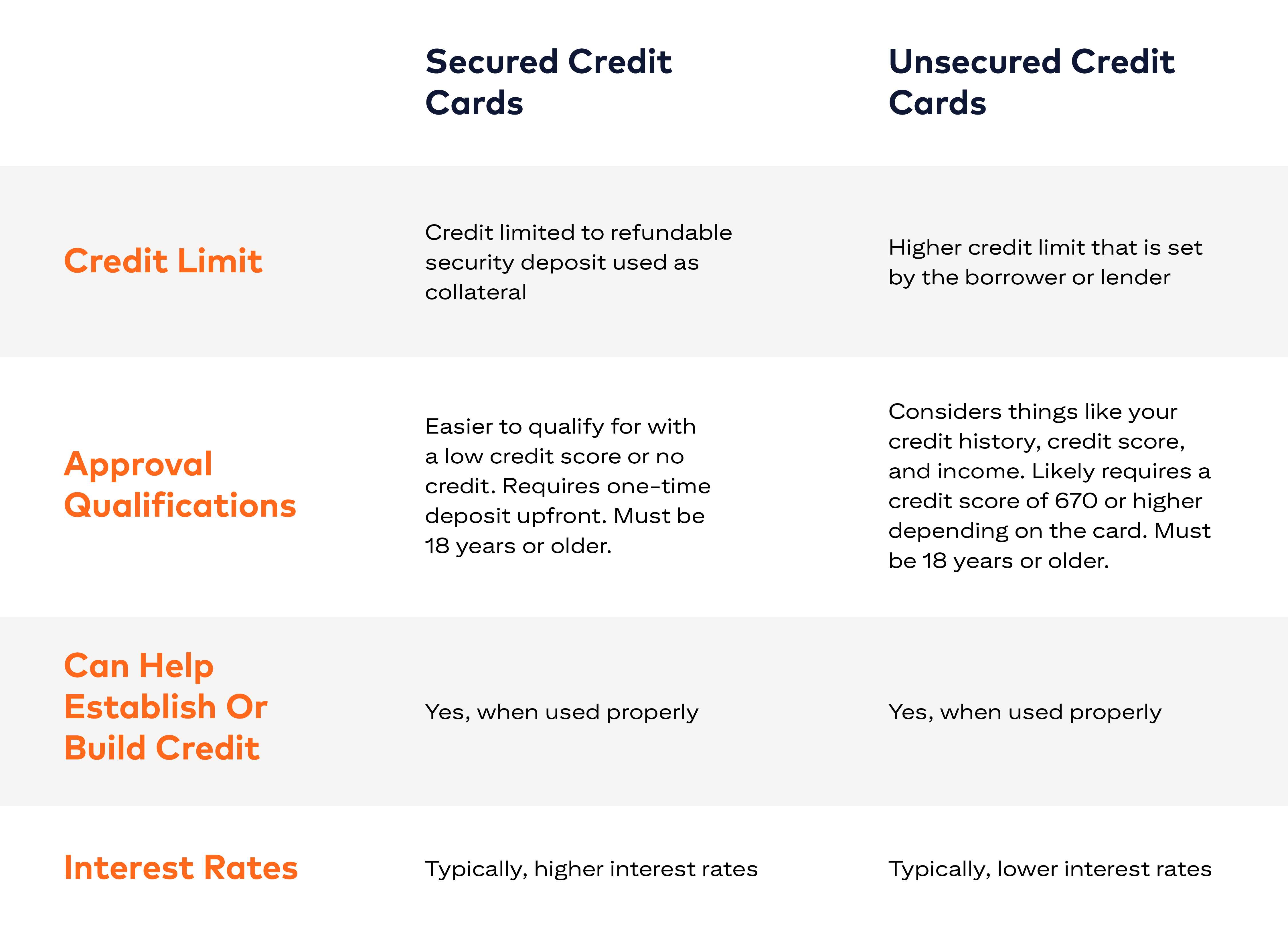
If you have no credit or poor credit, a secured credit card can be a very good option for you to soon be on your way to a good credit score.
If you’re considering a secured credit card, here’s what you need to know.
One of the main advantages of using a secured credit card is its ability to help you build or rebuild your credit. Secured cards report your payment history to all three major credit bureaus, which means that consistent on-time payments can have a direct, positive impact on your credit score.
This shows lenders that you’re capable of managing credit well. As your credit score rises, you can eventually qualify for an unsecured credit card or loans with lower interest rates.
Since the credit limit is tied to your upfront deposit, it encourages you to spend within your means and avoid taking on excessive debt.
“Try not to overuse your credit line,” says Kellen Burger, Vice President, Consumer Credit and Product Management at Mastercard. “Credit bureaus want to see 30% credit utilization or less.”
This means you shouldn’t use all of the money available to you each month. While avoiding the temptation to overspend can be tough, this can help you build the discipline needed to pay bills on time and stay within your budget.
Many secured credit cards come with modest perks. Some offer cash-back rewards, where you earn a percentage of your purchases back, which can be redeemed for money back or other rewards. Others offer travel points for travel-related expenses, such as flights, hotels, and car rentals. They also often come with fraud protections, giving you peace of mind in case your card is lost or stolen.
Before getting a secured credit card, look into the fees associated with the card. Many secured credit cards may charge annual fees, setup fees, or monthly maintenance fees.
These fees can add up over time, so it’s essential to shop around and compare different options. It’s important to understand all the components up front of what is required to get access to a secured card.
Secured cards often come with high interest rates. This means that if you carry a balance from month to month without paying it off, you could end up with extra charges. The average annual percentage rate on a new secured credit card might be around 24%.
To avoid this, try to pay off your balance in full each month. If you can't pay off the full balance, pay more than the minimum payment to reduce interest charges and prevent debt from accumulating.
Another factor to consider is the deposit required to open a secured credit card. While this deposit is usually refunded to you when you upgrade to an unsecured card (or close the account in good standing), it could be a financial burden for some people.
Deposits will vary by the financial institution, but a minimum amount can range from as low as $200 to as high as $5,000, although most are between $200 and $750.
If you're on a tight budget, make sure that the deposit amount is manageable for your finances.
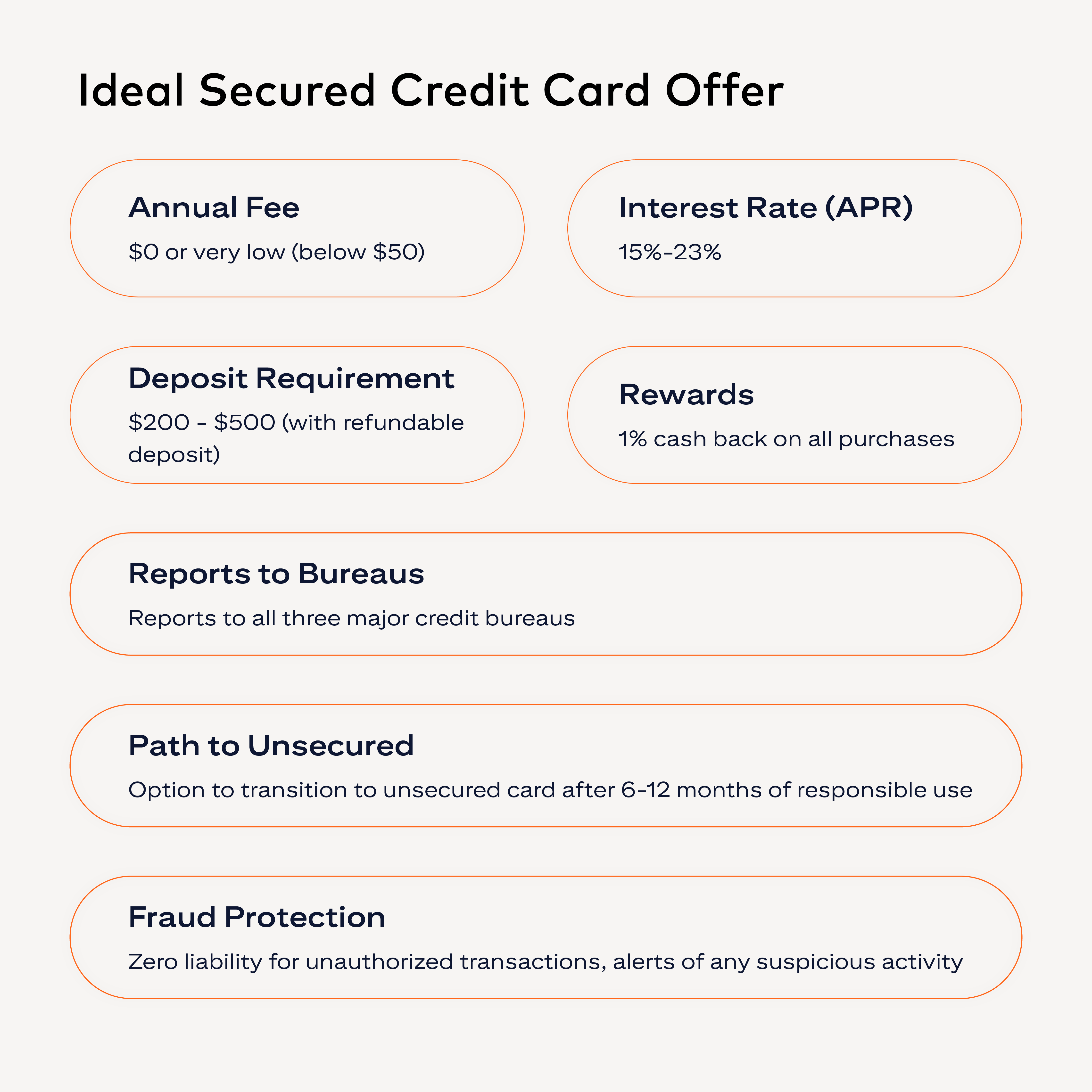
Do your research on different card issuers and compare each to make sure you’re getting the best deal possible for your needs. Below is an example of an ideal secured credit card offer:
“Remember that it’s not just a credit card, you’re also establishing a relationship with a financial institution,” says Neko Ennis, Product and Partnership Marketer at Mastercard. “See if that institution aligns with your goals and objectives so they can further support you in the future with higher-tier products.”
Once you’ve picked a card carrier that works for you, you’ll need to apply online. Typically, you can expect to receive a decision immediately after applying.
As long as you use the card responsibly—by making on-time payments and avoiding overspending—you can reap the benefits of increased credit scores and more financial flexibility. It’s a practical, manageable way to take control of your finances, especially if you're starting fresh or rebuilding after a setback.