How To Manage and Maximize Your First Salary

Smiling man sitting on couch at home reviewing financial documents

Receiving your first few paychecks can feel both exciting and overwhelming. You may be thinking: When should I start saving? Where should I spend? How can I stretch every dollar? There’s probably a lot of new words and concepts being thrown at you too, and it can get confusing fast.

Don’t fret. We’re here to help you start your financial journey off on the right foot.

Let’s begin with the basics. You can expect your company to issue a paycheck on a weekly, bi-weekly or monthly basis. At first glance, it can be tricky to decipher all the numbers that are listed on your paycheck.

Your gross pay is what you’ve earned before any deductions (like taxes and insurance premiums) and your net pay is the amount you take home after all deductions. You can expect some or all of these deductions to be withheld from your paycheck, as required by federal law, the state where you work, and possibly your individual situation. 

To better understand what these tax deductions mean and where your money is going, check out the ‘dictionary’ below:

Federal Income Tax: Money that goes to the federal government to fund their programs and services (like Social Security and Medicare) based on your earnings and information you provide on your W-4 form.

State Income Tax: Money that some states collect to fund public services and programs like public schools and public safety departments.

Local Income Tax: Money that some local governments collect to support community-specific needs.

Social Security Tax: Money that funds the Social Security program, providing retirement, disability and survivor benefits. It's usually deducted at a rate of 6.2% of your gross earnings up to a certain limit set by the IRS.

Medicare Tax: Money that funds the Medicare program, providing healthcare benefits to people who are eligible. It's typically withheld at a rate of 1.45% of your gross earnings.

In addition to these taxes, there may be other pre-tax and post-tax withholdings depending on your location or specific situation. 

3 Money Tips When Starting Your First Job

1: Create a Budget

Prioritize creating a budget during your first week or two on the job. Budgeting may sound tedious and constricting, but it actually gives you a bird’s-eye-view of your income and how you can make the most of it.  

Start by tracking your net income and expenses for one month, categorizing them into essentials like rent, monthly payments, and groceries, as well as flexible spending, such as dining out and entertainment. This will help you understand where your money is going and identify areas where you can cut back, if needed.

Having a plan like this can help you live within your means, avoid unnecessary debt and make informed financial decisions. Consider using a budgeting tool or app you trust to simplify the process and keep you on track. 

    2: Explore — and Sign Up For — Benefits

    If your company offers employee perks that you’re not using, you may be leaving money on the table. If you haven’t already, see if your company has pre-tax commuter cards, gym memberships, medical coverage and retirement plans, which can significantly boost your overall compensation package.

    A 401(k) is a common type of retirement plan, and when your employer offers a “match,” that means they contribute money to your plan based on the amount you contribute per paycheck. For example, your employer might match 50% of your contributions up to a certain percentage of your salary, like 6%, helping you grow your retirement funds faster. This is free money towards your future that you should take advantage of.

    Many companies also offer tuition reimbursement, courses or professional development programs that can enhance your resume, so take advantage of those benefits now to help boost your income in the future. 

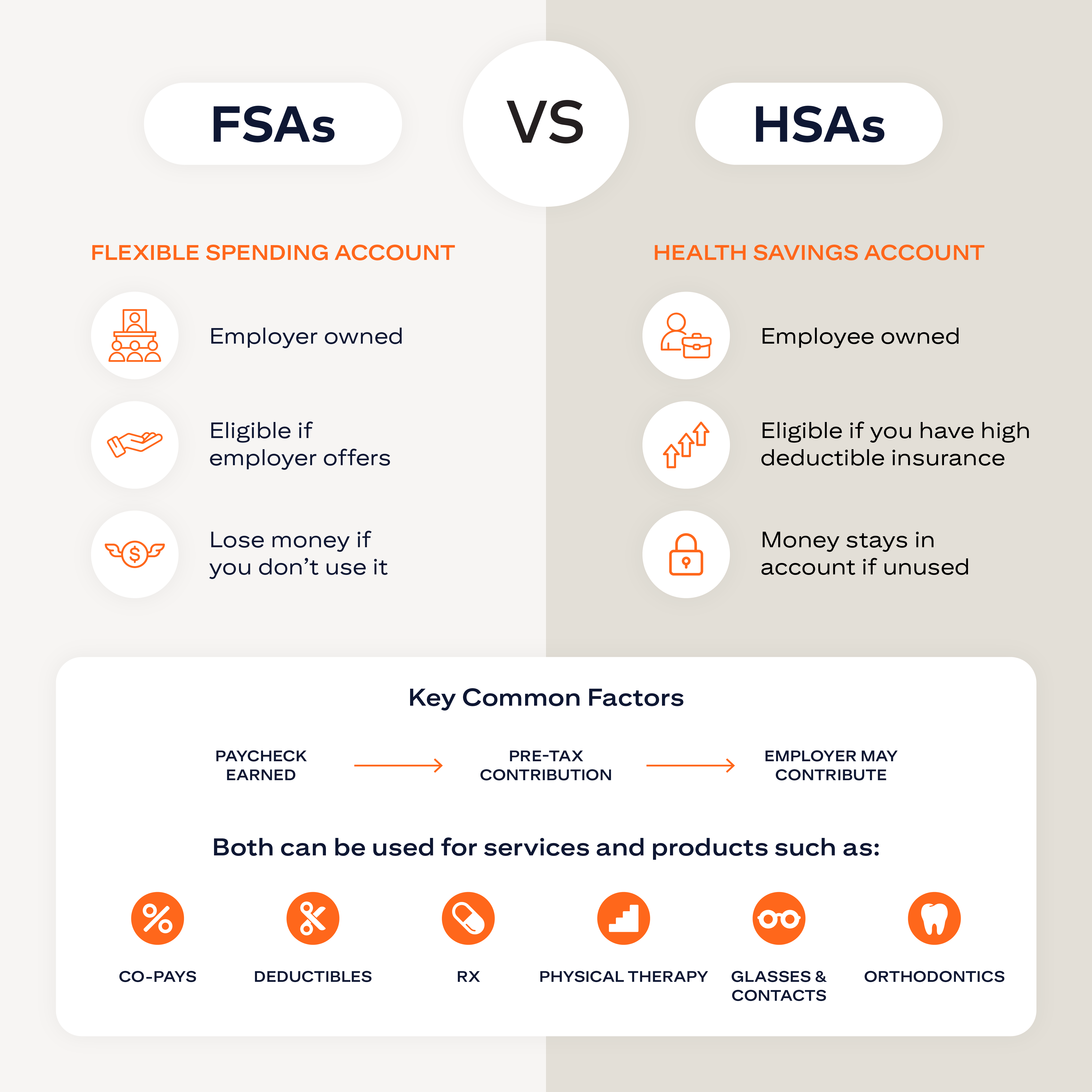
    Healthcare benefits are a key part of many employment packages, offering access to medical care, prescription drugs and sometimes dental and vision care. When it comes to managing healthcare costs, you might encounter two common options: Health Savings Accounts (HSAs) and Flexible Spending Accounts (FSAs). Both accounts let you set aside pre-tax dollars to pay for qualified medical expenses.

      A chart that lists the differences between an flexible spending account and a health savings account and common uses for both.

      3: Save early

      The sooner you start saving, the more your money will grow over time.

      Slowly start building an emergency fund of at least three to six months income to give yourself a financial cushion in case you end up with unexpected expenses or lose your job. You don’t have to set aside the full amount at once – you can grow it gradually, putting a little money away each time you get your paycheck. You can even automate this process, so a certain amount gets deposited directly into your savings account every paycheck.

      Investing is another way to get more out of your salary. High-yield savings accounts, for example, offer a higher interest rate compared to traditional savings accounts. This means your money grows faster over time because you earn more interest.

      Certificates of deposit (CDs), on the other hand, allow you to deposit a certain amount of money with a bank for a fixed period, like six months, a year or even longer. In return, the bank pays you a higher interest rate than they would with a regular savings account. Talk to your bank about savings account options.

      Nearly two-thirds of people say they wish they had started saving for retirement before the age of 25, according to recent data from Voya Financial. The earlier you start saving, the better. Your savings will compound over time, allowing you to make big purchases, such as a home, a car, or a ticket to travel the world, and eventually, retire comfortably. 

        About Master Your Card

        Master Your Card is a community empowerment education program sponsored by Mastercard, that works with committed partners nationwide to bring information about the benefits of electronic payments technology for underserved communities to build brighter financial futures. The program has facilitated presentations and workshops in numerous cities around the country, provided financial education to tens of thousands of students and reached millions through partners’ initiatives and education materials. 

        mastercard logo