What are you looking for?

If you're concerned about money you owe, it's worth noting you're hardly alone. The average debt for an American is $104,215, according to Business Insider. That entails nearly every type of loan, including a mortgage, car and student loans, home equity loans, credit card debt and personal loans. Debt is inarguably on the rise, and the best way to tackle your own is by becoming informed and making a plan.
If you feel like your debt has piled up, it may not only impact your spending but also your ability to take out loans. To get a better grasp of your debt, calculate your debt-to-income (DTI) ratio. This is the percentage of your monthly income that is put towards your debt. You can calculate this number by using the formula: total monthly debt / total monthly income x 100.
If it’s higher than 43%, it becomes much more difficult to qualify for a mortgage. However, most lenders will still approve you for a loan if your DTI is under 50%.
Don’t worry—with a debt management plan and some discipline, you can efficiently lower your DTI and save more. Familiarize yourself with these strategies to get started.
While creating a budget might sound constricting—it’s the opposite. A budget gives you more financial freedom by showing you how much you spend on bills, retirement accounts, and even occasional splurges, like a vacation.
“The idea of creating a budget can feel like a big hassle, but a simple way to do it is to go with the 50/30/20 plan,” says Kimberlee Josephson, Associate Professor of Business Administration at Lebanon Valley College. “Fifty percent of your take-home income goes toward needs while 30% goes toward wants, and the remainder—20%—is for paying off debt or accumulating savings,” she says.
If this is your first time creating a budget, the 50/30/20 plan is very beginner friendly. For example, 50% of your income would go towards needs such as your rent or mortgage, utilities, groceries, transportation, and insurance. 30% would go towards wants like clothes, electronics, entertainment, and dining out. The remaining 20% would go towards your debt (or savings). Of course, every household is different, so adjust according to what makes sense for you.
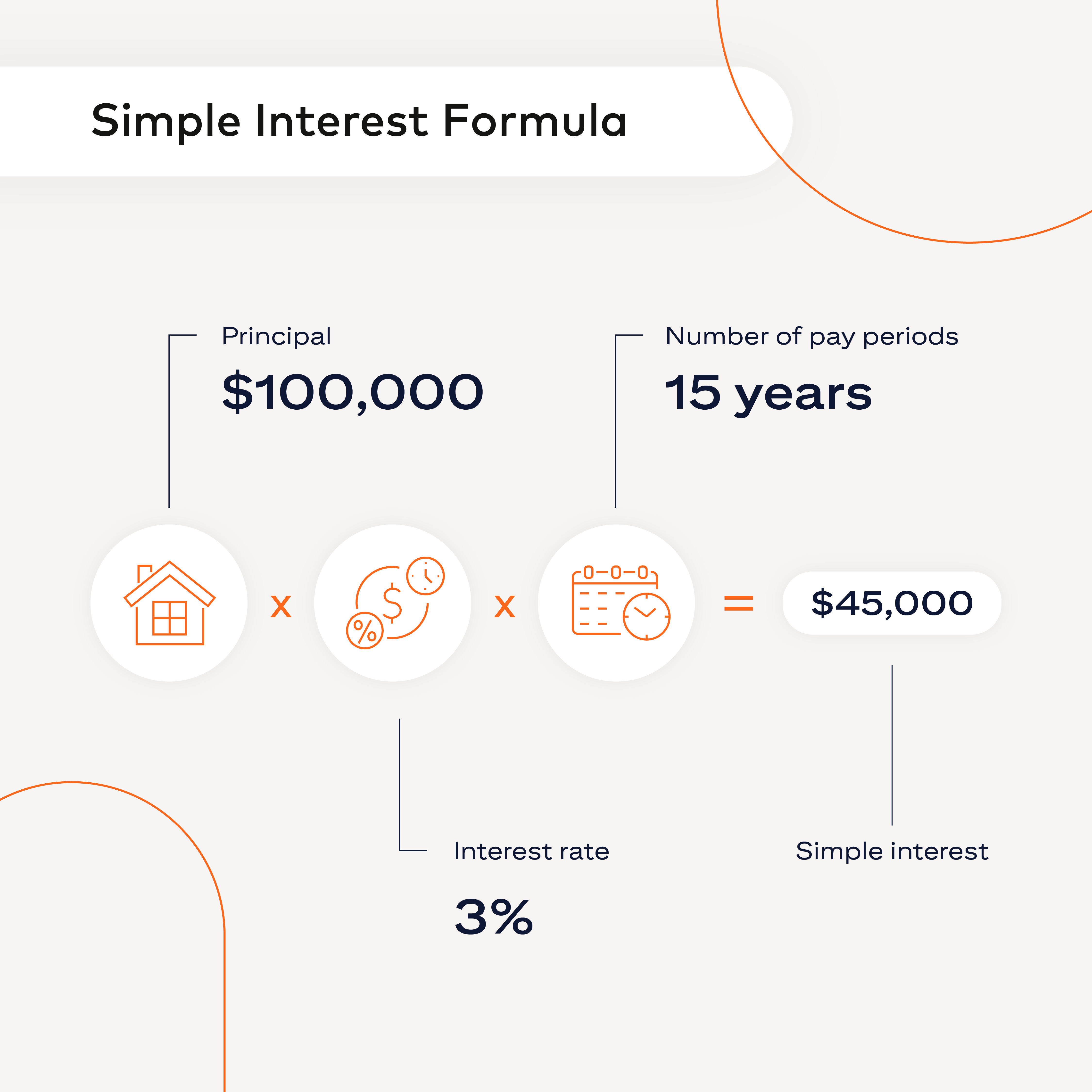
An interest rate is the fee charged for borrowing money, represented as a percentage of the amount borrowed. The lower the interest rate, the less you'll pay in interest. For example, if you borrowed $100 at an interest rate of 5% per year, you would owe $105 after one year. If the interest rate was 3%, you would owe $103.
Loans of all types have interest rates. Currently, the average credit card interest rate is 28.75%, according to Forbes. This number is high, indicating that for every $100 you borrow, you’ll owe an additional $28 over the course of a year.
In the face of high interest rates, consider moving your debt to a lower-interest line of credit. You can do this by talking to your bank about refinancing with more favorable loan terms or transferring your existing card balance to a lower-interest card.
If you have multiple loans, you may also consider consolidating them into a single loan, which can be beneficial if the single loan has a lower interest rate than the other loans. The catch is that you’ll need a solid credit history (which means not having had a lot of late or missed payments to lenders). Borrowers with below-average credit or unstable income might not qualify, so you may want to check your credit score before discussing this option with your bank.
If you want to become debt-free faster, there are two ways experts recommend going about it.
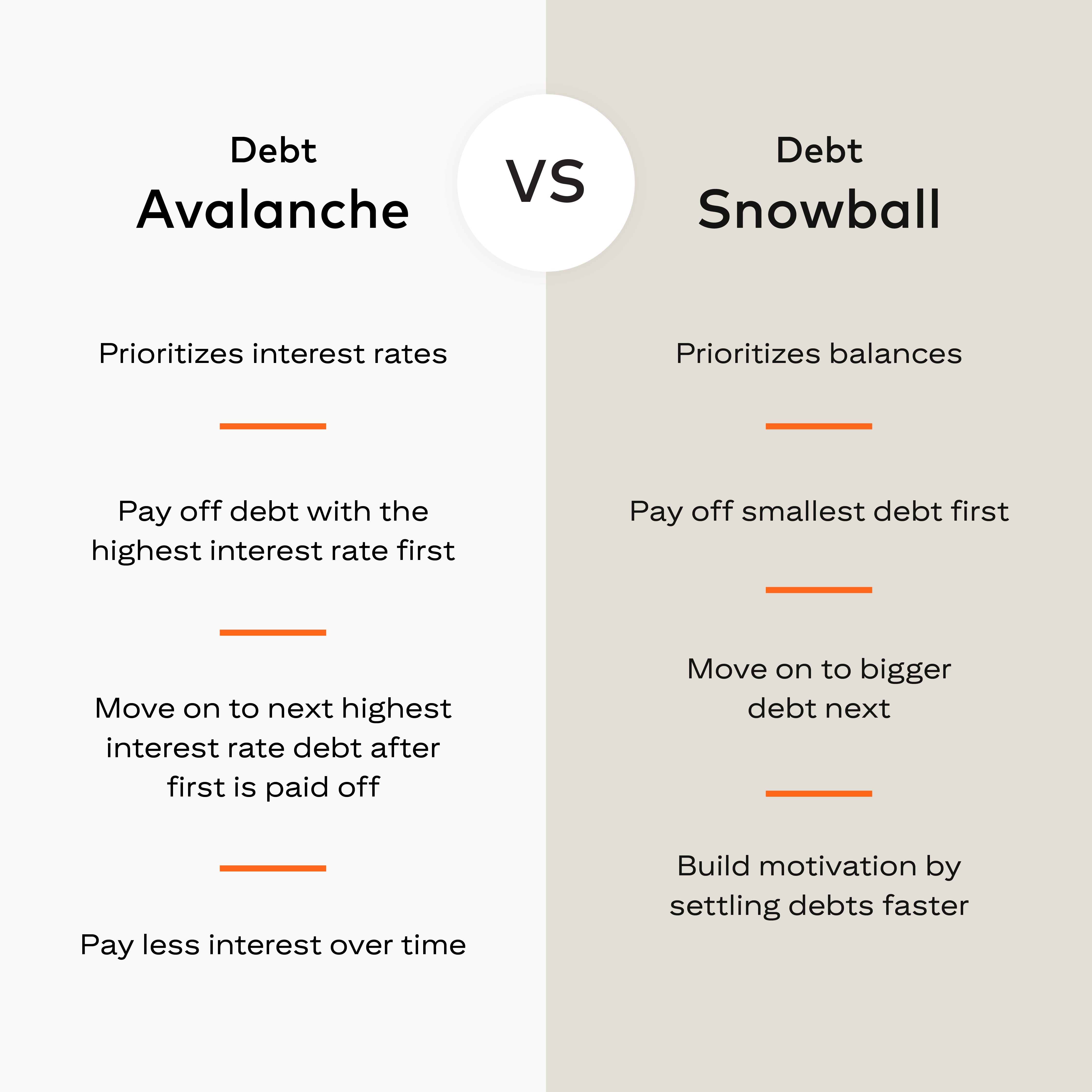
The debt avalanche method focuses on paying off the loan with the highest interest rate first. You'll still make the minimum payments on all your other debts, but you'll put as much as you can toward the highest interest loan. Why? If you only make minimum payments on high-interest loans, you’ll end up paying significantly more over time.
Despite the "avalanche" moniker, tackling the high-interest rate debts first can be slow; if the money you owe is significant, you may not see much progress until suddenly, like an avalanche, you do. Once that debt is paid off, you move on to the next debt with the highest interest rate, and so forth.
On the other hand, the snowball method focuses on paying off the smallest loan first, regardless of the interest rate. The reasoning for this is, psychologically, it can feel good to pay off something quickly, and your success may motivate you to work even harder at paying off the next debt.
Then, if you take the money you were using to pay off the first debt and add it to what you pay toward the next debt, there will soon be a snowball effect (imagine a snowball rolling down a hill, getting larger and larger), because after each debt is paid off, you'll have more money to put toward remaining debts.
One downside of the snowball method, however, is that your larger debts will accumulate more interest as you focus on paying off the smaller ones. So, if you have larger debts with especially high interest rates, the debt snowball method might not be the right fit for you.
Paying off debt takes time. The way many people get out of debt is by creating a plan and committing to it. Learn as much as you can about debt management and adopting good money habits to help spur your debt-repayment progress.
“Essentially, money is a tool for transactions and for advancement, which is why debt can be debilitating,” Josephson explains, “but even people with limited means can leverage credit and dig out of debt, especially by persistently and consistently taking small steps.”