Innovation

January 26, 2026


On the road: From connectivity to commerce

As vehicles and infrastructure begin to communicate in real time, streets are evolving from pavement into platforms for safety, efficiency and services.

google logo

David Wilkins

Director, Mastercard Foundry

Gridlock can be a major problem for Ann Arbor, Michigan, firetrucks on emergency runs.

“In our downtown area, we have a significant issue with traffic stacking,” explains Fire Chief Mike Kennedy. “There’s no room for cars to move out of the way and yield to us. We sometimes sit at a standstill.”

Fire trucks face a different challenge at high-speed, high-volume intersections on the city’s periphery, where 20 or more lanes of traffic converge. When emergency vehicles navigate these interchanges — sirens blaring, lights flashing — the risk of collision rises.

To address these issues, Ann Arbor is launching a connected transportation network designed to receive secure location and route data from fire trucks, predict their arrival at intersections and hold or turn traffic signals green to clear their path — cutting response times and improving safety.

“We expect it to be live by mid-2026,” Kennedy says. “We’re excited for it.”

The initiative is part of a growing wave of cooperative intelligent transportation systems, or C-ITS, that use roadside units — small communication hubs mounted at intersections on poles or signposts — to send, receive and relay data among vehicles, infrastructure and cloud platforms.

In many deployments, these units do far more than connect emergency vehicles and traffic lights. They link pedestrian and cyclist detection systems, weather and road-surface sensors, buses, snowplows, road-maintenance vehicles and even portable work-zone beacons, creating a dynamic, real-time picture of road activity.

Drivers receive this information — about a person crossing the street mid-block, slick pavement ahead or workers in the roadway — through in-dash alerts, audio or visual warnings in fleet systems or live updates in navigation apps like Apple Maps and Waze.

These systems are broadly described as vehicle-to-everything (V2X) technologies, which let vehicles talk directly with one another, roadside infrastructure and the wider network. Driven by the rapid embrace of V2X, these projects have shifted from pilots to deployments, offering a vision of streets that anticipate hazards, protect pedestrians and reduce congestion and emissions.

In the Netherlands, for example, all ambulances are connected to a national emergency vehicle alert network that transmits a digital “siren” through a connected-vehicle network, alerting nearby drivers via in-dash navigation and apps — a service reaching more than 4 million vehicles.


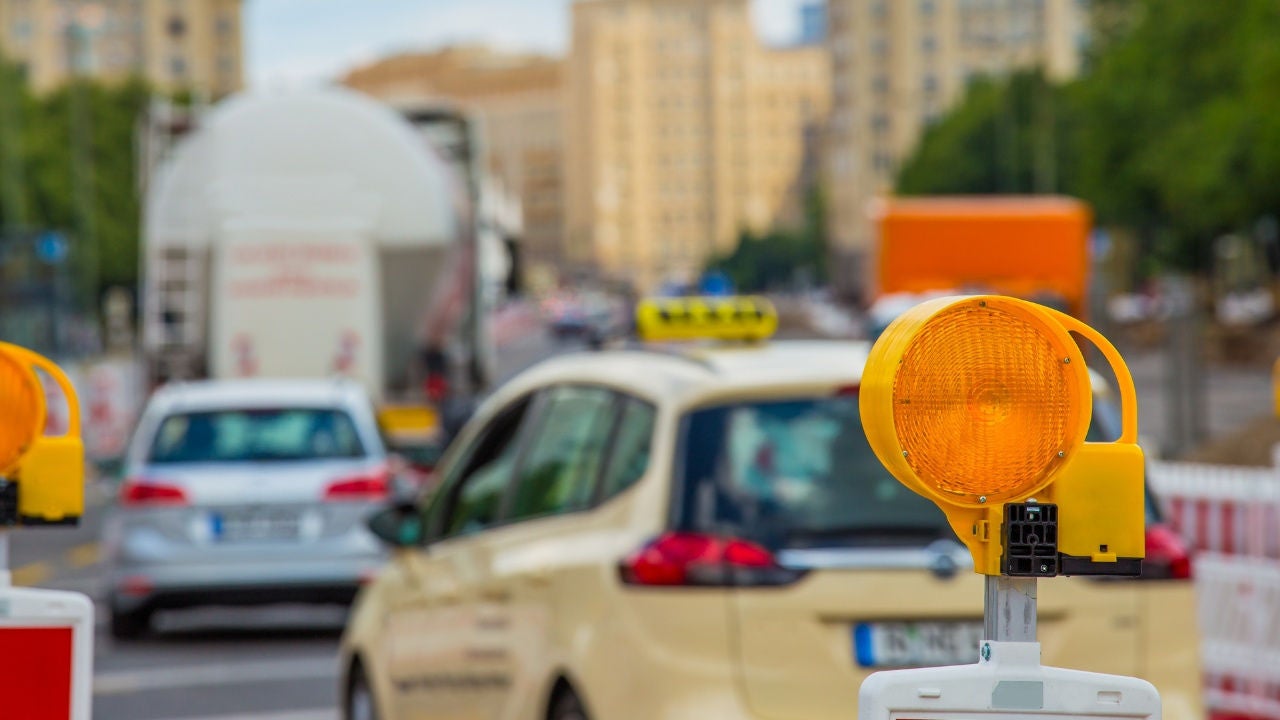
Cars navigating a work zone in Germany.


In Germany, highway maintenance vehicles broadcast digital work-zone warnings across more than 5,000 miles of motorway, reducing crashes in construction zones. And in China, robotaxis use connected-infrastructure corridors and cloud control platforms as the national “vehicle-road-cloud” initiative expands from pilots toward large-scale commercial use.


Emerging business models

Back in Michigan, home of America’s Big Three automakers, a handful of Oakland County maintenance vehicles — like the Ann Arbor fire trucks — are equipped to request traffic signal priority, essentially by asking connected intersections for green lights so they can move through without interruption. It’s not a life-or-death request, but the goal is important: to save time and fuel while reducing emissions, collisions and vehicular wear and tear.

Early estimates suggest that for each vehicle that regularly passes through connected intersections, the owner could save around $1,300 a year. The benefits would accrue quickly for private-sector fleets — delivery vans, utility trucks, waste haulers, ride-hail vehicles, freight carriers — that move through dense commercial corridors hour after hour.

These early deployments show how connected infrastructure could be the foundation for a mobility marketplace. For example, fleets might pay a subscription for traffic signal priority, real-time hazard alerts and smarter routing through busy zones. In practice, public agencies and policy frameworks would determine which vehicles qualify for these services — and under what conditions — based on safety, network efficiency and public-interest goals rather than simply the ability to pay.

These networks could also generate commercial value beyond direct services. The data they generate — aggregated and anonymized — could be packaged as analytics for planners, logistics operators and insurers to model risk, improve routes and make better infrastructure investment decisions. Over time, the same platform could support automated billing as commercial vehicles pay for access to premium services the moment they enter a connected corridor.


The rise of C-V2X

At the heart of many of these new transportation infrastructure initiatives is V2X communication. Two versions have evolved: dedicated short-range communications (DSRC), a first-generation system based on Wi-Fi-derived radio technology, and C-V2X, a newer standard built on 4G and 5G cellular standards. Both enable the low-latency, localized data exchanges needed for safety functions such as crash avoidance, red-light warnings and signal priority for emergency vehicles.

C-V2X stands apart in its range, flexibility and scalability. It offers similar split-second responsiveness to DSRC but adds a cellular network connection that links vehicles to the cloud and to one another across far greater distances. That integration lets traffic, weather and hazard data move through the same system that carries safety messages, enabling coordinated, real-time decisions across entire corridors or city networks.

Built on global mobile standards, C-V2X benefits from a mature technology ecosystem and strong industry backing. As cities modernize signals, fleet operators digitize safety systems and automakers add more connectivity in new cars, C-V2X is emerging as the leading foundation for connected mobility worldwide. And because C-V2X combines local responsiveness with cloud connectivity, it opens the door to real-time transactions between vehicles and infrastructure.


In the fast lane

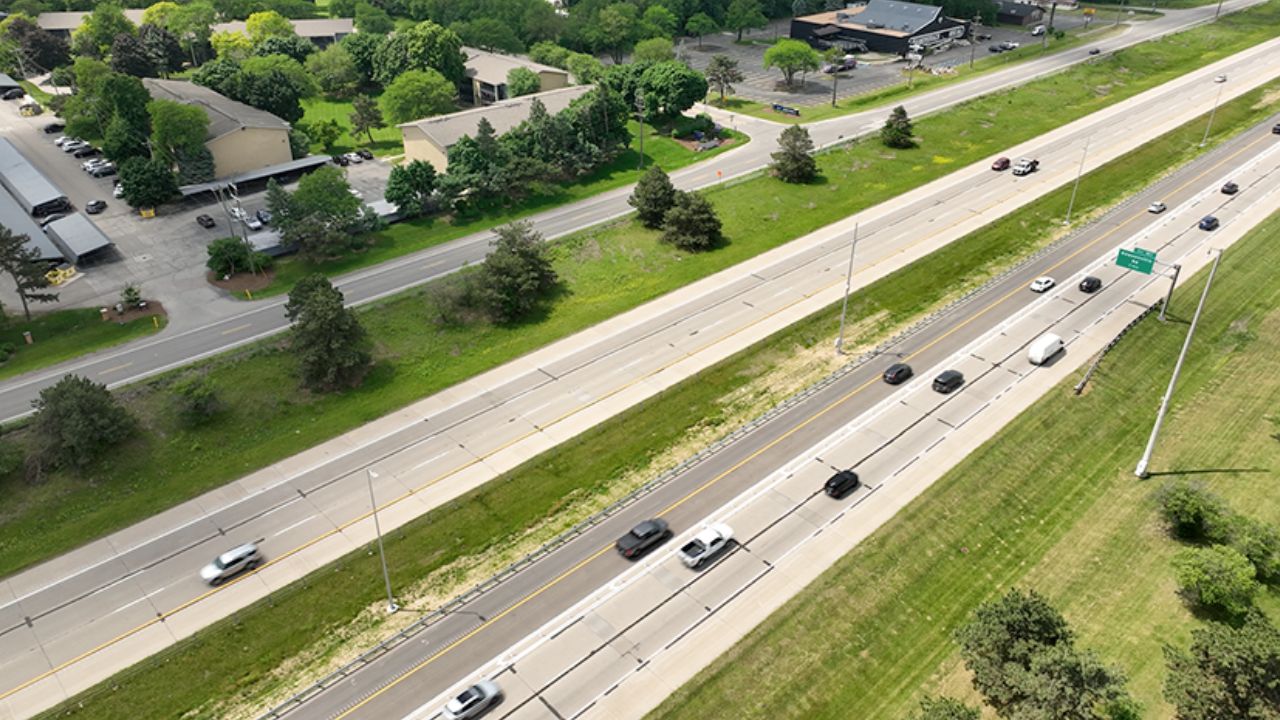
Imagine cruising from Ann Arbor to Detroit at rush hour in a self-driving shuttle that never gets bogged down in traffic. That’s the vision behind Michigan’s ambitious I-94 Connected and Automated Vehicle Corridor, a 39-mile stretch billed as one of the nation’s most advanced smart highways. The project — a partnership between the Michigan Department of Transportation and startup Cavnue — recently cleared a key federal hurdle that will allow the project to move into full development over the next several years.


Please accept functional cookies to watch this video.

poster


Along the corridor, roadside units equipped with cellular and short-range radios — along with radar and other sensors — will monitor conditions and relay data in real time, allowing vehicles to coordinate with infrastructure, adapt to weather or hazards and even platoon together at safe distances.

Beyond safety and efficiency, the smart corridor hints at a coming economy on wheels. With connected-car systems integrated with corridor infrastructure, vehicles could automatically discover, reserve and pay for services tied to that stretch of road — for example, booking and paying for a charging session at the next exit. As Michigan builds the highways of the future, it’s also building the backbone of a mobility marketplace — where data and dollars flow at 70 miles per hour.


From automakers to infrastructure

Car manufacturers and mobile network operators are converging around C-V2X as the leading communication standard for connected mobility. Major automakers are accelerating adoption through production rollouts, large-scale pilots and cross-industry collaborations. China is setting the pace, with manufacturers like SAIC, Geely and BYD embedding C-V2X in new vehicle platforms as part of a government-backed integration strategy.

Mobile network operators are central to scaling C-V2X. Companies such as China Mobile, Verizon and Deutsche Telekom have launched large pilots and partnerships with automakers and tech suppliers — demonstrating how C-V2X can improve road safety, traffic efficiency and data exchange while positioning mobile networks as the connective tissue of the vehicle ecosystem.


From connectivity to transactions

Unlike today’s in-car commerce — which largely runs through apps, accounts and vehicle dashboards — corridor-based commerce extends payment and service delivery into the road network itself. Services such as tolling, managed lanes, priority routing and coordinated charging can be activated the moment a vehicle enters a connected zone, governed by public policy and settled automatically in the background.

Early demonstrations show how this could work. Last September, Mastercard, Volvo Cars and the North Carolina Turnpike Authority announced a pilot program for in-vehicle toll payments. Eliminating the need for transponders, the program pairs existing in-car software with the latest in secure mobile payments technology to create a seamless, drive-through experience. As these systems scale, infrastructure built to manage traffic will increasingly function as a transactional platform, reshaping how mobility, data and commerce intersect on roads worldwide.

Car as mobile wallet? The technology is gaining speed

Vehicle connectivity and in-car payments are simplifying toll road fees and opening new possibilities in mobility payments.

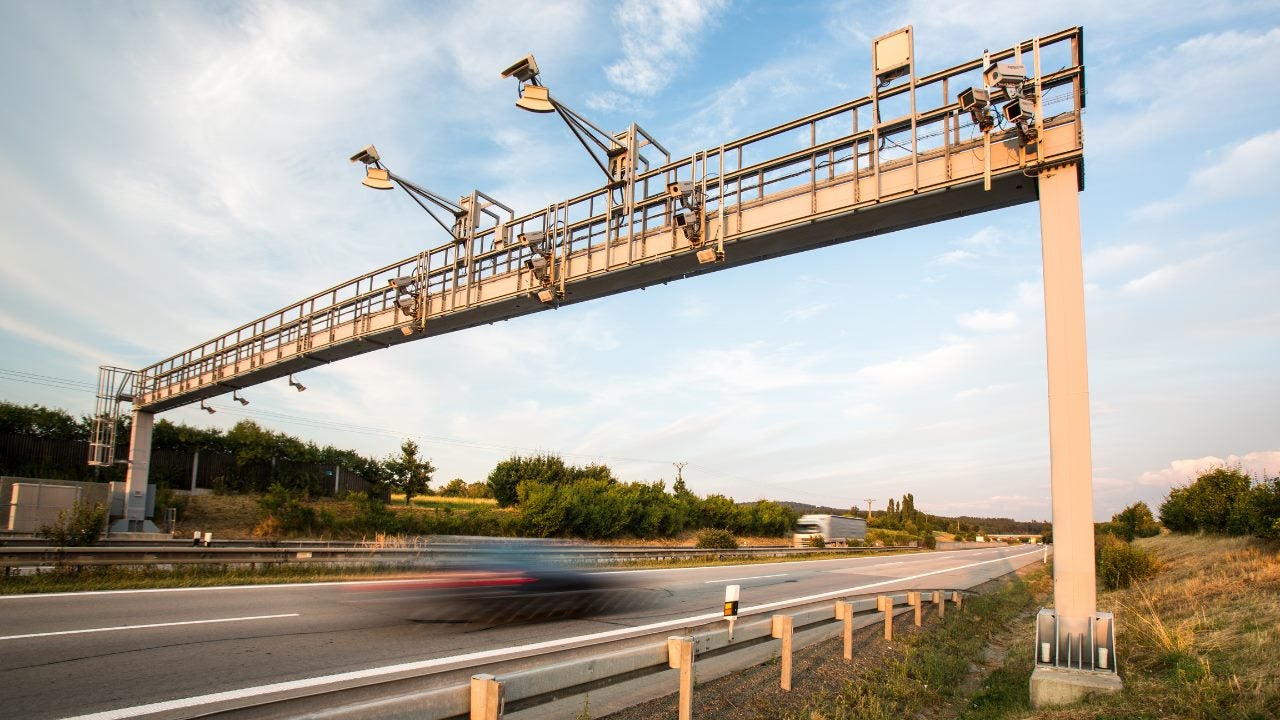
A car speeds beneath a toll gantry equipped with cameras on a highway.