December 1, 2025
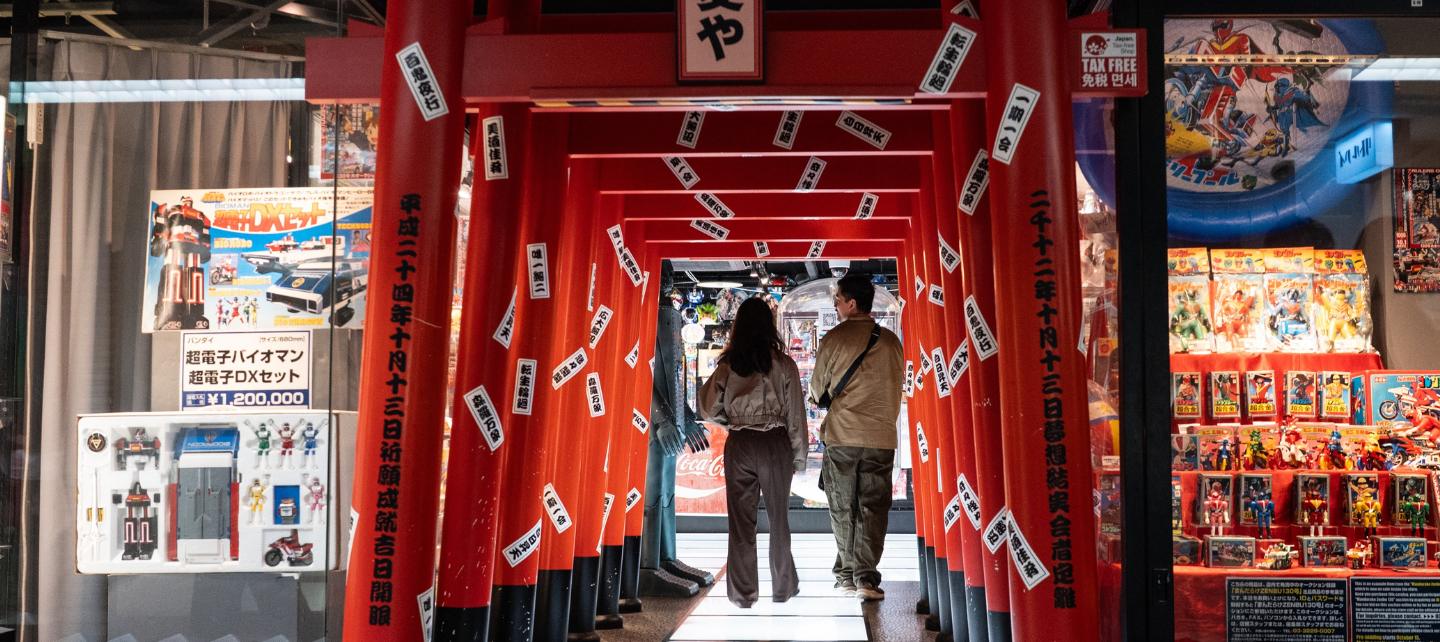
Shoppers pass through a tunnel made of Shinto torii gates in the Mandarake Henya store, which specializes in manga and anime, in Nakano's Broadway shopping district. (Photo credit: Tim Stevens)
"Each day is a journey, and the journey itself is home."
This is a quote from Japanese poet Matsuo Bashō, a reminder to be present and at peace wherever you are. As someone who finds himself in over a dozen countries a year, spending roughly half my days on the road, it's an important one.
Of the 50-odd cities I frequent annually, Tokyo is the only one where I always add on a few days and bring an oversized suitcase purely for souvenirs. I first made the journey to Tokyo in 2010, on assignment to cover the Tokyo Game Show (the annual raucous video game trade fair), and I've been lucky to spend at least a week there every year since. And more and more people agree – Tokyo topped the list of trendiest travel destinations this year, according to the Mastercard Economics Institute.
Tokyo is, for me, the most interesting city on the planet, one so riddled with sights, sounds and flavors that I never want to stop exploring, even when my feet are begging for a break. From bustling tourist hubs to lesser-known spots, Tokyo is full of must-visit destinations that keep bringing me back.
Tokyo is about as far away as you can get from the United States. You're essentially flipping the clock over as soon as you land. Don't be surprised, then, to find yourself up at an odd hour searching for something to do.
Wandering over to the Tsukiji fish market is a great start, even if you don't care for fish. The mongers and merchants here open early, plying an endless array of amazing street food. You'll find vendors selling treats like onigiri (rice balls), grilled wagyu beef on a stick and tamagoyaki. "They're like sweet omelets," I heard one tour guide explain, trying unsuccessfully to convince his group to try one.
Their loss: Tamagoyaki is the perfect Japanese street food for breakfast. Fresh eggs with brilliantly bright yolks are mixed with sweet kirin and then shaped into perfect cubes. They're chewy, savory and sweet, and while the idea of eating a square omelet might sound odd, they're sumptuous morsels.
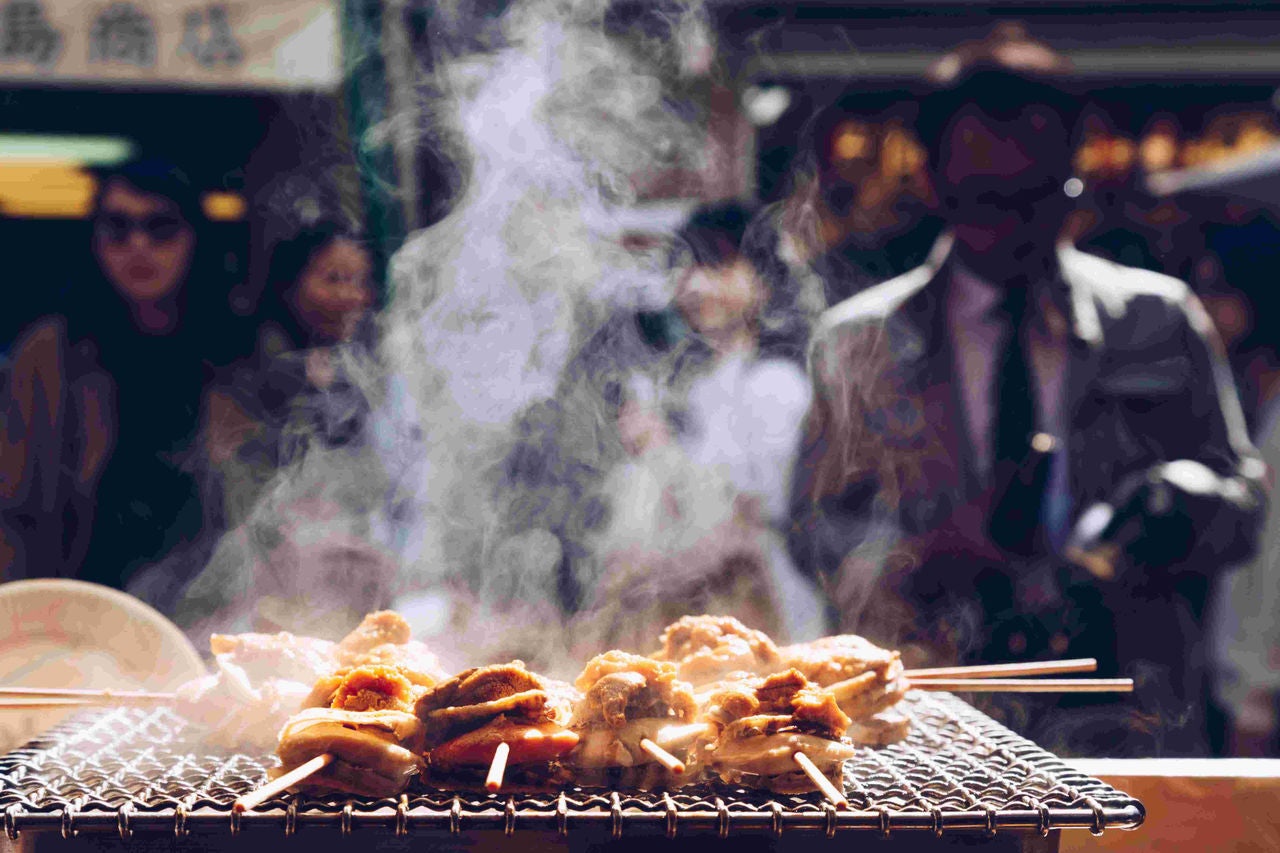
Grilled fish skewers await takers at the Tsukiji Fish Market. (Photo credit: Adobe Stock)
Street food is a huge draw in Tsukiji, but it's also a great place to buy a kitchen knife, which is among the best souvenirs you can bring back from Japan. Tsukiji Masamoto is a little shop stacked with no-frills, reasonably priced knives made of high-strength carbon steel. You can get specialty knives of every shape and size, including long, thin yanagiba sharpened only on one side, perfect for precision slicing. For your first knife, though, go with a double-beveled santoku, a great kitchen workhorse.
Want something flashier? Take the Hibiya subway line up to Kappabashi Dori, Tokyo's Kitchen Street. Kappabashi is where Tokyo's restaurateurs stock up on everything from pots and pans to unnervingly realistic plastic food.
There, under the watchful eye of a giant, dismembered chef's head, you can browse shops selling lovely flatware, high-end teapots and gorgeous knives made with every form of tempering and construction you can imagine. They're no more functional than the ones down in Tsukiji, but their eye-popping designs certainly make an impression.
Just be warned: Kappabashi Dori has its own theme song blaring out of every storefront, a song so catchy that Japanese bands even cover it at concerts. After just a few minutes of browsing, it'll be stuck in your head for weeks.
From Kappabashi, it's a quick walk down to my favorite restaurant in Tokyo. Okachimachi Menya Musashi Bukotsu is a tonkotsu ramen joint that seats just 12, each person guaranteed a front-row view. Step in here on a cold day, and your glasses will instantly fog up from the perpetual humidity. But the aromatic wave from the broth hits you even harder. The ramen here is heavy and salty, and the egg floating within is cooked to a perfect, soft center. Finishing a full bowl is a real accomplishment, but there's no shame if you need to tap out early.
Menya Musashi is named after one of Japan's most famous samurai, and the shop is littered with weapons. Don't be intimidated, though: the Green Day blasting on the speakers tells you this isn't a place that takes itself too seriously.
Make sure you say "arigatou gozaimashita" ("thanks very much") to the staff as you leave, then make your way down south to my favorite underground shopping destination. It's not quite literally underground, more like wedged beneath an overpass, but it is something of an undiscovered gem.
Aki-Oka is a narrow space full of local businesses and artisans and a quiet, peaceful break from the bustle outside. Here you can get a woven belt made to your exact size, purchase handmade wooden boxes for storing knick-knacks, and drape yourself in indigo-dyed fabrics. You can even sample some sky-high soufflé pancakes if you're still hungry. Each little shop has its own unique vibe, all cozy and welcoming and full of charm.
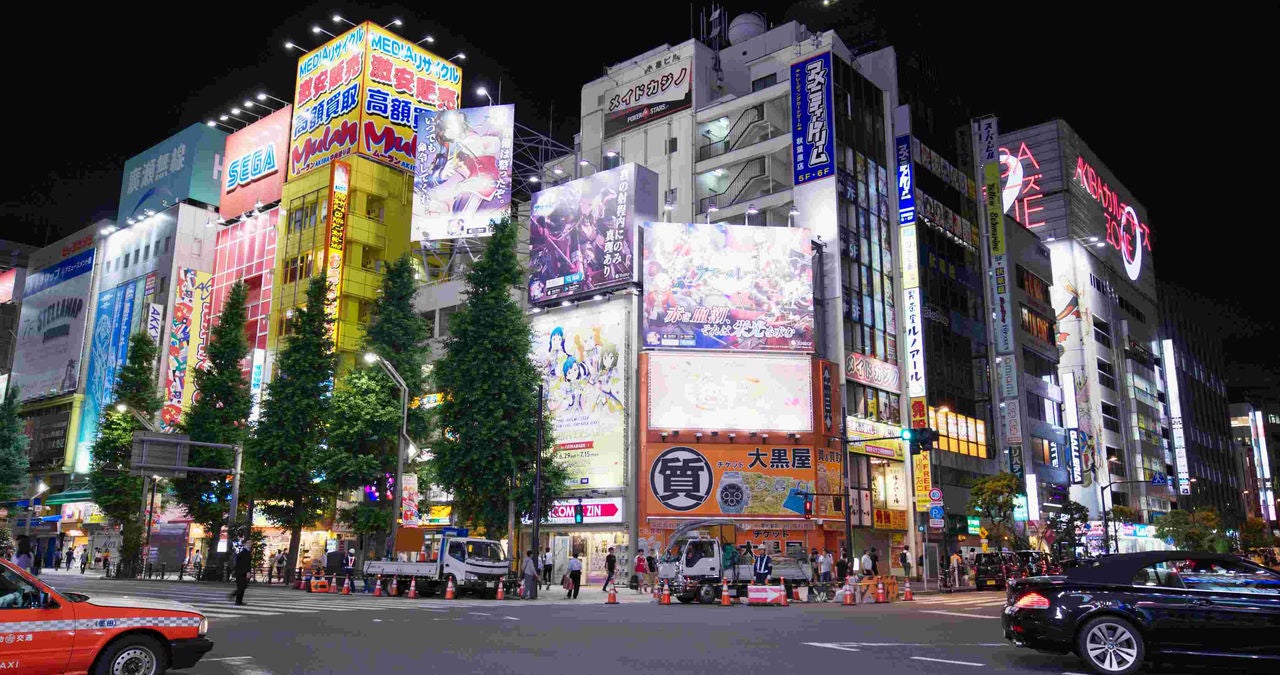
The Akihabara district, also known as Electric Town, draws electronics shoppers and anime lovers. (Photo credit: Adobe Stock)
From here, you're close to Akihabara. Tokyo's Electric Town has become a global mecca for otaku (the Japanese term for those in love with cartoons or games), so it's absolutely bursting at the seams on a given day. It's still worth a visit, especially Yodobashi, one of the greatest electronics stores in the world. Here you've got eight floors of everything from high-end lenses to wall-sized 8K televisions that will make whatever set you have at home look quaint. There's even a massive section dedicated to rice cookers, with some costing upwards of $1,000.
Yodobashi is a dazzling place full of tech toys, but for anyone looking for actual toys, there's an even brighter wonderland.
Nakano is about a 40-minute ride on the Chūō-Sōbu Line from Akihabara, far enough out of the center of town to soften the crowds. Nakano Broadway, my usual destination, is located at the end of a long street lined mostly with shoe shops, plus a few vendors selling freshly cooked taiyaki. Imagine a pancake stuffed with a sweet paste, and you have the idea. The smell is hard to resist and, honestly, you deserve a little snack at this point.
You'll find stores selling hand-drawn cels from anime films, a shop bursting with period movie posters for every generation of Godzilla, and even a place stuffed with ALF memorabilia. Toy stores abound, including whole shops dedicated to the tiny playthings you can get out of vending machines, model kits, and endless figurines of all shapes and sizes. Among all these playful destinations, my favorite is the Mandarake store on the top floor. The glowing floor tiles and pulsing ambient beats make it feel like you're walking into the ending sequence of Kubrick's “2001: A Space Odyssey,” but it's more like a museum for Japanese toys, one where you can buy the vintage exhibits.
If vintage clothes are what you're looking for, Tokyo's epic flea markets are a must-visit.
Tokyo has something of a tradition of pop-up weekend markets. Some are focused on produce, others on local crafts, but most mix anything and everything. The biggest is the Tokyo City Flea Market at Oi Racecourse, about 20 minutes south of Tokyo Station on the monorail. You won't have a hard time finding it: Just follow the crowds.
This market has exploded since I first started going years ago, now running every Saturday and Sunday. Frankly, there's a fair bit of chaff here, but between the racks of fake Coach purses and literal piles of clothes, you can find some golden wheat lurking in the shadowy aisles.
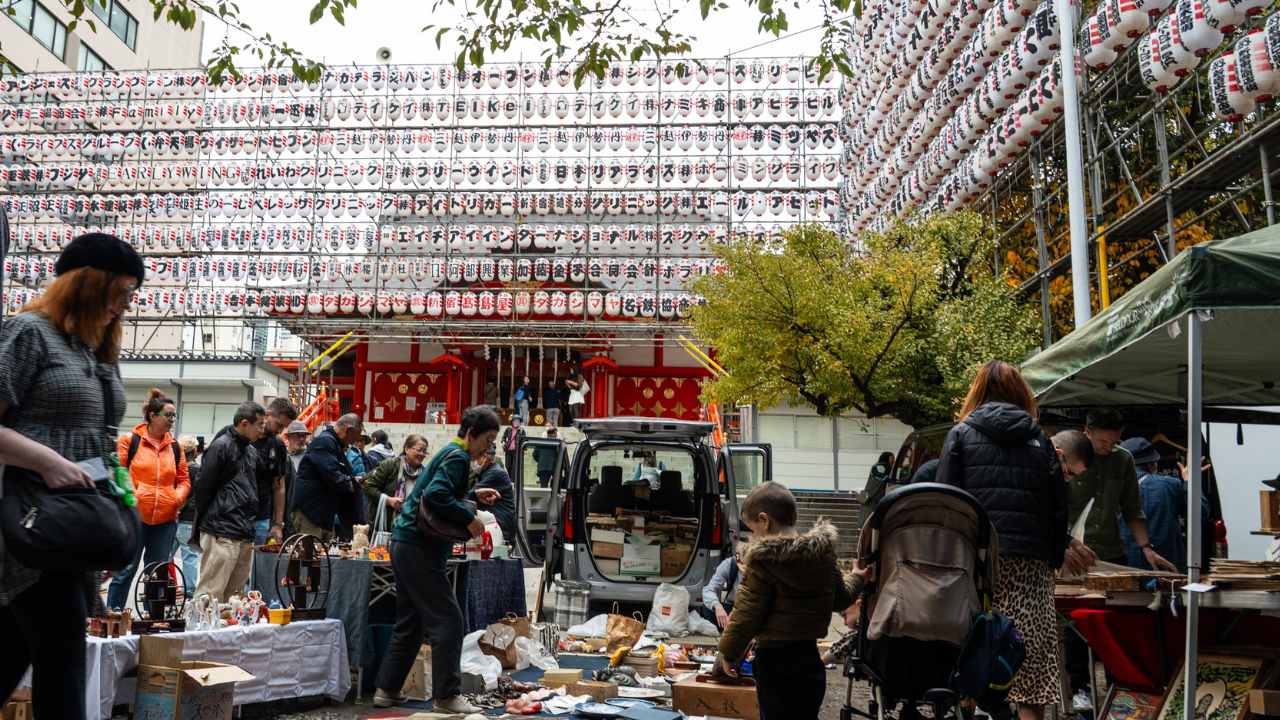
Around the grounds of Tokyo's 17th-century Hanazano Shrine, shoppers can pick up antique kimono, scrolls, prints and other finds at the weekly antiques and flea market. (Photo credit: Tim Stevens)
That said, I find Tokyo's smaller markets more charming. My favorite is the Hanazono Shrine market, which runs most Sundays, weather permitting. It's close enough to the temple that you can smell the incense as you browse through a choice few vendors offering lovely wares, including jewelry, statues, tools and even kimonos. I took home a beautiful orange obi (a kimono sash) for 1,000 yen, or about $6, which will make an excellent table runner.
For more modern clothes, many people would head to Harajuku. The center of Tokyo fashion, Harajuku was formerly known as the spot where costumed locals gathered to parade around in their finest. Today, though, it's better known for cutesy cafes perfect for people (and animal) watching.
Very quickly you’ll understand why the storefronts are jammed with people trying to get a look. One shop offers people the chance to cuddle with piglets. Another, a few doors down, had baby otters. But, you'll have to pay for admission, to the tune of roughly $15 for a 30-minute session — plus food, of course.
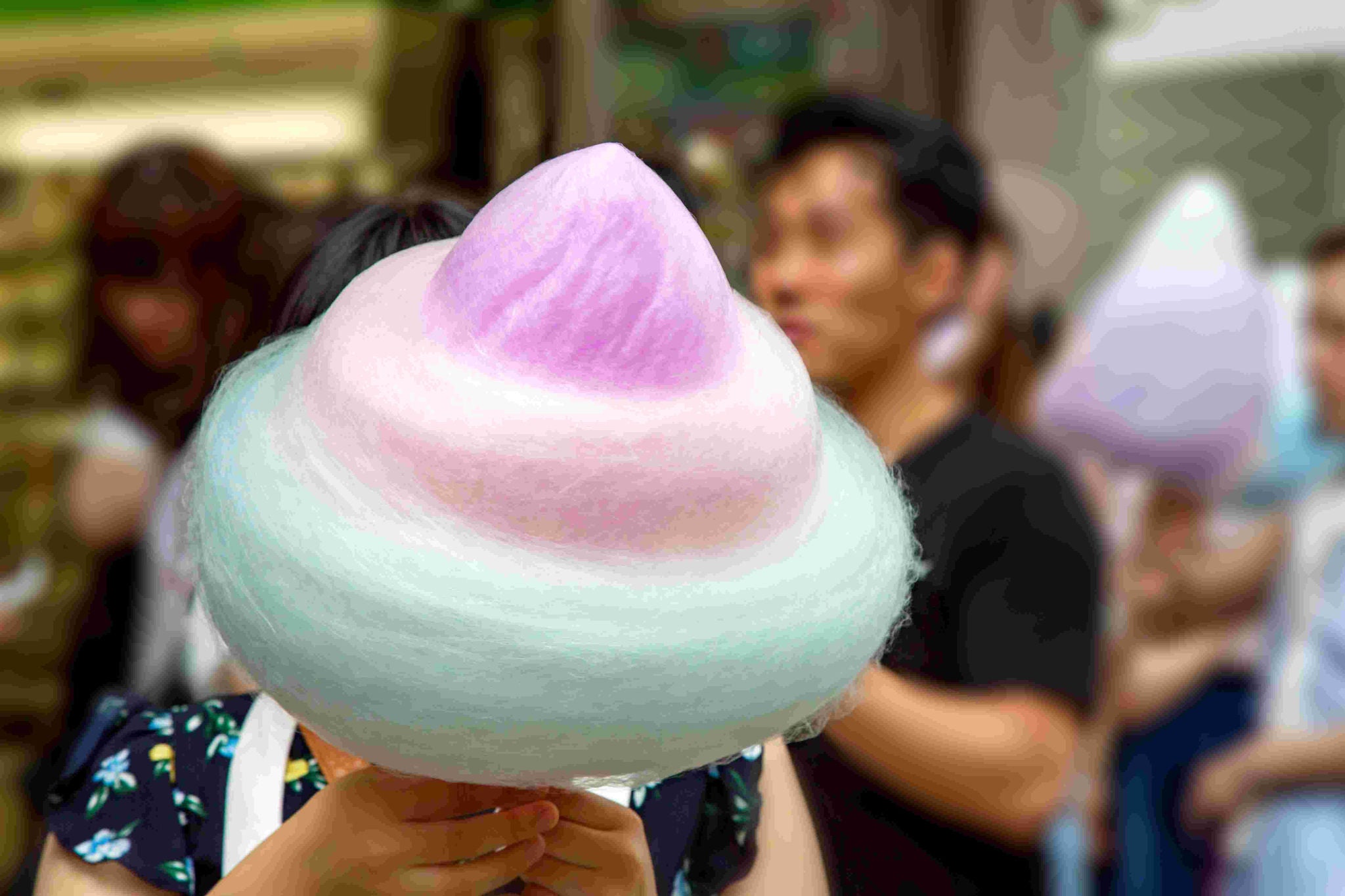
Rainbow cotton candy delights the eye and the taste buds in the trendy Harajuku district. (Photo credit: Adobe Stock)
For high fashion, Ginza is the place. You'll find amazing storefronts for all the design heavy-hitters like Chanel, Balenciaga, Hermès and many more. On weekends, the street closes to traffic, meaning you can wander freely between ornately designed shops that reach to the sky.
If you prefer to keep it casual, know that Tokyo has elevated denim to a fine art. You'll find stores like Tokyo Blue, Edwin and Momotaro scattered around. Sneakerheads are also well-served, but most shops offer only American or European brands.
I prefer shopping locally, so I always hit up the various Onitsuka Tiger shops for the latest kicks from Kobe. I'm also a big fan of Moonstar shoes, made in Kurume. That company's lone shop in the area is a bit of a hike, down in Jiyugaoka, about a 40-minute subway ride from central Tokyo.
Smaller, more rural shops like that can help you avoid the crowds, but sometimes the crowds are the best part. Visiting the Unicorn Gundam statue is one of those times.
Whether or not you're a fan of Gundam, Japan's most prolific series featuring giant, angry robots, it's worth making a run out to the Diver City mall on the other side of Tokyo Bay. Take the Jiyugaoka Line and sit up front so you can enjoy the view from the Rainbow Bridge.
The life-size Gundam stands just behind the mall, a giant white shape striking a dramatic pose. It's amazing to see during the day, but it's even better at night. If you get there too early, ignore the tiny, nearby Gundam shop and make your way inside the mall. You'll walk through the first food court (yes, there are multiple), full of foods familiar and exotic, then head upstairs past a Godzilla-themed store that's a great place to grab gifts for all the kaiju fans in your life.
The top-floor Gundam shop, though, is next-level, absolutely bursting with model kits. Called Gunpla, these DIY toys are an obsession around the world. They've blown up so much over the past few years that many models are sold on a limited basis, meaning you'll need to get there early and stand in numbered spots to have a chance to buy one.
The show outside, though, is free for all. Every night, the giant Gundam (an RX-0 Unicorn, specifically) runs through a transformation show. The lights go down and the music begins to swell, pulsing bass accompanied by clips from the show as the giant robot blossoms into its final form with a glowing flourish. It's honestly a little overwhelming.
"I thought it was going to be a lot shorter," Matt Buck told me while standing next to the animated statue. He, his brother Kyle and their friend Omar were all visiting from Kansas. Matt said he'd wanted to visit Japan since childhood and, in 2025, the three of them finally made it.
Matt grew up watching “Gundam Wing” on television, while Omar is a fan of the kits. "I don't have enough time to build them," he lamented. "I have a closetful."
And chances are you won't have the time to do everything on your list while visiting this amazing city. After more than a dozen visits, I'm still finding new adventures, which is why I'm already excited about the next time I'll get to take my journey, and thus my home, to Tokyo.