Faster Wi-Fi, robot hearts and other tech stories you may have missed in 2023
December 14, 2023 | By Enrique SeguraThe end of the year is just around the corner but don’t worry, there’s still some exciting tech to dive into before we usher in 2024. We’re sharing a few overlooked tech stories to wrap up 2023.
Wi-Fi 7 on the horizon and it’s 4.8 times faster
The Wi-Fi Alliance has officially announced the completion of Wi-Fi 7, set to be finalized in early 2024, enabling businesses and enterprises to adopt standardized hardware. Wi-Fi 7 is emerging as a strong alternative to traditional wired ethernet, boasting impressive speeds of up to 40 Gb/s, an improvement of 4.8 times faster than its predecessor, according to PCWorld.
The big takeaway here? Engineered for superior connectivity, Wi-Fi 7 is designed to deliver optimize performance in AR/VR applications and cloud computing.
MIT engineers design a robotic replica of the heart’s ventricle
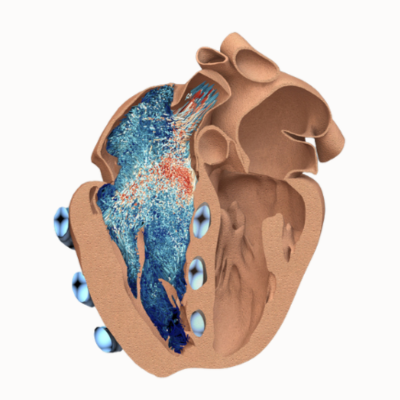
MIT engineers have designed a robotic replica of the heart’s right ventricle, integrating real heart tissue with synthetic balloon-like artificial muscles to accurately mimic the beating and pumping of a living heart. This robo-ventricle can be adjusted to simulate both healthy cardiac function and various heart conditions, including pulmonary hypertension and myocardial infarction.
Researchers believe this robotic right ventricle, or “RRV,” can be crucial tool for understanding and developing strategies to prevent heart failure, especially in intensive care scenarios. The ultimate goal is to pair this replica with a model of the left ventricle, ultimately assembling a fully functional artificial heart in the future.
AI can identify your typing by listening to your keyboard …
Researchers revealed the implementation of a new state-of-the-art deep learning model capable of classifying and identifying laptop keystrokes based on sound. In a paper published on the Cornell University website, researchers claim to have achieved over 90% accuracy in interpreting remote keystrokes by recording and analyzing the sound profiles of individual keys.
Their approach, using the latest advances in neural network technology, represents a significant breakthrough in audio cyberattacks, highlighting the potential security risks associated with this new method.
... and it can also eavesdrop on whales?
Scientists have made a significant stride in understanding whale communication, revealing previously undiscovered elements in their vocalizations that draw parallels with human speech, a new paper reveals. By studying sperm whales, researchers observed that the acoustic properties of their clicks, including pitch, mirror the workings of human vowels and diphthongs.
Two distinct “coda vowels” actively feature in whale conversations, a revelation prompted by AI, specifically, a learning model named fiwGAN that was trained to replicate sperm whale speech patterns, including acoustic properties.
The researchers concluded that the communication of sperm whales is more intricate and informative than previously believed.
And no, engaging in an actual conversation with a whale remains impossible for now. We guess that “Free Willy” reboot will be on hold for now.
Image above: A cross-section of the bio-robotic model of a right ventricle developed by researchers at MIT. (Photo courtesy of the researchers)
 Newsroom