Mastercard at 60

August 13, 2026


‘They call me Ms. Mastercard’: A long-serving employee looks back on decades of change

The technologies have changed dramatically over the years. Joy Ewing's passion for innovation hasn't.

google logo

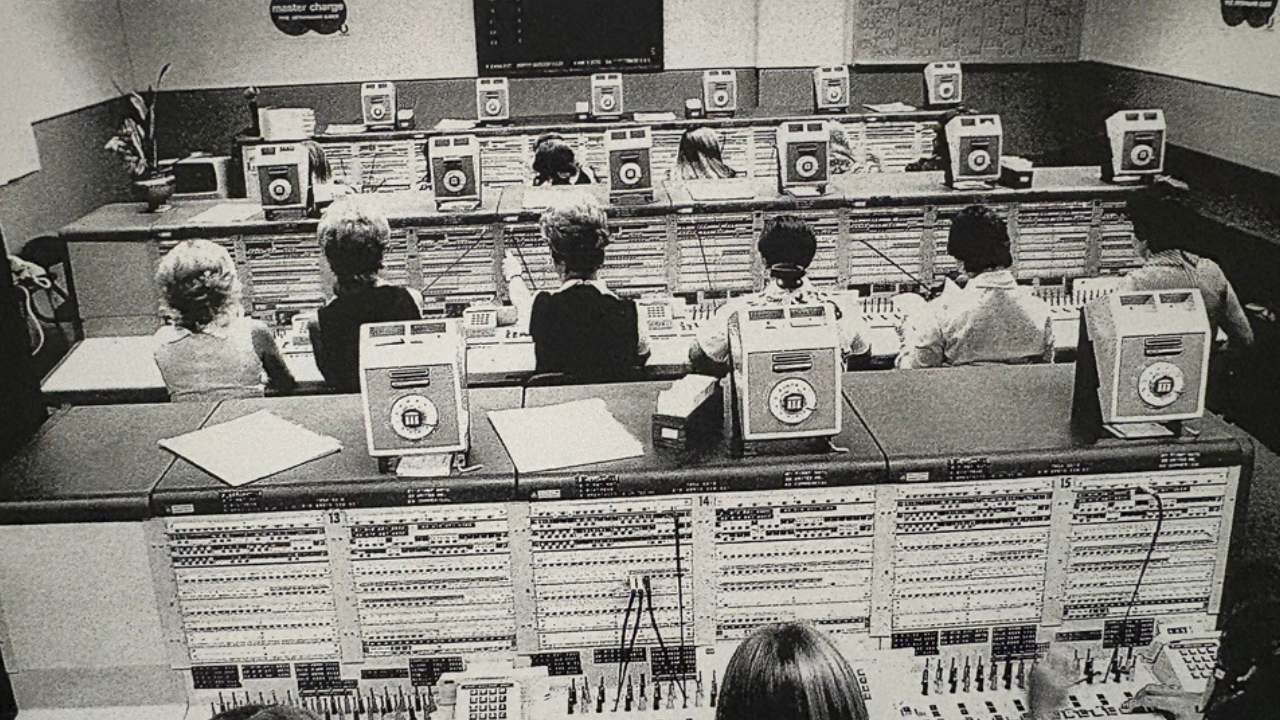
Fifty years ago, when Joy Ewing first started working in payments, merchants called this office to authorize transactions over a certain amount.  Today, transactions can be authorized in a fraction of a second. (Photo from Mastercard archives)

Christine Gibson

Contributor

Mastercard at 60 series

To mark the company's six decades since its founding, the Mastercard Newsroom is publishing stories about its history, employees, technology and future.

In July 1976, a few weeks shy of her 17th birthday, Joy Ewing filled out an application for an after-school job in her hometown of St. Louis, Missouri. Her friend had heard that a local company was looking for data entry operators; Ewing was hired on the spot. When she started work later that month, she found herself surrounded by the fixtures of a cutting-edge 1970s office: hulking mainframe computers, machines spitting out streams of paper tape, shelves crowded with microfiche.

She’d been hired by an arm of what is now Mastercard, which was celebrating its tenth anniversary that summer. A group of banks had founded the company on August 16, 1966 — 60 years ago this month — to create a shared system for authorizing, clearing and settling card transactions.

When she signed on, Ewing, Mastercard and the technologies that would define the company were all in their adolescence. Mastercard leaders quickly realized that to keep pace with customers’ demands for speed and convenience, the company would have to push the boundaries of digital infrastructure.

Fifty years later, it still is, having ushered the industry from zip-zap machines to tap and go. From snail-mailed sales drafts to round-the-clock instant settlement. From paying with plastic to intelligent agents making purchases on your behalf. In the 1960s, store clerks used rotary phones to dial up authorization centers for purchases over a certain amount. Today, the tiny chips and antennae in credit cards or mobile wallets can authorize a payment in a fraction of a second.

Ewing’s career unfolded at the nexus of these changes, at Mastercard’s technology and operations headquarters in Missouri, where she still works today. Gregarious and a fast learner, she rose through the ranks over the next five decades, taking on ever-greater responsibilities as the company evolved. As one of Mastercard’s longest-serving employees, she embodies the company’s spirit of adaptation and reinvention.

“They call me Ms. Mastercard,” she says. “This company is my family; it’s in my DNA. I grew up here.”


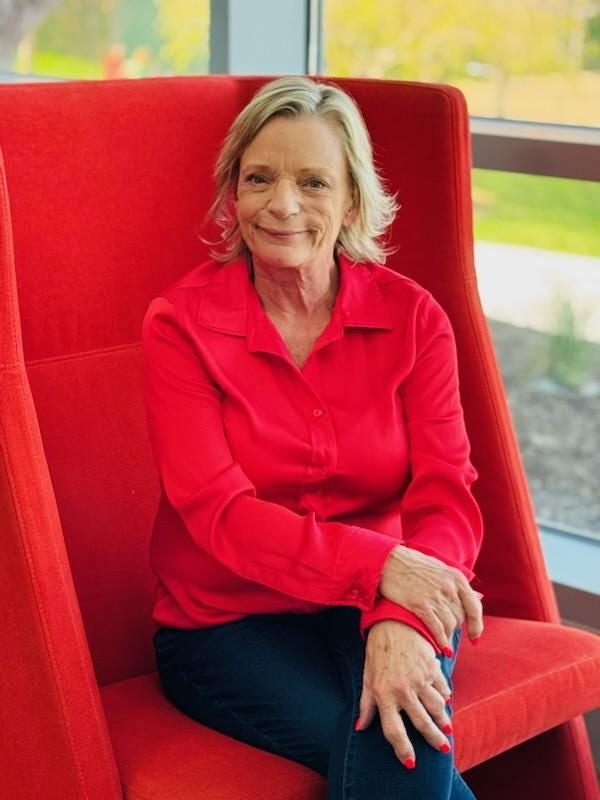
    Joy Ewing, in signature Mastercard red, at the company's St. Louis Tech Hub. 


A front-row seat to innovation

A few years before Ewing was hired, credit cards were facing an existential crisis. In the early 1970s, salesclerks were still dialing in requests to authorize a credit card transaction. As the clerk waited on the line (and the customer grew increasingly impatient), an agent on the other end might be poring through a gigantic binder of account records to determine whether to approve the sale. This could take anywhere from five to 20 minutes — and that was if the customer and the merchant used the same bank. The process was even longer when the issuing bank had to call the merchant’s bank.

The solution was technology: specifically, the first links in a communications network that would become the backbone of Mastercard’s global operations. By 1971, merchants served by St. Louis-based Credit Systems Incorporated (CSI), the processor for Interbank members in the southern Midwest, could simply phone its regional authorization hub, where operators keyed in transaction details for near-instant decisions from a refrigerator-sized computer.

Two years later, CSI helped Mastercard launch the first nationwide system of computer-to-computer communications between issuers and acquirers. The average time for a transaction dropped to a matter of seconds.

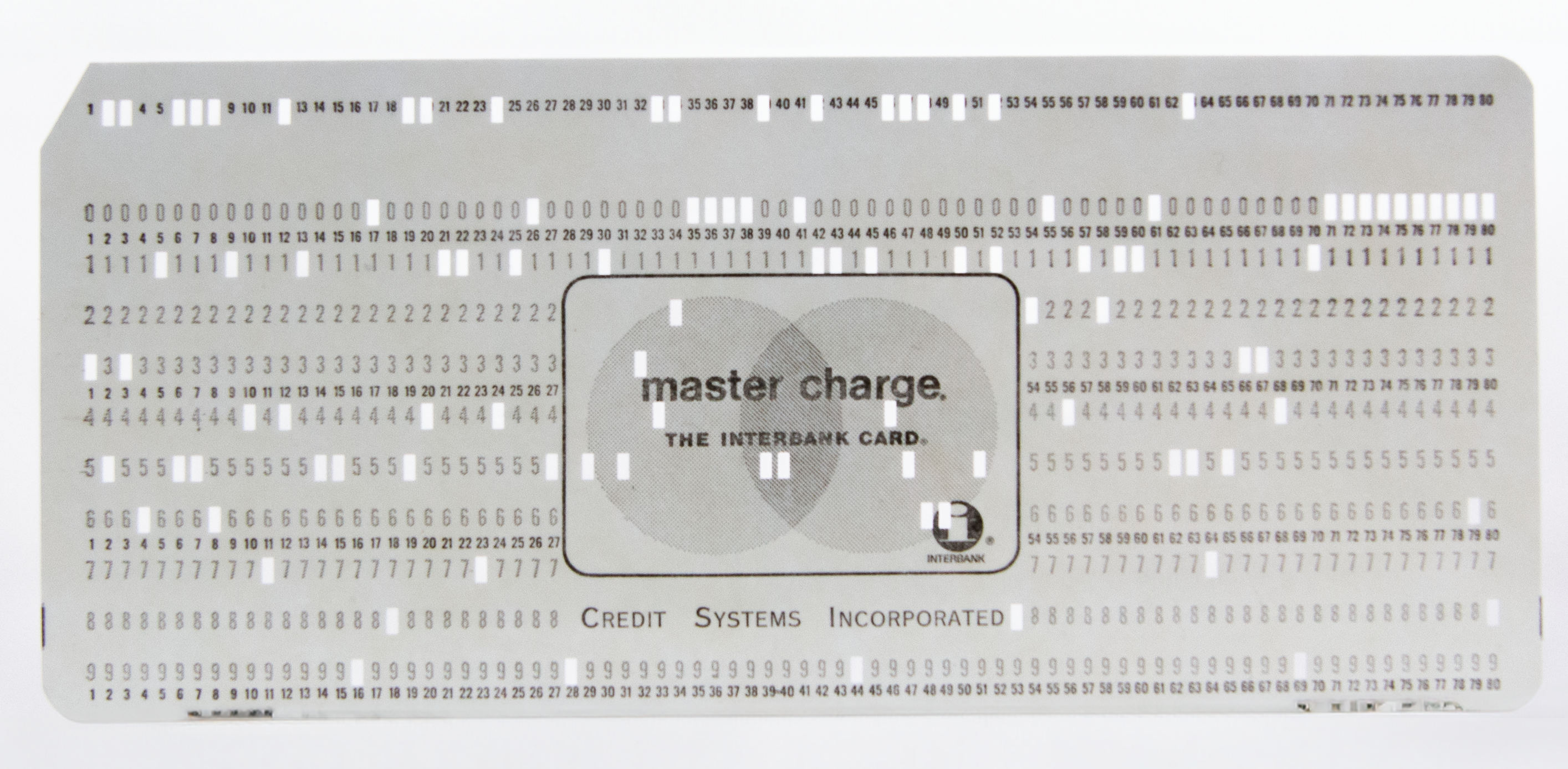
In her early Mastercard days, Ewing sat in front of a cathode-ray monitor answering merchants’ calls and running card numbers through the computer system. Impressed by her enthusiasm, in 1979 a higher-up offered her a position at Mastercard’s new data center just outside St. Louis. Officially, she became the secretary to the vice president of operations, but everyone on the 30-person staff pitched in as needed. For example, when the phones weren’t ringing, Ewing learned to prepare punch cards, a hallmark of 1970s computing, photo below..


The developer — yes, singular; there was only one in Mastercard’s St. Louis operation then — wrote out his code by hand; it was Ewing’s job to type it into the key-punch machine, which translated the characters into holes in cardboard cards that could be read by a computer.

“I became the jack of all trades,” she says. “I was intrigued by everything we were doing, and I wanted to understand how it all worked.” 


Growing with the company

As the technology changed, so did workplace culture. “There were mind-blowing changes in business,” she says. “We finally got an HR department. That was a pretty big change. I’m like, ‘What does HR do?’ We had two people in HR who kept us in order.”

Before Mastercard relaxed the dress code around 2000, those who wanted to wear jeans paid — literally — for the privilege (the money went to charity). “In the early days, we had to wear pantyhose every single day,” Ewing says. “Guys wore ties; they wore suits every day.”

Today the St. Louis team embraces flex time and hybrid work, but in the early years they stuck to a strict schedule: clock in, clock out, five days a week. The tradeoff was a close-knit staff that met downstairs for peanuts and beer every Friday. “People smoked in the office,” she laughs. “That was crazy.”


No one can say that I cannot adjust to change, because that’s all I’ve seen my entire career. It's what kept me interested. I’m still curious what we’re going to do next.

Joy Ewing


For most of Ewing’s career, she was usually the only woman at the conference table. Although she says she was never treated differently, she has taken pride in watching more women climb through the ranks. “Many more women in leadership roles, which I love to see at any organization, and we’re kicking butt,” she says. “Hear us roar.”

"No one can say that I cannot adjust to change, becuase that's all I've seen my entire career," she says. "It's what kept me interested. I'm still curious what we're going to do next." 

Even as the company evolves, one thing hasn’t changed: Its nerve center remains in Missouri. The data center, which relocated to the St. Louis suburb O’Fallon in 2001, is still Mastercard’s largest, managing hundreds of millions of transactions a day. And whereas Ewing once worked with a single developer, the data center is now the nucleus of a 4,000-employee Tech Hub, a birthplace of innovations that continues to transform how money moves around the world.

As she reflects on five decades at Mastercard, Ewing frequently circles back to what has kept her there.

“I’m still passionate about my job,” she says. “People ask, ‘How have you stayed so long?’ I love it, that’s how.”

Meet the card-carrying collectors preserving payments history

Credit card collectors are preserving rare cards, payment technologies and pieces of commercial history — from early Master Charge cards to modern collectibles.

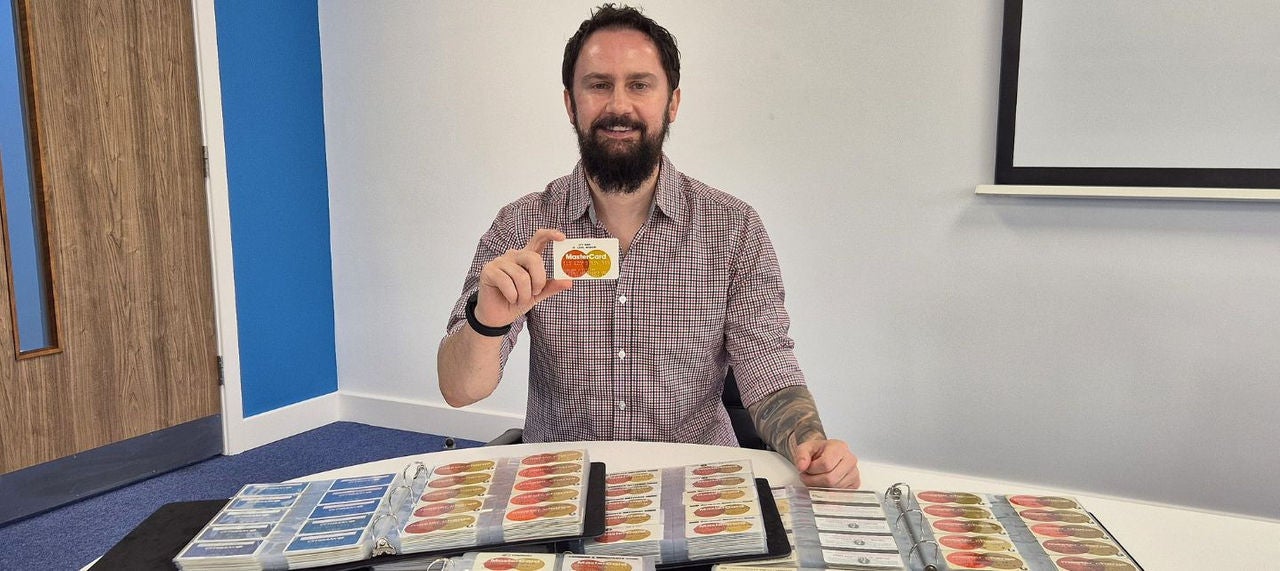
Rich Hudson holds up one of his vast collection of credit cards.