Article

Actioning data insights: How to avoid assumptions and motivate your team 

How luxury brand Naked Cashmere combines A/B testing and personalization to provide value for both the customer and business. 

Published: November 22, 2024

Shana Pilewski profile photo

Shana Pilewski

Vice President,

B2B Marketing,

Mastercard

Man at a coffee shop reading the news

Since our founding in 2016, Naked Cashmere, a luxury brand selling sustainably and ethically sourced cashmere products at a fair market rate, has grown amid a rapidly evolving digital landscape. As VP of B2B marketing, I attribute some of that success from recognizing early on that we needed to steer clear of our own tastes or biases and focus entirely on the customer. 

Our customer base ranges from 25-65+ years old, each segment with unique concerns, preferences and needs across the different customer journey stages, from brand newcomers to repeat purchasers. Additionally, luxury customers consider products for a long time before purchasing. We need to meet our customer where she is, no matter who she is — and ensure we do it while providing value to both the customer and the business. 

To do this, we’ve learned to treat data insights as our North Star. As an e-commerce team, we run two types of campaigns: those that are internally strategic and those that are customer centric and designed to drive visitors through the funnel. Each campaign: 

  • Begins with a hypothesis about user intent 
  • Considers the benefit provided to customers 
  • Matches with a business objective 


Achieving greater relevance with A/B testing 

One notable example of our data-driven approach involved evaluating the impact of product videos on our product detail pages (PDPs). For example, we thought product videos might create a more compelling, luxury-feeling PDPs experience, showing details and conveying craftsmanship better than static images ever could. We thought that they might build confidence in the customer and help them decide to purchase. 

At least, we assumed that — but what did our customers think? And if they did prefer it, would it be worth the video production costs? So we did some A/B testing, placing a video as the first image in galleries for select products. We found that it lifted revenue over static images by 4.7% — or an incremental revenue of hundreds of thousands of dollars annually. This result affirmed the need to invest in video production for our top products and core colors to optimize impact. 

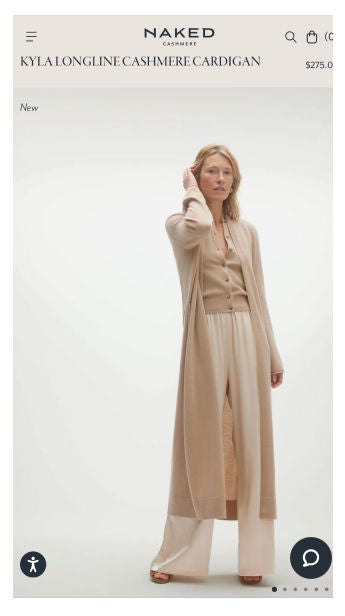
Static image example image
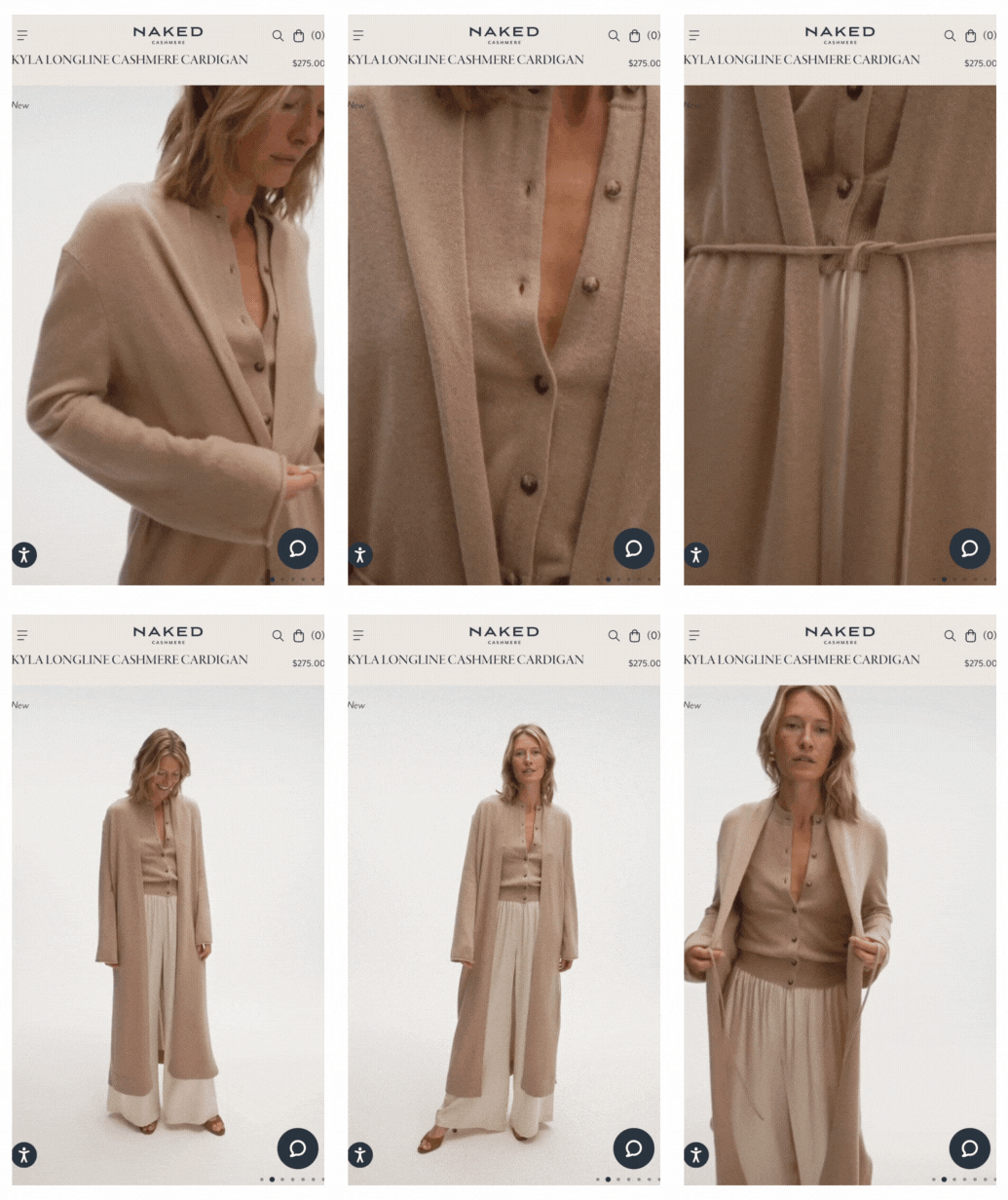
Product video example

The Naked Cashmere team A/B tested static images (L) against product videos (R) on select products, with the latter proving to increase the luxury of the online shopping experience. 

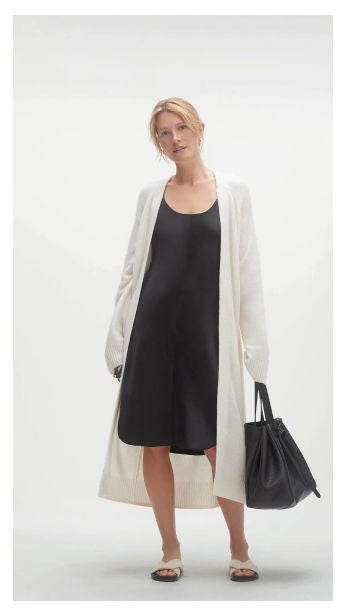
We also had an inkling that our customers would prefer an editorial style, so we tested different imagery styles on certain PDPs. While we tend to trend towards clean PLPs for our e-commerce images, we found that lifestyle and outfitting photos did in fact perform overwhelmingly better, leading to a 68% uplift on mobile and a 14% uplift on desktop. This insight helped us extend the life of our creative assets and maximize the value of our investment.

Editorial style image
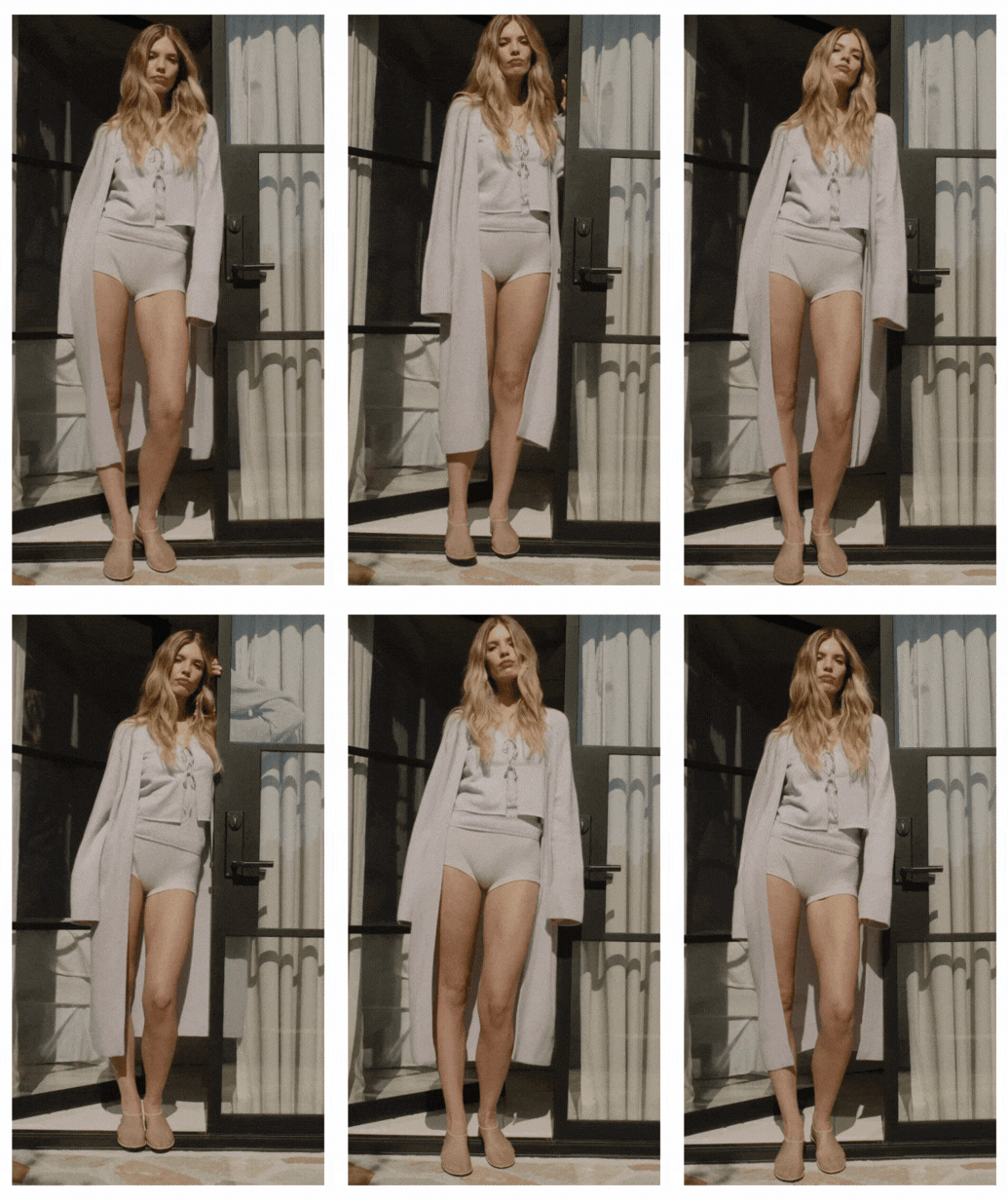
Editorial style video example

Naked Cashmere also tested clean product photos (L) against those that showed the products in lifestyle and outfitting situations (R), with an editorial style performing overwhelmingly better.

Layering on personalization to meet specific customer needs 

These A/B tests helped us optimize our site for the majority of visitors, but that version isn’t always what meets a customer’s needs. 

As stated before, we have customers who are at different phases of their life. Insights from our customer data platform (CDP) tells us that our empty nest customers start with cardigans, while our 30-year-old customers start with pullovers. On top of this, we also have customers in different phases of their brand relationship, from those just visiting the site for the first time to those who have navigated it regularly for years. We think the site can be more relevant across all our users, and so we use personalization to get the right product in front of the right customer at the right time. 

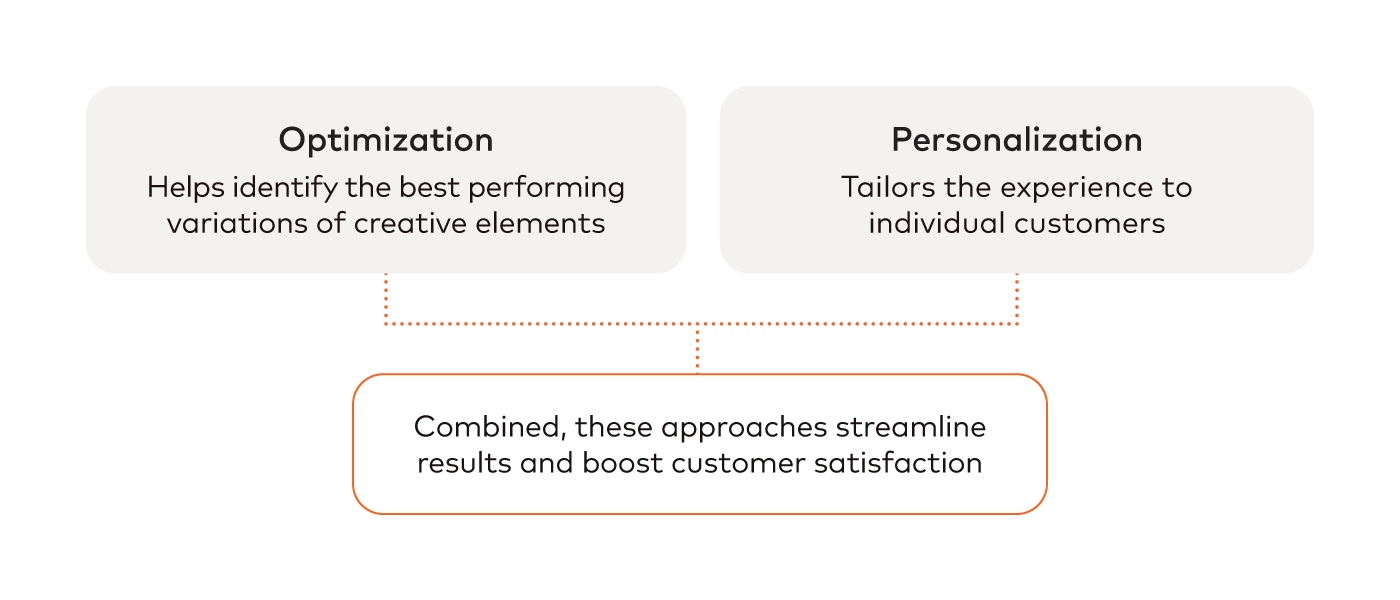
A/B testing + personalization benefits image

The power couple of A/B testing and personalization led to a measurable boost in KPIs.

While traditional e-commerce journeys have started on the homepage and ended up on product pages, the PDP is now the first interaction for many with the brand. This is akin to walking into a store and landing directly in the fitting room. We want to make sure that if the product a customer lands on site which isn’t for them, their journey doesn’t stop there. So we deliver different product recommendation strategies on our PDP to different audience groups.

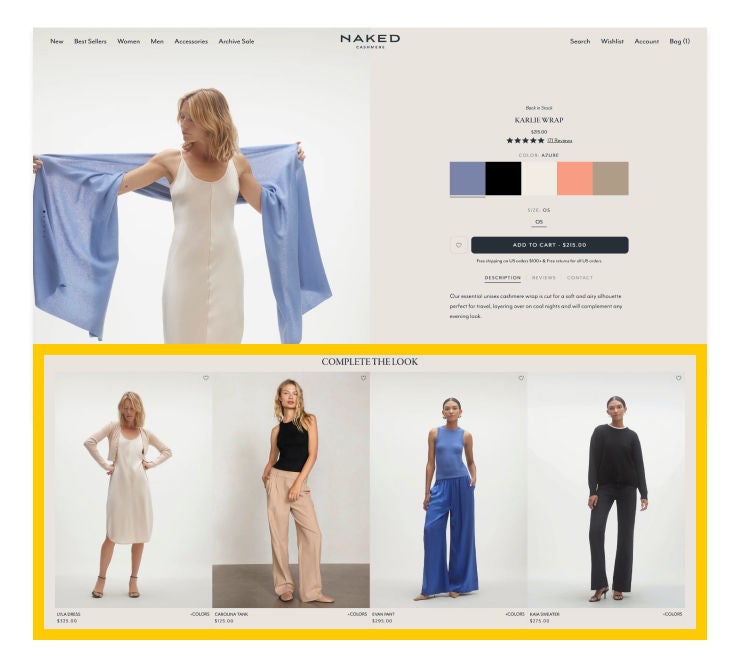
For new audiences on their first page view, we deliver a “Complete the Look” widget that highlights other products that complement the styling in the image. For visitors who’ve looked at multiple products, we populate a “Recommended for You” widget based on recently viewed products. For returning visitors, this widget shows recommendations based on their interests, using a customer’s past preferences and real-time context to recommend items predicted most relevant to them.

Doing this allows us to offer an individualized experience for all our visitors — no matter their history with the brand.

Complete the look widget

A “Complete the Look” widget is shown to new visitors as a way of recommending complementary products.

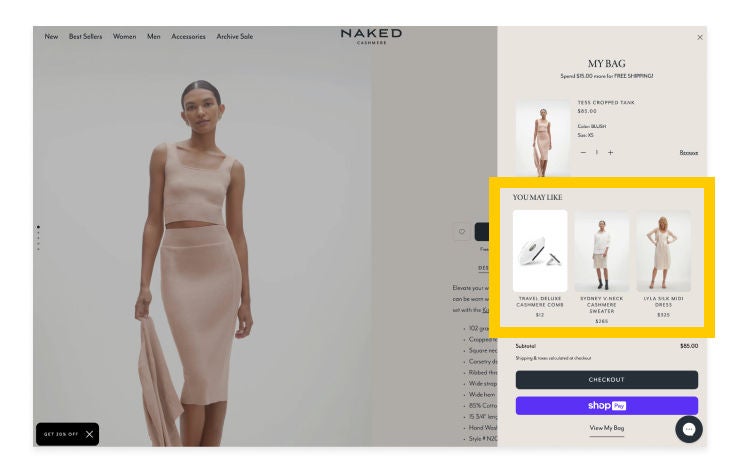
In our mini-cart, we also feature a You May Like widget that features three items to improve average order value (AOV) and units per transaction. One slot is pinned with a product that shoppers often buy as an add-on, like a cashmere comb. But the other two feature different algorithms to show other relevant products based on browsing history.

You may like widget

A “You May Like” widget appears once an item has been added to cart. It features a mix of merchandising and AI to feature recommendations that are relevant to the cart.

Looking ahead — testing more channels, algorithms and digital luxury experiences

Experiencing Naked Cashmere should feel like luxury — no matter who, where or when someone interacts with the brand. We’ve made strides towards this by incorporating data insights into our decision-making, personalizing the right aspects of the journey and rigorously testing our hypotheses. While focusing on our website, we’re looking to expand these initiatives to other channels, such as incorporating recommendations into email, breaking down silos to provide a cohesive experience that emphasizes our brand’s craftsmanship and values.

Additionally, we’re beginning to A/B test not only UX elements, but algorithms as well. We already use different recommendation strategies on our PDP to different audience groups, but how can we be sure those recommendations are the right fit for each segment? We can go a step further A/B testing our algorithms to ensure the best performing variation for each audience group and learning even more about the nuances within. For example, while the majority of loyal customers might prefer a “Recommended for You” widget that features recommendations based on their interests, some might actually want to discover products totally outside of their own previous tastes. We can convert this “losing” test into additional personalization opportunities, dividing our audiences into more meaningful segments based on previously uncovered shared characteristics and generate the best performance for more users.

In all, we want to create a strong first brand impression, exhibit our values and ensure that if the product doesn’t fit the customer, that their journey doesn’t end there. We believe the right experiences will not only evoke a high click-through rate (CTR), but will also emphasize luxury and craftsmanship and put the brand in a strong light. Content — the details of the product and craftsmanship — connotes luxury, and much of that can get lost in product grids. To accomplish all of this, we’ve allowed customer data insights to decide for us rather than just relying on our personal preferences.

Contact sales

Talk to an expert to learn how Mastercard can enhance your business through our products and services.

Mastercard