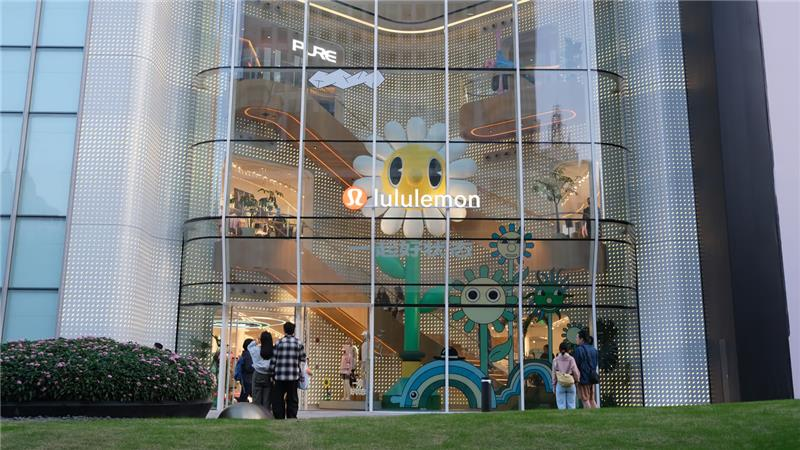
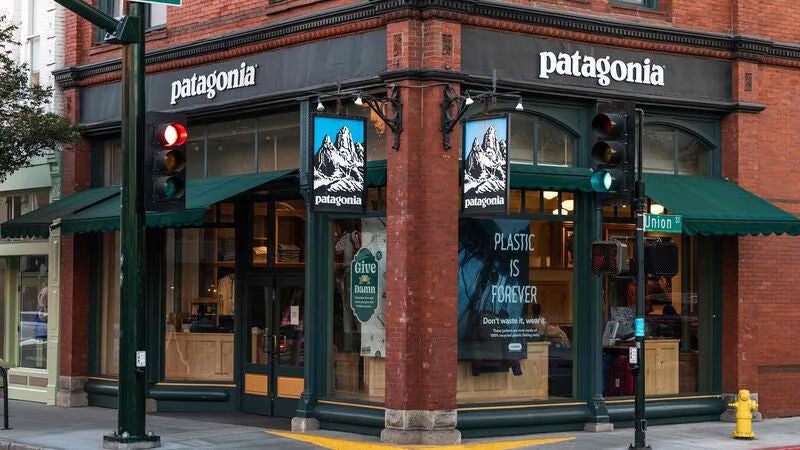
A worldwide survey of retail execs indicates that providing “an in-person component to customer experience” is the most important virtue of the physical store, with 44% of respondents naming it.44

Fashion retailers are pioneering a revolution in experiential shopping, blending digital and physical elements to create immersive consumer journeys.
Brands like Gucci and Louis Vuitton are leading the way with AR-powered virtual try-ons and exclusive pop-up shops that offer unique, interactive experiences. These retailers are setting new benchmarks for customer engagement and brand loyalty as they reshape the retail landscape.
The rationale for in-store shopping is changing. While shops may no longer be the primary channel for product acquisition, leading retailers are transforming them into sites of meaningful consumer experiences. Shops are becoming places where consumers can socialise, learn about brands and their products or simply immerse themselves in a brand-specific atmosphere. This transformation is happening first and fastest among luxury apparel, beauty and fashion brands.
A worldwide survey of retail execs indicates that providing “an in-person component to customer experience” is the most important virtue of the physical store, with 44% of respondents naming it.44
Retail facilities geared more toward encouraging a brand experience than toward moving merchandise are starting to emerge, signalling a different way to use store footprints for engagement.
Seattle startup Augmodo is deploying a range of cutting-edge technologies, including computer vision, spatial computing, AI and AR to track and map products in complex retail environments, such as sprawling supermarkets.45 The company’s technology could be accessible to users as MR overlays on the physical world, courtesy of spatial computing hardware.
Some fashion companies are leveraging generative AI for highly customised marketing campaigns — adapting messages for individual consumers, using large language models to create content and modifying website and app interfaces to deliver more personalised experiences. L’Oréal has used a generative AI solution that analyses shopping habits to produce product recommendations — resulting in a 20% increase in sales for one L’Oréal brand.46
Luxury brands are adopting digital product passports (DPPs) to comply with the European Commission’s upcoming Ecodesign for Sustainable Products Regulation (ESPR), which mandates transparency and traceability for products made or sold in Europe. DPPs connect physical products to a digital identity, providing comprehensive information about the entire product lifecycle to promote sustainability and circularity. This innovation not only helps brands meet regulatory requirements but can also combat counterfeiting and confirm product authenticity. Additionally, DPPs enable rich product storytelling and deeper consumer engagement, driving higher conversion rates and fostering long-term customer trust and loyalty by transparently showcasing the sustainability of luxury products.
Numerous leading retailers, including Lululemon, Madewell and Patagonia, maintain “sell-back” programmes in which they compensate customers for used items and then resell them, promoting circular economy principles.
Emerging use cases, such as virtual try-ons and home visualisation apps, are expected to see widespread adoption due to their ability to enhance customer confidence and reduce returns.
Ensuring accurate and user-friendly technology for body scanning and AR/VR experiences is challenging and the current cost of MR devices is an impediment. However, as technology advances and costs decrease, retailers that can address privacy concerns and offer seamless, valuable and immersive experiences could lead the way in redefining the e-commerce landscape.
Over the next five years, retail will be transformed as individualised consumer engagement, conversational shopping, dynamic loyalty programmes and immersive experiences become industry standards.
Companies that integrate AI chatbots, digital shopping assistants, in-store digital touchpoints and VR/AR experiences into the consumer journey will enhance product discovery and should ultimately increase brand loyalty and customer retention.
Each of these five attributes underscores the importance of treating customers as unique individuals and building more robust, meaningful connections with the brand. Successful retailers can achieve this — along with improved financial performance — by providing a retail experience that is individualised, contextually relevant and responsive to consumers' evolving needs and preferences.
Mastercard stands at the forefront of innovation in retail and commerce, leveraging its deep expertise in AI and data analytics to revolutionise shopping experiences, optimise payment operations, enhance cybersecurity and bolster trust.
With over two decades of AI expertise, Mastercard is at the forefront of using generative AI to optimise operations and innovate payments. Solutions like Authorisation Optimizer and Scam Protect empower partners with intelligent transaction routeing and smarter recommendations, driven by the analysis of over 143 billion transactions annually.
By embedding AI-powered security measures in our products and services, Mastercard proactively identifies and neutralises threats, ensuring data security and building trust in the digital economy. Mastercard's deep bench of AI-powered cybersecurity solutions prevented over $20 billion in potential fraud losses in 2023. Due to advances in generative AI, card fraud detection has doubled in speed and reduced false positives by up to 200%.
Mastercard is revolutionising retail with AI-powered tools that enhance consumer shopping experiences. Through Dynamic Yield, Mastercard helps its customers deliver valuable, useful and enjoyable experiences at scale with smart personalisation. DY uses AI to personalise every step of the consumer journey, across numerous channels, including web, mobile apps, email, SMS, digital assistants, kiosks, in-store displays and more. In 2023, DY's AI delivered 371 billion impressions of personalised info across hundreds of brands.
Mastercard's co-creation approach with partners drives innovation at scale. By leveraging its global infrastructure, Start Path programme for supporting startups and commercial partnerships, Mastercard collaborates with over 80% of the top digital payment and neobank fintechs on the CNBC global fintech list, solving real-world problems and transforming the commerce ecosystem and its vast network of innovative new companies.
[36] https://www.cbinsights.com/research/report/retail-technology-startups-2023/
[37] https://www.voguebusiness.com/technology/mapping-the-net-a-porters-of-nfts
[38] https://hypebeast.com/2021/5/virtual-gucci-bag-roblox-resale
[39] https://www.voguebusiness.com/consumers/new-era-ar-vr-pop-ups-enough-to-lure-customers-in
[40] https://www.voguebusiness.com/consumers/new-era-ar-vr-pop-ups-enough-to-lure-customers-in
[41] https://wwd.com/fashion-news/fashion-scoops/jacquemus-cafe-fleurs-seoul-1235882485/
[42] https://www.cnbc.com/advertorial/behind-the-vs-series-by-sk-ii-studio/
[43] https://www.retaildive.com/news/savage-x-fenty-delves-deeper-into-fitting-room-tech/643390/
[46] https://www.salesforce.com/news/stories/loreal-salesforce-success-now/