What are you looking for?

AI
September 16, 2026
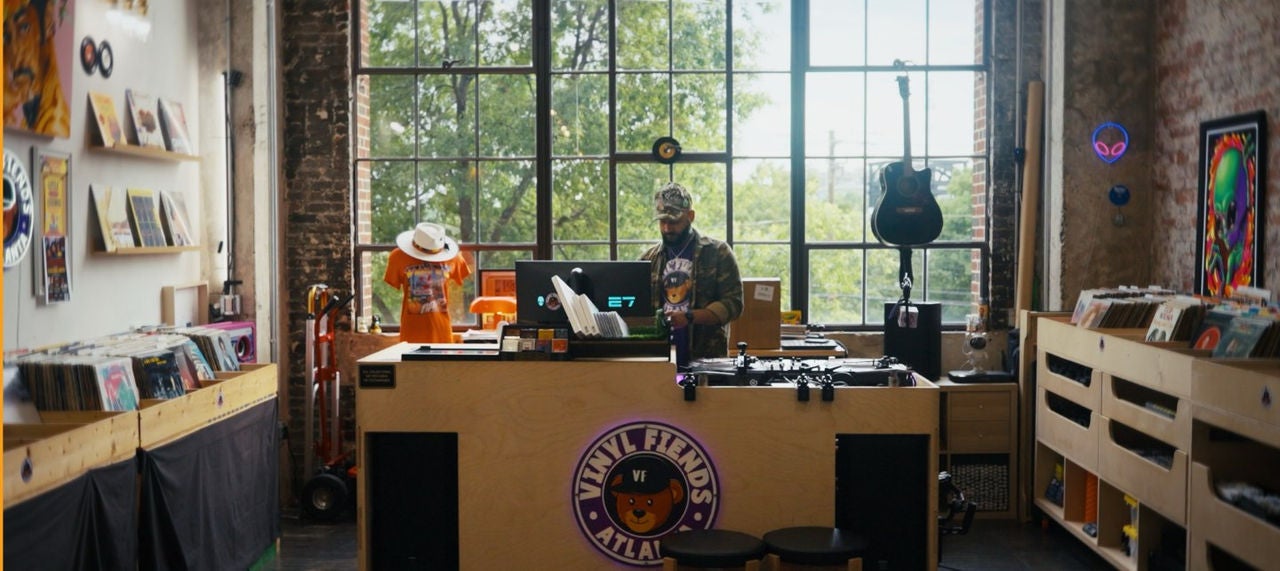
DJ Silver Knight, owner of Vinyl Fiends in Atlanta, says AI helps him think through strategy and grow sales while running a business rooted in analog culture. (Photo credit: Arsalan Danish)
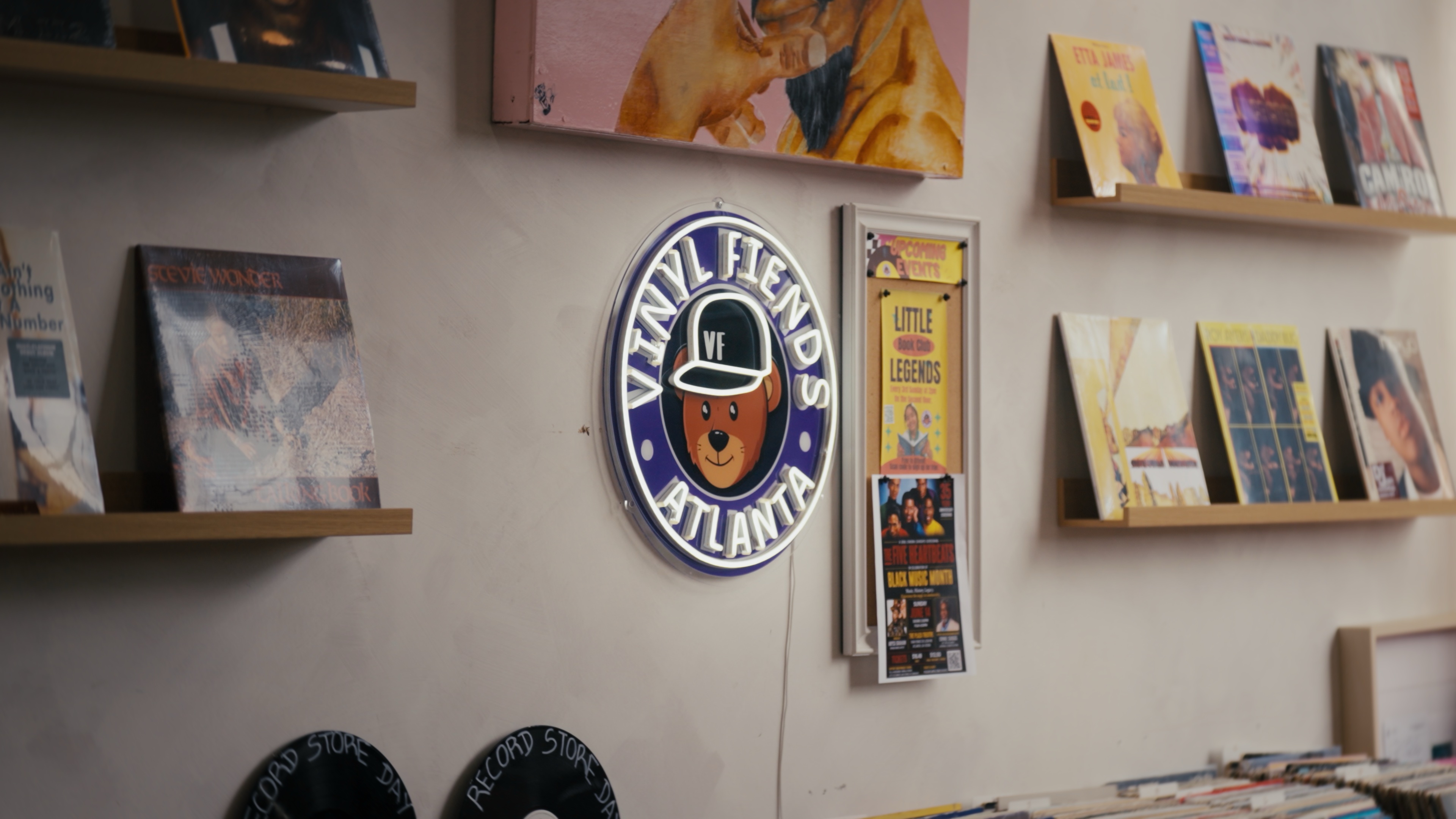
DJ Silver Knight, owner of the Vinyl Fiends record store in Atlanta, says one of his biggest challenges as an entrepreneur is finding staff who share his vision. So, even though he specializes in retro analog media, he has “fully embraced” AI to add some extra brainpower.
“I use AI sometimes to ideate and strategize,” Knight says, “helping some of our overseas and worldwide sales grow, being able to click on and letting AI figure out some things or do some things that I wouldn't have thought to do.”
The stratospheric growth of artificial intelligence is making it easier than ever for small fast-forward nearly every stage of the startup process, from sketching out business plans and finding financing to generating leads, lining up logistics and devising social media campaigns. By providing alternative data points for lenders to score, AI is expanding access to capital for small businesses who may not have qualified for traditional loans.
All these new capabilities are supercharging small business creation. From food trucks to drop shipping to digital media agencies, more than 5 million entrepreneurs applied to start their own ventures last year, continuing a spike in new business creation since the pandemic. That trend is expected to continue through 2026, as hiring slowdowns and a competitive job market spur would-be entrepreneurs to take the plunge.
Meet DJ Silver Knight, who spins up new ideas with AI in Atlanta.
Please accept functional cookies to watch this video.
Granted, there’s plenty that AI still can’t do or does poorly, such as generating errant answers or clichéd wording. Plus, the human touch is still vital when running a small business, so AI is far from a fix for every entrepreneur’s needs. But it is helping make much more possible for these small-but-scrappy teams.
“AI and agentic commerce can really even the playing field,” says Ginger Siegel, Mastercard’s North America small and medium business lead. “If you're a small business, you do everything: chief cook, bottle washer, hiring [and] you're firing. What AI does is cuts out a lot of the time in some of the key areas that they may not have time to do.”
Executive-level expertise is a luxury many small businesses can’t afford. Now, new tools like Mastercard’s Virtual C-Suite package will soon be able to equip entrepreneurs to compete against their better-resourced larger competitors.
Small businesses will be able to integrate AI agents as virtual executives to track their performance and advise them on critical business decisions. For example, a virtual chief financial officer can pull together accounts, invoices and bills to streamline a business’s finances and illuminate new avenues for growth.
“You're short on time and resources, and you're acting as a jack-of-all-trades. These executive agents will sit around your virtual table so you can focus your time on priorities and on the things that truly require a human touch,” says Raj Seshadri, who served as Mastercard’s chief commercial payments officer and is now a senior strategic advisor for the company.
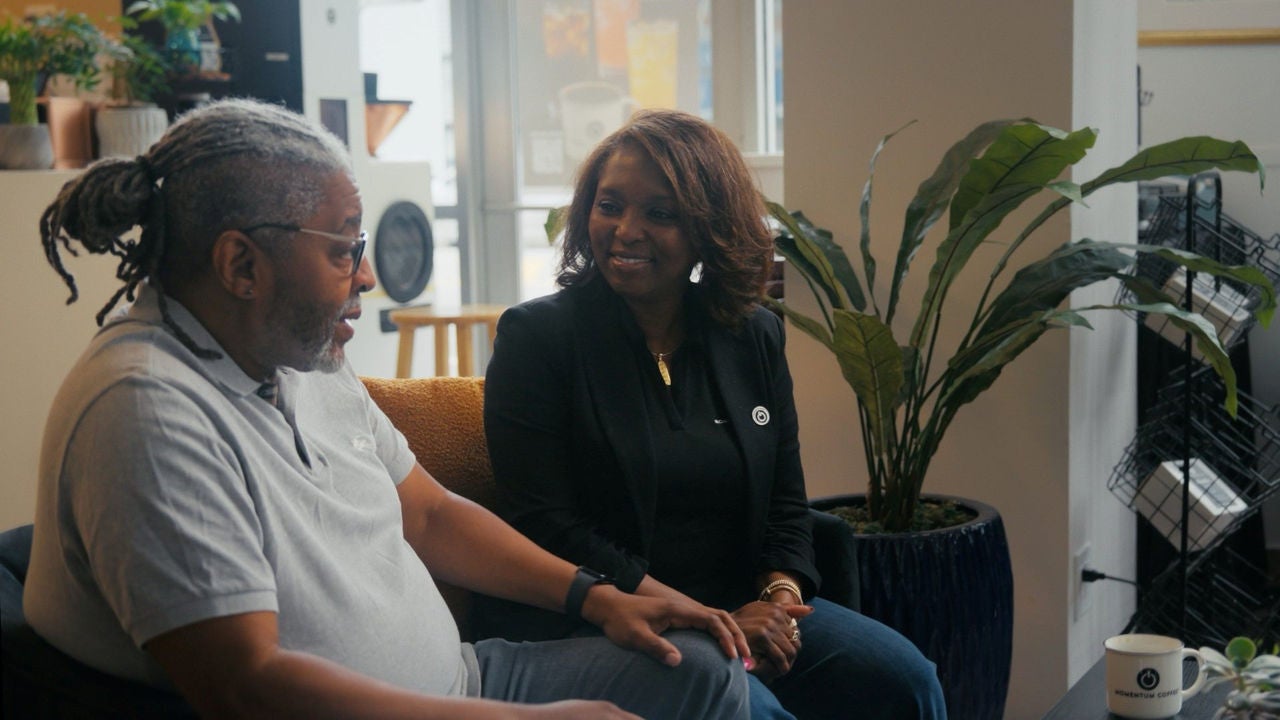
Nikki Bravo, who co-founded Momentum Coffee with her husband in Chicago in 2020, is enthusiastic about the potential for AI to automate routine activities so she can focus on bigger-picture needs.
“That kind of assistance quickly makes the difference for a business that does not have a lot of time,” she says about the technology. “I've got a number of people in different locations that are calling, they're texting right at the same time. You're running your business, you've got to order, you're paying bills.”
“We really want to be out there promoting Momentum Coffee, being able not just to connect. We're really good connectors, but we want to deepen relationships and that requires time,” she adds. “And so if you don’t have the time because you have to answer 50 emails in a day, that keeps your business from growing.”
Nikki Bravo and Tracy Powell, the husband-and-wife co-founders of Momentum Coffee in Chicago, are exploring how AI can help automate routine tasks so they can spend more time building customer relationships. (Photo credit: Rebecca Abraham)
Knight and Bravo aren’t alone in their interest in AI. Overall, 70% of entrepreneurs said they are excited about AI’s potential, according to Mastercard's new Dreamonomics report, which surveyed more than 6,000 small businesses across 18 countries. That result backs up a Goldman Sachs survey from March that found that three-quarters of U.S. small businesses said they used AI and most said it had been beneficial, but only 14% have fully integrated it into their core operations. Experts caution that small business owners can’t afford to sit back as this digital transformation reshapes the U.S. economy. To avoid falling behind, they urge entrepreneurs to keep up with AI’s evolving capabilities and figure out where to weave new tools into their operations.
Abran Maldonado, co-founder of the Create Lab Ventures generative AI studio, advises entrepreneurs to learn how to outsource tasks such as finding suppliers or managing finances to their AI agents.
“It's kind of like dog years, because a year in AI is exponentially faster than the rest of our lives,” he says.
However, for many small business owners, it’s a challenge to muster the energy and resources to integrate AI as they grapple with rising costs and the day-to-day challenges of running a business. Taking small steps that can build up over time will help a lot.
Because small businesses make up some 99.9% of companies in the United States, empowering them to use AI to expand and create jobs is a vital part of supporting inclusive economic growth, say experts like Maldonado, and a responsibility that tech giants and major companies need to shoulder.
“If they're going to continue an active growth phase, so that they can continue to be bigger than they are today, we need to help them with some of these tools,” says Siegel. “For me, it's about helping their business thrive.”