Small business

July 1, 2026


Built in a small business

For these Mastercard leaders, the earliest lessons in leadership came from watching entrepreneurs — their parents and grandparents — build something of their own.

Vicki Hyman

Director,

Global Communications,

Mastercard

Before the boardroom, there was a back room, a counter, a kitchen table, a shop floor.

Long before titles and teams, there were early mornings, small mistakes, difficult customers and lessons learned the hard way.

Growing up around their family business shaped more than a work ethic for these Mastercard leaders. It gave them a close-up view of what it takes to keep a business moving, to keep customers coming back, to keep a community connected.  Here, they share the moments that stayed with them, and how those lessons continue to influence how they think about entrepreneurship, resilience and leadership today. 

Always show up

Shamina Singh, founder and president, Mastercard Center for Inclusive Growth

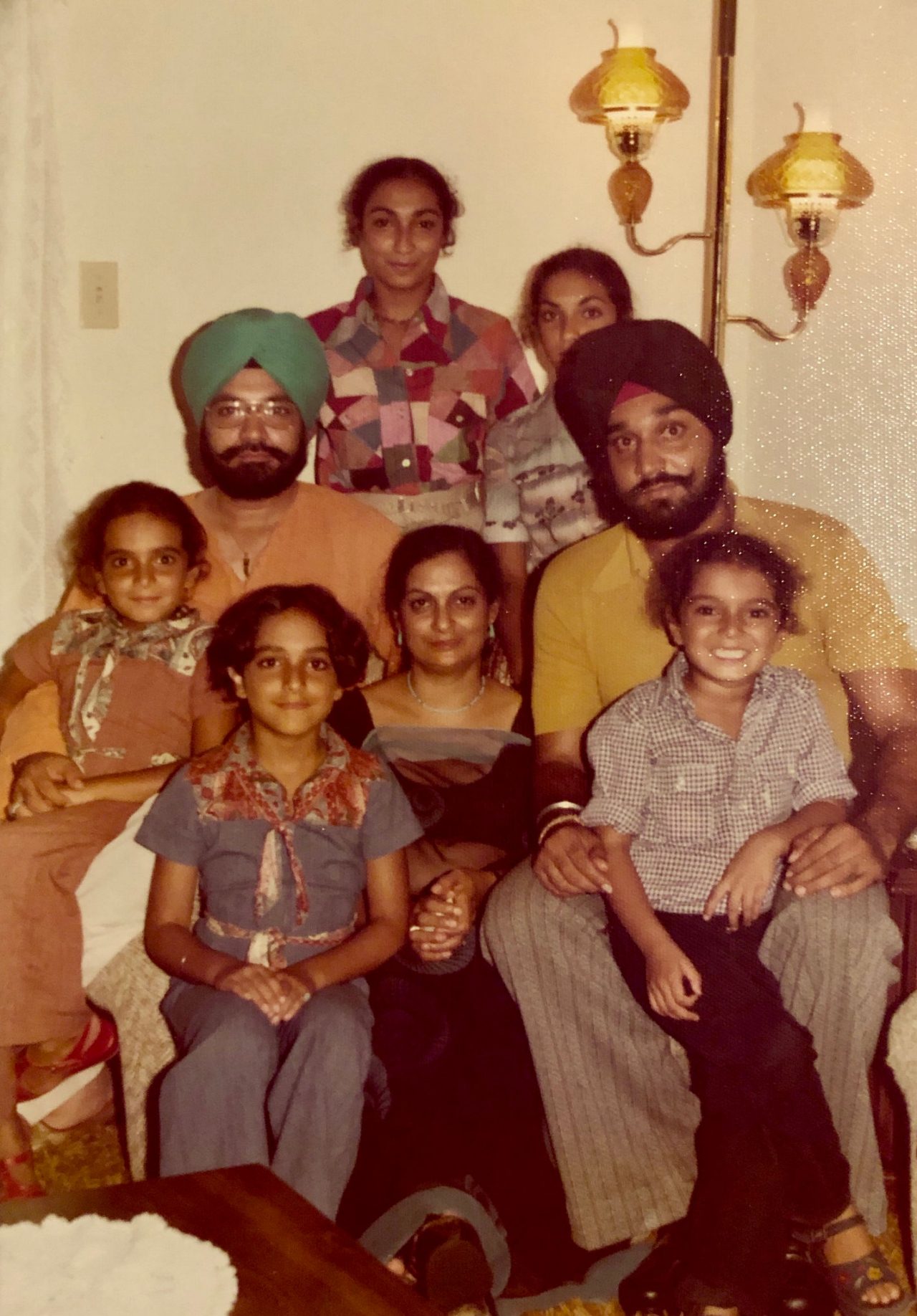
Shamina Singh, right, with her family.

Shamina Singh, seated in her father's lap, left, grew up in Norfolk, Virginia., where her parents ran a jewelry business and Oriental rug store. (Photo courtesy of Shamina Singh) 

The beginning

My mother had a jewelry store in a local hotel in Virginia’s Hampton Roads region when my sisters and I were quite young — a fringe benefit was swimming in the hotel pool. My father, a professor at the local community college, designed the jewelry and even became a certified gemologist. Then in 1981, my parents opened a standalone jewelry and Oriental rug store in Norfolk. As a teenager, I unloaded rugs from trucks in the sweltering Virginia heat, displayed them for customers, and, by high school, I was staffing the shop myself and attending road shows and trade shows.

The moment

There was the immense pride my parents felt when they opened the store and got our photo in the local newspaper and joined the chamber of commerce. But I also recall seeing that pride in action: When I was about 9 or 10, I was tagging along with my father and grandfather to meet a customer when our car broke down — this was years before cell phones and Uber. Someone finally pulled over and offered to help fix the car, but my father asked him to drive us all to the customer meeting instead, because that was more important. That stayed with me.  

The lesson

I have deep respect, appreciation and humility for the small business owner. I respect that this is not easy. Starting and growing a business is very difficult job, and it’s a very personal job, so it’s different for everyone. There’s no one-size-fits-all approach. I try to meet them where they are. This ethos is the foundation for Mastercard Strive. 


Finish today's work

Marcus O'Toole, senior vice president, Global Small & Medium Enterprise Solutions & Design

Marcus O'Toole and his father in their furniture store.

Marcus O'Toole, left, with his father in their home furnishings store in Ireland. (Photo courtesy of Marcus O'Toole)

The beginning

Growing up in a small rural town in Ireland, I spent my teens working in my father’s home furnishings business — furniture and carpets — helping with after-school deliveries and weekend carpet fittings before moving into the shop floor, where I’d help customers choose floor coverings and furniture for their homes. My father ran the business for over 40 years, and my mother ran her hair salon next door to our home, having taken it over from her own mother, and my grandfather ran his own barbershop — entrepreneurship was simply part of our family’s DNA. 

The moment

One of the sharpest lessons came during a housing boom when the business was growing fast and demand was outpacing everything. The bank overdraft was maxed, stock was needed, and payments started bouncing — not because the business wasn’t busy, but because we’d extended too much trust to customers who hadn’t yet paid. Suddenly, my father and I were spending every weekend reconciling accounts and sending multiple reminders and, in some cases, calling to homes chasing payments. It was stressful, humbling, and ultimately a turning point that shaped how I think about cash flow and customer accountability to this day.

The lesson

My father had a saying he lived by: Never put off until tomorrow what can be done today, because there will always be more to do. That bias for action and the discipline it takes to stay ahead — rather than react — has stayed with me throughout my career. But equally important was learning that listening to what a customer actually needs, rather than trying to fit them to a product, is the foundation of any lasting business relationship. In a small town, your reputation travels fast, and every unsatisfied customer is a reminder that trust is your most valuable asset — something that’s just as true in global commerce as it was on the shop floor in rural Ireland.


Relationships matter most

Payal Dalal, executive vice president, Global Programs, Mastercard Center for Inclusive Growth

Payal Dala
Payal Dalal in Istanbul with her father on a rug buying trip.

Payal Dalal in Istanbul with her father on a rug buying trip. (Photo courtesy of Payal Dalal)

The beginning

I grew up in Dallas, Texas, the daughter of Indian immigrants. My mother created a company that specializes in resort wear combining Indian heritage with modern fashion and high-end Indian-influence jewelry, and my dad founded a luxury furniture and access business sourced from India, Africa and the Middle East. As a kid, I worked in both, writing up invoices, talking to customers and helping out at the occasional show, and spent two summers in my early 20s in sales with my dad. 

The moment

There isn’t one single memory but rather a cascade of moments that reinforced to me that running a small business is really only about one thing: fostering strong relationships. The depth of my parents’ relationship to customers, suppliers and employees always struck me. Customers would stay at our home and we at theirs. My parents would go to the weddings of their suppliers and celebrate life milestones with their employees. It became clear to me that small business is deeply personal. That why when I think of our work with small businesses, I don’t think about them only as the backbone of economies but the heart of communities.

The lesson

Business is about people. Connecting with them, understanding their needs and listening actively are more critical than any technical skill or qualification. That’s why I try to take a people-first leadership approach.


Everyone deserves opportunity

Ginger Siegel, senior vice president, Small and Medium Business lead, North America 

Ginger Siegel
Ginger Siegel, right, poses with her grandfather, Louis Zahn, and entertainer Danny Thomas, at the ribbon-cutting of Zahn's new location.

Ginger Siegel, right, poses with her grandfather, Louis Zahn, second from right, and entertainer Danny Thomas, at a ribbon-cutting for a new location of Zahn's pharmaceutical distribution business. (Photo courtesy of Ginger Siegel)

The beginning

My grandfather borrowed $225 to start the Louis Zahn Drug Company in Chicago and turned it into one of the country’s largest pharmaceutical wholesalers. As a child, I rode along the conveyor belt in the shipping boxes. In high school and college, I packed pharmacy orders, processed billing and data for independent drugstores, and fed punch cards into the company's early computer systems. Growing up around the business gave me a front-row seat to entrepreneurship in action — and to the small, independent pharmacies that meant so much to the communities they served.

The moment

I grew up watching my grandfather run the business. He was rough. He was tough. It was a very successful business, so you could say it worked for him. At the same time, I remember thinking that if I ever ran a business or managed people, I’d do it differently. You have to be tough sometimes, but there also has to be a softer side. I also watched my mother — who was every bit as capable as the men in the family — navigate the lower expectations that were common at the time. It was very old-fashioned, but that was the way things went. I vowed that gender would never be a reason to judge anyone’s ability. 

The lesson

My grandfather started a business out of the trunk of his car with no one to help him. I watched how he built this business from the ground up without a lot of support. I believe that it takes an ecosystem of partners working together to help entrepreneurs not just survive but thrive. At Mastercard, it’s not just about selling products. It’s about providing support to our partners so they can do better for their small business customers. It’s about consistently laying the groundwork so all boats can rise. I want the work we do to make that journey a little easier for the entrepreneurs building something of their own.