Travel
May 13, 2026
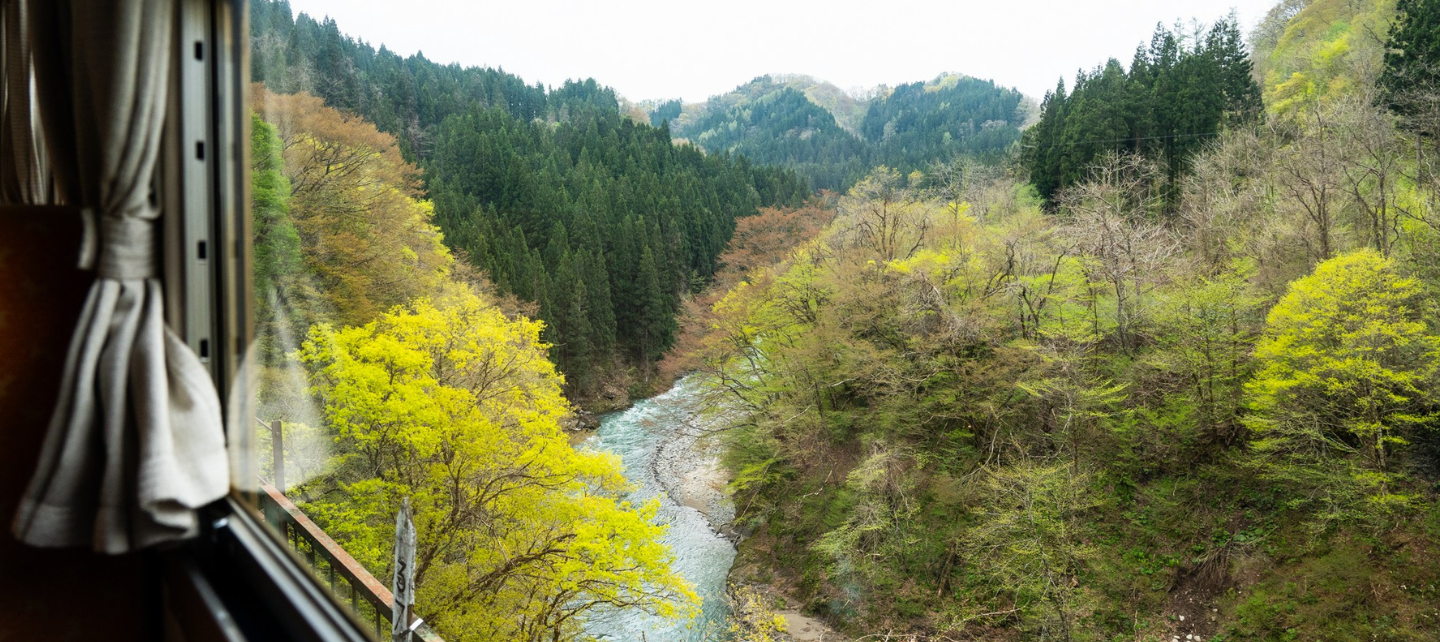
A stunning view from the Akita Nairiku Line, better know as the Smile Train, which slowly rattles through northern Japan in a bucolic contrast to the bullet trains for which the country is known. (Photo credit: Tim Stevens)
No trip to Japan is complete without at least one train ride. It's simply the best way to get around in a country that obsesses over its rails.
Tourists will see kids wearing backpacks painted in the colors of their favorite Shinkansen (Japan’s high-speed bullet trains), find multiple museums dedicated to the preservation of every era of railcar, and, most importantly, explore an island-spanning infrastructure that can get you wherever you need with peerless speed and reliability.
But despite all that enthusiasm, most trains in Japan have a cold, efficient feel. I've traveled to Japan dozens of times, ridden countless trains to many places, and yet never have had one pick me up or drop me off more than a few minutes off schedule. None, though, have tugged at my heartstrings like the Smile Train.
Cherry blossoms are a big deal in certain parts of the U.S. If you're in Washington, D.C., or Macon, Georgia, you can’t miss some extra tourists wandering about in late spring, but it's a fairly localized thing.
In Japan, this season is a country-wide event. Sakura, as cherry blossoms are called in Japanese, are found across nearly the entire country, and tracking the optimal time to view them is an obsession. The Japan Meteorological Corporation, or JMC, provides incredibly detailed forecasts and projections. Since the blossoms only open for a little over a week at a time, timing is key.
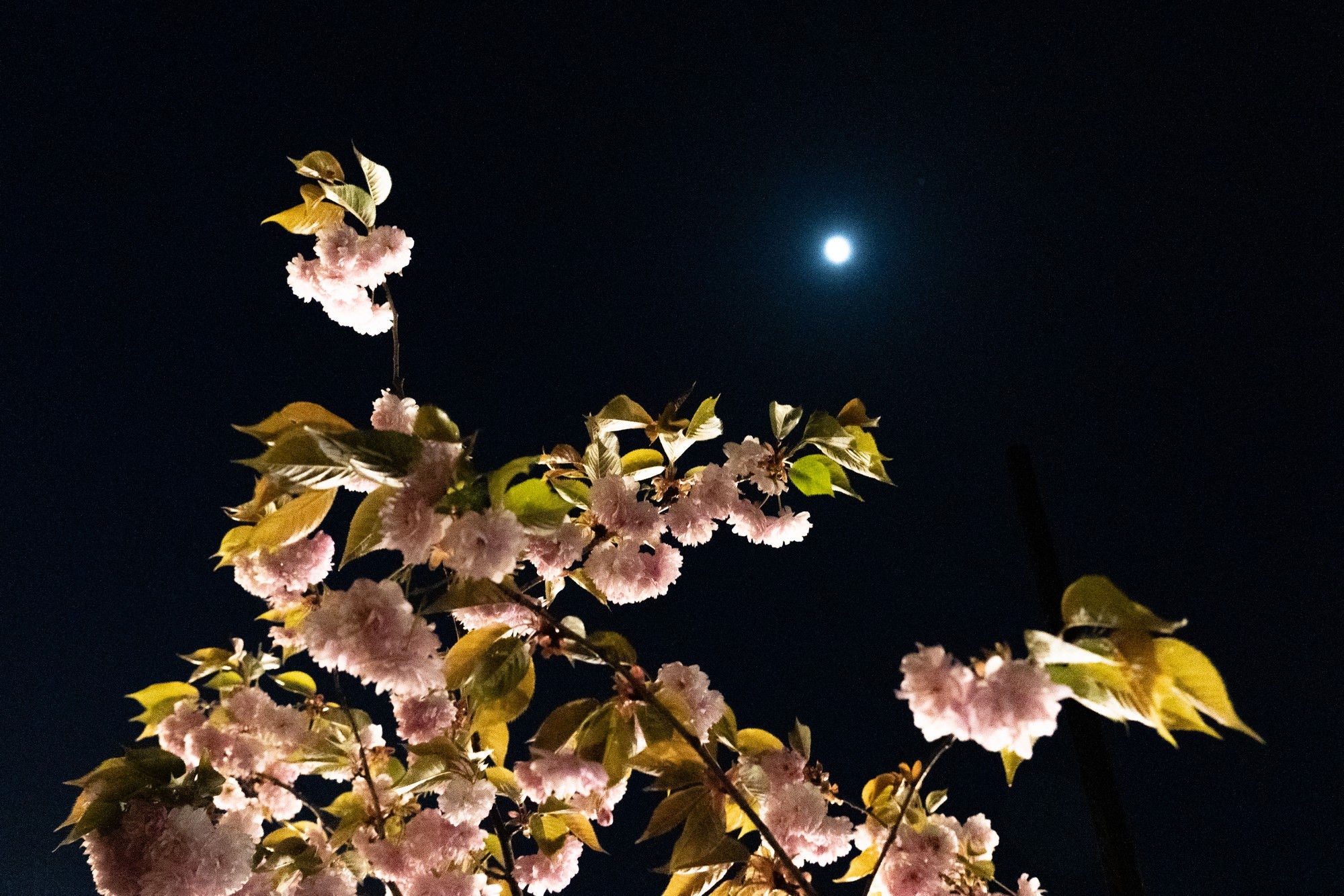
The cherry blossoms in bloom at Hirosaki Castle, first built in 1611, with grounds lined with cherry trees lit up into the night. (Photo credit: Tim Stevens)
Visit Japan in peak season, and you'll find everything from pastel-pink, blossom-flavored ice cream to blushing, doughy bread, not to mention an endless sea of sakura souvenirs. Tourists flock in, trains get jammed and the most popular sites near Tokyo, like Ueno Park and Shinjunku Gyoen, are full of more awed onlookers than open blossoms.
This year, I decided to hunt down some flowering trees outside of the city while also getting a better taste of rural Japanese communities that are too often ignored by tourists. I thought about renting a car and driving north, but not only is fuel prohibitively priced here, but the tolls for highway driving make road tripping a very expensive pursuit.
So I started looking into train options, and that's when I found the Smile Train.
Formally called the Akita Nairiku Jukan Tetsudo Railway, it's often referred to as Japan's most scenic train. Its unofficial name, the Smile Train, was earned not only because the attendants and conductors are all so friendly, but because you can expect to be smiling as you disembark.
And there's good reason to smile. The Smile Train starts in Kakunodate in Akita Prefecture to the west and makes it easy to get up to Hirosaki in Aomori Prefecture to the north. These two destinations are rich with history and loaded with scenic spots and amazing foods.
Your Smile Train journey will start in Kakunodate, but it's worth taking a day to explore before heading onward. About three hours by Shinkansen from Tokyo, the most futuristic city on the planet, Kakunodate is a town still rooted in the 17th century. While most of Japan's castles and residences from this period have been lost over the years, here you'll find an immaculately preserved street of Edo-period homes once owned by the area's highest-ranking samurai.
At that time, the residences of the powerful were often hidden behind walls. The wealth and status of the inhabitants within were exhibited by the size and beauty of their gates. Walk through the so-called Samurai District in Kakunodate, and you'll see those walls and stunning entryways preserved. More importantly, you can enter and explore grounds within that look like something out of a Kurosawa epic.
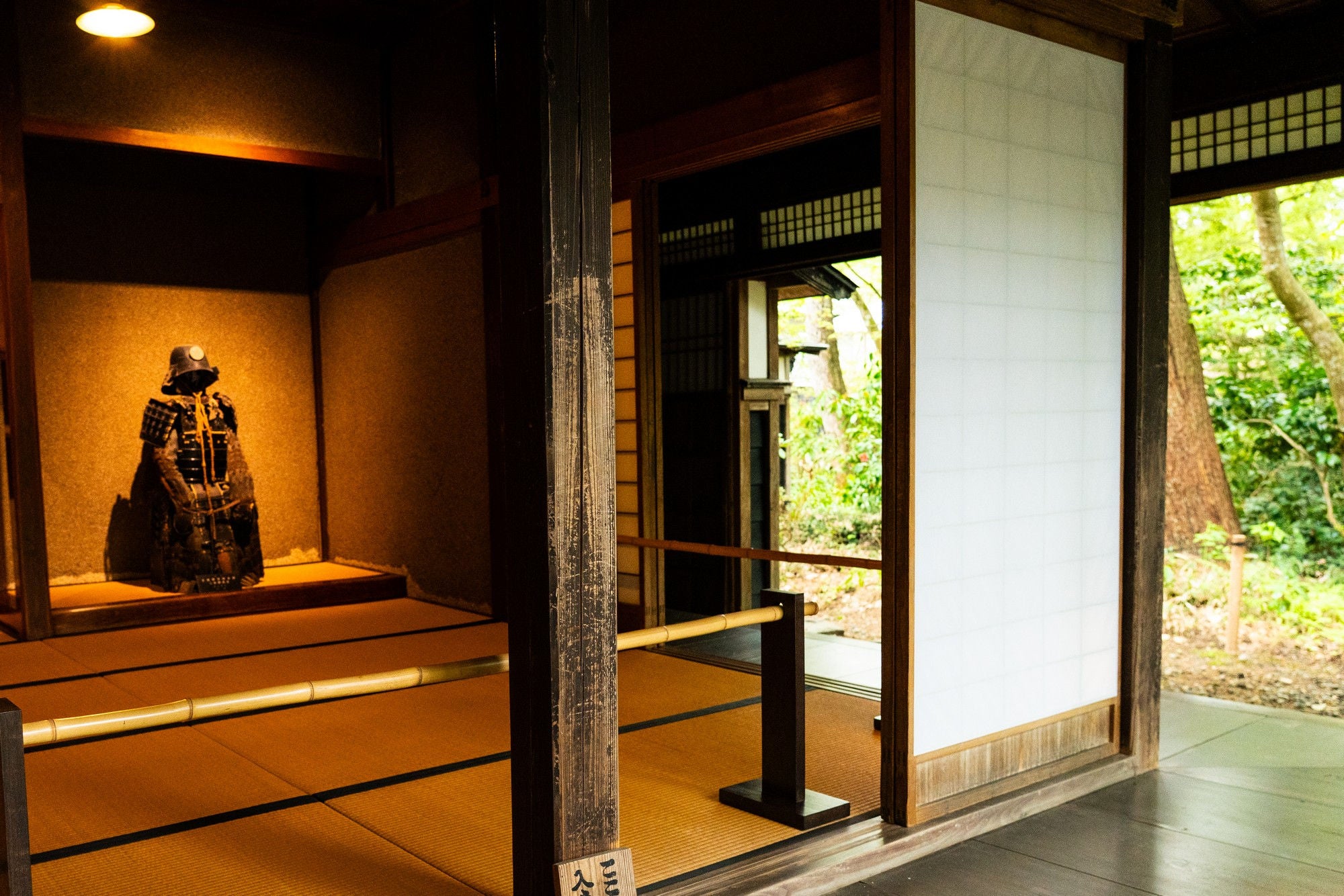
Heft a samurai sword while wandering through Kakunodate, an Edo-era town with homes built by Japan's elite military class. (Photo credit: Tim Stevens)
Most of these homes are free to explore, but two of the larger houses will set you back 500 yen. That cost, about $3 in time of writing, is more than fair to get a look inside. In one, you can even hold a genuine katana, getting a feel for the weight of the curved sword that these warriors carried into battle.
Kakunodate isn't all about fighting, though. This is also a hub for fine woodworking. Kabazaiku is an ancient art of creating beautiful objects from cherry bark. Much like tiradors in Portugal, who carefully harvest cork bark without killing the trees upon which it grows, workers in Japan meticulously strip the trunks of wild cherry trees.
The bark has a distinct, lustrous shimmer that looks better and deeper the more you examine it. It's used as a fine veneer on products like delicate boxes, game boards and serving trays. It was even used on samurai armor back in the day, appropriate since this was an art form often enjoyed by those warriors in their downtime.
The Kakunodate Cherry-Bark Work Museum also costs 500 yen to enter, and despite its small size, is well worth the price of admission. You'll not only see a rotating collection of historic artifacts like samurai armor, but you can also find local artists selling their work, which you can watch them make.
When it's time to refuel yourself, Kakunodate is riddled with restaurants serving locally made Inaniwa udon noodles in hot or cold broth. On the chilly, drizzly day that I visited, I opted for the former, following my nose to a little shop tucked between the samurai homes. A steaming bowl of soup served with a side of hot barley tea quickly thawed my frozen toes.
One note: Restaurants in Kakunodate tend to open late and close early. Very few places were open past 5 p.m., so don't wait too long to find food.
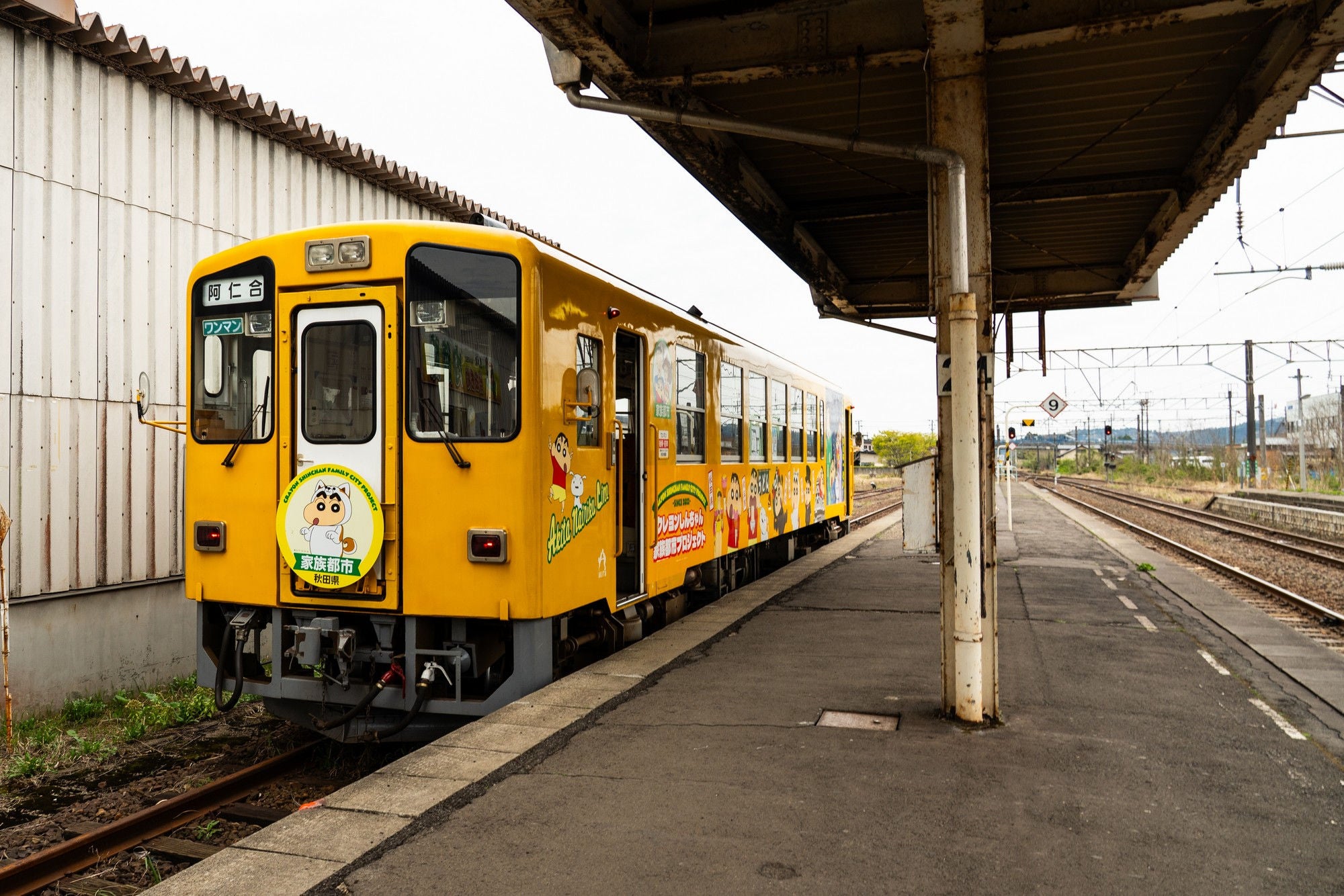
Compared to the sleek bullet train that takes you up to Kakunodate from Tokyo, the Smile Train is a ticket from another time. It's blunt and tiny, just one or two cars long depending on the day, and while most of Japan's trains whisk along electrically, the Smile Train has a distinctly diesel rattle to it.
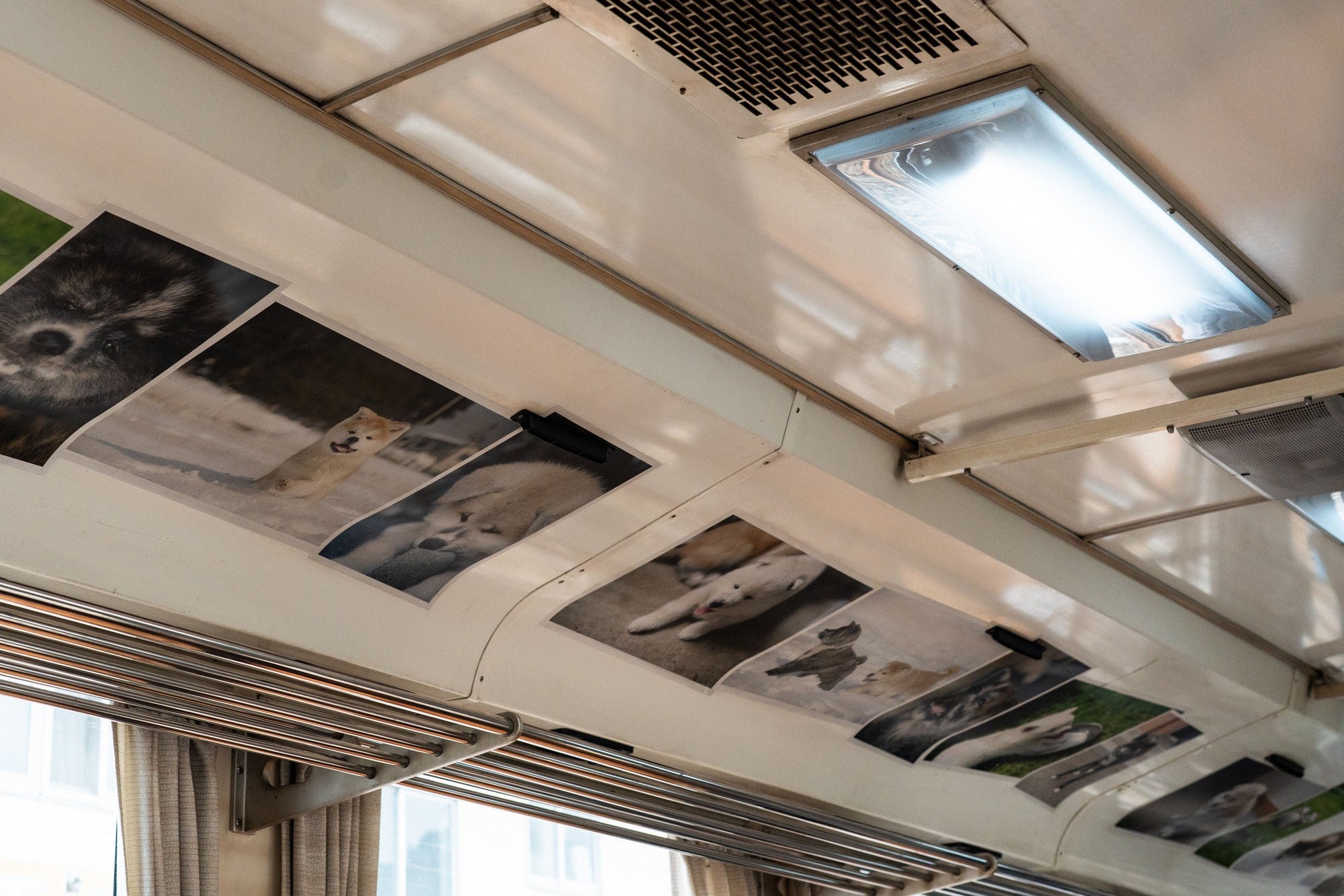
The train cars are even more charming on the inside. I was lucky to get the Akita car, celebrating the prefecture’s namesake dog. Instead of walls covered in advertisements for cosmetics and video games like your average Tokyo subway, this car is decorated with pictures of adorable, fuzzy dogs romping and playing and, yes, smiling for the camera.
The yellow Smile Train at a depot, left, in Akita Prefecture, and the whimsical interior, festooned with photos of Akitas, the large Japanese dog breed that hails from the mountains of northern Japan. (Photo credit: Tim Stevens)
You'll need a paper ticket to board, and once you get on, it's open seating. Sit wherever you like, but I'd recommend finding a seat on the left if you can. There, you'll get a nice view of Mt. Moriyoshi far in the distance, and the rivers that drain down from it, waters blue with minerals pulled down from higher terrain.
The train spends much of its time cutting through pastureland, mostly rice paddies growing Akitakomachi, a high-quality, short-grained rice. When I traveled through this year, much of this land still showed signs of the devastating flooding suffered the year before. Many farms were rebuilding, but if you travel in more fertile months, you'll see patterns and pictures sown in the fields, everything from playful pups to welcoming messages.
But the most scenic bits of the Smile Train are when it starts to deal with the terrain along its route. Travel through somewhere hilly on your average Japanese Shinkansen, and you'll spend more time looking at the inside of a tunnel than anything else. When you're traveling more than 200 mph, winding up a mountain pass isn't really in the cards.
While the little Smile Train has one lengthy tunnel stretch, most of the time it chugs its way up and over obstacles, slowing down over the bridges to give you a better look at the churning waterfalls and slate blue waters below.
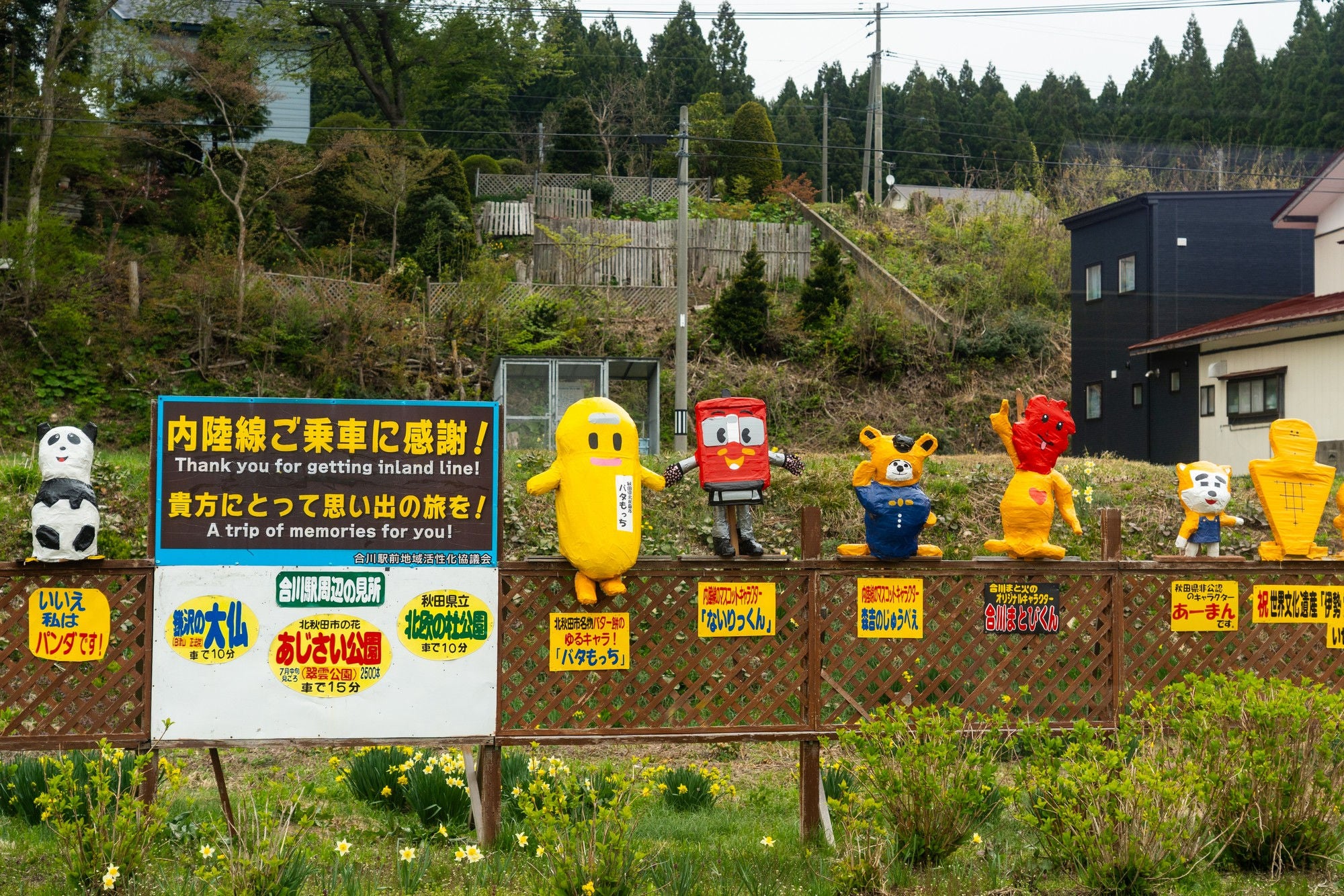
Kawaii, the beloved Japanese anime figures, line a fence along the railway line greeting visitors. (Photo credit: Tim Stevens)
The path also winds through some dense woods, trees so close you could literally reach out and touch them. This is the source of some of Japan's finest lumber. If you're a fan of woodland terrain, as I am, it's among the most charming parts of the ride. The Smile Train travels so slowly at times that it almost feels like you're hiking more than taking public transit. Foxes, pheasants and even bears can be spotted from the comfort of your seat if you have a sharp eye.
The Smile Train terminates in Takanosu, a small town without much reason to explore. But hop on another, more traditional train line, and you'll quickly find yourself in Hirosaki, the heart of Japan's apple production.
If there's one thing I love more than traveling, it's apple pie. While it was the Smile Train and sakura season that brought me up north, the promise of all the apple pies I could eat was an equally strong draw. It's such an attraction that Hirosaki Tourism and Convention Bureau publishes a map listing 40-plus restaurants and bakeries, each with a unique take on the treat.
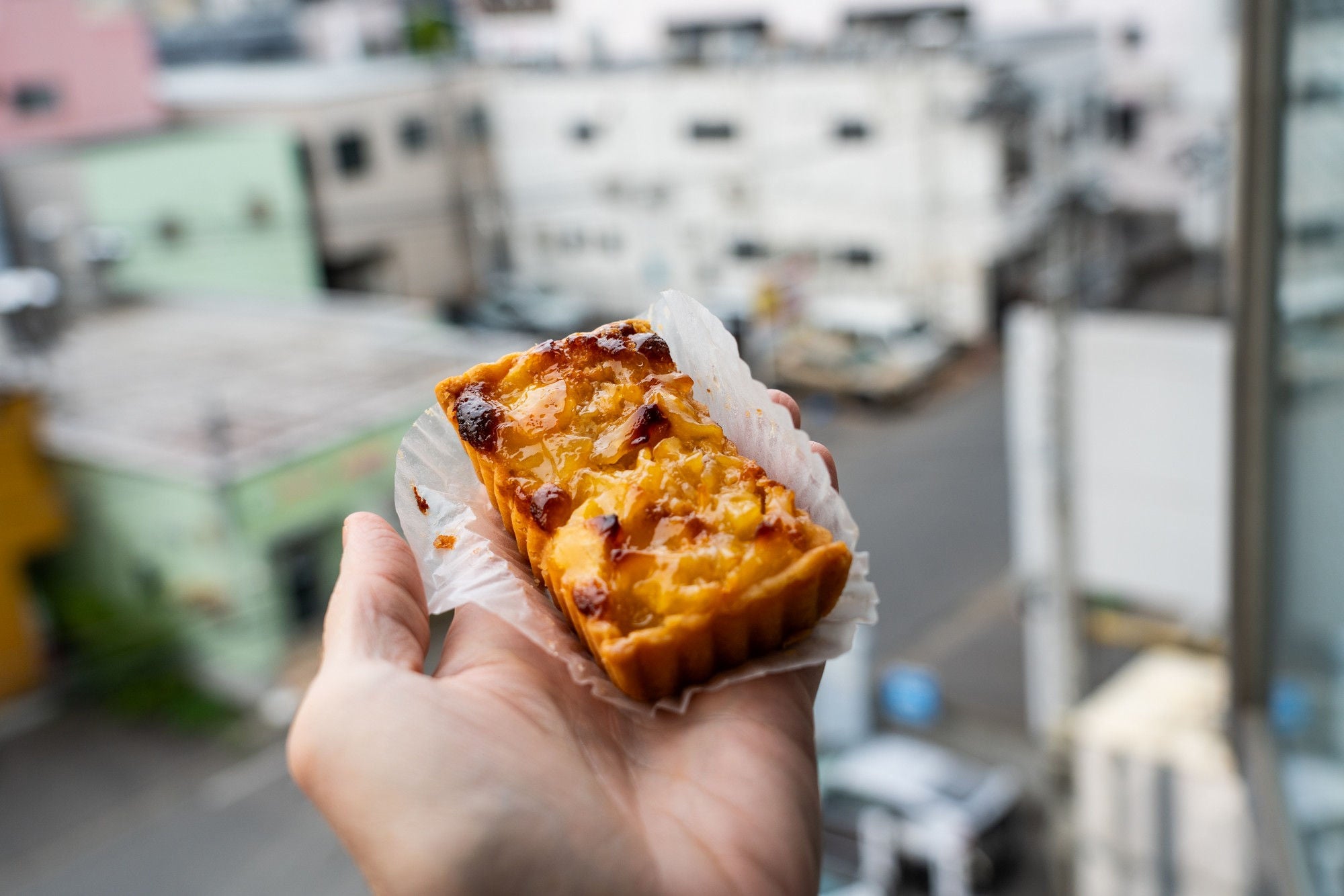
One of many (perhaps too many) slices of apple piece downed during a visit to Hirosaki, a short train ride from the Smile Train terminus and a center of apple production. (Photo credit: Tim Stevens)
I was only there for about 24 hours, but that didn't stop me from sampling pies from five separate vendors around town, most of which only cost me a few dollars per slice. I likewise couldn't resist buying from the ubiquitous vending machines, many of which in this area are stocked with local apple cider.
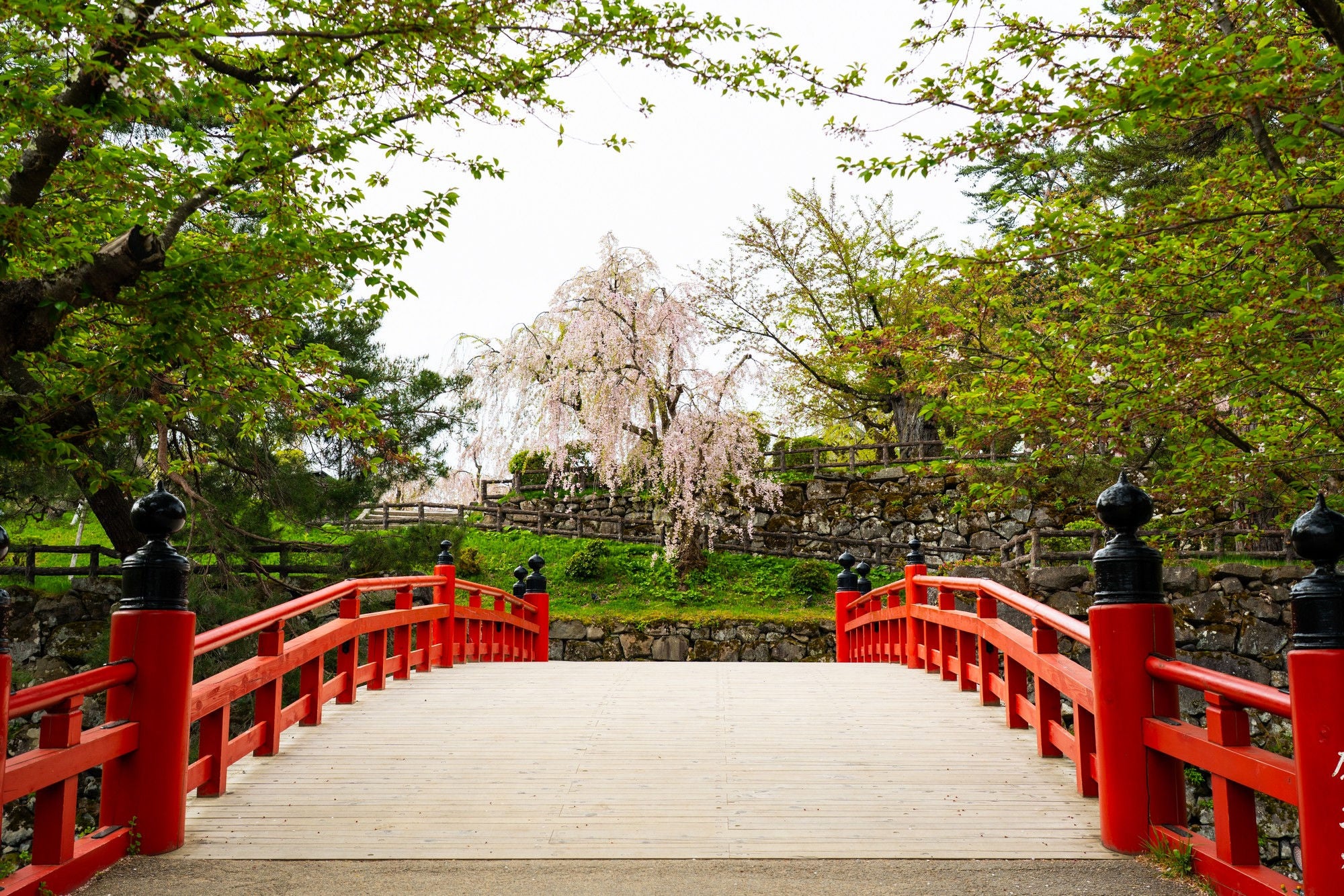
The main attraction here, though, is Hirosaki Castle, a fortress that dates back to 1611. It has been destroyed and rebuilt multiple times since then, but the grounds around the castle are the real draw. Lined with cherry trees, time it right and you'll bear witness to one of Japan's most striking sakura sights, trees of amazing colors covered in blooms of pure white, striking yellow, and, of course, the season's trademark pink.
Cherry trees with blossoms ranging from white to yellow to pink dot the grounds of Hirosaki Castle. (Photo credit: Tim Stevens)
During the day, you can take a boat ride around the moat. At night, most of the grounds and trees are well-lit until 10 p.m. During sakura season, hundreds of local vendors set up shop selling everything from roasted corn and octopus to churros. But I'd recommend you stick to apple pie and cider if you want to best sample the local flavor.
Oh, and my favorite pie? It was actually from Brick A-Factory, right there in the Hirosaki train station. It was little more than a poached, syrup-drenched half-apple centered on a piece of puff pastry. The smell was so irresistible I had to stop, even though I had yet another train to catch.
Sakura season in late April is the best time to visit this area of the country, but it's also the most complicated. Despite all the scientific effort to predict blooming times, climate change is making things more difficult. Miss it by a week, and instead of clouds of pink flowers on the trees, you'll find fields of brown petals on the ground.
That's doubly complicated by trains that sell out early and a limited hotel selection. In my trip, despite aiming for the absolute peak according to the forecast, I arrived a few days late for the best show. Still, there were plenty of beautiful blossoms to enjoy thanks to Hirosaki's variety of trees blooming at different times.
If you are going to time sakura season, I'd recommend erring toward the side of early rather than late, as that would mean you could still see blossoms to the south. But late fall is also an excellent time to visit. That would make for some stunning foliage on the Smile Train, while the Hirosaki Apple Harvest Festival would mean even more local delights to enjoy.
Starting from Tokyo, to get up north and back south, you'll probably want to take the Shinkansen operated by JR, the Japan Railway Group. The company sells various all-inclusive passes for various lengths that let you ride as many trains as you like. The JR East pass is worth the cost.
That said, the Smile Train is operated by Akita Nairiku Jukan Tetsudo Railway, so you'll need separate tickets. At just 1,700 yen, or less than $11 one-way, it won't break the bank.
Note that a visit to Akita Prefecture means heading out into the country, an area where you'll rarely see Western tourists. Few locals speak more than a smattering of English, but they are incredibly friendly and welcoming to visitors. Make sure you install something like Google Translate on your smartphone to help read signs, but thanks to menus loaded with pictures, ordering food is usually as easy as pointing at what you want and saying, "Oh-nay-gai-shi-maas."
That's the word for "please" in Japanese, which, as in the United States, opens a lot of doors.