January 9, 2024
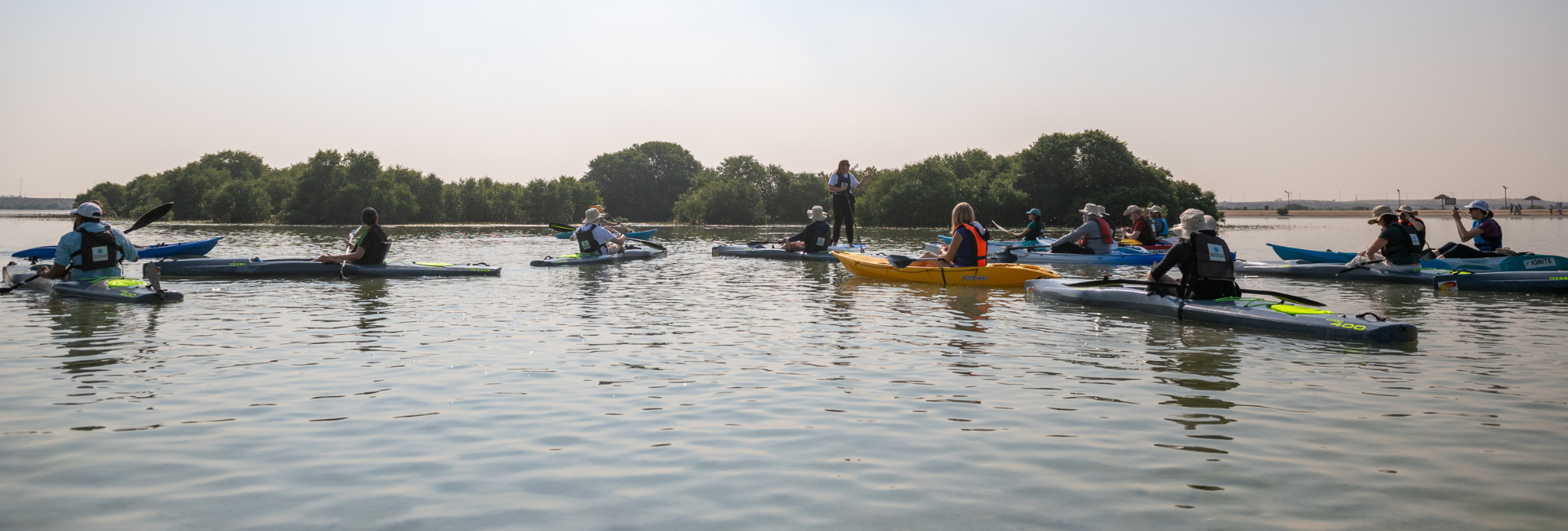
We’d been paddling along the southern shore of the Arabian Gulf for about half an hour when M. Sanjayan, the CEO of Conservation International, stilled our chattering with a single word. “Listen,” he said.
At first we heard nothing. Then the lapping of water against our kayaks. The distant flapping of wings. Nothing, and then everything.
Thirty-five of us had traveled an hour and a half north from the artificially chilled conference rooms and crowded reception halls of Dubai, United Arab Emirates, where we had spent the previous week at the UN Climate Change Conference, also known as COP28, joining government officials and nonprofit and private-sector leaders in advancing solutions to address the climate crisis. Today, though, was an opportunity to bring those conversations to life and remind us what we’re all fighting for.
In 2020, Mastercard founded the Priceless Planet Coalition with Conservation International and World Resources Institute, uniting the efforts of businesses and consumers to fight climate change, with a goal of restoring 100 million trees across six continents.
We work with scientific experts to design and identify projects and ensure the integrity of our restoration practices. We also collaborate closely with the people whose lives and livelihoods are threatened by the loss of these habitats — and who could benefit from careful and thoughtful restoration, like the Indigenous Arhuaco of the Colombian highlands, the fishing communities of Cambodia’s Tonle Sap lake, and the farmers of Australia’s Southern Tablelands.
In the Middle East, we set our sights on 25 acres of mangrove forest in the UAE, partnering with Emirates Nature-World Wildlife Fund to restore 50,000 mangrove trees along the Arabian Gulf. In addition to capturing carbon, these mangroves protect coastlines from storm surges and provide habitat for a wide variety of marine species, which in turn keep local fisheries healthy and the regional economy thriving
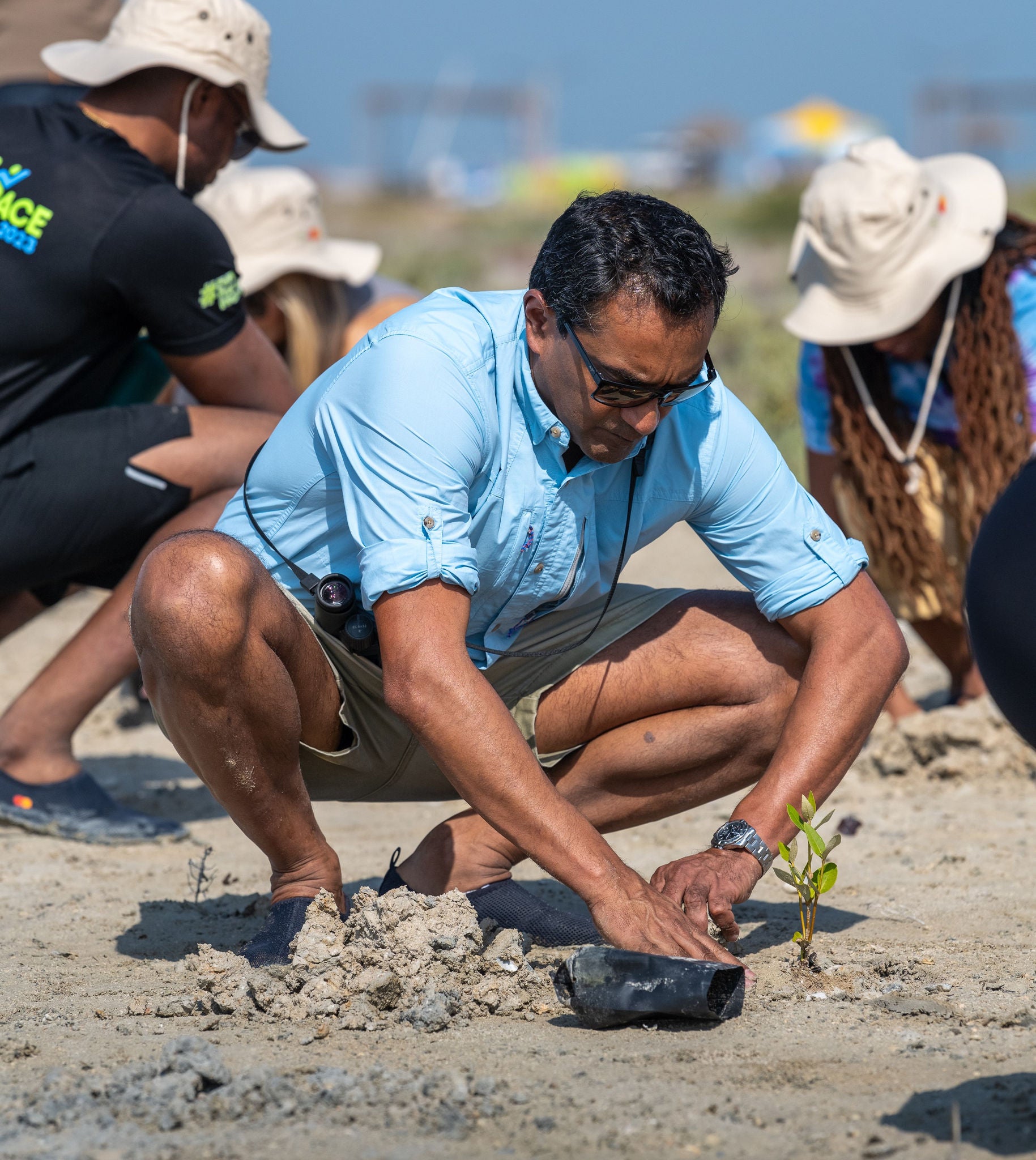
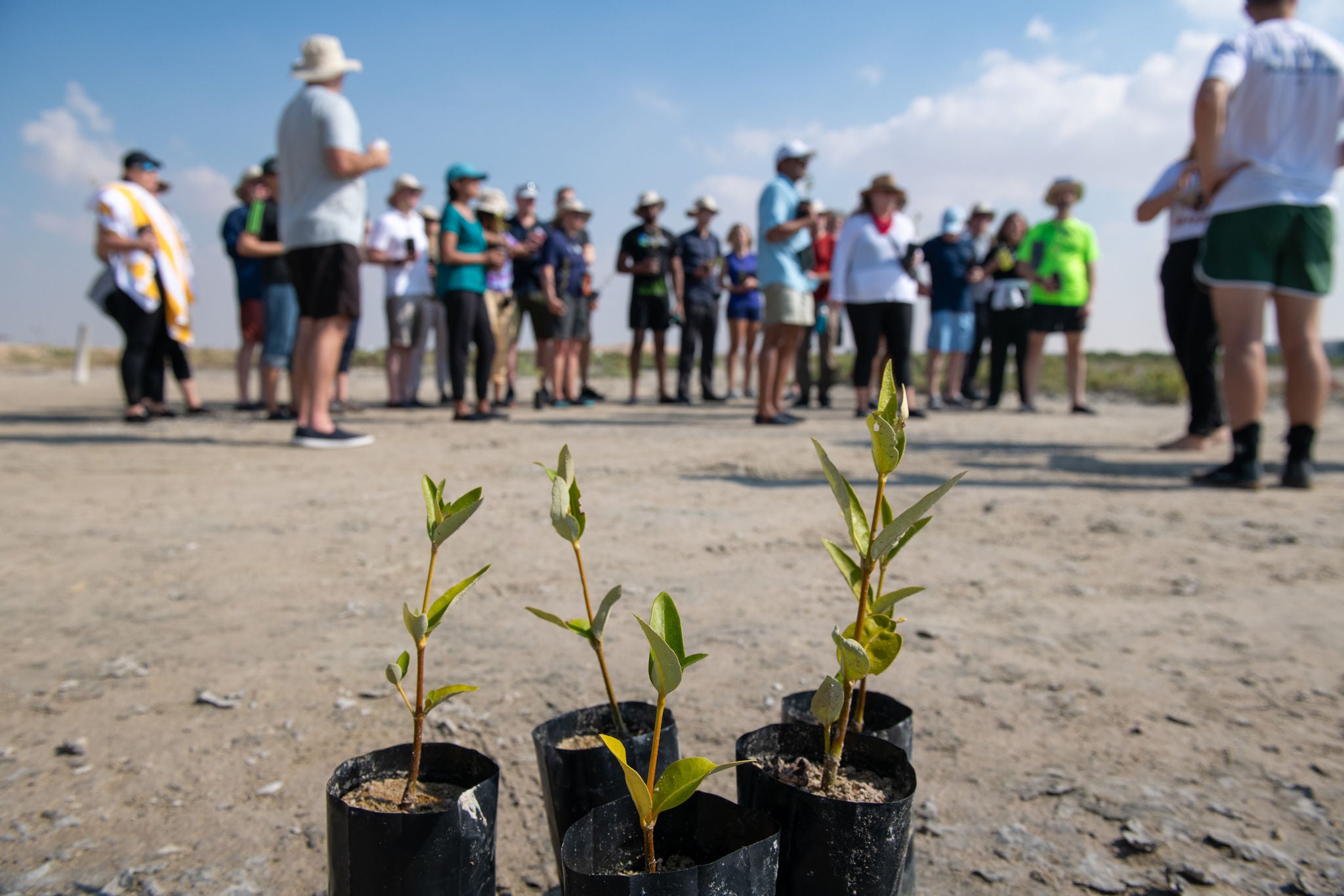
COP28 offered a perfect moment for our customers and partners to understand what makes the Priceless Planet Coalition extraordinary and distinct from other planting and restoration programs. On this day, they experienced a critical ecosystem firsthand, and contributed to its future by planting mangrove saplings. Our aim was to inspire them to launch their own campaigns to support the coalition’s goal of restoring 100 million trees.
Conservation International CEO M. Sanjayan joined other sustainability leaders on a field visit to Mangrove Beach during COP28, seeing firsthand the carbon-storing power of mangrove forests and planting saplings at the site.
We set off that morning with Sanjayan, Johan Rockström of the Potsdam Institute for Climate Impact Research and Conservation International’s chief scientist, and other world-renowned conservation experts and climate scientists. Once we reached the aptly named Mangrove Beach in Umm Al Quwain, we learned more about the unique role coastal and marine systems play in combating climate change.
Mangrove forests thrive in salty coastal waters of the tropics and subtropics. Their dense masses of roots at and below the waterline are incredibly effective at storing “coastal blue carbon,” the term for carbon captured in saltwater ecosystems. (Sea grasses and salt marshes play the same role.)
Globally, these ecosystems have a smaller footprint than tropical rainforests but can sequester more carbon per acre, more quickly — making them a critical and irreplaceable tool in our fight against climate change. Sanjayan called these mangrove forests the “the hardest-working habitats on earth.”
Following planting, the site is carefully monitored to track the health of the mangroves, which will assist in the natural regeneration of the mangroves and wider ecosystem.