Financial health

May 7, 2026


In Ecuador, this AI startup is training better money habits

Kamina turns everyday spending signals into real-time coaching for people traditional banks don’t see.

Decorative

Aimee Levitt

Contributor

When Jens Thobo-Carlsen’s father died a few years ago, he was deeply in debt, something his son and the rest of his family only found out after the fact. This isn’t an uncommon situation. In Ecuador, as in the rest of Latin America, formal credit can be hard to access but it can be easy to borrow from informal and often predatory lenders, who lack oversight from the government and credit bureaus. The average Ecuadoran carries eight loans, according to one report, with some as many as 13.

It still made Thobo-Carlsen, who inherited his father’s debt, angry. “You think that because you have these options or you’re offered credit, you’re allowed to get it,” he says. “That’s why indebtedness keeps growing. There’s always someone willing to lend you money, increasing the interest rate.”


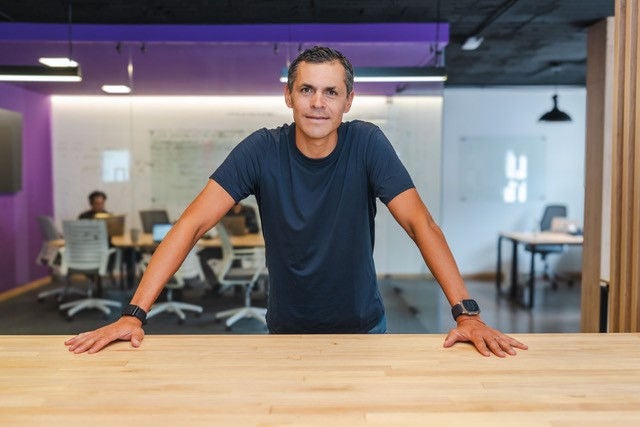
Jens Thobo-Carlsen

After his father died, Jens Thobo-Carlsen discovered he had been deeply in debt, which eventually lead him to found Kamina, an app that helps users avoid delinquency. (Photo courtesy of Kamina)


But Thobo-Carlsen noticed that while lenders were more than happy to hand out loans and collect the interest, they didn’t seem to care much about what happened afterward. More than 35% of Ecuadoreans are unbanked, meaning they have no relationship with a financial institution and no formal credit history, and even when do they do, many rely on other financial services that can be more expensive to use in the long run. Nobody was educating these people about the consequences of not paying back their debts — and then the collection agencies came calling. By then it was usually too late: The interest had accumulated and the debt was now more than the lendees could afford to pay.

“It’s the same as giving you a car,” Thobo-Carlsen says, “and not verifying if you have a driver’s license.”

Thobo-Carlsen’s experience pushed him to build Kamina, an app that uses AI to turn a user’s day-to-day money habits into personalized lessons — an attempt to give Ecuador’s millions of unbanked consumers the kind of guidance that lenders and regulators rarely provide, before small loans snowball into lifelong debt.


Combating debt with personalized education

At the time of his father’s passing, Thobo-Carlsen was working for a startup in Ecuador that produced apps to improve users’ health and well-being. But when he learned that financial problems are a leading source of mental stress, he concluded that a better source of stress relief would be an app that taught people how to manage their money and build up their credit responsibly. So he quit the startup and launched Kamina in late 2023.

Kamina — a play on the Spanish word for walk — guides users step by step to develop stronger financial habits. And because a client relationship built on strong credit and trust is healthier for everyone in the long run, Kamina also alerts financial institutions before a borrower may miss a payment, giving the bank time to intervene before a loan goes bad. Thobo-Carlsen says he hopes the app will reduce loan delinquency and keep people from falling into debt. More simply, it’s like training wheels for managing credit.

The app is based entirely on human behavior. Kamina or a financial institution will loan the user a small amount of money, from $500 up to $8,000. Those users give explicit consent to share their data, and the app uses AI to monitor and analyze 300 different metrics, including email, social media and the digital wallets that many Latin Americans use in lieu of formal bank accounts. It tracks users’ spending habits and their progress in paying back the initial loan, and Kamina uses this information to score users’ financial behavior and provide lessons and advice in real time about how to improve.

“AI allows us to bring a personalized experience into analyzing the behavior of each user,” Thobo-Carlsen explains. “What are their spending patterns, why are they spending in one place or another, if they have psychological effects, if they have a lack of education. All these data points are calibrated into our platform and allow us to make sure that the information that the user is receiving allows them to take into consideration or change their financial habits through the preventive and predictive scenarios that we provide to our users.”

The app gamifies financial education in a playful style that Thobo-Carlsen compares to the language-learning app Duolingo. “There are tests and fill in the blank and many, many alternatives that keep the user engaged,” he says. “We have 73% engagement, which is really high. People love the app.”

As the users’ financial behavior scores go up and they demonstrate that they’ve improved their financial literacy, they become eligible for more benefits. Their payments toward the initial loan are logged through credit bureaus and count toward improving their formal credit history. This makes them eligible for subsequent loans from financial institutions. These are less predatory than the informal loans most unbanked Ecuadoreans take out. Approximately 20% of Kamina users have gone on to receive loans from financial institutions, Thobo-Carlsen says.

“But the thing we’re doing that I think is most impressive,” he adds, “is that we are giving loans to the 70% of users that financial institutions didn’t see. That’s huge. That means that out of the 80 or 85% of Ecuadoreans that are not visible to banks, we can get up to 70% of those users into a situation where they have at least a small loan.”

 

A brighter future

Last year, Kamina became part of Mastercard Start Path’s Emerging Fintech program, the first Ecuadorean startup to be chosen. In early 2026, Mastercard collaborated with one of the largest banks in Ecuador on a small pilot to see how Kamina improved users’ financial behavior and found that existing cardholders facing delinquency who downloaded the app showed more self-regulation in spending than those who didn’t use the app.

In the future, Thobo-Carlsen hopes to expand Kamina beyond Latin America and magnify the scope of the app beyond personal finance to include small businesses.

But for now, Kamina’s mission remains educating consumers about how debt works. And Thobo-Carlsen is happy with how things have progressed. “What we’re seeing with users,” he says, “is that if you spend less with a different intention, things can change.

“It goes against the logic of everything, raising capital for financial education the way we did,” he continues. “Most people would say, ‘Why not take the easiest track and give loans to the people, and then forget about them? Forget the whole support thing.’ But no. We were born from there and that makes us unique.”

Looking beyond just tech to power inclusive growth

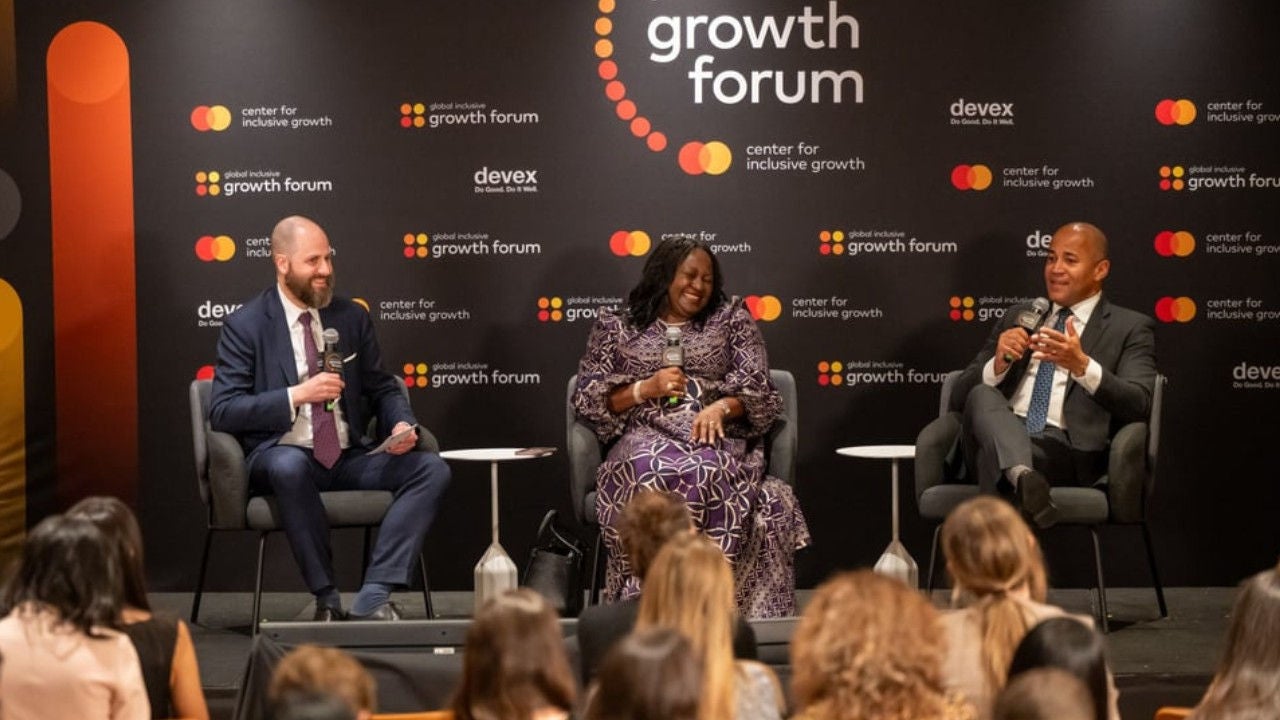
At the Global Inclusive Growth Forum in Washington D.C., speakers emphasized guardrails for AI, stronger digital rails and aligned regulation. 

Related stories