April 17, 2026
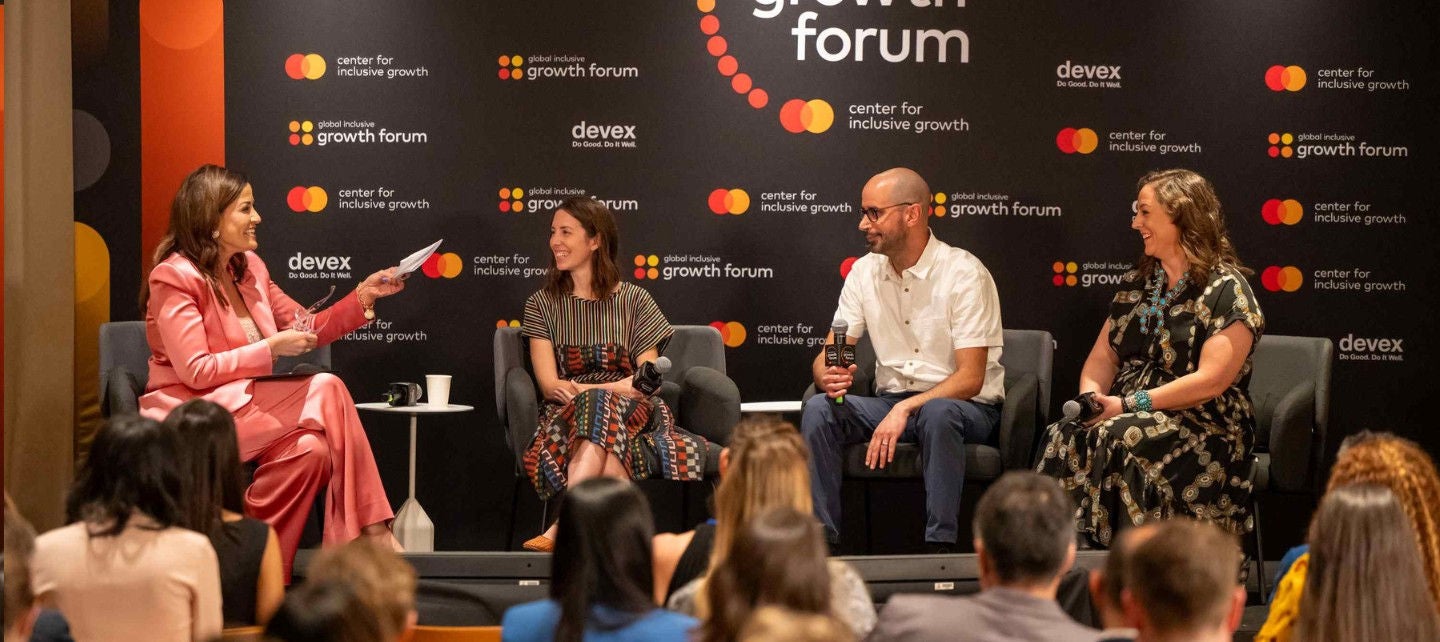
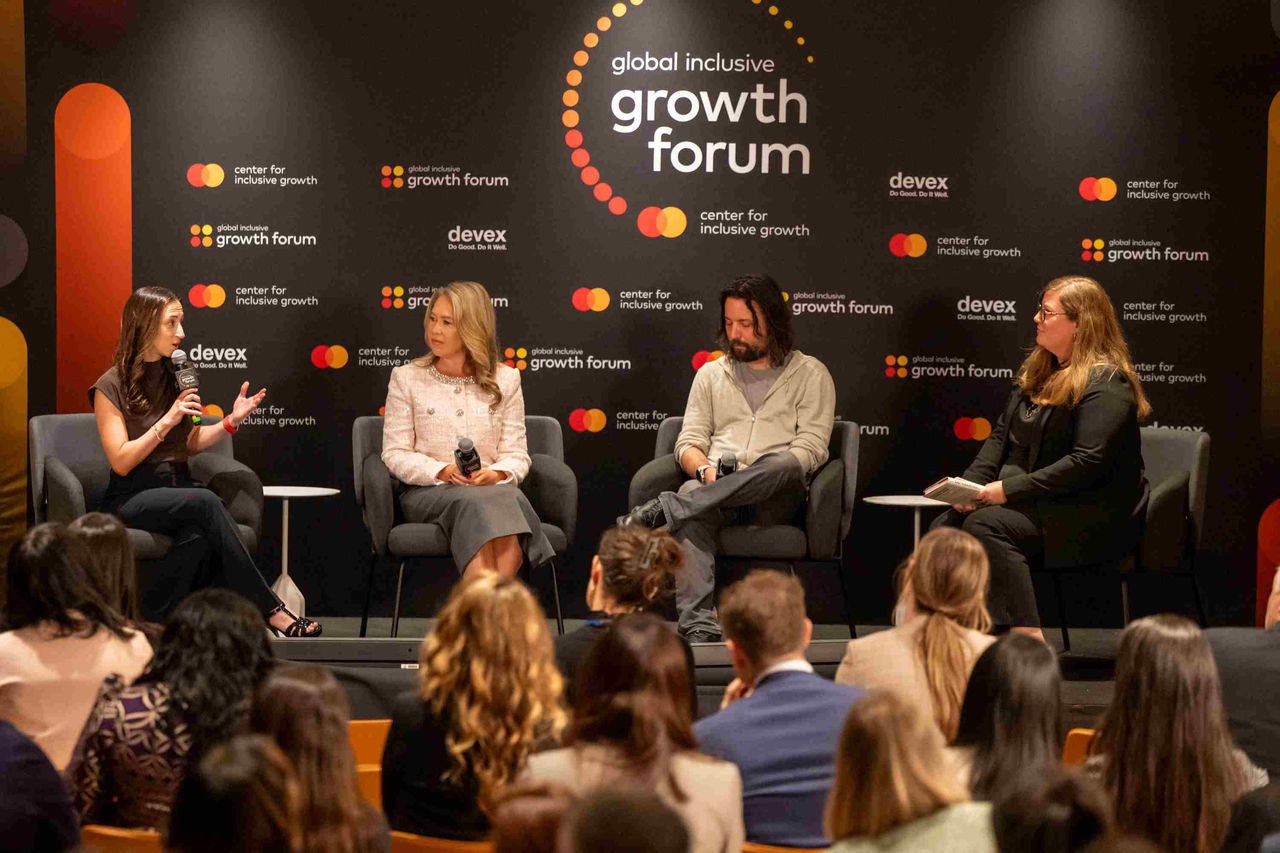
From left, Andréa Vieira, panel moderator and the founder and chief executive officer of nailsaloon, Rebecca Van Bergen, founder and executive director of Nest, Elias Morr, co-founder of candle company Peacesake, and Morgan Buckert, the bootmaker behind Morgan Buckert Custom Boots, discussed the benefits and risks of growing fast. (Photo credit: Kevin Allen)
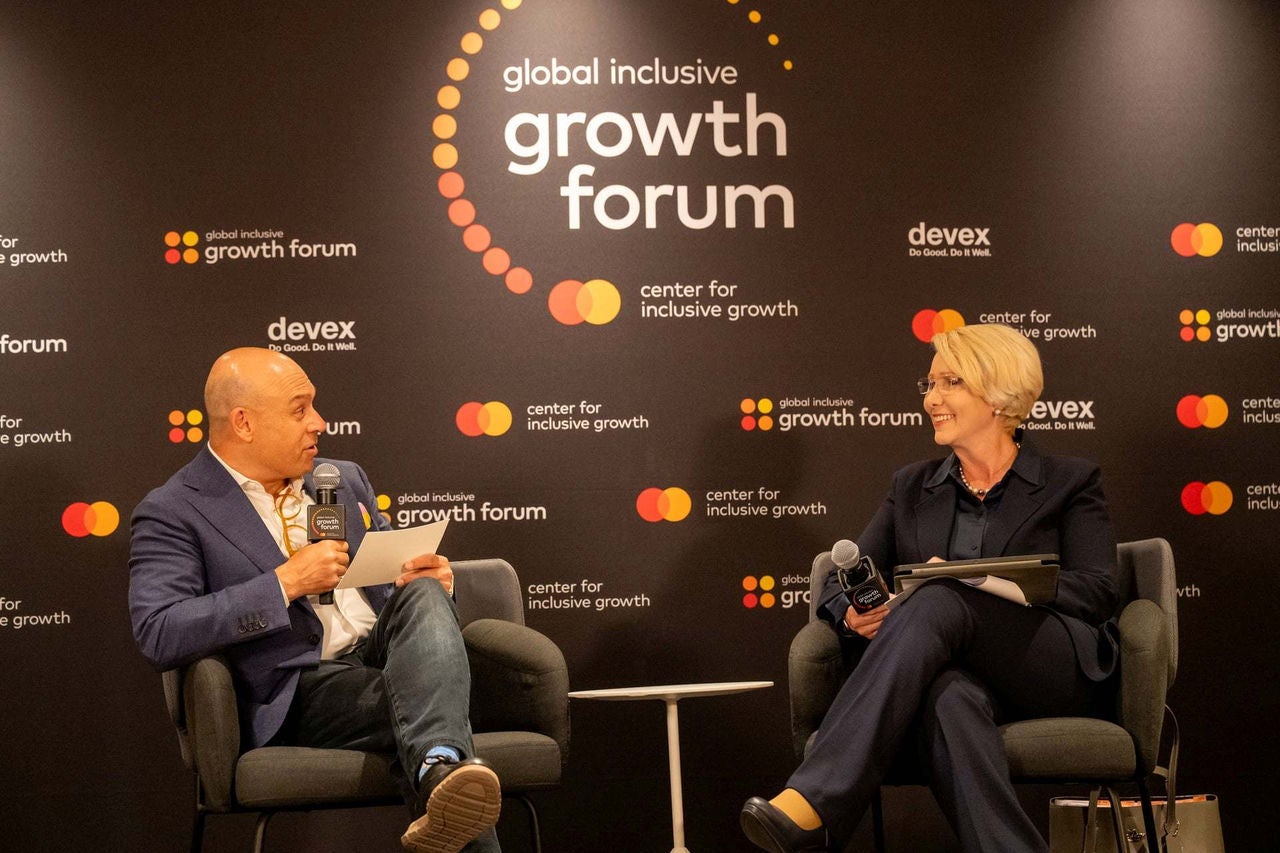
“Plans of action, not empty platitudes.” That’s how Shamina Singh, the founder and president of the Mastercard Center for Inclusive Growth, opened Wednesday’s Global Inclusive Growth Forum in Washington, D.C., and it became an unofficial through-line.
From small business resilience to the promise (and risks) of AI and digital assets, speakers returned to the same practical questions: What does inclusion look like at scale, who gets left out when innovation moves fast, and how do we develop the policies and partnerships needed to expand opportunity for families, entrepreneurs and markets rather than deepen divides?
One path, announced by Singh and Antonio Silveira of CAF Development Bank of Latin America and the Caribbean at the close of the summit: increasing access to credit in Latin America for the micro, small and medium-sized businesses that comprise more than 99.5% of enterprises in the region and employ about 60% of people in the formal economy there. Mastercard is partnering with CAF to mobilize $100 million in CAF financing over four years, with a focus on women-led and underserved businesses and climate finance. It’s a significant step toward the company’s recently-announced commitment to connect and protect 500 million people and small businesses on the path to financial health, Singh said.
Across the standing-room-only forum, held on the sidelines of the World Bank Spring Meetings, the talk often snapped back to one message: Durable growth has to be built for the people and small firms who feel volatility first — and it has to be powered by technology we can trust. Here are three takeaways.
Small business owners aren’t chasing explosive growth so much as steady, dependable progress, said Tim Ogden, managing director of the Financial Access Initiative at NYU Wagner. They want to keep their doors open, pay their workers and support their families and communities without risking everything, he said in a session drawing on his insights from Small Firm Diaries, a research initiative using financial diaries to understand how small business owners manage cash flow, costs and uncertainty. They want simpler, more flexible financial products and practical tools to help them manage day-to-day cash flow, he said. “They don’t need to go 60 miles an hour,” he said. “What they’re doing is trying to survive and at least stay in place.”
Intentionality of growth surfaced again in a session with two artisan entrepreneurs and Rebecca Van Bergen, the founder and executive of Nest, a global nonprofit that supports artisans by promoting fair labor practices, providing training and market access, and helping handmade businesses grow sustainably. Elias Morr, the Maryland candlemaker who with his wife runs Peacesake Candles & Co, and Morgan Buckert, a custom bootmaker based in Idaho and Texas, spoke about prioritizing the quality of their products, their own mental health and their legacy over scale.
For entrepreneurs, growth has always been viewed as the default setting, said Morr: “You get that big order, you take it, you don’t ask questions … So we did get these big retail orders, and it was extremely stressful for us. Something we learned the hard way is just focusing on growth, taking all that money and making these sales sometimes can break your business.”
That’s a more recent shift, Van Bergen said. “People just thought that supporting makers meant placing a huge order and not coming behind them and supporting them. And we’re seeing so many creative models, from pop-ups to licensing to a whole host of ways you can support small business without overwhelming them.”
The developed world may be awash in AI anxiety, but panelists at a discussion on how AI could transform developing markets were far more bullish (with a few caveats).
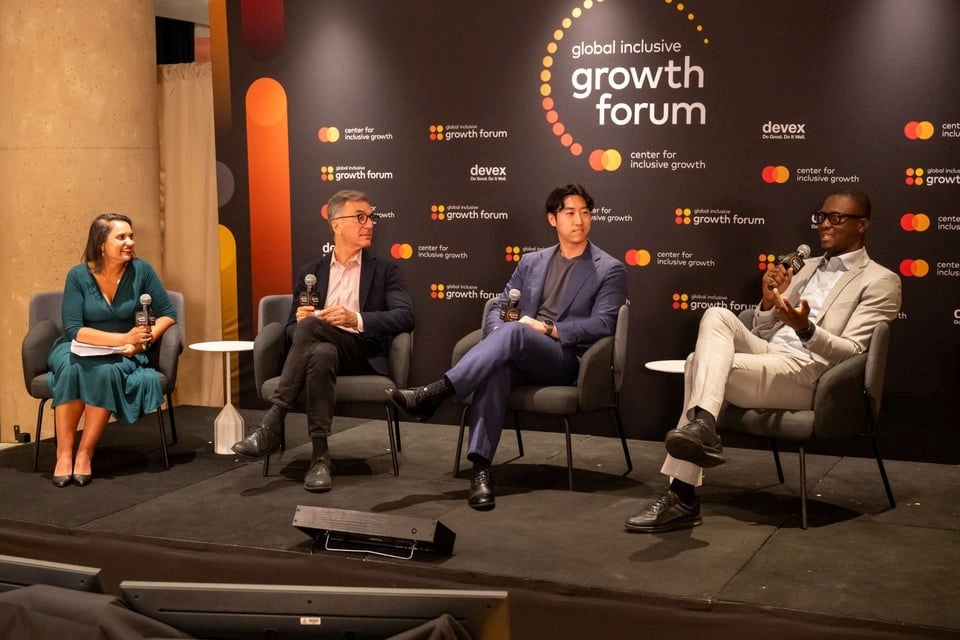
Without building local infrastructure, technical capacity and proper governance, AI can be extractive, gathering local data but creating value elsewhere, said Vilas Dhar, president of the Patrick J. McGovern Foundation, a philanthropy that develops AI and data science for good.
How to flip the script? Right-sizing models that can run on low-cost devices and connect to users through text messages can reach more people and reduce risk, said Olubayo Adekanmbi, the CEO and co-founder of the African startup EqualyzAI, which works with thousands of data collector and hundreds of language experts to develop Small Language Models to open up AI opportunities in local languages in sectors including health care, agriculture and education.
“The biggest problem we have is that the foundational layer is very thin, which seems to want to build, you know, a penthouse on a sandcastle. The foundation is missing,” Adekanmbi said about the data currently available to create these local models. “But are we going to give up on that? Never.”
At another session on AI and financial health, panelists positioned the tech as a way to lower the cost of banking services and personalize guidance that otherwise would have been prohibitively expensive to scale. But speakers also warned against plug-and-play AI: Deployment requires governance, guardrails and investment in the underlying infrastructure.
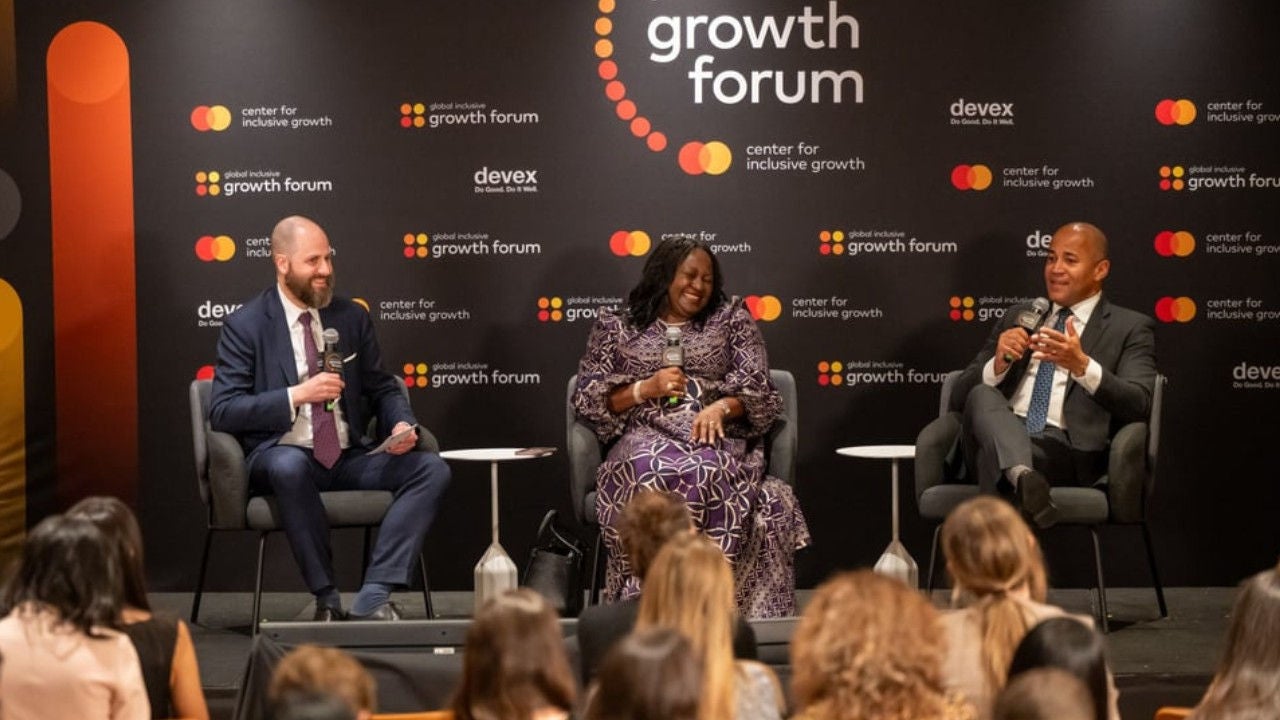
When payment systems don’t connect seamlessly, we all pay the price in time and uncertainty. “How useful would your email be if you couldn’t send an email from one domain to the next?” said Dante Disparte, chief strategy officer and head of Global Policy and Operations at the stablecoin giant Circle. “That is just the operating reality of what we’re talking about.”
Digital assets hold the potential to become a shared financial infrastructure that could be incredibly empowering, particularly for small businesses, but he also stressed “payment systems optionality,” saying progress should be defined by expanding choice and resilience, not forcing everyone into a single channel.
Making interoperability work also means designing for real constraints, including providing affordable services and simple user experiences, said Sabine Mensah, deputy CEO of the AfricaNenda Foundation, which helps governments, economic development organizations and the private sector plan for instant, inclusive payment systems. And the hardest part, she argued, isn’t the technology. It’s aligning the rules across markets.
Moderator Jesse McWaters, Mastercard’s head of Global Policy, agreed, pointing to the difficulties in harmonizing regulations in the G20 roadmap for improving cross-border transactions. “If we can’t get that data layer better aligned, then we’re still going to be dealing with frictions no matter what technology we’re going to be using,” he said. When we get regulators on board, he said, “these types of inclusive innovations will really have the opportunity to grow.”