Article

Breaking the personalisation barrier for banks

While major roadblocks have kept banks from reaping the benefits of personalisation, new solutions are about to catapult the industry to new heights.

Parks Daniel profile photo

Parks Daniel

Director, Product Management at Dynamic Yield by Mastercard

Here’s what you need to know:

  • Banks historically struggle with personalisation due to data challenges, lack of resources, compliance hurdles and integration complexities.
  • New solutions exist that can streamline personalisation for banks by helping them to leverage data, reducing the burden on internal bank resources, ensuring compliance and simplifying integration.
  • By implementing these solutions, banks can build stronger customer relationships, optimise card spend and gain a competitive edge.

Banks are hearing it again and again - personalisation is a necessity amongst consumers who have come to expect seamless, relevant and valuable experiences from brands. Research from Forrester shows that 61% of customers are unlikely to return to a brand that does not provide a satisfactory tailored experience. And while over 4 in 5 financial institutions (FIs) acknowledge that personalisation is a clear priority, only 21% of bank customers receive personalised advice or guidance when it comes to financial decisions. While there are some notable edge cases like Synchrony, most banks haven’t overcome pervasive industry challenges to reap the rewards of personalisation.

In this article, we’ll put a spotlight on the major barriers to entry with banking personalisation and answer the question about whether a simplified path even exists. (Hint, it does and it could significantly change how banks digitally engage with consumers.)

Navigating Personalisation Challenges

The misalignment between vision and execution is due to challenges in data, internal resources, compliance nuances and technological integration. Let’s dive into each challenge below:


It’s no surprise that most banks view personalisation as a nice-to-have rather than a necessity, given the hurdles they face when developing this discipline. Source: PwC


Customer spotlight

Learn about exceptional teams using Mastercard Services to drive real-world impact.

Mastercard logo

Data is the fuel of personalisation, allowing brands to understand customer preferences and deliver relevant content and offers. FIs, like many businesses that have unique datasets, often lack efficient integration and curation processes to share data across tech stacks and siloed teams and effectively deliver tailored experiences. In fact, 80% of banks report that they collect so much data that they cannot seamlessly integrate it into their engagement systems.

Successful personalisation efforts need dedicated owners to manage these robust processes and co-ordinate efforts across teams, but 63% of banks globally say they operate without a primary business resource wholly devoted to personalisation. In a world with rising customer acquisition costs, most banks just can’t justify dedicating headcount to projects with anything more than a quick time-to-value.

Lack of internal resources:

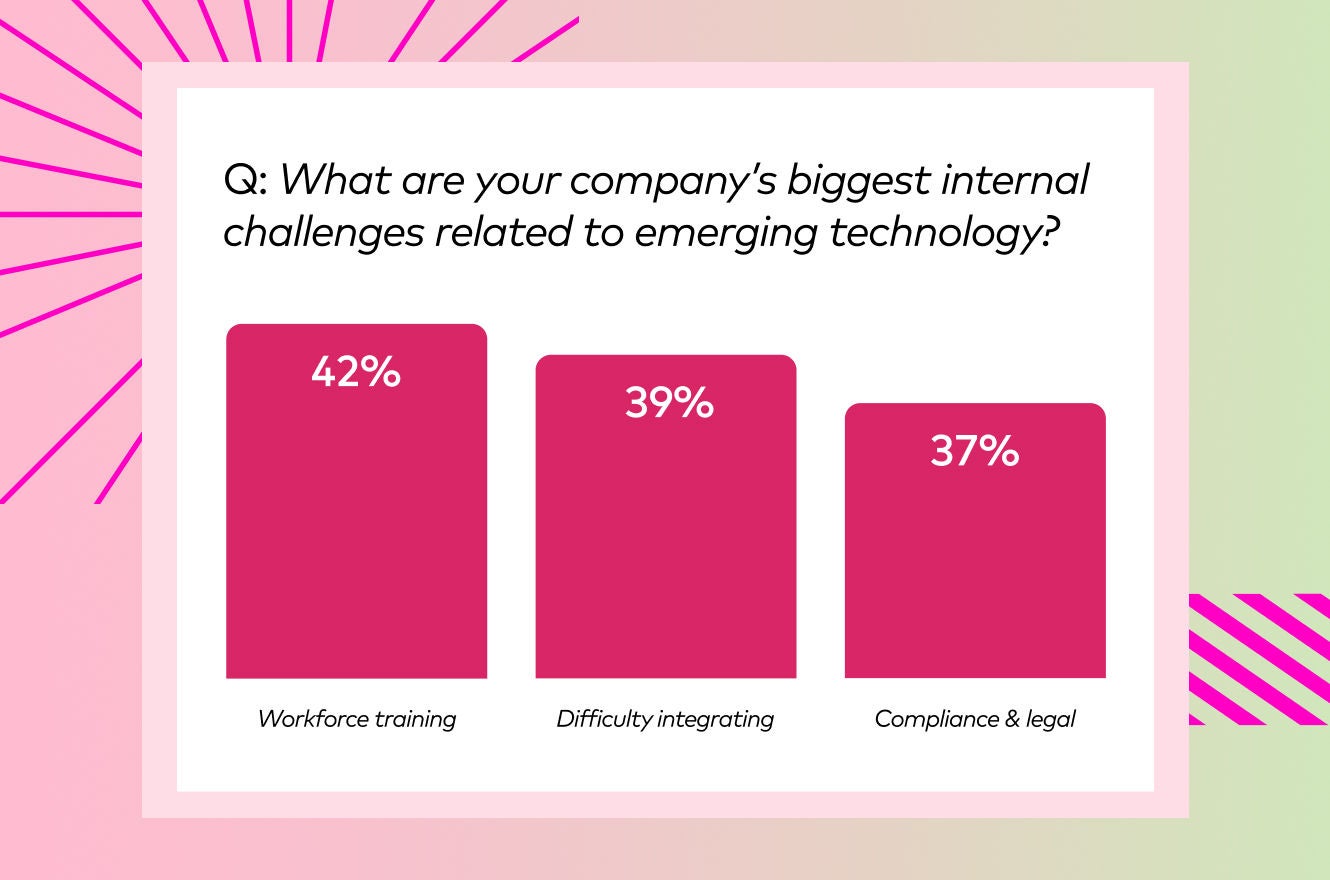
Just as securing headcount is a pervasive issue, so too is the challenge of hiring. In fact, 42% of financial institutions report that internal resources and workforce training are their greatest challenges in implementing effective personalisation. The expertise needed to drive successful personalisation programmes is not yet developed en masse for FIs, making it even more difficult and costly for banks to hire these positions. The candidates who fully understand the requirements are hired at a premium, while less-experienced programme hires need increased onboarding time and more opportunities for trial and error.

Additionally, the portfolio-centric organisation of banks means that personnel are more likely focused on making sure the whole programme thrives rather than whether customers click a personalised email. With other opportunities competing for time and attention, most banks haven’t invested in growing personalisation’s progressive edge.

Compliance challenges:

Even so, banks that do invest resources in dedicated programmes are swiftly met with the extra time and attention needed to comply with stringent legal and regulatory requirements. 37% of FIs say these requirements are their greatest personalisation challenge. Personalisation teams must work to constantly verify how their strategies adhere to current highly matrixed data protection and privacy laws while also anticipating future requirements.

If a bank has placed personalisation as a clear, visible priority of the company and the overall digital strategy, it can be easier to navigate compliance challenges due to a more mature awareness of the discipline’s nuances. However, only 29% of banks report that personalisation is part of their DNA. Largely, legacy systems and hierarchical structures within banks prevent the agile and collaborative approaches needed for cultural change.

Integration complexity:

Those stringent legal and regulatory requirements also prevent banks from onboarding proper personalisation software in the first place. Often banks are locked into legacy technology. Even if a bank can “turn on” personalisation as part of a larger suite, it’s unlikely that these existing technologies offer purpose-built machine learning models that analyse and predict intent throughout the banking customer lifecycle. For the lucky few banks that can onboard a new technology, it’s an uphill battle connecting it to the rest of their tech stack due to compliance concerns, creating data-integration issues and preventing banks from scaling omnichannel experiences.


A Bright Future Ahead for Issuing Banks

While banks have historically been shut out from personalisation, a simplified path to personalisation fortunately does exist. Hands-free solutions like Personalisation Breeze enable banks to deliver tailored messaging and offers to customers through preferred channels like email, in-app messages, push notifications and mobile content blocks - rendered at open time to ensure real-time relevancy. They help teams overcome the challenges above by:

Circumventing data challenges: Partnering with a personalisation provider not only frees banks from the task of activating their existing in-house data but also unlocks insights and patterns beyond their own consumer base. For example, Personalisation Breeze’s predictive spend insights analyse billions of dollars’ worth of transactions across thousands of issuers to predict where cardholders are likely to spend next. These AI models can target cardholders according to their historic and predicted spend and deliver specifically curated incentives and benefits to individual customers, increasing relevance and optimising card spend and engagement.

Increasing resources: A personalisation provider handles campaign execution, allowing banks to focus on their core business while also benefiting from personalisation. Additionally, solutions like Personalisation Breeze provide monitoring of campaign performance across key digital and spend KPIs, such as click-through rates (CTR), engagement, spend, transaction count and active card percentage. Plus, these insights are leveraged to continually optimise the programme and provide recommendations for additional use cases, unlocking even greater value from personalisation.

Remaining compliant: Personalisation solutions adhere to regulatory standards by using models trained on non-GDPR data and fine-tuning with anonymised, customer-consented Issuer data to enhance personalisation while maintaining privacy.

Sidestepping integration issues: Purpose-built solutions require minimal implementation, meaning Issuers can quickly onboard and integrate new personalisation technology through a trusted provider.

With a simplified way to invest in the right personalisation solutions, banks can more easily reap the rewards of deeper customer relationships, optimised card spend and a competitive edge in an ever-evolving market.

Learn more about how Dynamic Yield by Mastercard is making personalisation a breeze for banks here. 

Related stories

AI and personalisation can close the empathy gap between brands and their customers

Here’s why your customers are tuning you out, and how you can effectively re-engage them.

Why A/B testing and personalisation are more powerful together