Signet Jewelers leverages Mastercard Predictive Spend Insights to personalise for anonymous visitors

The world’s largest retailer of diamond jewellery, Signet Jewelers operates several household-name brands including Kay Jewelers, Zales, Jared and more. Since 2021, the brand has leveraged Dynamic Yield across these brands to deliver a premium browsing experience to millions of shoppers, using personalised content to educate, encourage and drive sales of fine jewellery and luxury items. Recently, Signet Jewelers achieved effective hyper-personalisation for completely anonymous first-time visitors, driving impressive uplifts in average order value, conversion and revenue per visitor. They did this by leveraging geo-based predictive targeting, part of Dynamic Yield’s Element offering. This exclusive offering enables brands to target anonymous, first time visitors based on the spending patterns of consumers in their postcode, opening the door for an unprecedented level of personalisation at the first touch.
Signet Jewelers sells everything from affordable, semi-precious jewellery to statement heirloom pieces. With an extensive range of products and price points, personalisation is a critical tool to help Signet streamline browsing for visitors and showcase desirable jewellery in the right price range, type and material.
Quality jewellery is a luxury item, which means that customers often don’t purchase on the first visit. Therefore, sticky first impressions, even for anonymous visitors, are essential to secure repeat visits and conversion. Yet this significant challenge is faced not just by Signet, but by marketers across industries: how do you personalise effectively for an anonymous, first-time visitor? Signet leveraged proprietary Mastercard spend insights and prediction models with personalisation, empowering the team to deliver personalised content from the very first touch — reaping huge returns on critical KPIs.
Element is an exclusive offering in Experience OS that activates Mastercard’s AI models for unmatched targeting, even for first-time, anonymous visitors. Element utilises aggregated, anonymised Mastercard insights from 175 billion transactions to predict consumer spending behaviour based on customers’ historical and projected spend within their postcode.
When getting started, the Signet team’s first task was simple: decide, from the insights available, which audience would be the best starting point for a personalisation campaign.
Multiple targeting options are available, which meant Signet could tailor content and offers to anonymous visitors from postcodes associated with high spenders in categories like Apparel & Accessories, Beauty & Personal Care, Luxury products and more. Years building a strong personalisation programme primed Signet’s team to think critically about this opportunity and approach it through the lens of their customers’ mindsets and values. They anchored their first campaigns on strong hypotheses based on contextual knowledge, as shared below.
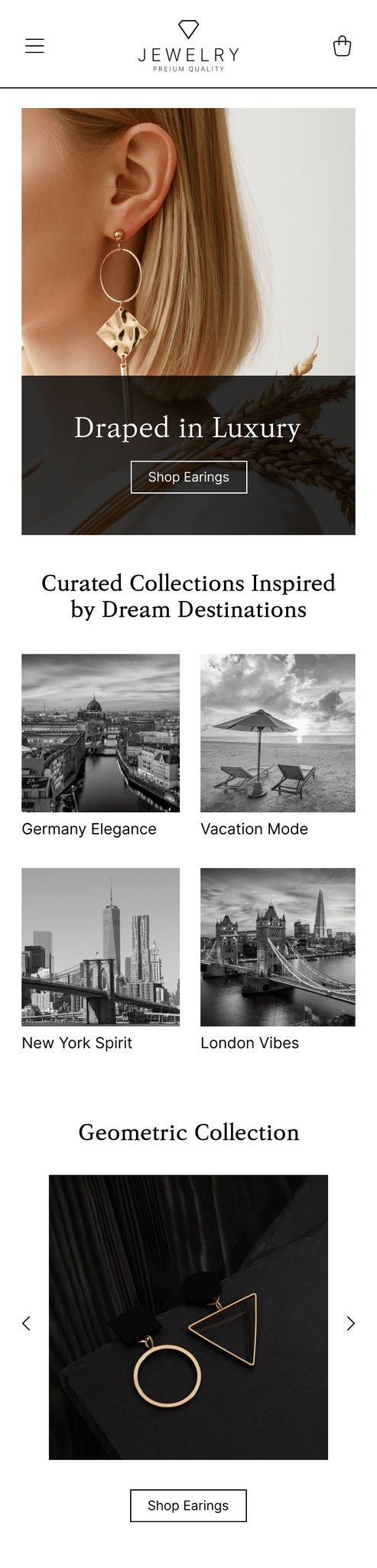
As a first test, the Signet team decided to target users who were likely to spend on luxury travel experiences. The team hypothesised that visitors already willing to spend large amounts of money on travel would be amenable to the idea of purchasing an heirloom keepsake as a reminder of that experience. Alternatively, these customers might have a significant life event, such as an anniversary or honeymoon, tied to the trip and therefore might want a statement piece of jewellery as a gift.
The Signet team created copy and images to go along with this hypothesis, promoting this type of messaging. The experience was rolled out on the homepage for users identified by Mastercard’s spending models that fit into this luxury travel segment.
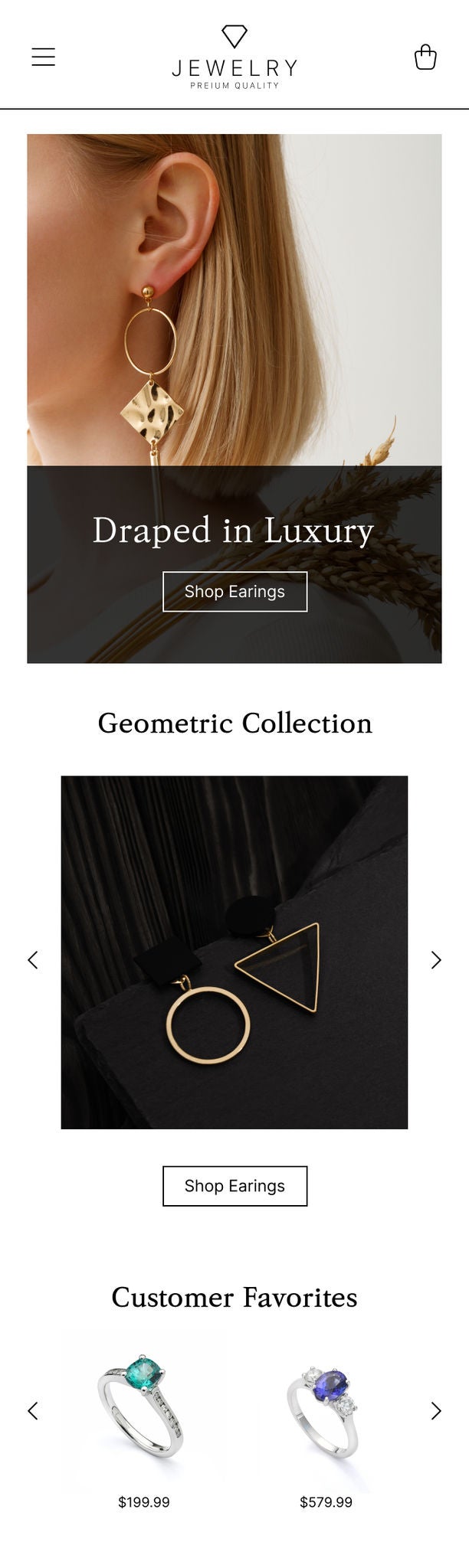
The default homepage (left) versus the homepage for visitors identified as likely to spend on luxury travel experiences (right). The variation shows messaging and images that connect the luxury jewellery collection with luxury holidays. Note: the images here are mock-ups used for illustrative purposes only.
This campaign was highly successful, generating an overall website lift to AOV (+3.20%), conversion (+2.43%) and revenue per user (+5.71%). Metric performance more than doubled among variant users who had interacted with the destinations shown. Compared to the default experience, the variation drove a +67.65% uplift in AOV, a +96.72% uplift in conversion and a +229.80% uplift in revenue per user.
Following the success of the luxury travel use case, the Signet team wanted to find new ways to promote their heirloom products to users who were more likely to spend on luxury. The purpose of the next iteration was to evaluate the greater impact of targeting luxury shoppers, as well as understand how to best showcase heirloom collections to these visitors.
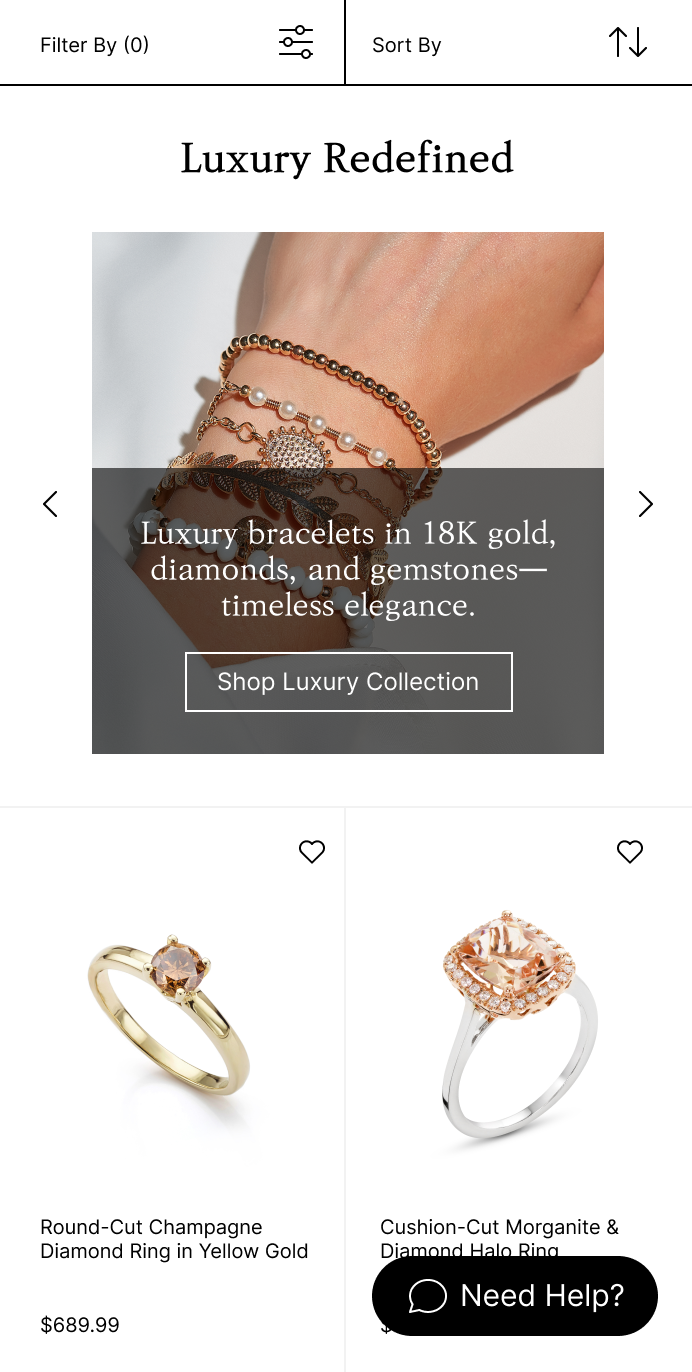
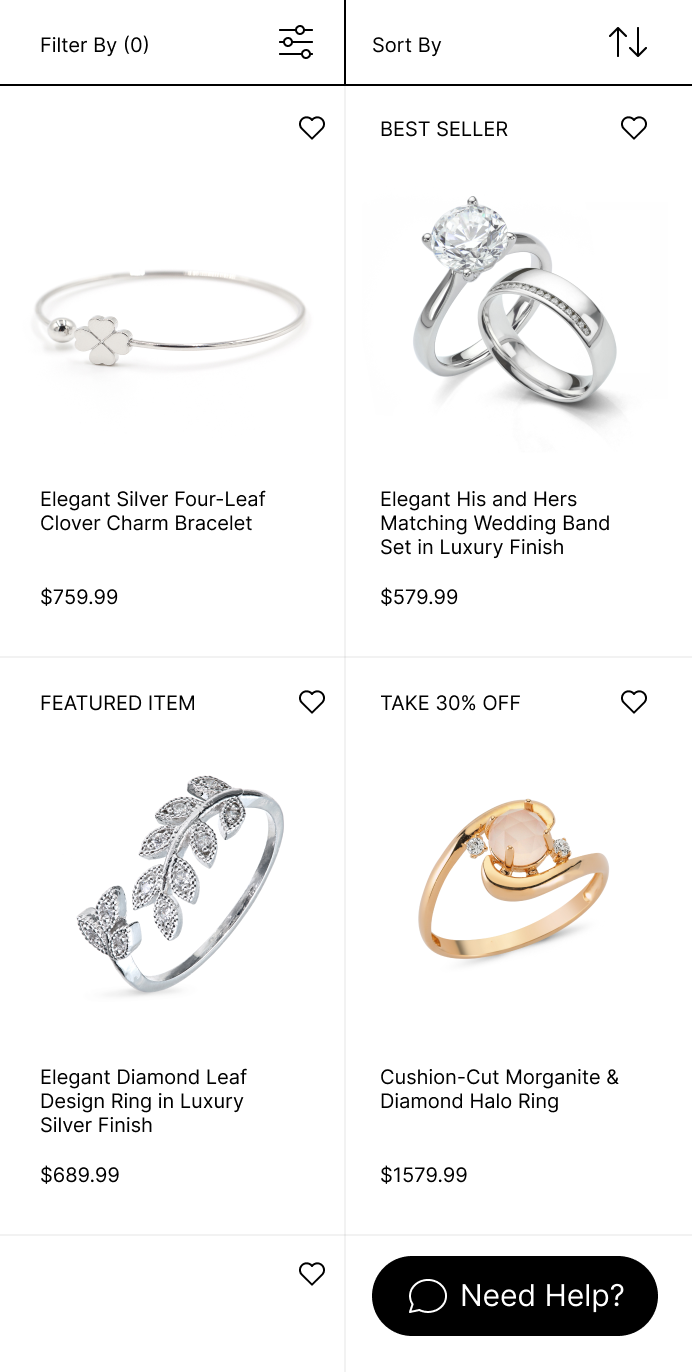
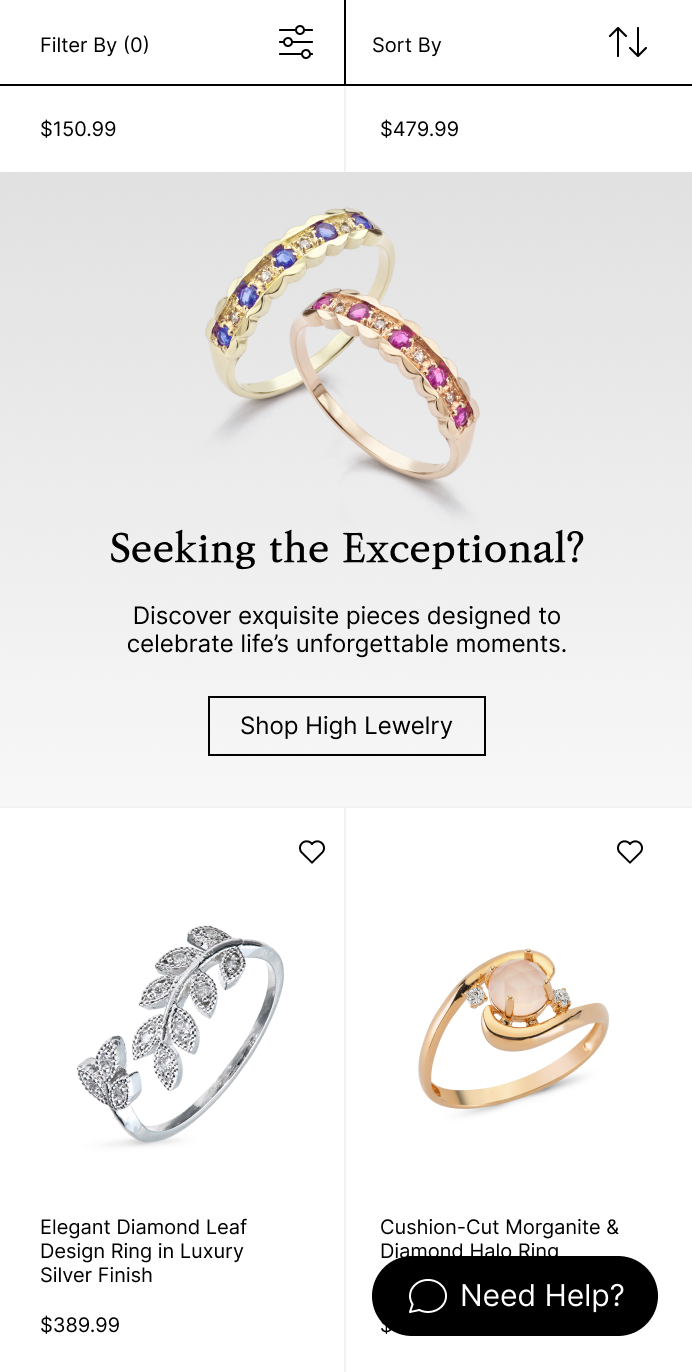
The team deployed a test on the product listing pages (PLPs) promoting specific luxury jewellery designers at the top of the page.
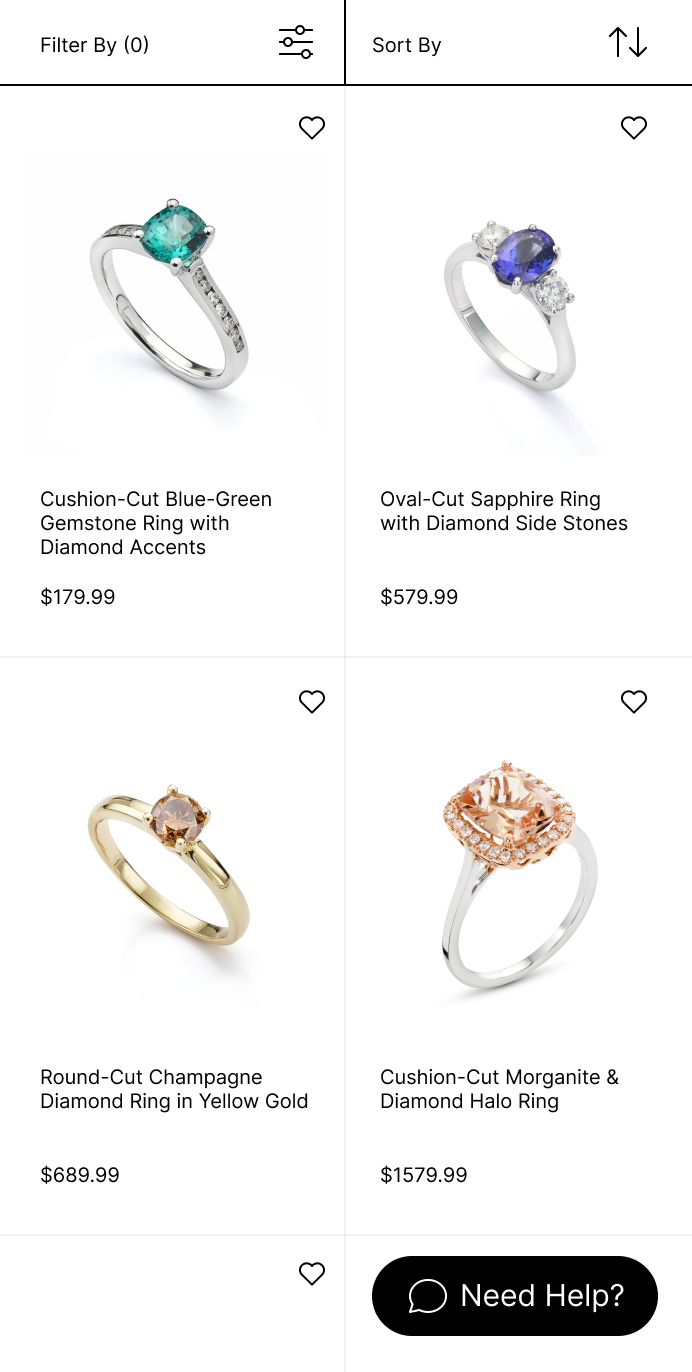
The default PLP (left) contains no luxury call outs, while the variation (right) highlights luxury lines of jewellery at the top of the PLP. The variation was shown to two target audiences: known visitors with a history of high spend and anonymous first-time visitors identified as luxury spenders by Mastercard’s predictive models. Note: the images here are mock-ups used for illustrative purposes only.
Visitors targeted by Mastercard’s predictive spend insights saw the most success from this campaign, resulting in a +49.6% increase in AOV, a +51.2% uplift in revenue per user and a -5.0% bounce rate. While overall clicks luxury products stayed consistent between the control and the variation, this encouraging data told the Signet team that it would be valuable to continue iterating on this campaign.
As a result, the team created another PLP test, this time incorporating videos on the PLP showing items in different categories, such as rings, necklaces and bracelets. They targeted this variation to predictive audiences likely to spend on luxury products.
The default PLP (left) versus the variation PLP (right). The variation showed videos of luxury items in the category, such as rings, necklaces and bracelets. This was targeted towards predictive audiences likely to spend on luxury products. Note: the images here are mock-ups used for illustrative purposes only.
Showcasing luxury jewellery videos on the PLP delivered the biggest impact in page engagement rates, with the luxury collection click through rate increasing from 1% to 47% across all categories. Although this campaign did not necessarily translate into significant gains in AOV or conversion, the positive impact on engagement rates implied that visitors were drawn to curated content specific to their interests - information that the team took away to incorporate into their roadmap.
After several tests targeted to predicted luxury spenders, the Signet team wanted to expand their strategy by branching into different categories. The team looked at Mastercard’s models and hypothesised that visitors with a spending history on sustainable products might respond well to targeted messaging about eco-friendly jewellery and jewellery practices.
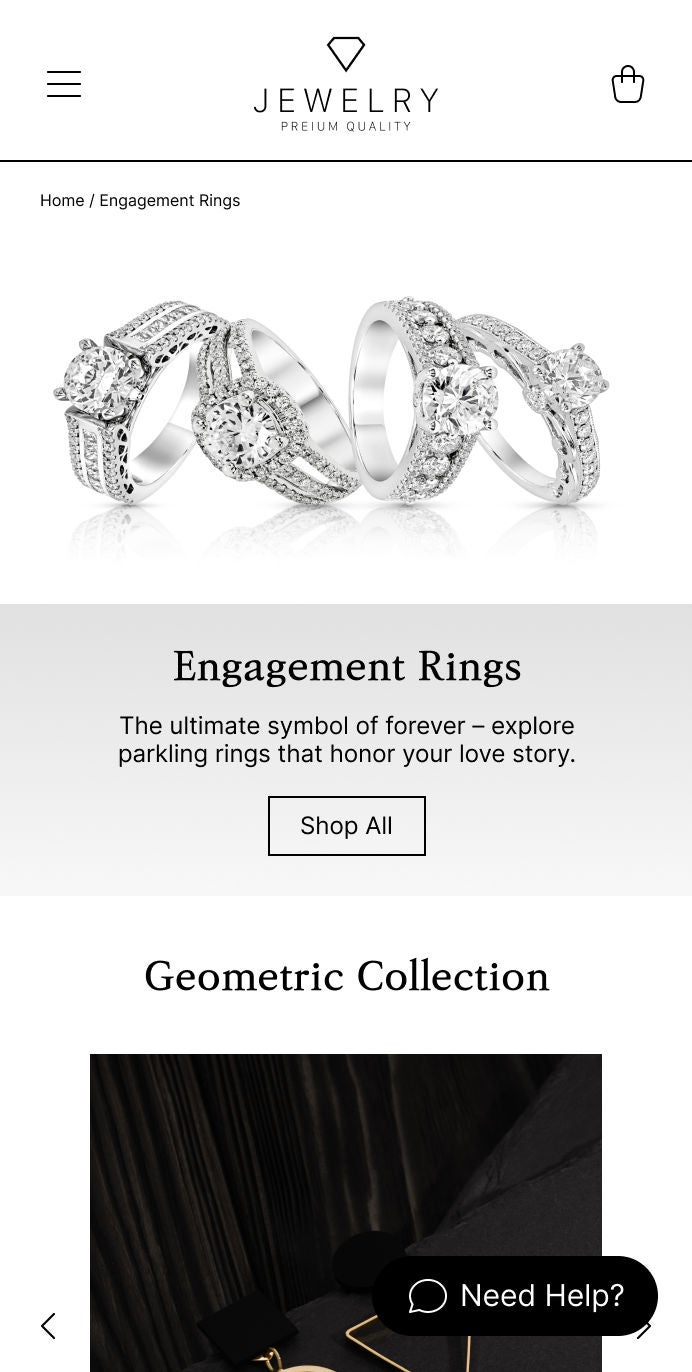
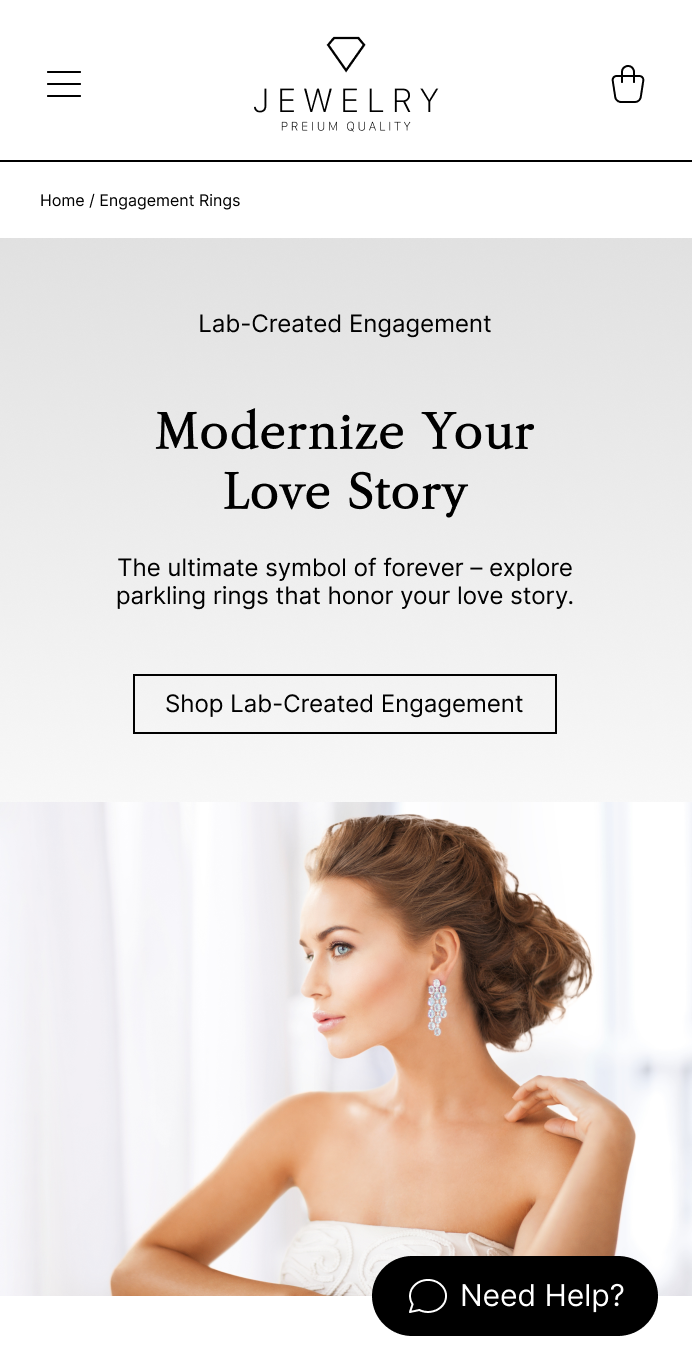
The team put this to the test with a campaign promoting lab-created diamonds on the engagement ring PLP page, targeted to predictive audiences with a spending history on sustainable products.
The default Engagement Ring PLP (left), versus the Engagement Ring PLP for visitors with a spending history on sustainable products (right). The variation highlights the eco-friendly aspect of a lab-created diamond ring. Note: the images here are mock-ups used for illustrative purposes only.
The variation featuring the sustainability hero positively affected key metrics, including a +88.6% boost in conversion rate, a +147.2% uplift in revenue per visitor and an +18.2% increase in AOV. Clickthrough rate with the sustainability hero was also strong at 11.4%.
Exceptional success with personalisation requires both strong data and creativity; Signet’s performance can be credited to both the accuracy of Mastercard’s predictive spend insights and the ingenuity of Signet’s personalisation and experimentation team. Using their knowledge of the business, industry and unique customer pain points, Signet’s team created hypotheses about their customers’ mindsets and values. Having Mastercard’s geo-predictive spend insights empowered the team to act on these hypotheses and deliver exceptional experiences for first-time, anonymous visitors, once again demonstrating Signet’s commitment to innovation and a stellar customer experience.