What are you looking for?

Inclusion
September 9, 2026
Illustrated by Janet Pagliuca of Room to Read, “The STEMMA Club: Friendship Algorithm” is the first in a series of children's books written by Susan Warner, the founder of Mastercard's Kids4Tech, to make STEM more accessible.
At school, Emma finds it easy to untangle tricky math problems, but making friends is much more complicated. In Susan Warner’s new book, “The STEMMA Club: Friendship Algorithm,” lead character Emma discovers she can formulate her own series of steps — an algorithm — for everything from bathing a cat to building new friendships.
It’s the first in a series of children’s books that Warner has written through a collaboration between Kids4Tech, Mastercard’s award-winning STEM education program, and the global nonprofit Room to Read, which develops children’s foundational literacy skills as well as life skills that promote gender equality. Warner’s goal is to make science, technology, engineering and math fun and accessible, breaking down the basic concepts so kids can see that these skills are within their reach.
It’s the type of book that Warner herself needed when she was in elementary school. Although she loved math and science, she lacked the confidence to pursue either subject, instead nurturing her talent for writing as a literature major.
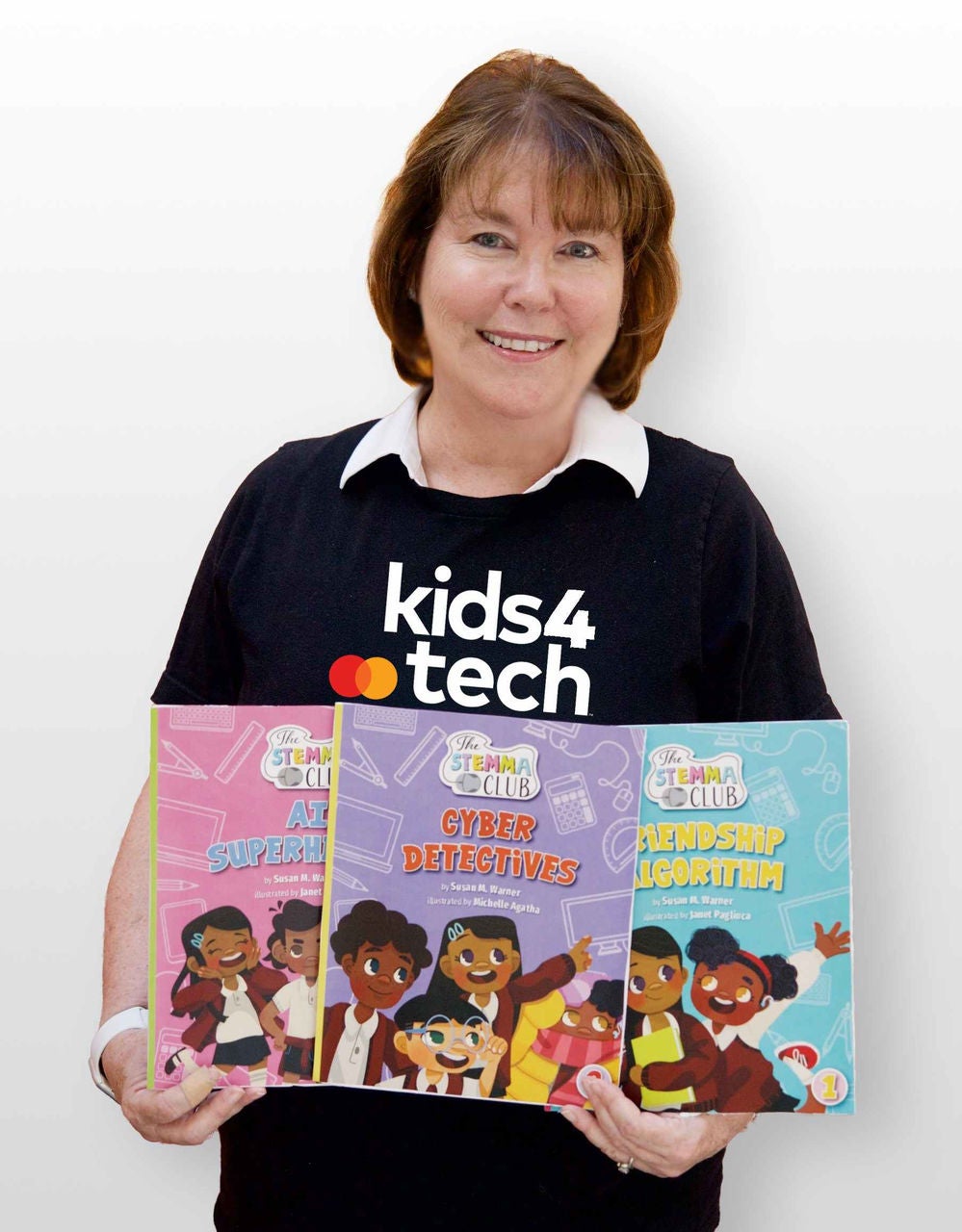
Susan Warner with “The STEMMA Club” series of children's books that explores friendship, cybersecurity, AI and more through the adventures of two young STEM enthusiasts.
Warner found a way to fuse her passions for STEM and storytelling when she joined Mastercard’s worldwide communication department in 2011. As she got to know her fellow employees, she realized they had a wealth of experience to share with children in their communities.
To put their expertise to work, Warner founded Girls4Tech, and later its offshoot Kids4Tech, which both offer STEM curricula for kids aged 8 to 16. Since 2014, they have introduced more than 14 million children in 70 countries to the world of tech, from big data to fraud detection and cryptology.
The benefits go in both directions. Mastercard employees relish the chance to mentor the next generation and to help expand the effort across the globe.
“The impetus was to create a community program that connected all of us,” says Warner, who now oversees global community impact for Mastercard’s Center for Inclusive Growth.
With pictures by Venezuelan illustrator Janet Pagliuca of Room to Read, “The STEMMA Club: Friendship Algorithm” will debut in November in the U.S. and India.
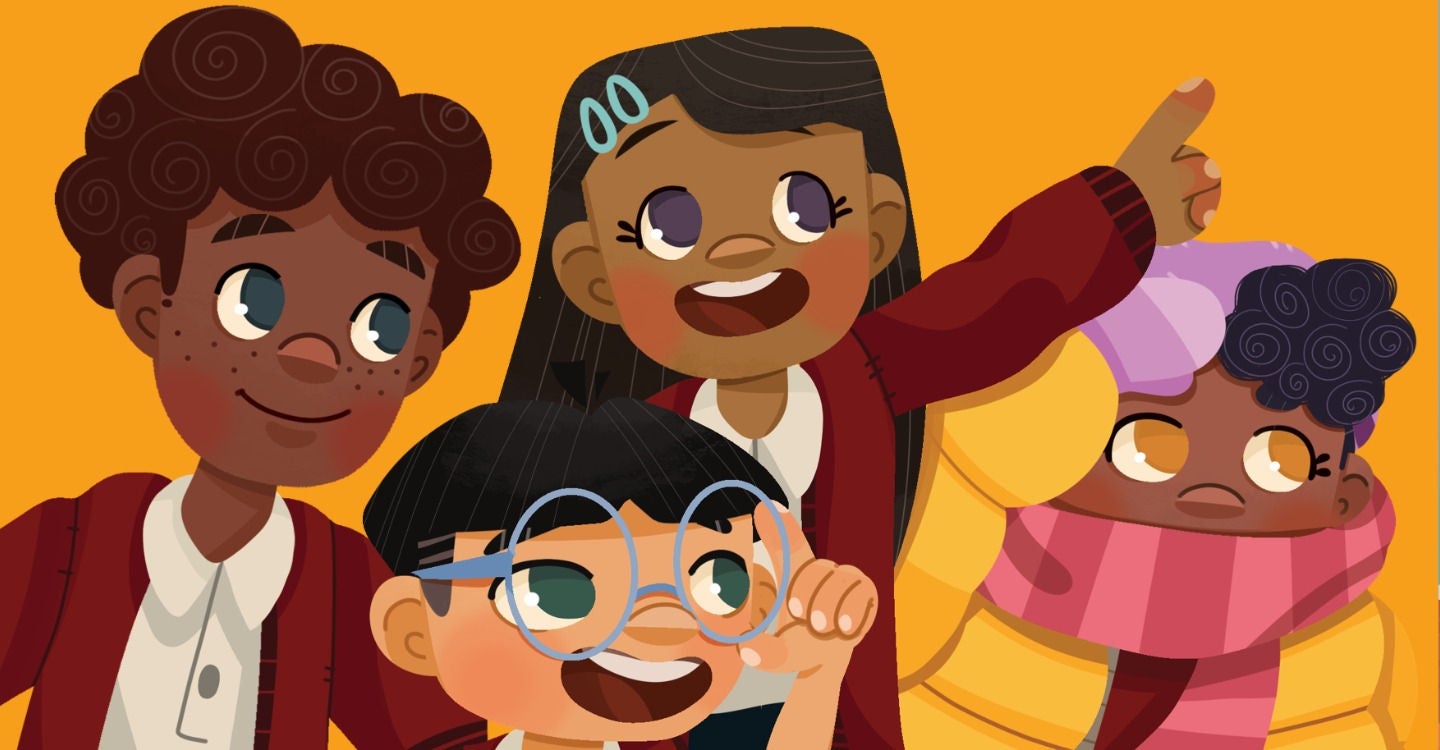
The book follows Emma and her new friend Stacy as they decide to found a STEM learning club. They develop an algorithm to help them get started: Come up with a cool name, make a poster and pick topics to learn about. Once they hit on a winning formula for the name — STacy + EMMA = The STEMMA Club — the rest of their plan quickly falls into place. In the other two books, Emma and Stacy delve into cybersecurity to educate their teacher, Ms. Woodhouse, and learn about the four industrial revolutions, from the abacus to the development of AI.
Along with “Friendship Algorithm,” the book series includes “The STEMMA Club: Cyber Detectives” and “The STEMMA Club: AI Superheroes.”
Seeing the three books in print will be a significant moment for Warner, who wrote the first book over a weekend after visiting a local bookstore and not seeing a lot of STEM content for children. Among the algorithms she details in the first book, Warner includes the personal roadmap she formulated to manage her writing process. Like many authors, she sticks to a regimen of long walks in search of inspiration, plus endless rounds of editing.
“With children’s books, I’ve learned that every word has to work hard to convey complex technology in simple, fun-to-read ways.” It’s here that she credits the editors from Room to Read. “STEM and storytelling are both about helping people make sense of the world, and my editors helped me bring those two worlds together.”
Twelve years after Warner launched her STEM program, her vision now connects STEM and literacy to help inspire a generation of young problem solvers, equipping them with the confidence to imagine new possibilities and the skills to bring their ideas to life.