AI

October 23, 2026


The biggest name at Money 20/20 this year wasn’t even human

AI and stablecoins dominated the financial industry show, with many more agents expected soon.

People move past a Money 20/20 banner

AI agents, cybersecurity and stablecoins took center stage at Money 20/20, reflecting how quickly new technologies are reshaping payments, commerce and the broader financial system. (Photo credit: Brian Friedman)

Ben Fox Rubin

Vice President,

Global Communications,

Mastercard

The bots took over Money 20/20.

Seemingly every booth at this year’s premier financial industry show was slapped with an AI label and seemingly every panel discussion fixated on the rapid evolution and risks of the technology.

While, yes, last year’s show was also heavy on AI storylines, the booth demos were just that — demos. People were talking about AI’s potential, but they weren’t actually using it yet. Twelve months later, back in Las Vegas, the volume on AI got turned up to 11 and it wasn’t hard to find people offering real-world examples for how they’re using AI agents.

Across various panel discussions, Skyfire CEO Amir Sarhangi said he used an agent to try buying a broken part for a rice cooker (the purchase didn’t work, by the way). Adam Davis, an AI strategist at Forter, said his company created an agent for a customer conference and people could use the bot to buy swag, including a hat that said, “My agent bought me this hat.” Shaun Flagg, a senior cloud engineer at Fastly, said he uses an agent to evaluate contractors’ work estimates for his Airbnb.

All these activities are likely to go into hyperdrive as more people jump on the agentic commerce bandwagon this rapidly approaching holiday season.

Microblink CMO Vanita Pandey, who moderated a panel on deepfakes, summed up what a lot of people were likely feeling: “We’re just entering a very, very different era.”


People move past a Money 20/20 banner
The Mastercard booth at Money 20/20 with people milling around.

At Money 20/20, the conversation around AI shifted from what it could do to what it’s already doing, as AI agents move into commerce and force the financial industry to rethink security and trust. (Photo credit: Brian Friedman)


The tenor of this year’s show — held at The Venetian Expo a short walk from the giant, pulsating Sphere concert hall — highlighted how quickly payments, economies, retail and consumer behaviors are changing as AI surges in popularity and stablecoins expand into more parts of the financial system. One enables a new form of commerce, the other a new form of value, and together they’re quickly reshaping just about everything.

ChatGPT and Claude have helped people with internet queries and workplace productivity for years, but the watershed moment in agentic commerce came this September when Meta released Muse, a personal assistant that can manage your bills and buy you new shoes.

In its first 40 days since launch, the app has already been downloaded more than 10 million times in the U.S. Davies, whose company provides e-commerce fraud prevention tools, said agentic transactions through Forter’s network have grown 5.6 times in just the last month and a half.

“I think there’s two worlds in agentic commerce,” he said, “Everything before September 2026 and everything after.”


Moving at machine speed

This is really just the start.

Sitting by his company’s booth on the busy show floor, Dean Hickman-Smith, chief revenue officer for AI testing company Testlio, told me about how people are already feeding their AI agents pictures of their full fridges along with pictures of their now-empty fridges and telling the agent to go buy what’s missing. “People are doing that now with Muse and it works,” he said.

Hickman-Smith said over the past year he’d heard others in the industry talk about agentic commerce needing one to four years to gain broad consumer adoption. Instead, it’s all happening now.

Skyfire’s Sarhangi said people should expect many more agents to come out soon, building on the success of Muse, with specialized agents from brands or for uses like health and wellness joining the AI party. At the show, Aravind Srinivas, CEO of AI lab Perplexity, talked about his company’s work to develop a personal finance agent for consumers.

Sherri Haymond, Mastercard’s global head of Digital Commercialization, said in an interview she expects agent-to-agent interactions and transactions to grow next year.

She said a small business could soon use an agent to create a marketing campaign. “It will go out and it will source the content, it will source the images, it will actually hire an agentic marketing agency to put the whole thing together to do the ad buy and then go ahead and place the ad,” she said. “We’re enabling all this to happen at machine speed.”


AI raises the stakes

The AI discourse at the show also veered into the many potential pitfalls.

Several panels offered impassioned calls to shake up cybersecurity efforts to respond to rapidly changing, AI-powered cyberattacks. Many speakers mentioned how the speed, volume and diversity of attacks have all increased, with generative AI being used to create fake videos and photos and synthetic data like receipts, all presenting problems for businesses and retailers.

“AI is the biggest force multiplier that fraud has ever seen,” Sarah Ward, Chainalysis’ chief legal and administrative officer, said.

These problems are complicated by the fact that businesses now have to identify the difference between “good bots” and “bad bots” and let in those good bots, like Muse. That’s a major shift from years of fraud-prevention efforts that focused on identifying bots and blocking them all.

Many talked about the need for more interconnected AI standards and protocols to make things simpler for merchants. “It’s currently a very fragmented, very complicated space,” Davies said.

More data sharing was also encouraged, so businesses could more effectively respond to attacks.

“Criminals are sharing information, they’re moving across networks. I don’t think there’s a choice at this point,” Ward said about pushing for collective defense and information sharing.


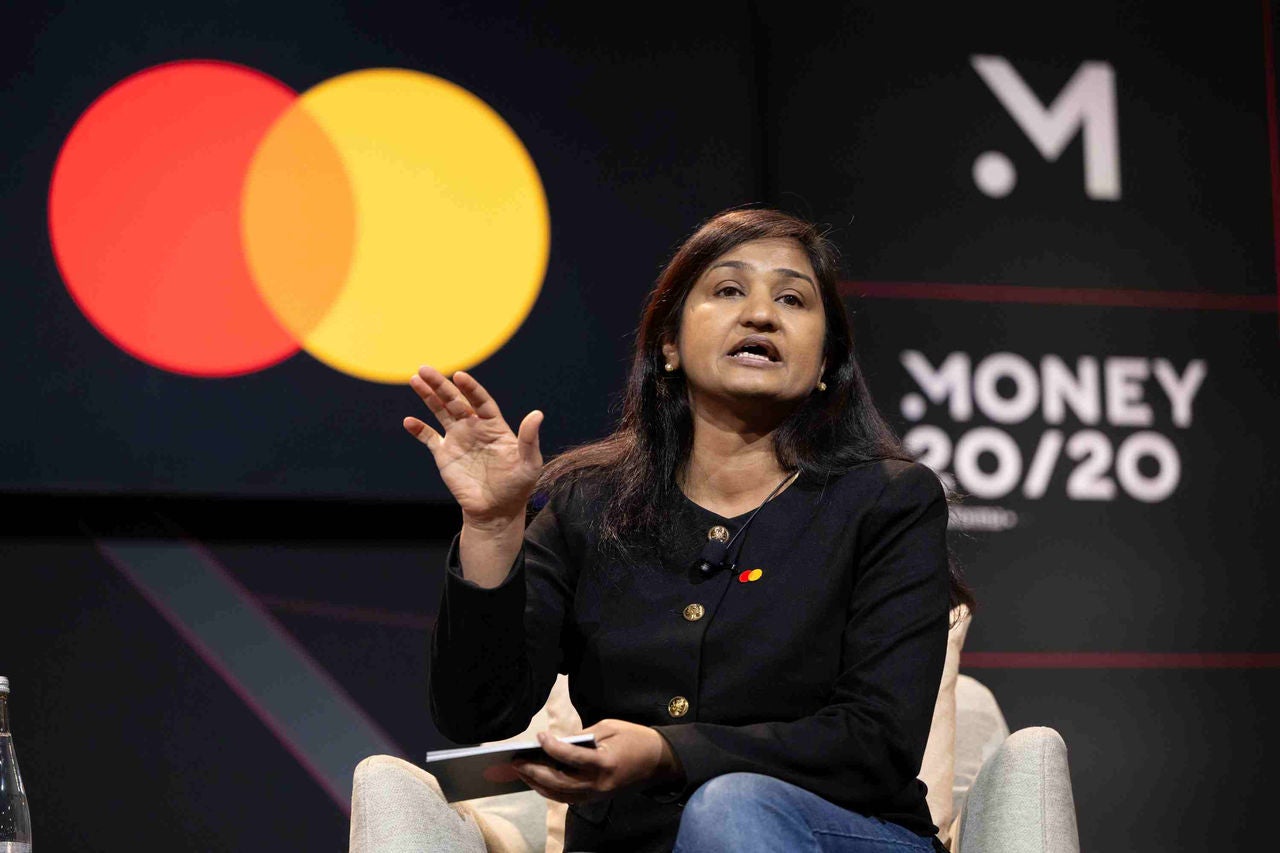
Ranjita Iyer speaks on stage at Money 20/20

At Money20/20, Mastercard's Ranjita Iyer discusssed how fraud has evolved into an industrialized global business, and why the earliest signals of emerging threats can offer critical intelligence for protecting customers and businesses. (Photo credit: Brian Friedman)


Stablecoins step up

Another major trend coming out of Money 20/20 this year revolved around blockchain-based payments.

As the financial industry has warmed up to blockchain technology over the years, cryptocurrencies like bitcoin and ethereum have become less prominent at mainstream finance shows like this one. They’ve been replaced with discussions on stablecoins and tokenized deposits, which aren’t as volatile as free-floating crypto and therefore more suitable for payments.

To support traditional finance’s adoption of blockchain tech, Mastercard at the show announced Stablecoin Security, which blends fiat and blockchain financial signals into one risk score, helping financial institutions assess complex transactions using blockchain and then ultimately avoid scams and fraudulent purchases.

“The best way to build trust is with intelligence,” Ann Johnson, who leads Mastercard’s Security Solutions business, said onstage during the conference as she announced the new capability.


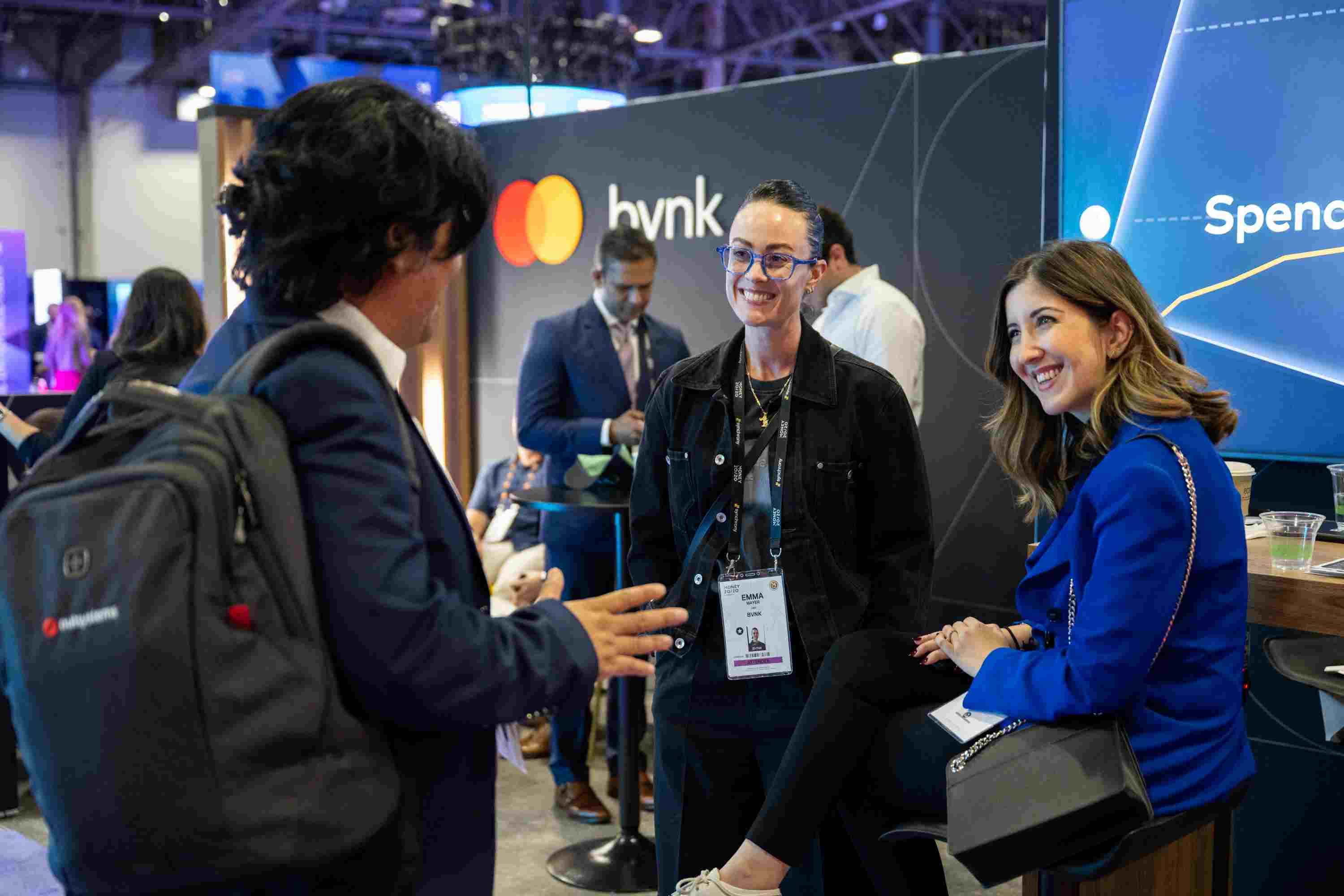
People at the BVNK booth at Money 20/20.

Money 20/20 attendees mingle at the BVNK booth. The president and U.S. CEO of the blockchain infrastracture company acquired by Mastercard this year spoke about the role stablecoins could play in transforming gig economy payouts. (Photo credit: Brian Friedman)


In a corner of the show floor, Ajit Deshpande, head of marketing for blockchain security company Blockaid, told me that traditional finance has been working quickly to integrate more blockchain capabilities, such as issuing stablecoins and using blockchain for treasury management.

His company has worked with these financial institutions to ensure their blockchain security infrastructure can scale across their businesses.

“They are thinking about it,” he said, “it’s just the ‘how?’ for them.”

During a panel, Amit Cheela, president and U.S. CEO of BVNK, the blockchain infrastructure company Mastercard acquired this year, discussed how freelancers and gig workers have been looking to gain more access to stablecoin payments, particularly in emerging markets with volatile currencies so they can hold their funds in dollar-based stablecoins.

"There’s a world of opportunity in front of us,” he said about the work ahead to build more cross-border blockchain payments.

Considering the fast changes happening across blockchain and agentic payments, it’s hard to imagine what exactly next year’s Money 20/20 could look like, but it’s a safe bet, even in Vegas, to say things are going to be very different.


What will move agentic commerce from possibility to everyday reality?

What stands between today's AI assistants and autonomous commerce? The Start Path agentic commerce startups discuss trust, payments, identity and adoption.
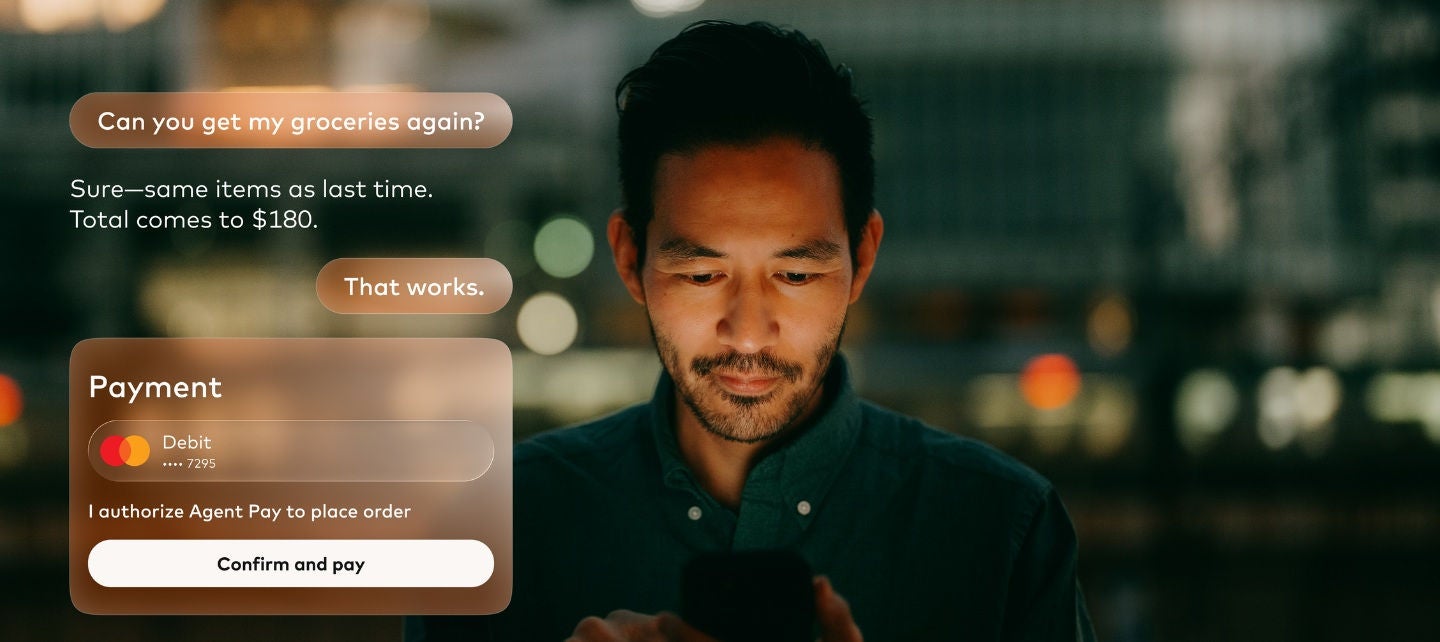
A man looks down at his phone while an overlay shows an agentic transaction.