Small business
June 2, 2026
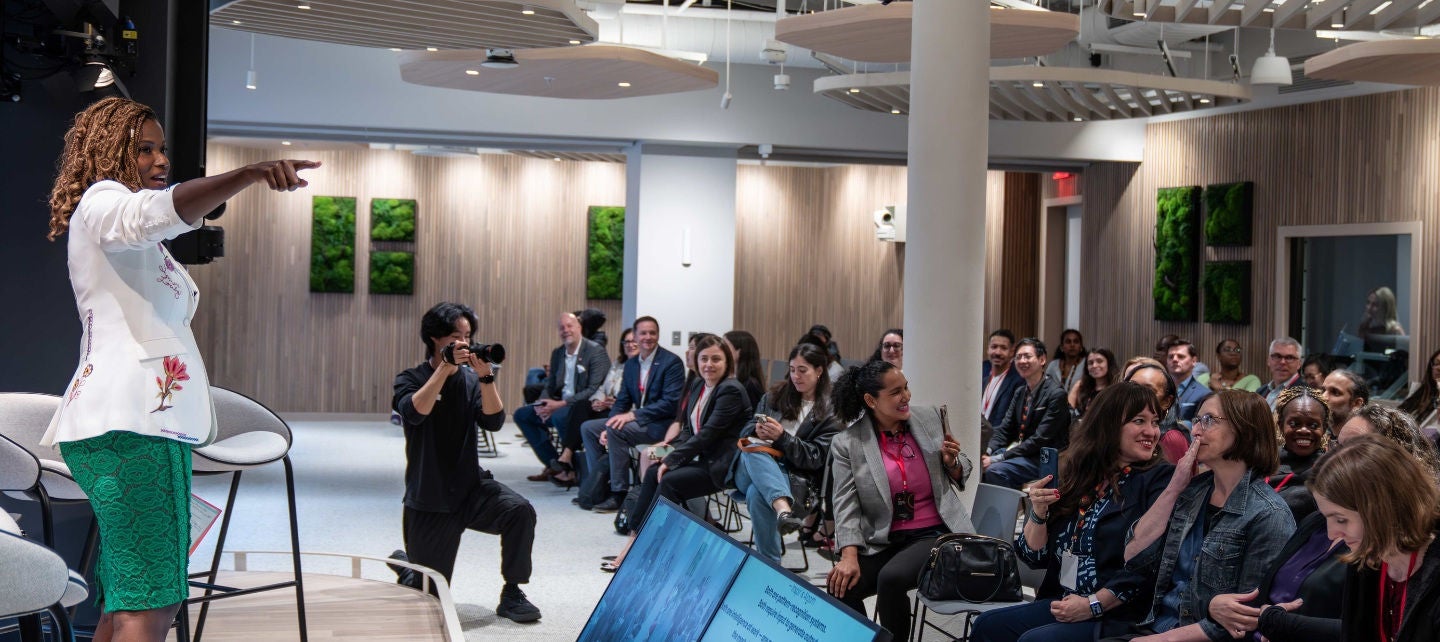
Actor and Creatricity founder Cassandra Freeman shares how small business owners can turn bold ideas into lasting careers by owning their voice, their craft and their business at Mastercard's Small Business Summit in New York City.
Small business owners are being asked to do more than ever — run leaner, move faster and navigate rising costs, new technologies and evolving threats. Closing the gap between what small businesses need and what systems deliver is now essential to growth, said speakers at Mastercard’s Small Business Summit in New York City, the first in a 2026 series convening entrepreneurs, experts and partners across the U.S.
“Small businesses don’t need a lot of inputs,” said Ginger Siegel, who leads Mastercard North America’s small business team. “They need outcomes.”
From AI adoption to cybersecurity to maintaining a momentum mindset, speakers shared practical ways to simplify operations, strengthen resilience and help founders build with confidence. Here are four takeaways.
AI is emerging as a meaningful driver of the current surge in small business creation, according to Roiana Reid, the lead economist for North America at the Mastercard Economics Institute. Business applications have remained elevated since the pandemic and are now accelerating again, with AI playing a role alongside factors like strong equity markets and policy shifts, she said. Sectors that are heavy adopters of AI — like professional services, tech and education — are seeing the strongest growth in new business formation, indicating that the technology is lowering the barriers to entry by helping business owners do more with fewer resources, particularly across marketing, planning and day-to-day operations.
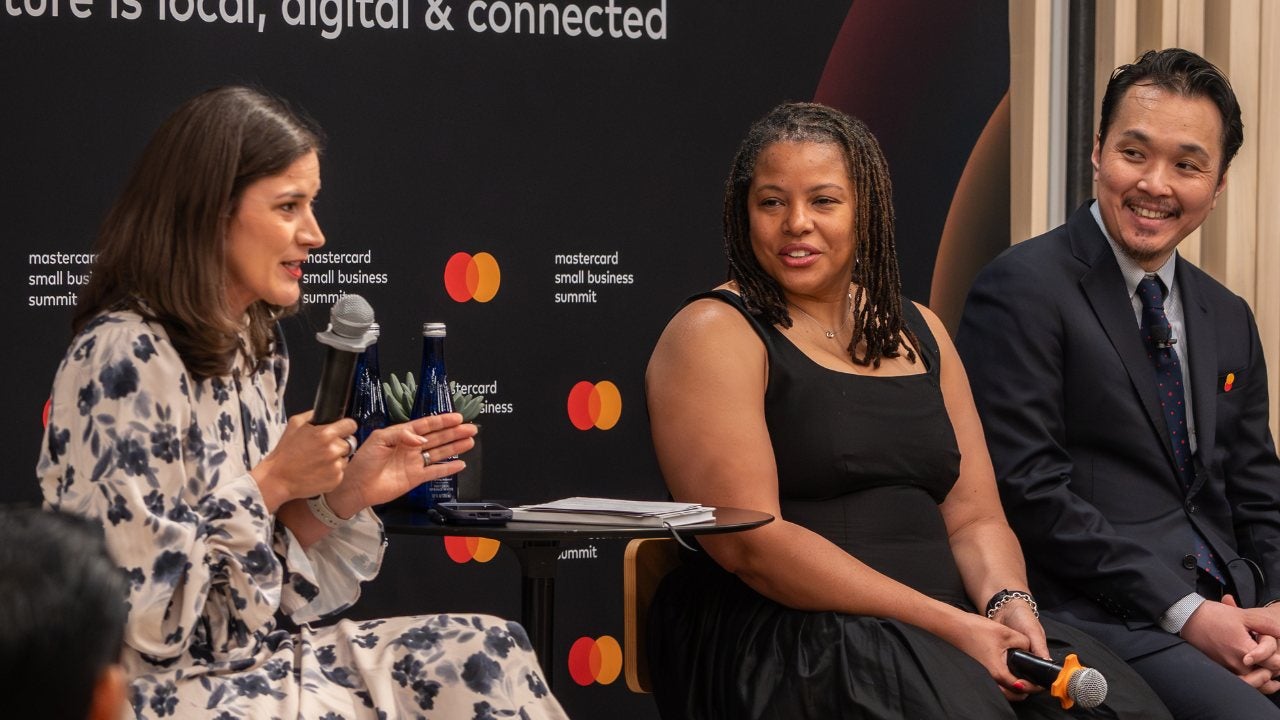
In a separate “ask the experts” panel, Michelle Sohn, a vice president for agentic commercialization at Mastercard, pointed to the rise of agentic search and the need for small businesses to find ways to embed their brand and products into these new discovery engines or risk losing visibility with their customer base.
Adopt the latest AI tools, Reid encouraged: “We don't want there to be a widening of the gap in performance between larger companies that are better resourced and are already adopting AI at a fast pace and smaller businesses."
Small businesses aren’t lacking effort or ideas — they’re overwhelmed by fragmentation, with the average business juggling dozens of platforms, tools and providers that each focus on a piece of the puzzle, several panelists said: managing cash flow, navigating fraud, hiring, marketing, and strategizing for the long term while putting out everyday fires.
“Consumers and businesses have more choices in how to pay and how to get paid than ever before,” said Kathryn Drew, a senior vice president with U.S. Bank who manages the Amazon Small Business co-brand, “but it’s also extremely complex on the back end.”
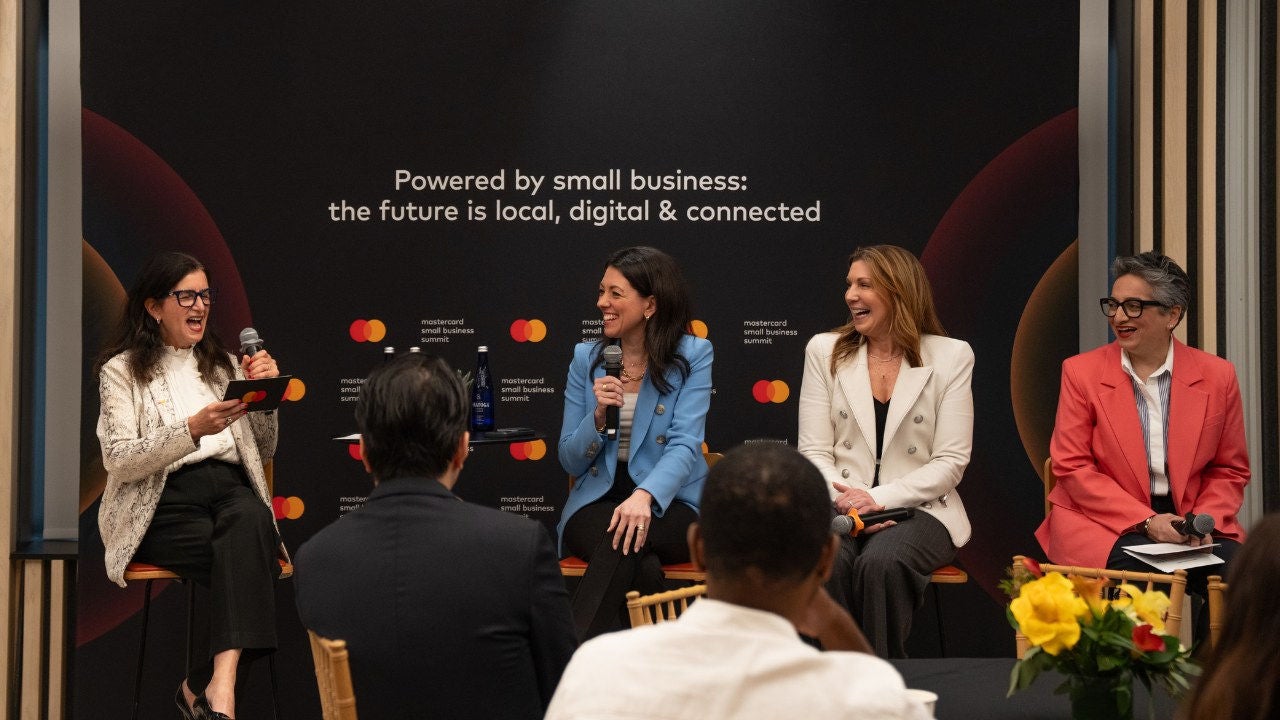
From left, Mastercard North America's small business lead Ginger Siegel, left, led a lively discussion on how the company is expanding access and driving growth for small businesses, with Linda Kirkpatrick, president, Americas, Jill Kramer, chief marketing and communications officer, and Shamina Singh, the president of the Mastercard Center for Inclusive Growth.
Small businesses are being asked to operate like large enterprises without any of the infrastructure, said Linda Kirkpatrick, president of Mastercard Americas: “They need the capabilities of a big company, but at a price point and level of integration that works for small businesses.” With AI accelerating business formation, the need is only getting more urgent. The winners will be the organizations that can simplify the back end of running a business so owners can focus on the front end: growth.
Small businesses sit in the worst possible position, dealing with both consumer scams and sophisticated business-targeted attacks, but without the resources large companies have to defend themselves, said Scamnetic CEO Al Pascual on a panel about cybersecurity. Habits, not heroics, can prevent the worst from happening. Slow down when you get an urgent message requiring you to click an unfamiliar link. Use a password manager. Regularly check your accounts. Freeze your credit but still monitor it. “Think of your security like an onion,” said Carolyn Esposito, a director on Mastercard’s cybersecurity product management team. “Your data is at the center, and you want to keep adding layers.”
Kiara Di Paola, who turned her popular travel content into a small business, saw a single suspicious charge escalate into a full-scale account takeover that froze her funds and crippled her operations for months. She offered a parting piece of advice: Schedule a weekly "cybersecurity date" with yourself — even 15 minutes to review accounts and update passwords.
The New York City summit featured the Mastercard Small Business Marketplace, presented by Amazon, spotlighting local entrepreneurs, including Ashley London Fouyolle, the Brooklyn designer who founded luxury gift wrap brand UnWrp.
Keynote speaker Cassandra Freeman, an actress and co-founder of Creatricity, a global platform connecting creators, executives and brands, shared a pivotal moment from her own career when, broke and ready to give up, she nearly dismissed the audition that would change her life. "When you are low, you will look opportunity in the face like it's a lie," she said. Instead of letting setbacks shrink her sense of what's possible, she chose to expand it. For small business owners navigating slow seasons, rejection or self-doubt, this is a powerful way to reframe the situation: Your future isn't based on your past — it's based on your next move.
That same idea surfaced in a more practical way from Angel Gregorio, who owns the Washington, D.C. culinary boutique The Spice Shop: Don’t wait until things are going wrong to figure out how to respond. “Accept that difficult things are going to happen,” she said. Don’t wallow in them — move through them. The most resilient business owners are the ones who expect friction, prepare for it and stay in motion, she said. Mindset isn’t just about optimism — it’s about readiness.