What are you looking for?
Innovation
October 22, 2026
Technology has mastered the art of capturing our attention via sight and sound. Now researchers and artists are beginning to work with perception in less conventional ways. The result is not just more stimulation, but a larger set of tools: changing what becomes visible, translating sensations that are difficult to describe and reconnecting us with environments that have forever disappeared.
Getting a tattoo has traditionally consisted in making the prediction about your future self: “Would I still love this band, symbol or the name of this person currently occupying a stretch of my forearm years from now?” Researchers at the University of Colorado Boulder have developed PhotoTat, an experimental system of photochromic inks that introduces a little more flexibility into that decision.
Photochromic materials change the way they absorb light when exposed to particular wavelengths. In PhotoTat, blue, magenta and yellow dyes are encapsulated in tiny particles made from polymethyl methacrylate, or PMMA. Ultraviolet light activates the pigments and makes the colors visible. Bright light reverses the effect and returns them to a nearly colorless state. Mixing the three inks can create a broader palette, allowing multicolor images to be switched, faded or rewritten with light.
This, however, doesn’t mean the ink fully disappears from the skin. The change only affects its visibility, so this means the pigment remains in the skin while its visibility changes. This work is still experimental and broader human-testing would be needed before it could be offered as an everyday tattoo option. Even so, it points toward body art that could be more adaptable, interactive and potentially useful beyond mere body modifications.
Describing colors could be a straightforward task. However, describing a smell often requires a comparison: roses, toasted bread, or, if the moment calls for it, teen spirit. A Yale-led study is exploring how machine learning can help organize those impressions and predict how similar complex odors mixtures will smell to people.
The research grew out of an international competition where teams developed AI models to predict how similar different smell mixtures would smell to people. After the challenge, researchers combined predictions from six high-performing models into an ensemble. The model outperformed existing approaches on a hidden test set and performed strongly on an independent set of 50 newly designed scent-mixture pairs.
One of the most interesting findings was that the model relied heavily on semantic descriptions of odors, not only on molecular structure. This is key, as smell has very limited vocabulary for everyday use. We usually name the object with what a scent reminds us of rather than the scent itself. Instead of being a weakness, language provided highly useful in predicting relationships between mixtures. “Something ‘smells like flowers’ or like watermelon or like a rotten egg, whereas colors have specific names like ‘green’ or ‘blue,’” lead author Vahid Satarifard of Yale’s Human Nature Lab told the Yale News. “That was thought to make semantic odor descriptors a poor basis for predicting how smells relate, but we found the opposite.”
For now, the study demonstrates something very important: AI could help give structure to a sense that has remained difficult to measure, explain or digitize.
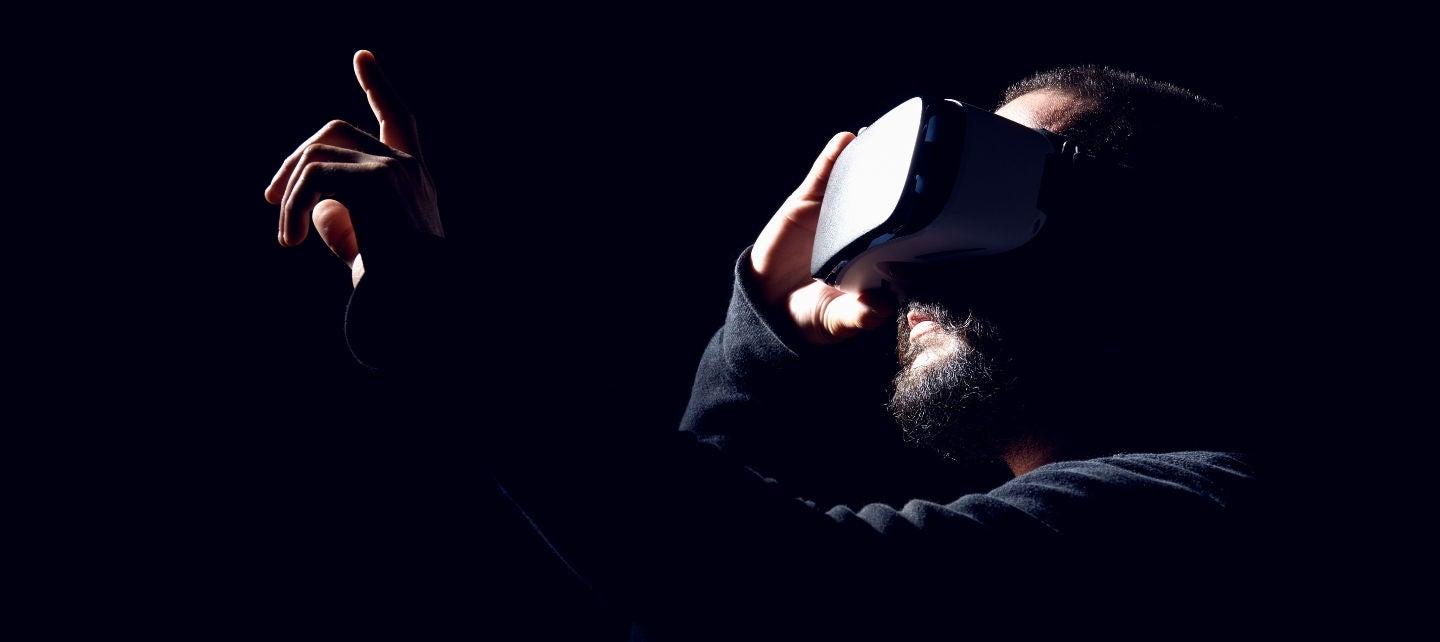
At the Museum of Modern Art in New York, artist Jakob Kudsk Steensen has approached senses from a very different direction. His work “Berl-Berl” reimagines Berlin’s forgotten wetlands as a singing digital swamp, combining ecological research with folklore, myths and songs.
The project started from fieldwork imagining Berlin’s remaining wetlands and collaborations with the Museum für Naturkunde Berlin and the musician Arca. Here, rocks are mixed with flora and fauna to create a digital recreation of the swamp, using macro photogrammetry, 3D scanning and game-engine technology to turn those elements into an ever-changing digital landscape.
Although it’s part archive and part speculation, this installation is a reminder that technology can do more than create new digital worlds. It also can help us notice what the history and the physical world has lost over time.