What are you looking for?
Inclusion
November 18, 2026
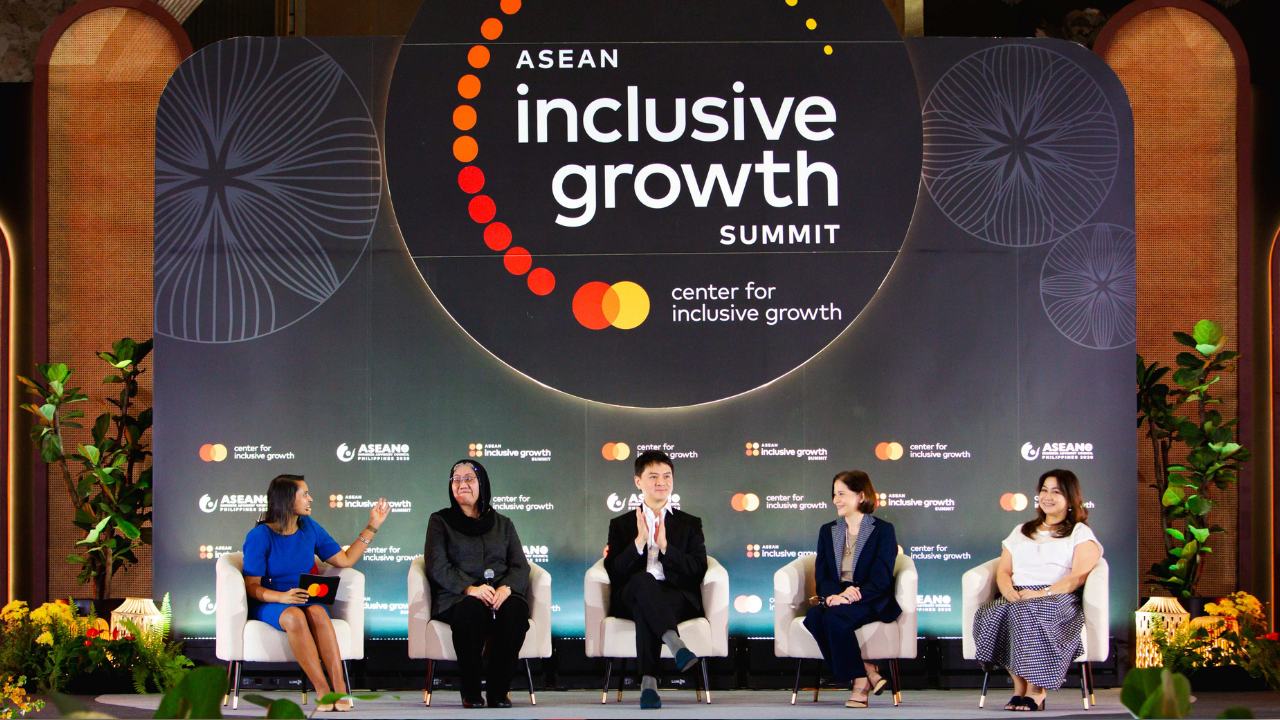
Access is only the beginning: From left, Mastercard's Payal Dalal, GX Bank Berhad's Datuk Zaiton Mohd Hassan, Dana's Vince Iswara, Bangko Sentral ng Pilipinas' Bernadette Romulo-Puyat, and GCash's Martha Sazon discuss how Southeast Asia can turn gains in financial inclusion into greater financial health, helping people save, weather emergencies and build more secure futures.
Southeast Asia has one of the world’s fastest-growing economies. In the 1980s, the combined economy of the region was about $200 billion, roughly equivalent to the market capitalization of McDonald’s Corporation, explained Jon Huntsman, former U.S. ambassador to Singapore and China who now oversees Strategic Growth at Mastercard. Now it is on track to become the fourth largest economy in the world by 2030.
“I have lived to witness one of the truly extraordinary, if not unprecedented, economic miracles in the modern world,” Huntsman said last week in Manila at the second annual Association of Southeast Nations (ASEAN) Inclusive Growth Summit organized by the Mastercard Center for Inclusive Growth.
Supporting that kind of spectacular growth, however, requires more of everything: more energy, broadband connections and digital infrastructure, transportation, more support for up-and-coming creatives, and financial management education. It will also require resilience in the face of natural disasters and economic tremors.
The ASEAN Inclusive Growth Summit was held on the sidelines of the 49th ASEAN Summit, in which representatives from 11 nations discussed socioeconomic and political issues related to the region. At the daylong summit, economists, bankers, business leaders, nonprofit leaders, government officials and humanitarian advocates discussed how Southeast Asia can maintain its rapid growth while making that progress more inclusive and resilient.
The most essential strategy, they agreed, was cooperation: between national governments, between public and private organizations, and between institutions and the individuals they serve.
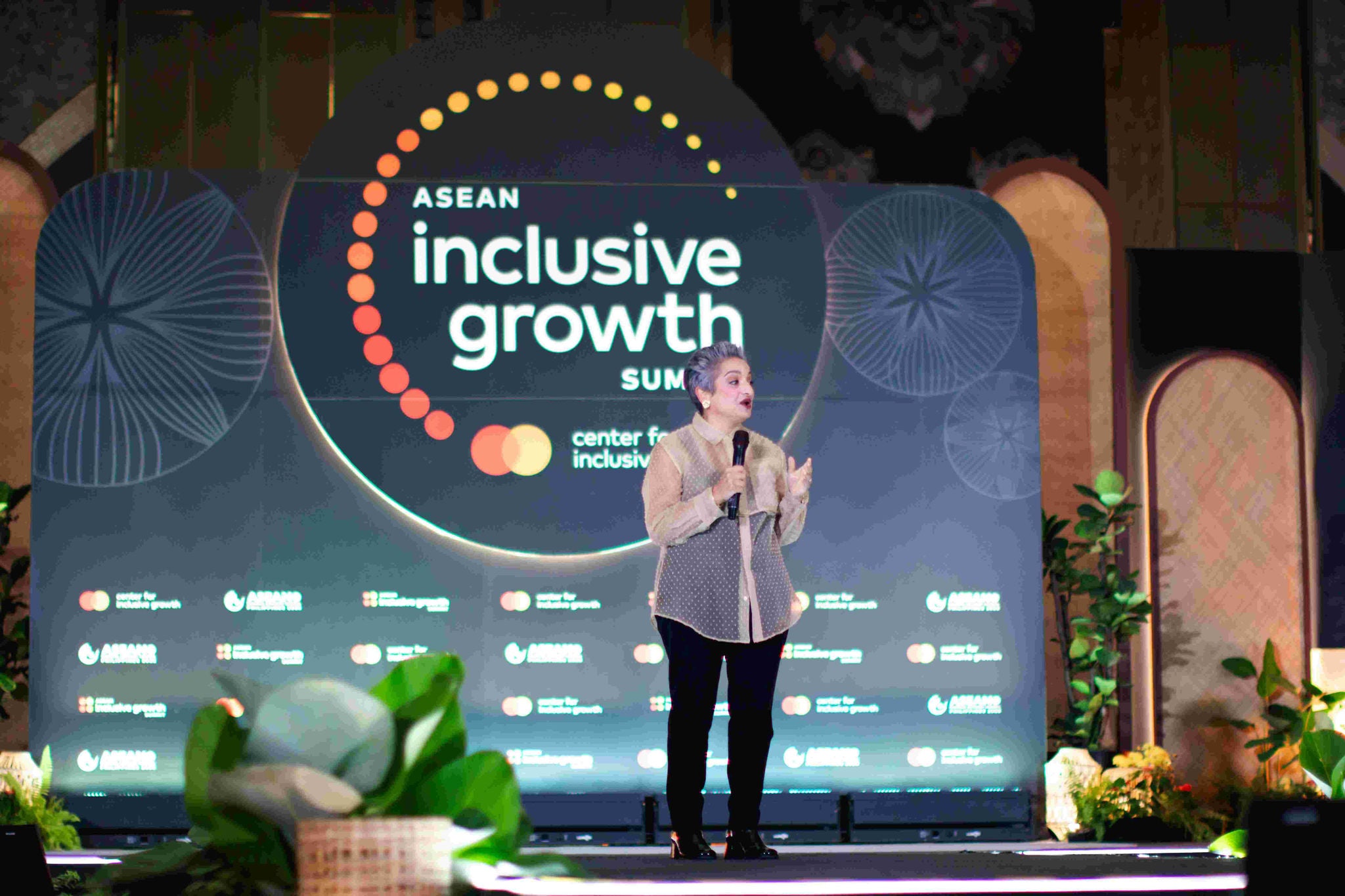
Mastercard’s Shamina Singh opens the ASEAN Inclusive Growth Summit with a call for collective action, challenging leaders across sectors to work together to ensure the digital and AI economies create opportunity for everyone.
“In a world where so much is pushing us towards fragmentation, unity, connection, and collaboration are needed now more than ever,” said Shamina Singh, the founder and president of the Center for Inclusive Growth and executive vice president for Sustainability, Mastercard.
“As we look at Southeast Asia and ASEAN as a body, we think in terms of what has been a succession of shocks in recent years and clearly with negative effects on the economies across the region,” said Scott Morris, vice president of East and Southeast Asia and the Pacific of the Asian Development Bank.
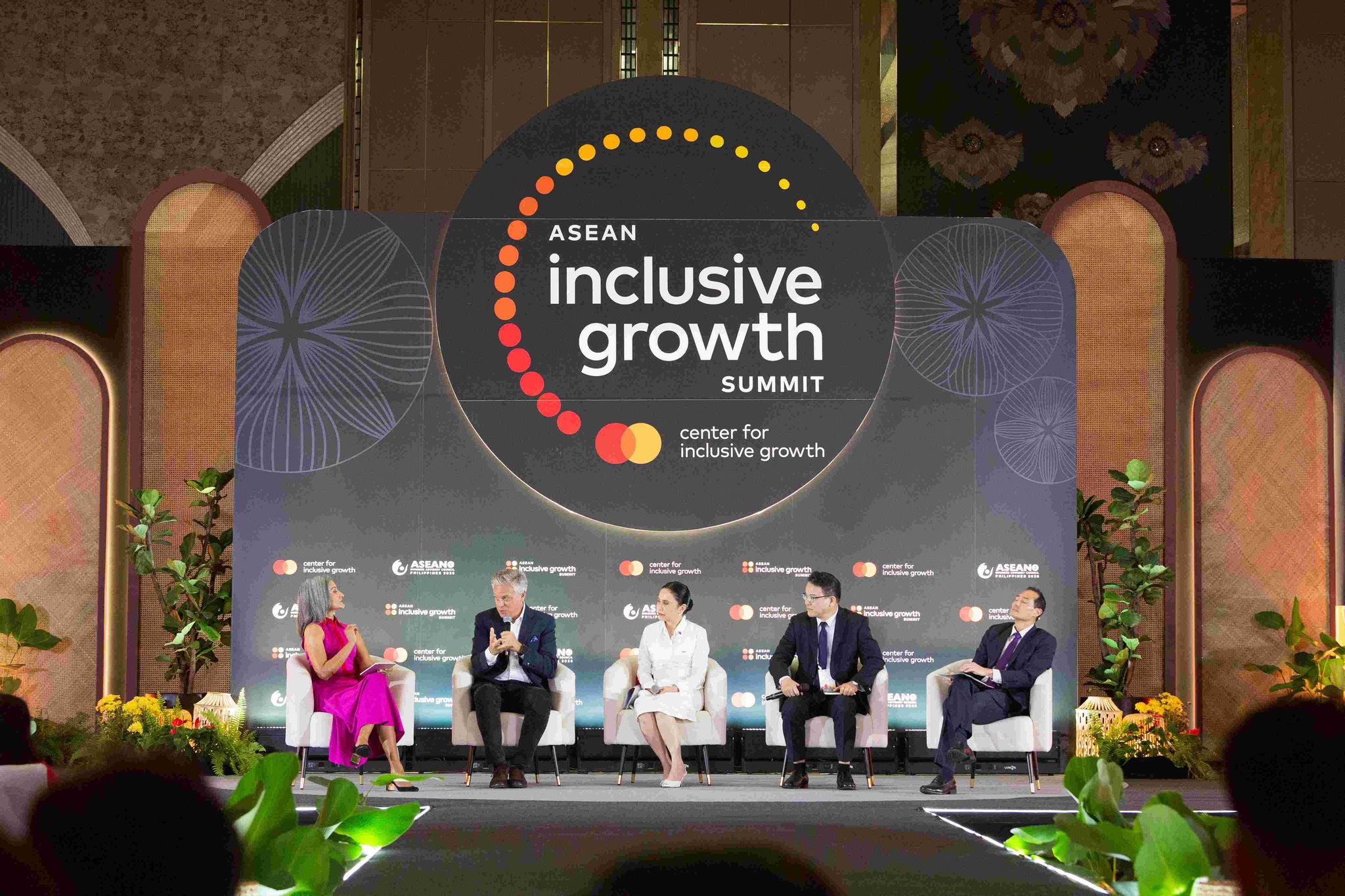
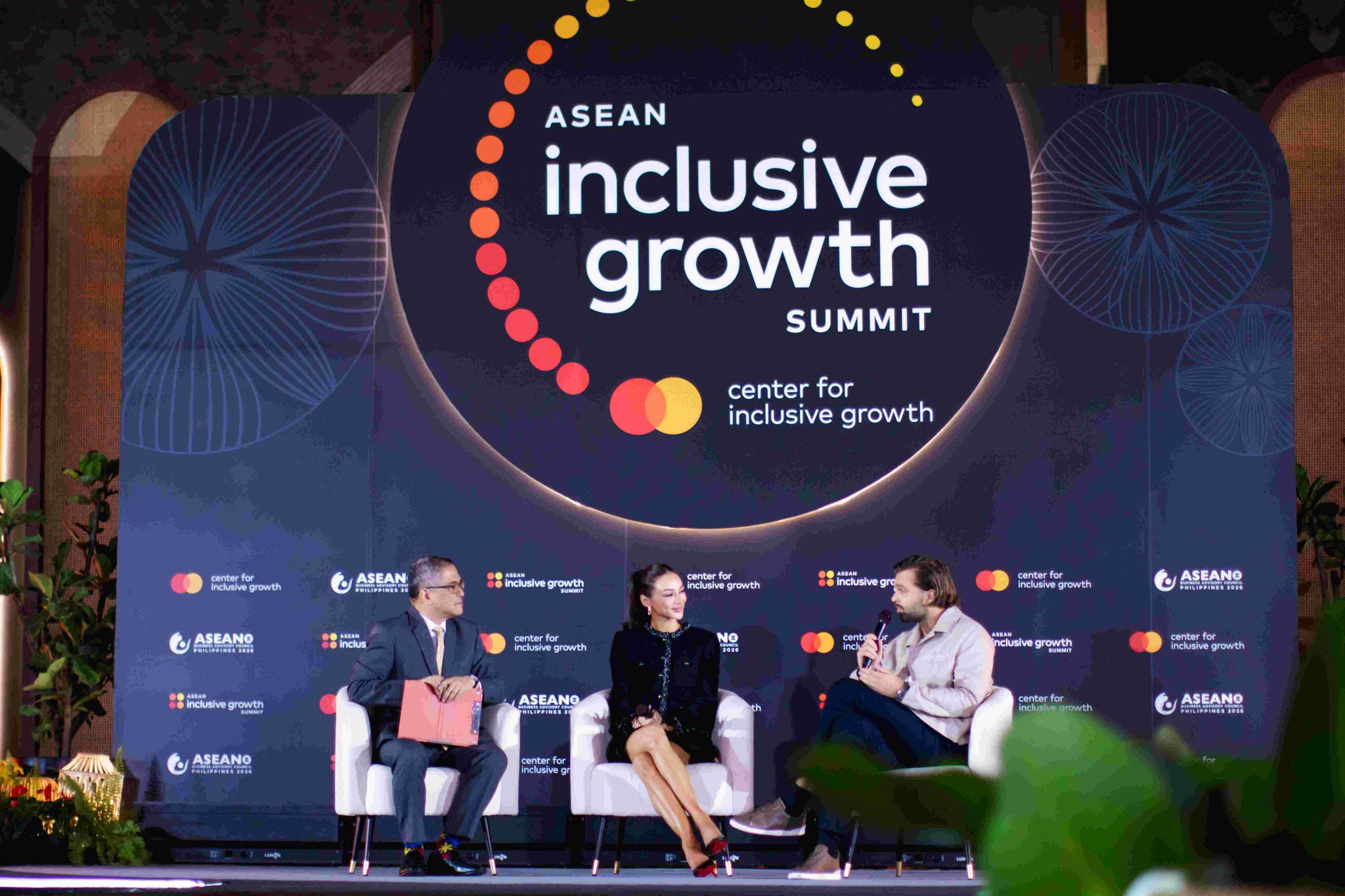
With ASEAN poised for its next era of growth, leaders, including Mastercard's Jon Huntsman, second from left, discuss how the region can stay open, connected and competitive while ensuring that small businesses and communities share in the opportunities ahead.
Those shocks include the COVID-19 pandemic, supply chain reordering, natural and climate-related disasters, and the rising cost of fuel. “And yet at the same time, when you look closely, you both see the resilience of these economies but also what it has done to the political-level commitment around ASEAN and the drive toward integration."
Here are a few ways Southeast Asians can work together to build a better and more sustainable future.
The ASEAN Power Grid, an ambitious project 30 years in the making, finally went into effect last year, allowing countries in the region to trade electricity, fuel and other energy resources. But in the next 25 to 30 years, Southeast Asian demand for energy will require four times the current supply. By contrast, most other regions are anticipating only 20% to 40% growth in that period.
“The scale of what we can achieve is limited because the infrastructure is still not improved,” said Satvinder Singh, deputy secretary-general of ASEAN for the ASEAN Economic Community. “The grid needs to be upgraded and a lot more investments have to come into place. A lot of these connectors need to be in full force.” Singh estimates that this will cost about $700 billion.
A lot can change between now and 2060, especially when it comes to 11 member nations, each with their own political systems and socioeconomic challenges. There is always the risk that an incoming government could derail crucial links in the power grid.
That’s why it’s important, Singh said, for government leaders, as well as banks who will be able to help fund the project, to meet regularly on neutral ground, such as the ASEAN Summit, in order to smooth out potential political issues before they become real problems.
Southeast Asia’s middle class is expanding rapidly — which was in fact, a major theme of last year’s ASEAN Inclusive Growth Summit. As more people accumulate more savings, a large number are opening bank accounts for the first time, and they need to learn how to use them.
"For many years we've measured success on how many people have accounts, how many people have gone digital, how many people have access to financial products,” said Bernadette Romulo-Puyat, deputy governor of Bangko Sentral ng Pilipinas. “But we've discovered that financial inclusion does not automatically translate to better financial health.”
A study of 39,000 customers conducted by Malaysia’s GX Bank Berhad and Mastercard revealed that building robust savings has more to do with behavior than with income level. The bank responded by making it easier for customers to set up accounts, said its chair, Datuk Zaiton Mohd Hassan. It no longer requires minimum deposits or sets a duration restriction on loans. It’s also created “pockets” where customers can stash their money. Now 84% of customers use those pockets to save for their children’s education.
“If you look at a potential customer even with 50 ringgit and they put it in these pockets, it is really saving for that rainy day,” she said. “It is really translating from financial literacy to cash flow defense.”
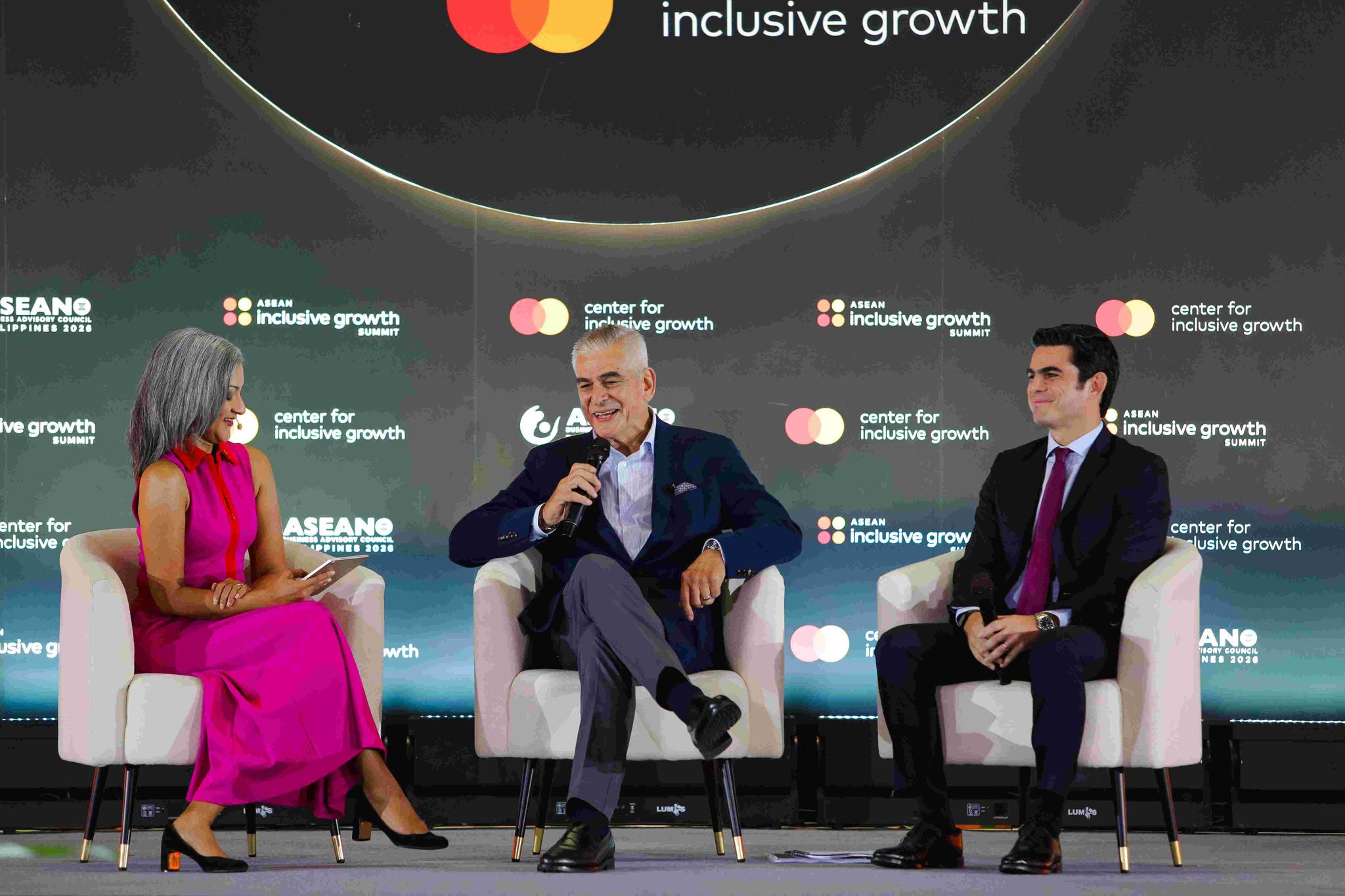
Nearly 200 years after Philippine conglomerate Ayala was founded, Jaime Augusto Zobel de Ayala, center, and his son, Jaime Alfonso Zobel de Ayala, reflect on the trust, resilience and willingness to change that have carried the family business across generations, and what it will take to stay relevant for the next one.
Many new banking customers are unaware of other ways they can use a bank, namely for loans and interest. “People can pay money easily, but may not have savings,” said Romulo-Puyat. “When there is an emergency, they fall deep into debt. They do not borrow responsibly. You can have access but not be financially healthy. So we really need the help of the private sector.”
Bangko Sentral ng Pilipinas is creating products that teach customers financial responsibility, such as behavioral nudges and goal-based savings accounts. The bank has also partnered with private companies like GCash, a mobile payments service, to establish programs like a personal equity retirement account.
“Partnerships are really important,” said Martha Sazon, the president and CEO of GCash. “Together we can include more people, not just Filipinos, and drive financial inclusion in the countries that we live in.”
E-commerce is booming in Southeast Asia: The digital economy is expected to reach $368 billion in gross merchandise value this year, a 17% jump over 2025. And AI can help small and medium-sized businesses with administrative tasks like managing inventory and accounting as well as tracking shipments.
OpenAI is working on ways to adapt its apps to the specific needs of Southeast Asians, including better language support and voice commands, said Sandhya Devanathan, OpenAI’s managing director for Southeast Asia and Australia. It has also formed a partnership with Grab, one of the largest super-apps in the region, to teach 30,000 delivery drivers and merchants how to improve their AI skills. “It’s not just using AI like a chatbot,” Devanathan said, “but also using AI to complete tasks. We think that will also power more people who want to become entrepreneurs and set up their own businesses.”
Mark Barnett, Mastercard's global head of Small and Medium Enterprises, chats with local entrepreneurs who showcased their wares at the Mastercard Strive Marketplace.
“AI levels the playing field,” said Tanit Chearavanont, the Group CEO for wholesale business and group chief commercial officer of CP AXTRA, the food industry wholesaler based in Bangkok. But that playing field depends on reliable internet access, which isn’t always a given in some parts of Southeast Asia. “The most important thing is not just affordability,” Devanathan. “It’s accessibility, and what I would define as accessibility is that it works mobile-first. It works in low-bandwidth areas.”
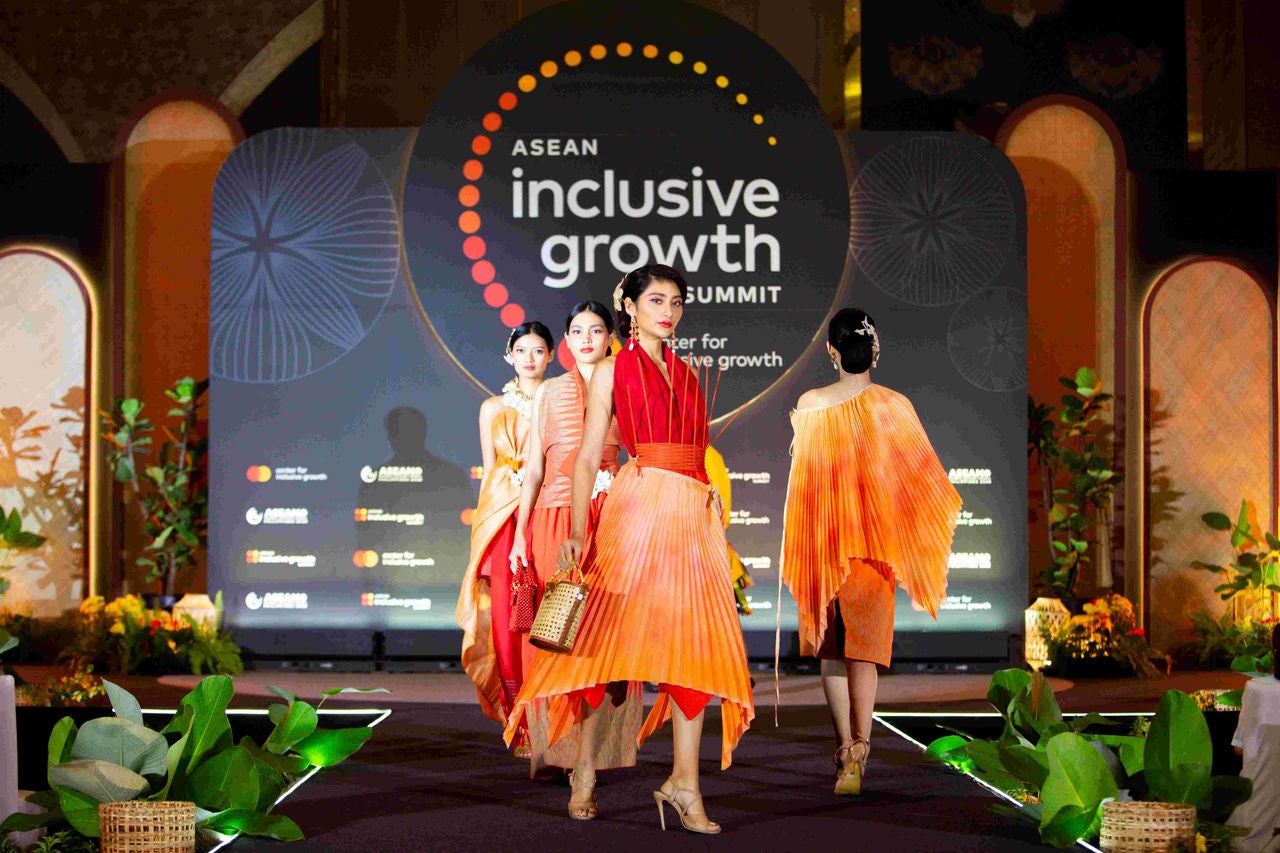
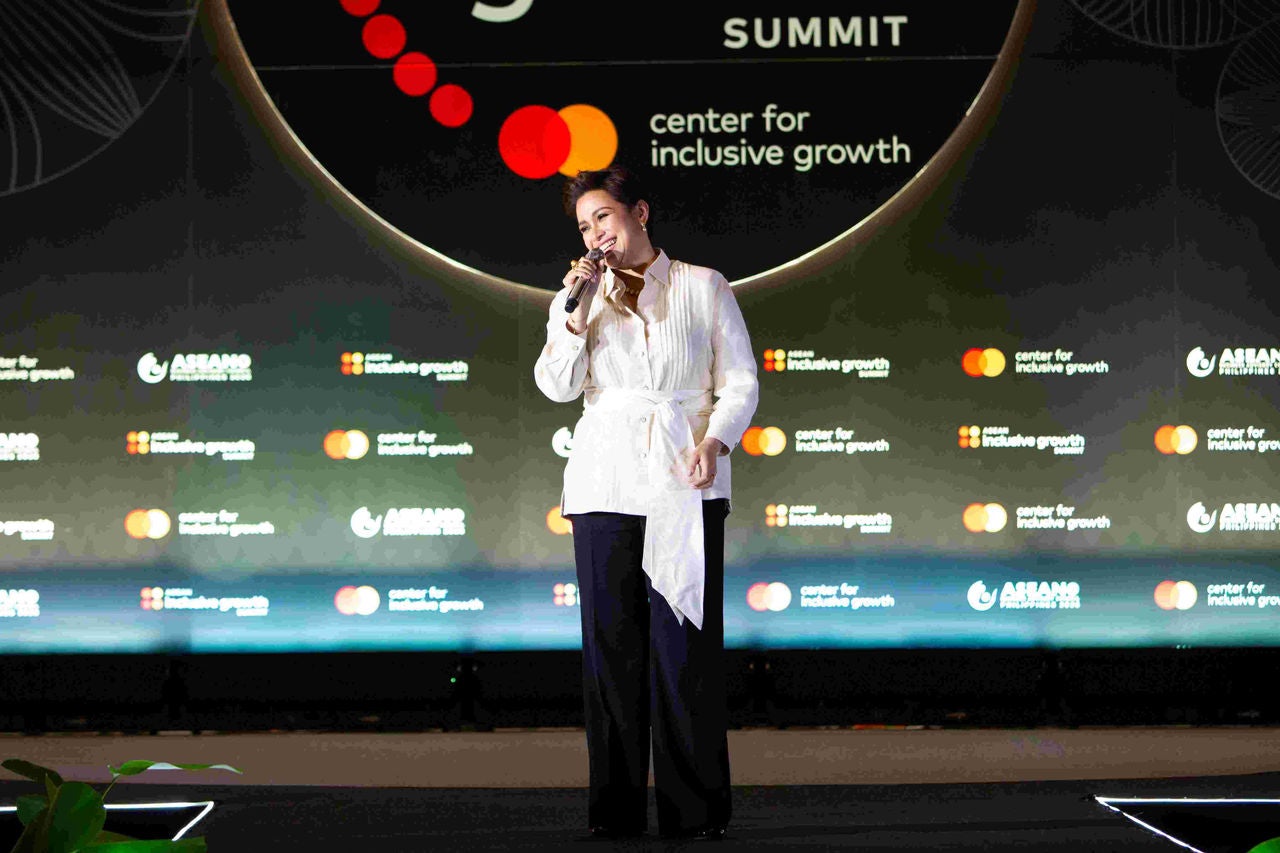
Filipino art and culture featured prominently throughout the Inclusive Growth Summit. One of the highlights was a fashion show — complete with catwalk — featuring work by Cebuano designer Dexter Alazas, who merges local textiles and contemporary design; the show was attended by First Lady of the Philippines Louise Araneta–Marcos, a strong supporter of Filipino design. Award-winning actress and singer Lea Salonga spoke about the rise of Filipino talent on the world’s biggest stages and the opportunity for Southeast Asia’s creativity and culture to be a source of pride and livelihood for artists across the region. She closed with a rendition of her most well-known works, in English and Tagalog.
Left, Filipino designer Dexter Alazas showcases handwoven Cebuano textiles and contemporary design in a runway show. Right, Broadway icon Lea Salonga performs at the summit.
Meanwhile, actress and entrepreneur Kylie Verzosa spoke about how creativity and partnership can help build a meaningful telehealth business in the Philippines. Beyond the mainstage, the Mastercard Strive Marketplace featured local artisans and small businesses, including Ormita’s Loom Weaving, Tan Inong Manufacturing, SongoTelu and Mitera.
Overall, the attendees of the conference agreed that Southeast Asia is full of potential.
"Potential needs to be realized,” said Tan Kiat How, Singapore’s senior minister of State, Ministry of Digital Development and Information and Ministry of Health. “And to capture these opportunities openness must be underpinned by trust and interoperability. So businesses need confidence that they can transact securely, protect data and operate across borders."
And that requires cooperation from everyone.