Learn how to orchestrate a customer journey flow from the ground-up, from vision to execution to optimization across the lifecycle stages.
Published: July 08, 2026
Customer expectations for relevance and personalization are higher than ever, with every interaction a test of whether your brand understands their needs in real time. Yet most organizations remain stuck in a campaign-centric mindset, pushing static messages through disconnected channels. The result? Experiences that feel robotic and fail to build trust.
The challenge is structural: Legacy data systems that can’t process real-time signals; AI models limited by weak training data insights; and marketers dependent on IT and data science teams for execution. These barriers make it hard to move from siloed tactics to adaptive, lifecycle-driven experiences.
This guide gives senior marketers a practical framework to design and deploy lifecycle-led journeys that feel human — at scale.
With the right tools and expertise, even small teams can build systems that react to hundreds of real-time data signals and engage meaningfully at every touchpoint. But the best companies don’t start big; they create a strong foundation first. Here’s how.
The lifecycle model provides the organizing logic for journey planning. Rather than treating customer journeys as isolated campaigns, lifecycle stages help teams understand what role each interaction plays in moving a customer forward, sustaining value or re‑initiating engagement.
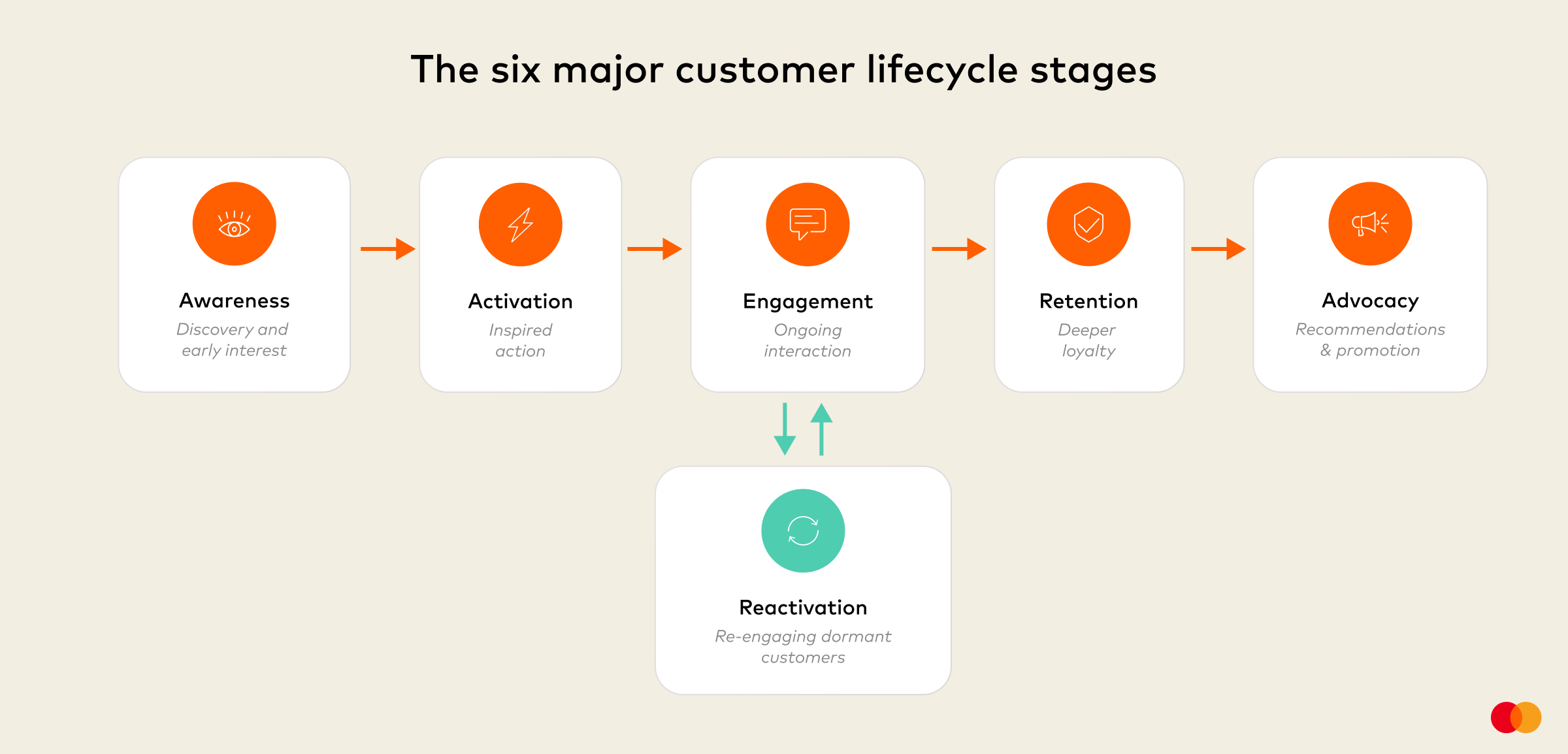
Broadly speaking, there are six major lifecycle stages that customers traverse. Every lifecycle stage should connect to a business outcome you’d like to achieve. Start by defining the desired outcome for each flow:
Awareness: The first‑touch driver, where initial information gathering and early interest begin. This is where marketers should focus on spurring product discovery and driving initial interactions, like browsing your site homepage for the first time.
Activation: Mid‑journey engagement, where brands should inspire customers to take meaningful early action, from add-to-carts to first purchases.
Engagement: The last‑touch driver, where usage and interaction deepen. Aim to strengthen familiarity through account creation and app downloads, which can lead to more robust data insights and power onboarding strategies.Reactivation: The re‑entry initiator, where high-potential customers have disengaged. Bring them back into the journey through follow-ups and win-back strategies via email, SMS and more.
Retention: The long‑term value contributor, where consistent engagement signals loyalty. Your objective at this point is to cultivate return visits, be it through loyalty programs, exclusive rewards and community-driven content.
Advocacy: The loyalty end goal, where satisfied shoppers are keen to recommend your products. To reinforce trust, your goal here should be to encourage shoppers to share their positive experiences on their network.
Every successful journey starts with clarity of purpose. Before deciding what to send, define why you’re sending it. This “why-first” mindset ensures that every touchpoint serves a measurable outcome.
Lifecycle stages are not theoretical constructs. They are grounded in observable signals that help marketers determine where a customer is and what should happen next.
To ensure signals are accurate, gather reliable identifiers such as email, device or customer identification numbers (CIDs), and key customer behavior trends.
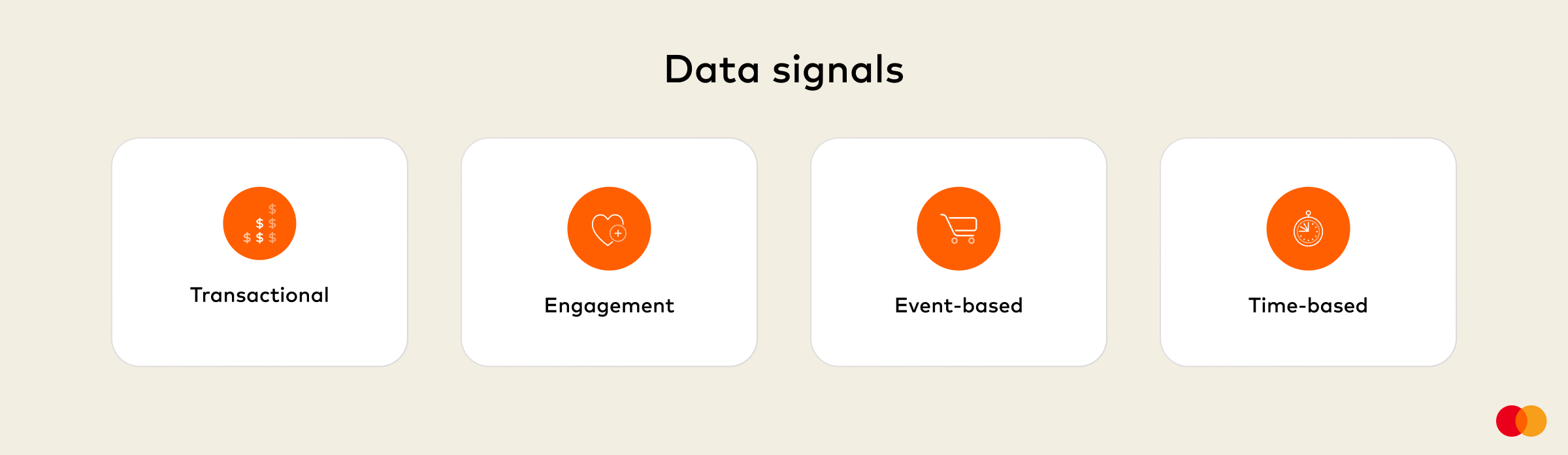
Types of signals include:
Transactional: All things that impact ROI, including purchase count, product category, spend level, etc.
Event-based: Key moments such as site/app visits, cart activity, feature usage, payment frequency, etc.
Engagement: Customer patterns suggesting level of interest, like email open/click frequency, app sessions or push opt-ins.
Time-based: Days since last activity or conversion.
Online retail may be relatively straightforward, but let’s look at another vertical: FinTech. By analyzing the following scenarios, an issuer could determine which of the following lifecycles the customer is in:
A card was issued 15 days ago but never used — therefore they may still be in the activation stage
A customer’s account shows over three transactions per month, indicating consistent — albeit light — usage typical of the engagement stage
No account activity has taken place in 30 days, meaning reactivation is necessary
Of course, it’s not always that easy. What matters is the discipline of clearly mapping signals to stages so journeys can respond consistently and predictably.
Once lifecycle stages are defined, communications can be tailored to support the specific job of each stage. The goal is not more messages, but more relevant ones.
Messaging should be personalized by stage:
Awareness: Educate and inspire using brand story, benefits, and proof points.
Activation: Reduce friction through setup guidance, incentives, reminders and key tips.
Engagement: Personalize recommendations and progress or rewards updates.
Reactivation: Highlight what’s new or improved and re-introduce tailored benefits or offers.
Retention: Reinforce value through loyalty perks, insights, or community content.
Advocacy: Encourage sharing with review requests and bring awareness to referral programs.
Let’s return to our FinTech example, where:
Awareness messaging may focus on card benefits and security features
Activation may include a first‑spend incentive or guidance on getting started
Reactivation might message improved rewards or new features since last use
Retention could include a cashback summary or spending insights
Messaging should feel natural and conversational rather than robotic or overly automated. Deliver a consistent, recognizable tone aligned with each lifecycle stage. Phrases like “Looks like you’re close to your next reward” signal empathy and awareness of context. AI can help optimize timing, but human judgment brings empathy into the message.
Choosing the right channel for each moment strengthens the journey rather than overwhelming it. Each channel has inherent strengths that should be considered when designing flows.
Urgency: SMS and push are effective for time‑sensitive messages, while email supports richer, non‑urgent content.
Value exchange: Channels like SMS and push are more personal and should be used thoughtfully to avoid overwhelming users.
Depth: Email provides space for explanation and storytelling, while push and SMS are best suited for brief updates.
Cost: SMS and push typically carry higher costs and should be reserved for high‑value, high‑intent moments.
Defining channel roles upfront helps teams make consistent decisions as journeys scale and prevents reactive channel selection later. Channels should be orchestrated as part of a single experience, each playing a distinct role:
Email for storytelling and education
Push for real‑time engagement
SMS for urgency and intimacy
In‑app for guided interaction
Each channel has unique strengths that, when deployed strategically, can elevate the customer experience at each lifecycle stage.
Effective orchestration starts with a journey‑first mindset, using signals to determine the next best action rather than planning messages channel by channel.
Audiences are then refined within this journey structure. Segment users by lifecycle stage, intent and engagement level, and layer segments such as “likely to churn” or “high‑value user.” Over time, AI and machine learning can help these segments self‑update as engagement and spending patterns shift. Here are some best practices:
Apply cross‑channel frequency caps, limiting total touches per user rather than per channel.
Avoid repeating the same message across multiple touchpoints.
Set clear exit and suppression rules.
Use intent‑based triggers instead of calendar‑driven schedules.
Design journeys as modular micro‑flows that can be updated independently.
These practices help maintain consistency while giving marketers flexibility to adapt without breaking the overall journey.
Effective journey measurement starts with a clear definition of success for each lifecycle phase. Rather than relying on a single KPI, teams should assess performance across engagement, conversion, efficiency and experience.
Define success metrics for each phase:
Awareness KPIs: Open rate, click rate, push interaction, session re‑entry
Activation KPIs: Application completion, product adoption, customer acquisition cost
Engagement KPIs: Purchase rate, app downloads
Reactivation KPIs: Cost per reactivation, churn rate
Retention KPIs: Opt-out rates, response latency
Advocacy KPIs: Satisfaction (CSAT/NPS), customer lifetime value (CLV)
To understand true impact, brands should implement a global control group to serve as a baseline for measuring incremental lift — whether revenue, engagement or retention — compared to typical customer behavior patterns. These control users will still receive mandatory or service messages, ensuring essential experiences are not disrupted.
Launching a customer journey is only the beginning. When engagement declines, new product features roll out, spending patterns begin to dip or new data and AI tools become available, brands must be observant and proactive. Here are three ways to keep your strategy relevant and effective as customers evolve.
Measurement also plays a critical role in determining when a customer moves from one lifecycle stage to another. Common indicators include:
Activity thresholds: Number of logins, purchases or sessions
Engagement decay: Reduced open or click rates, declining app usage
Value milestones: Reaching spending, saving or investment goals
Intent signals: Interactions with pricing pages, upgrades or renewal content
AI can help surface potential pattern shifts — for example, when a previously loyal customer suddenly drops engagement — and automatically trigger reactivation journeys based on those changes.
Optimization is most effective when it focuses on specific parts of the journey rather than attempting to overhaul entire flows at once. Be sure to:
A/B test at the micro level: Test variations of timing, channel or message before scaling.
Employ fail‑safes: Use suppression and exit rules to avoid duplicate or conflicting messages.
Stagger launches: Release and monitor response and error rates to a small cohort.
Identify issues early: Leverage real‑time dashboards to detect problems after launch.
Listen to feedback: Data insights show what users do; feedback explains why. Look at both signal types:
Direct signals: In‑survey NPS, post‑interaction ratings, customer support tickets
Indirect signals: Engagement drop‑offs, negative sentiment in open‑text responses or app store reviews
Plan next steps: Hold performance syncs between CRM, product, engineering and analytics teams to discuss findings.
Maintain a culture of continuous improvement: Employ quarterly tuning and periodic redesigns driven by engagement shifts or product updates.
Imagine a retail brand that notices drop‑offs after sending out post‑purchase emails. By analyzing customer feedback across reviews and support tickets, the business uncovers confusion about returns. After clarifying their email messaging, engagement returns to normal.
Retention and re‑engagement require proactive attention as customer behavior trends change. Rather than waiting for churn, effective journey strategies anticipate when value may be fading and respond early.
Common triggers for retention or re‑engagement journeys include:
Declines in engagement or conversion metrics
Product updates (new feature, pricing or compliance change)
Shifts in usage behavior, such as increased mobile reliance
New data availability or tech capabilities (e.g. signals, AI rollout)
To build long-lasting relationships, the world’s most effective brands are anticipating needs and responding in real-time by prioritizing:
Variety: Mix value-driven content with transactional reminders.
Recognition: Celebrate milestones to strengthen loyalty.
Next Best Action (NBA): Recommend actions or offers based on predicted intent.
Cross-channel reinforcement: Maintain coherence across email, push, and in-app.
Predictive churn models: Identify at‑risk users before disengagement becomes permanent. These models complement observable signals by surfacing early warning patterns that may not yet be obvious.
Used together, these approaches help sustain relationships without increasing fatigue.
Journey orchestration is ultimately about designing adaptive, data‑driven flows that respect customer context and intent. By planning around lifecycle stages, grounding decisions in signals and continuously measuring performance, marketers can create journeys that feel more human and perform more reliably.
Begin with one lifecycle stage. Unify the data insights you need, define what success looks like, and build around signals — not sends. From there, iterate and scale with confidence.
For marketing leaders, the call is clear: Evolve with customers — or end up as static as your campaigns.
Reconnect by Mastercard Dynamic Yield bridges every channel and moment, delivering timely, personalized messages that truly resonate — so every interaction counts. Explore journey orchestration.
Campaign planning schedules messages in advance, while journey orchestration responds to customer signals and determines the next best action dynamically.
Common signals include transactional, event-based, engagement and time-based data insights.
Email is effective for education and storytelling, push for real-time engagement, SMS for urgency and in-app for guided interaction.
Measure performance by lifecycle phase using metrics tied to engagement, conversion, efficiency and customer experience.