CASE STUDY

Elevating Peru’s real-time payments to a world-class ecosystem

Cover banner

Introduction

Peru’s clearing house and payments operator Cámara de Compensación Electrónica (CCE) sits at the heart of the Peruvian payment’s ecosystem, connecting more than 35 financial institutions.

CCE began the process of modernizing payment infrastructure in Peru through real‑time payments in 2016, and, as traffic increased, CCE needed a partner that could scale the system appropriately and ensure resilience. Following a competitive process, CCE selected Mastercard to help modernize its instant payments infrastructure with the system launching in 2021 for batch payments and in 2022 for immediate payments.

The objectives of the partnership have been to:

Thinking icon

Build the foundations for innovation

Arrow chart going up icon

Help drive Peru’s economic growth

Receive funds icon

Provide an increased range of payments options for consumers and businesses, which would in turn support wider efforts to increase financial inclusion 

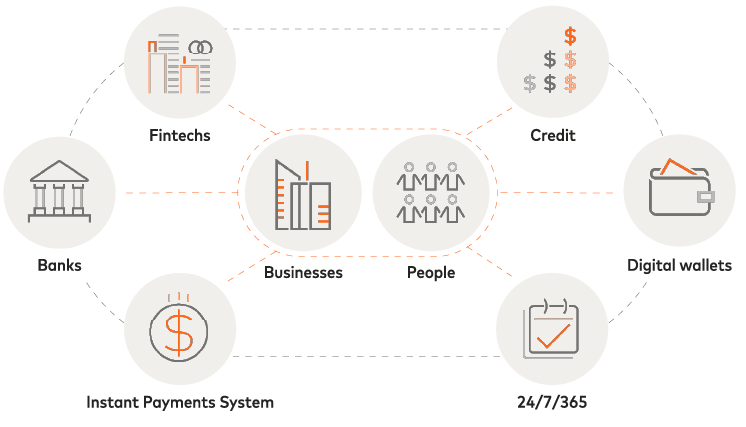
The infrastructure was designed to be highly interoperable – enabling a wider range of fintechs and other players to engage with the system. This has driven inclusion, and stimulated increased competition across the financial ecosystem, in turn transforming the payments landscape for both financial institutions and their customers.

Mastercard and CCE continue to work together to expand, improve, and optimize the real‑time network, accelerating digital wallet interoperability and developing new use cases.

At a national level, bringing more people into the formal financial system is essential for driving inclusive economic growth. This is particularly true in a market like Peru, where we have historically seen a strong preference for cash and limited access to financial services in rural and informal sectors of the economy. With its enhanced infrastructure and deeper integration, CCE is helping to close the inclusion gap.

Cristian Castañeda CEO, Cámara de Compensación Electrónica
Woman smiling while scrolling her phone

The challenge

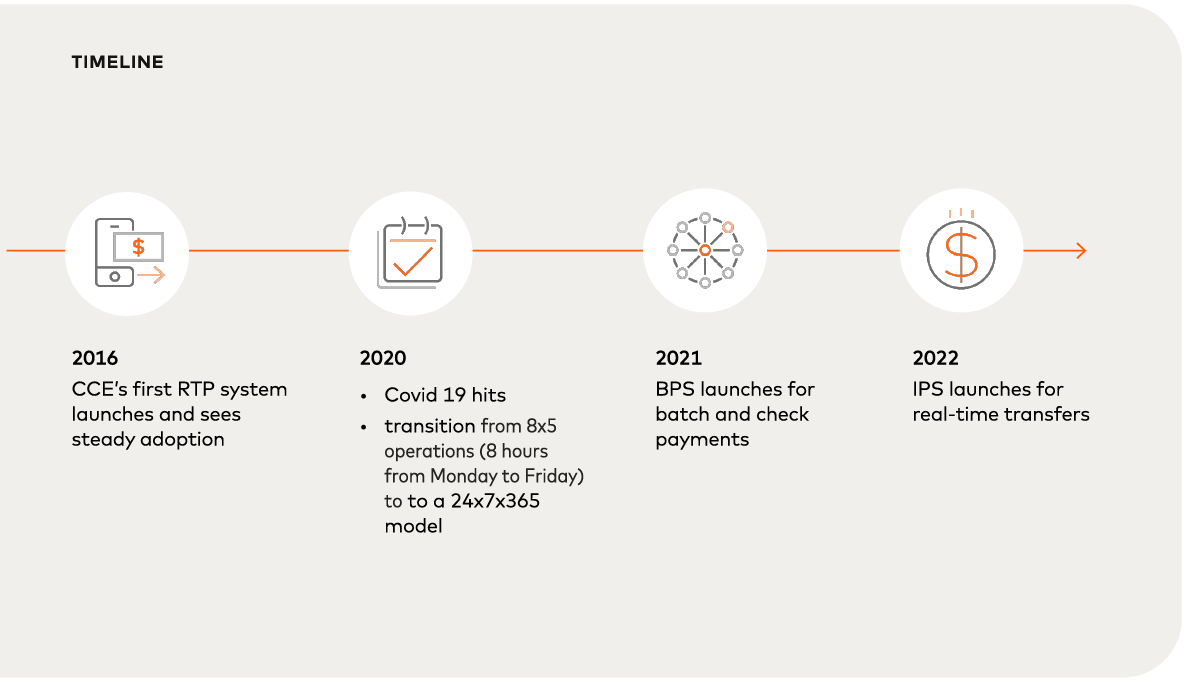
The evolution of Peru’s payment infrastructure has been shaped by both necessity and opportunity. CCE’s first real‑time payment system, launched in 2016, saw steady adoption until early 2020, when two major shifts accelerated change:

  • The Covid‑19 pandemic
  • The transition from 8x5 operations (8 hours from Monday to Friday) to a 24x7x365 model

These developments triggered a surge in payment volumes, reinforcing the need for a more resilient and scalable system.

CCE and Mastercard were at this point already working together to develop a more modern infrastructure – not only to handle these higher volumes, but also to introduce advanced features such as proxy directories and improve integration across the country’s fragmented payments landscape. By connecting more effectively with digital wallets, banks, and fintechs, CCE aimed to build a more competitive and user‑friendly ecosystem for both consumers and businesses.

This transformation also laid the groundwork for a broader ambition: expanding financial inclusion. Greater access to financial services is a powerful enabler – helping individuals manage resources, access credit, and build financial resilience.

Chart

With Mastercard’s support, we were able to introduce a model that allows smaller fintechs and regulated electronic money issuers to operate under the umbrella of established institutions responsible for central bank settlements. This has opened the door for new entrants to join the real‑time payments ecosystem, increasing innovation and driving higher transaction volumes.

Cristian Castañeda CEO, Cámara de Compensación Electrónica
Timeline

The execution

To modernize Peru’s payment infrastructure and advance national financial inclusion, CCE partnered with Mastercard to launch two key systems:

  • BPS (Bulk Payment System) in 2021 for batch and check payments
  • IPS (Instant Payment System) in 2022 for real‑time transfers

Both are fully managed by Mastercard, ensuring secure, reliable operations and ongoing technological support.

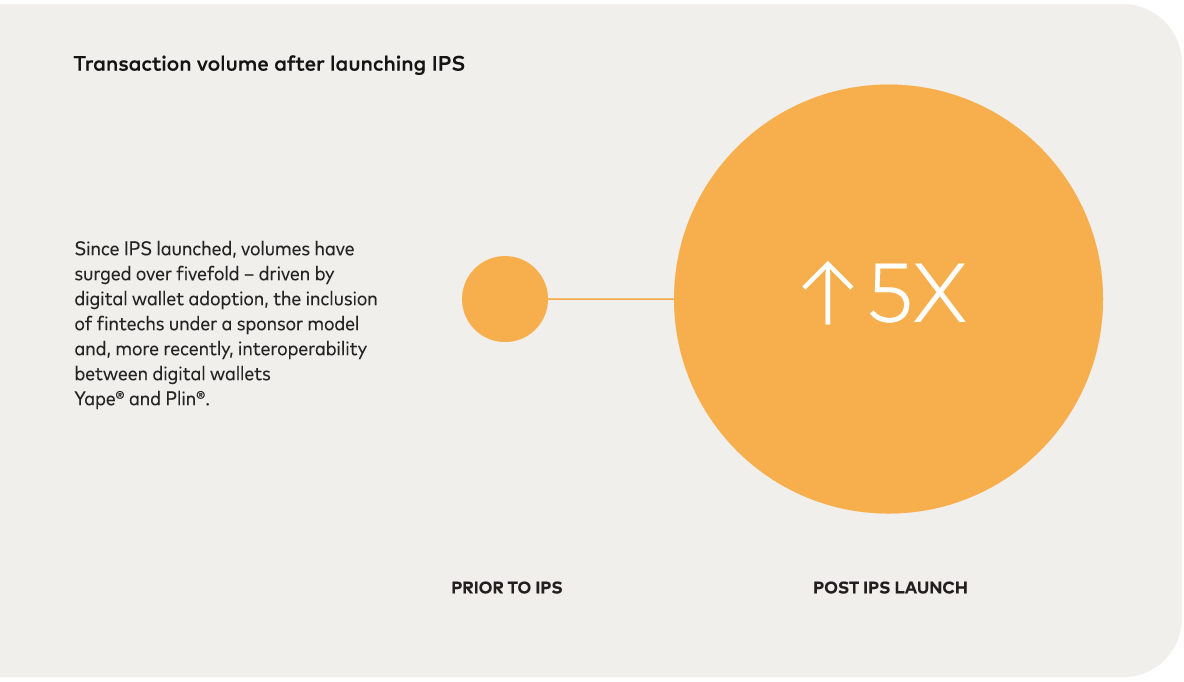
These systems were specifically designed to boost interoperability, resilience and inclusion amid rising transaction volumes. Since IPS launched, volumes have surged over fivefold – driven by digital wallet adoption, the inclusion of fintechs under a sponsor model and, more recently, interoperability between digital wallets Yape® and Plin®.

This interoperability for wallets was ensured through a mandate from the country’s central bank – Central Reserve Bank of Peru (BCRP) – that these must be open‑loop rather than closed‑loop systems, allowing people to transfer funds between different providers.

The sponsor model has played a critical role in enabling innovation and inclusion. CCE traditionally supported only larger financial institutions approved by BCRP, effectively excluding many fintechs. All these factors have come together to boost innovation, improve access, and thereby support financial inclusion.

Beyond its collaboration with CCE, Mastercard maintains close engagement with BCRP, banks, acquirers, and wallet providers to ensure its infrastructure efforts align with Peru’s broader financial strategy and long‑term goals

Alongside what has already been done, we are working with Mastercard to incrementally increase the scale of the system. We see substantial opportunities for further growth – which, if realized, could enable significantly higher payment volumes.

Cristian Castañeda CEO, Cámara de Compensación Electrónica
Transaction volume increase visualization

The results

The introduction of the new real‑time system has supported financial inclusion and payments optionality across Peru, while supporting increased transaction volumes and improved resiliency.

New use cases have been added, including supporting person‑to‑merchant payments through simplified digital tools like QR codes. Conversation is ongoing around other use cases, including tokenization to boost security measures, and cross‑border payment capabilities, which can help the country’s entrepreneurs and micro‑businesses to more easily transact across borders.

1b

Celebrating 1 billion transactions across Peru’s real time payments system

800m

transactions in country projected for 2026

Key takeaway

Mastercard and CCE have a long‑standing and successful partnership to deliver an inclusive, modern, and reliable real‑time payments system in Peru.

The level of interoperability offered by the system is helping to increase financial inclusion by making a range of financial services accessible to businesses and citizens. This is delivering unified payment experiences, and more accessible products and services for those who were previously unbanked

About CCE

Created by Peru’s banks, the Cámara de Compensación Electrónica (CCE) is the central entity that provides clearing services in the Peruvian financial system, facilitating interbank payments and checks


Account-to-Account Payments

Mastercard has been at the forefront of A2A and real‑time payments innovation for decades, and is creating a more seamless, secure, and resilient ecosystem for everyone.