What are you looking for?

The last decade has witnessed an unprecedented acceleration in technology adoption in retail, from digital, virtual and social commerce to contactless and biometric checkout
Alongside this technological surge, consumer expectations for personalization and engaging retail experiences have evolved dramatically. These two forces are culminating in a retail renaissance where brands use emerging technologies to deepen their connection with and value to consumers.
This issue of Signals explores today’s retail innovation through five key attributes, which often converge and overlap in various combinations to create new experiences.
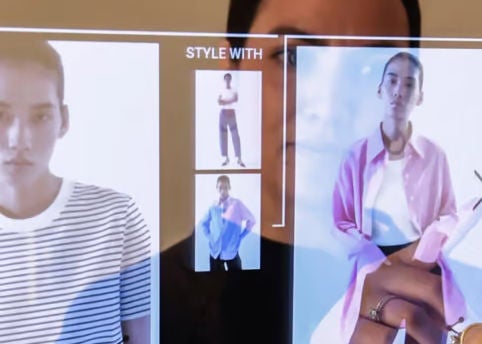
Consumers who opt in could be identified when they enter the store by authenticating through their app or facial recognition. This would let sales associates — human or AI-powered — access their purchase history, preferences and loyalty status to provide bespoke service.
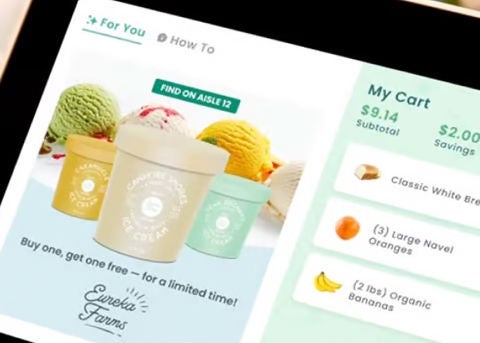
As the shopper moves around the store, smart shelves with sensors and digital displays — or perhaps product tags scanned by a mobile device — could provide real-time information about product provenance, sustainability and availability in the store and online.
Ultra-wideband (UWB) technology offers accurate location tracking that merchants could use to deliver contextualized information to consumers’ devices or digital signs. The app might notify shoppers that their loyalty rewards offer discounts on items they’re looking at, for example.
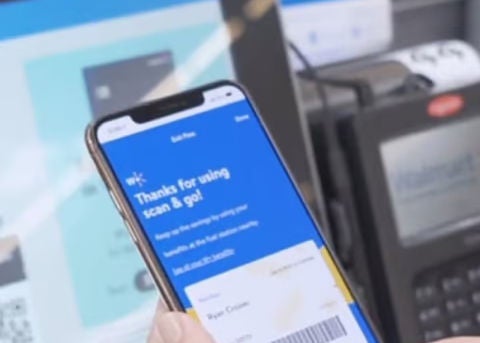
Automated and unattended checkout tech, including mobile payment solutions and AI-powered apps like Sam’s Club’s next-gen Scan & Go, process rewards in real time and send digital receipts as consumers leave the store.2
Only 9% of consumers say they’re satisfied with the in-store shopping experience, according to an IBM survey of 20,000 consumers in 26 countries.3
More than half of those surveyed said they would like to use bots or virtual assistants or AR/VR and AI apps as they shop.
Two-thirds of respondents who had used AI assistants were dissatisfied with the experience and nearly 20% said they were unlikely to try again.
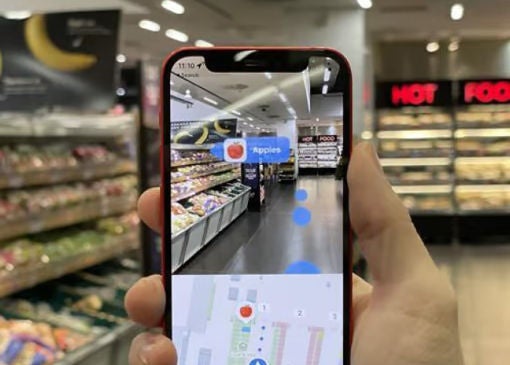
the British multinational retailer, has introduced a smartphone app that leads customers through the store to find items on their shopping lists. AR startup Dent Reality developed the app, which uses the store’s Wi-Fi network to pinpoint a shopper’s location and provide digital maps of product locations.4
We use our people, resources, and network to drive equitable, sustainable growth and financial inclusion globally through Strategic Growth and the Center for Inclusive Growth.
Mastercard's 9 employee-led resource groups with 159 global chapters drive inclusion, innovation, and insights for better business results.
We use our people, resources, and network to drive equitable, sustainable growth and financial inclusion globally through Strategic Growth and the Center for Inclusive Growth.
Increasingly, innovative companies are leveraging high-quality data and internet of things (IoT) architecture to overlay immersive technologies and biometrics that bring a new level of interactivity and engagement to the in-store experience. Practical use cases, such as solving the recurring problem of improving product discovery in the store or removing friction from the checkout experience, are likely to resonate well with consumers and see widespread adoption. By contrast, some early experiments that gamify the shopping experience — such as awarding digital trophies — have not gained as much traction due to a lack of perceived value.
Despite the potential of these technologies, widespread adoption has been limited to date. This may be due to integration challenges, the high cost of implementation, and the need for consumers to adopt new behaviors and new technologies. As technology advances and costs decrease, retailers that effectively address these challenges and enhance the customer experience could set new standards in the industry.